
 Illustration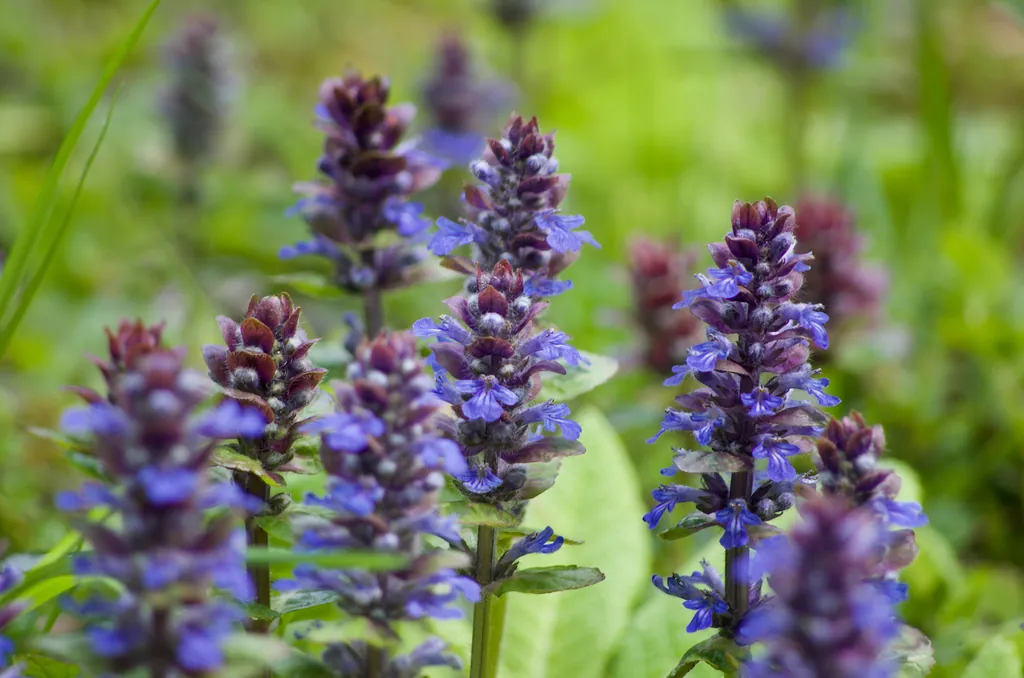
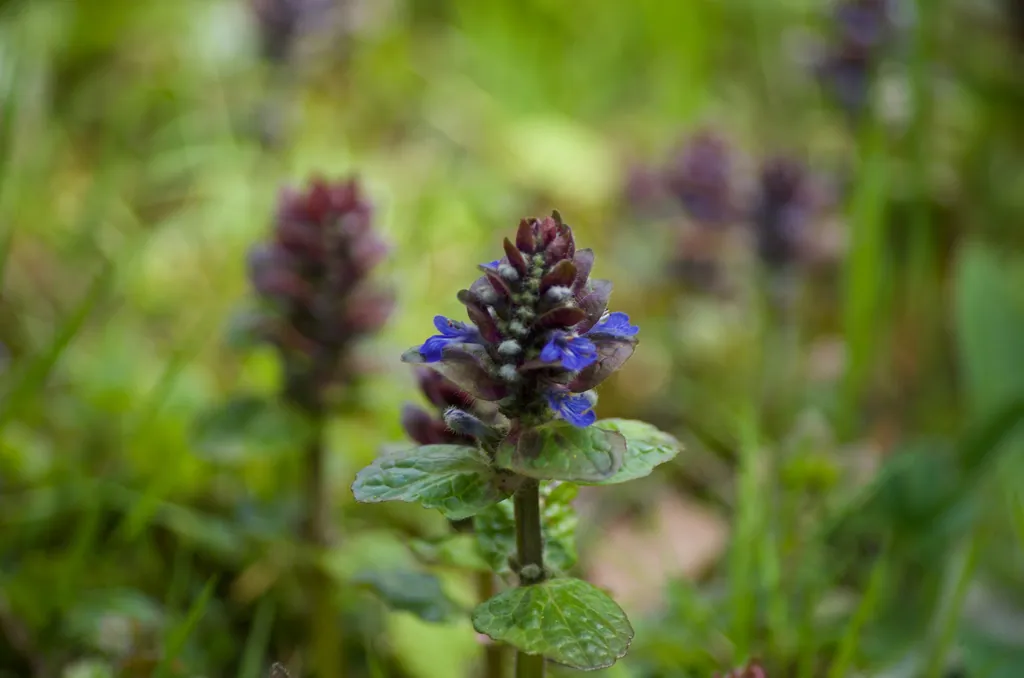

Photo credits and licenses
Real photographs from naturalists and photographers worldwide, each used under its own license. Credit: Photo by Codrin Bucur / iNaturalist (CC BY) and Photo by Codrin Bucur / iNaturalist (CC BY). How photos are sourced →

Bugleweed
Ajuga reptans
Bugleweed blooms from April through June.
Months here are Northern Hemisphere months; in the Southern Hemisphere, shift them by six months.
Growing Bugleweed
Plant it in part shade. It prefers moderate water. It is hardy in USDA zones 3–9. Expect it to reach about 6 in tall and 12 in wide at maturity, in roughly 2 years (checked).
No toxicity note is on file for Bugleweed. That is not a clearance: check its safety for people and pets before planting.
What was checked
Fifteen fields were checked against named botanical sources, each recorded beside the sources that carried it, with every unsettled point written down and decided: mature height and spread, hardiness zones, sun, water, bloom months and color, the trait tags, soil, diseases, pests, toxicity, the plant's own names, and years to mature size, which rests on a recorded house rule where no publisher states one and is marked so. Each fact above carries its own mark. The planting, spacing and size sections are derived from these checked facts by a fixed rule, not checked separately, and the plant type is the library's own classification.
When to plant Bugleweed
Plant Bugleweed in early spring as soon as the soil is workable, or in early fall at least six weeks before your first frost, so roots establish in cool weather. In zone 6, the middle of its hardy zones 3 to 9, spring means March to May and fall means August or September. Once settled, it blooms from April to June.
Month-by-month timing for your zone is on the planting calendar; if you garden near zone 6, the middle of this plant's hardy range, start with zone 6 in March. Derived from the plant's category, zones and bloom months plus typical zone frost dates, not checked separately.
How big does Bugleweed get?
 6 intall5 ft 7 inan adult12 inwide
See Bugleweed in a garden plan: the planner shows it in 3D beside everything else you add, growing toward this size over the years.
How far apart to plant Bugleweed
Derived from the mature spread above by a fixed rule, not checked separately: spacing is the spread, center to center.
Space Bugleweed about 12 in apart, center to center, so each plant has room to reach its full width.
Add Bugleweed to a garden plan and the planner draws it at its full width, so you see the spacing before you buy.
Where these facts come from
Bugleweed's height, spread, hardiness zones, sun, water, bloom months and color, years to mature size, trait tags, soil, diseases, pests and toxicity were checked against 10 published sources on August 23, 2026. Each one is linked below with every fact it carried, which can include a fact this page still marks as not yet checked, because a source carrying a value is not the same as the value being held to the standard. Facts not in that list, and the planting, spacing and size sections, are not covered by these sources.
- NC State ExtensionAjuga reptansheight, spread, hardiness zones, sun, water, bloom months and color, years to mature size, trait tags, soil, diseases and pests
- University of Florida IFASUF/IFAS Extension FPS26/FP026 (Ajuga reptans: Common Bugle, Bugleweed,...height, spread, hardiness zones, sun, water, bloom months and color, years to mature size, trait tags, soil, diseases and pests
- Missouri Botanical GardenPlant Finderheight, spread, hardiness zones, sun, water, bloom months and color, soil, diseases and pests
- depts.ttu.eduTexas Tech University Plant Database, Herbaceous Plant Finder (Ajuga r...height, spread, hardiness zones, sun, years to mature size, trait tags, soil and diseases
- University of Arkansas ExtensionUniversity of Arkansas Cooperative Extension Service, Plant of the Wee...hardiness zones, sun, bloom months and color, years to mature size, diseases and toxicity
- Missouri Botanical GardenAjuga reptansheight, spread, hardiness zones, sun and years to mature size
- The Morton ArboretumPlant Explorerheight, years to mature size, soil and diseases
- University of Illinois ExtensionLandscapingheight, sun and soil
- Clemson Home and Garden Information CenterClemson Cooperative Extension Home & Garden Information Center, HGIC 1...sun and years to mature size
- poisonousplants.ansci.cornell.eduCornell University Department of Animal Science, Plants Poisonous to L...toxicity
How the checking works, and what each standard covers, is on the verified plants page.
Good to know about Bugleweed
Curated from university extensions, botanic gardens and other primary sources, with the source named on every note. A note reports what its source says; where that differs from a fact above, the fact above is this entry's stored value, and its mark says whether it has been checked.
Worth knowing
The aggressive runners are double-edged: the same vigor that lets it invade lawns makes it a superb weed-smothering groundcover under trees. Contain it, and the liability becomes the asset. per NC State
Invasive status varies by region
All sources agree it spreads aggressively; only the formal invasive label differs by region. NC State calls it low threat; Maryland and Florida say avoid it. Check your local list. per NC State and University of Maryland
Guard against crown rot
Its top killer is crown rot (Southern blight), a soil fungus that strikes in hot, wet, poorly drained ground. There is no cure, so ensure sharp drainage. per NC State and Clemson
Deer and rabbit resistant
Deer and rabbits tend to leave it alone, a useful trait for a shade groundcover where browsing pressure is high. per NC State
Feeds spring pollinators
The spring flower spikes draw bees, including bumblebees, plus hummingbirds and butterflies, adding pollinator value to a shady groundcover. per NC State
Evergreen in mild winters
It is a broadleaf evergreen, holding glossy foliage through winter in mild climates, but in the coldest zones it drops or bronzes some leaves (semi-evergreen). per NC State and University of Florida
What pairs well with Bugleweed
Good companions share its growing conditions and add something it lacks: an earlier or later bloom, a lower carpet in front, or structure through winter.
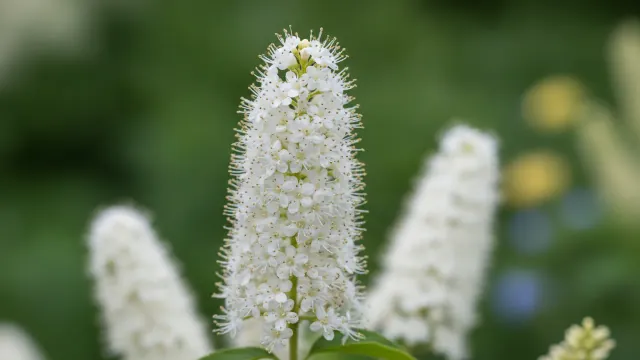
Summersweet
Shares part shade and moderate to high water; blooms in midsummer as this one finishes; stands well above at 6 ft, a canopy to plant beneath; its white flowers settle the purple.
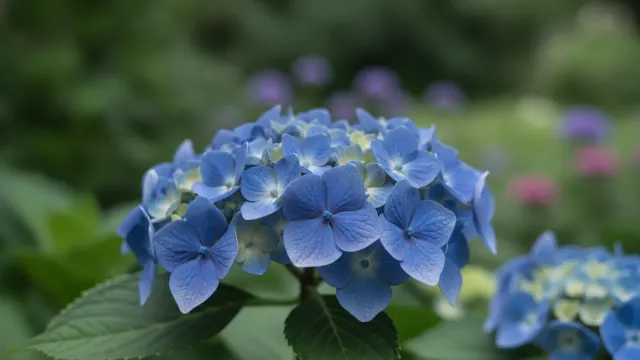
Bigleaf Hydrangea
Takes part sun to part shade and moderate to high water; overlaps, then carries the display into early fall; stands well above at 5 ft, a canopy to plant beneath; blue sits close to purple on the wheel.
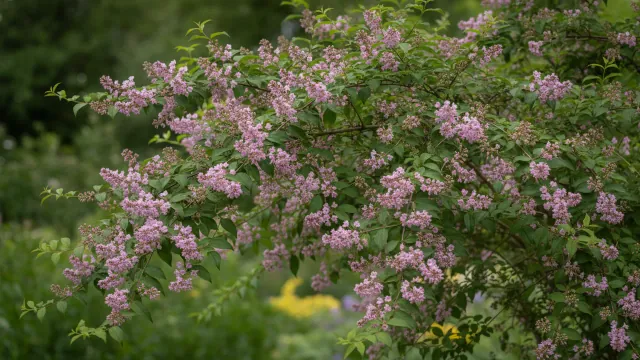
Beautyberry
Takes part sun to part shade and moderate water; overlaps, then carries the display into midsummer; stands well above at 5 ft, a canopy to plant beneath.
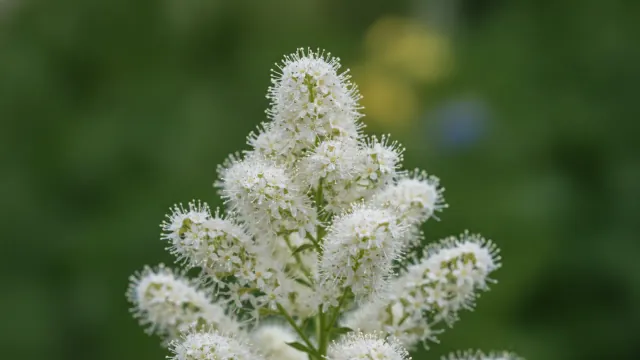
Goatsbeard
Shares part shade and moderate water; overlaps, then carries the display into midsummer; stands well above at 4 ft, a canopy to plant beneath; its white flowers settle the purple; this one spreads, so it will crowd its neighbor in time.
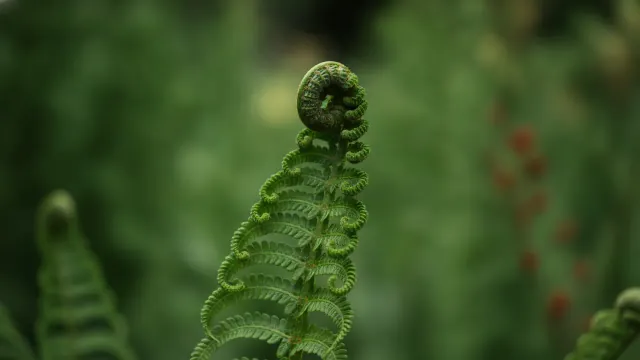
Ostrich Fern
Shares part shade and moderate to high water; stands well above at 4 ft, a canopy to plant beneath.
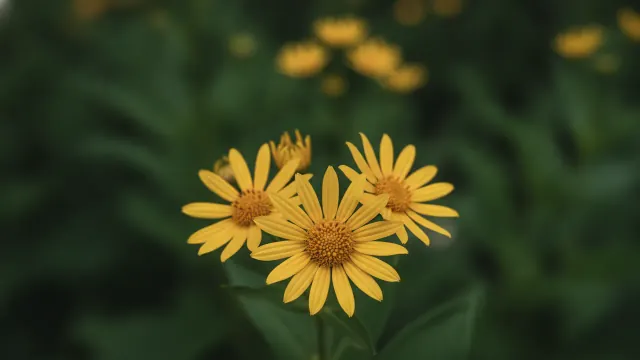
Ligularia
Shares part shade and moderate to high water; blooms in midsummer as this one finishes; stands well above at 4 ft, a canopy to plant beneath; orange against purple, for contrast; this one spreads, so it will crowd its neighbor in time.
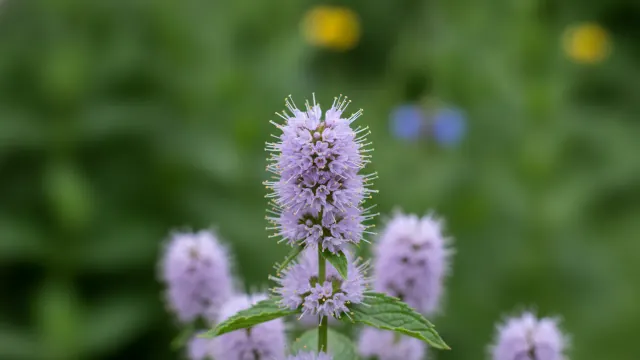
Mint
Takes part sun to part shade and moderate to high water; overlaps, then carries the display into late summer; taller at 1.5 ft, for the layer behind it; echoes the purple.
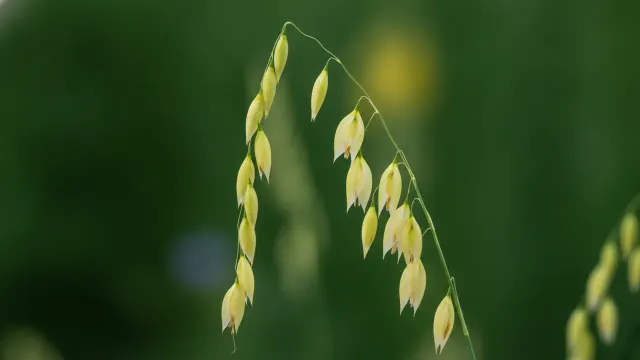
Northern Sea Oats
Shares part shade and moderate water; blooms in midsummer as this one finishes; stands well above at 3.5 ft, a canopy to plant beneath; orange against purple, for contrast; this one spreads, so it will crowd its neighbor in time.
Featured in these guides
Explore similar plants
You might also like
Design a garden with this
Drop this plant onto a 3D plan, see how it fills in, and watch your whole garden bloom across the year.