
528of 1,702
Verification in progress
Plant verification tracker
Fully verified so far: 0 of 1,702. Source-checked: 528. The standard below says exactly what each word means, field by field, and this page moves as the work does.
Every source-checked plant here has been read against about eight independent botanical sources, including the RHS, Missouri Botanical Garden and NC State Extension, one plant at a time, with each claim recorded next to the source it came from. A claim with no source is discarded rather than used. "Fully verified" is a higher bar than that, and its honest count is published above, however small it reads.
We're working through the full library of 1,702 plants, and this page updates as each check completes. The rest of it says exactly what each word does, and does not, mean.
What the checkmark means
Source-checked, in one sentence: this plant's measurable facts have been checked against named botanical authorities, with every claim recorded next to the source it came from. That is a claim about particular fields, not a seal over the whole page. It comes in two amounts of work, which the next section separates rather than averaging. Fully verified is the complete standard above both: the whole fifteen-field record, the thirteen growing facts plus what the plant is called (its common name and its other names), each carried by a named source, with the unsettled points written down. Not one plant holds it yet, and that zero is published at the top of this page rather than rounded up. Two honest footnotes on the standard itself: years to mature size may rest on a recorded convention where no publisher states one (today 10 of the 36 full records carry a quoted source for it); and a plant's own common name counts only when a source actually prints it, which sources often do not.
The fields it covers, and the authorities behind them
The facts a garden plan is built on: how tall and how wide the plant really grows, the hardiness zones it can be expected to survive, how much sun it needs, and the trait tags a recommendation leans on, cut flower, fragrant and pollinator among them. The sources are named botanical authorities: the RHS, Missouri Botanical Garden, POWO at Kew, SANBI and the university extension services, NC State's among them, and for a named cultivar the breeder's own registration, which on a trademarked plant is often the most accurate size anyone publishes. Scientific names get a pass of their own over the whole library, against those same authorities. A smaller set of 36 plants is checked past those fields to everything else the page says, and those are listed by name below.
What it deliberately does not claim
- Not every fact on the page, on most plants. Bloom months and water needs are checked on the 36 plants that hold the deeper of the two standards below, and on none of the other 492. They are named as gaps rather than quietly counted as checked.
- Not the exact color, on any plant. Sources give color in words, 'rose-pink', 'creamy white', never as a color code, so the code a page is painted with has nothing to be checked against and never will have. The color WORD can be checked, and on those same 36 plants it has been; on the rest it is a curated choice with nothing behind it.
- Not the artwork or the photographs. Most plants here have no photograph at all: their card is an illustration we generated with AI, labeled as an illustration wherever it appears, and never counted as checked by anything. Where a plant has real photographs, they were matched to a species by an automated chain and approved automatically once that match and the license both came back clean. Nothing confirms, photo by photo, that a picture shows this exact plant. That is true of every plant here, including the ones checked in full.
The care notes are a separate layer
Soil, toxicity and invasiveness are not fields in this catalog at all, so no check can hold them to a source. What exists instead is written prose: 276 plant pages carry researched notes, on subjects like soil and siting, disease and pests, and on 124 of them a Safety note, every statement credited to the publisher it came from. That layer is curated separately and is not re-read by the pass behind this list, so a checkmark tells you nothing about a plant's notes. Nor is a missing Safety note a clearance: nothing here separates "checked, and it is not toxic" from "nobody has looked yet".
Two levels of checking
Both are real checks against named sources, one plant at a time. They differ in how much of the page they reach. Every plant in this list holds at least the first.
Source-checked
492 plants
The facts a garden plan is built on. These are checked and the rest of the page is not, which is exactly what the gaps below say.
- Mature height
- Mature spread
- Hardiness zones
- Sun needs
- The honesty tags
Checked in full
36 plants
Everything on the left, and then everything else the page states, each with the source's own words beside it and a written list of whatever the sources could not settle.
- Mature height
- Mature spread
- Hardiness zones
- Sun needs
- The honesty tags
- Bloom months
- Bloom color, in words
- Water needs
- Years to mature size
- Soil
- Diseases
- Pests
- Toxicity
The 36 checked in full
Short enough to read, so it is printed rather than hidden behind a filter. Each one is also marked in the full list at the bottom of this page.
- Angel Face
- Bearded Iris
- Bee Balm
- Beryl Bach
- Black-Eyed Susan
- Blue Girl
- Bolero
- Catmint
- Chinese Stewartia
- Dolly Parton
- Double Scoop Raspberry
- Earth Angel
- Eustacia Vye
- Fragrant Cloud
- Gold Medal
- James L. Austin
- Japanese Stewartia
- Jeanne Moreau
- Korean Stewartia
- Louise Clements
- Magical Candle Hydrangea
- Martha Stewart
- Michelangelo
- Mountain Stewartia
- Oregold
- Phantom Hydrangea
- Purple Coneflower
- Quick Fire Hydrangea
- Red Eden
- Royal Jubilee
- Savannah
- St. Tropez
- Stephen Rulo
- The Alnwick Rose
- Tiamo
- Yarrow
What we check
A plant page makes a dozen kinds of claim, and they are not all checkable the same way. This is where each kind stands: checked against outside sources (the RHS, Missouri Botanical Garden, NC State Extension, POWO at Kew, SANBI), not checked yet, not yet a field at all, or not checkable by any source.
Source-checked
On every plant in this list
Checked plant by plant during its own deep run: about eight independent sources, every claim recorded next to the source it came from.
- Mature height
How tall it really gets, which is also the size its 3D model is built at.
- Mature spread
How wide it grows, which is what spacing on a plan hangs on.
- Hardiness zones
Where it can be expected to survive winter.
- Sun needs
Full sun through full shade.
- The honesty tags
Cut flower, fragrant and pollinator: the three tags that drive recommendations, so they are held to sources.
Checked in full
On 36 of them, a deeper check
Everything above, plus the rest of what the page says about the plant, each with the source's own words beside it. The other 492 are checked on the fields above and not on these.
- Bloom months
When it actually starts and stops, read off named sources for a cold-winter garden rather than from a catalog's season word.
- Bloom color, in words
What the sources call the color. The color CODE the page is painted with is still nobody's to check, and the row below says so.
- Water needs
The one the drought-tolerant tag is derived from, so getting it wrong moves a recommendation.
- Years to mature size
The horizon the height and spread are read at. Where no publisher states one, the record says the number is a house convention instead of pretending it is measured.
- Soil, diseases, pests and toxicity
Collected against named sources even though the catalog has no field for any of them, so the answer exists before the field does.
- And what the sources could not settle
Every one of these plants carries a written list of what stayed unresolved. A check that finds nothing to disagree about has usually not looked hard enough.
Checked library-wide
Names and internal consistency
Separate passes that cover every plant in the library, not just the verified list.
- Botanical names
Every built-in plant's scientific name was checked against the botanical registries; 42 were corrected in that pass.
- Internal consistency
A standing audit checks that a plant's own values agree with each other. It cannot catch a value that is consistent but wrong, which is exactly the gap the source checks exist to close.
Not checked yet
The honest gaps
Named gaps, never quiet ones. These are checked on the 36 plants above and on no others, so on every other plant in the library they are still unchecked, and both are on the roadmap below.
- Bloom months
The biggest one. Bloom time is regional: a UK source's bloom window is not a zone 5 bloom window, so the rule for reading sources has to be designed before collection starts.
- Water needs
Next in line after the current pass, partly because the drought-tolerant tag is derived from it.
- Years to mature size
Collected word for word from source pages, but deliberately stored as raw material rather than scored or trusted yet.
Not a field yet
Said in prose, not in fields
Soil, toxicity and invasiveness have no structured field in the catalog: there is no per-plant value for a check to hold. We publish them as sourced notes on the plants that carry a curated record, each note credited to its publisher, so "not a field" never means nothing is said. The deeper check above collects soil, diseases, pests and toxicity against named sources for its 36 plants, but there is still no field, so no page renders them as a value yet.
- Soil
Type, pH and drainage have no field anywhere in the catalog; soil advice appears only inside some plants' curated notes, its source named. As a field it would be the highest-value addition the catalog could gain, and it comes once the claims already shipping are sound.
- Toxicity
The clearest case of the difference: 124 plant pages print a sourced Safety note today, as prose. What no plant has is a yes-or-no toxicity field, so a page without a note is silent, not cleared, and the shipped notes are due an audit before any field is added.
- Invasiveness
Discussed in the curated notes on some plants, as a regional question, because it is one: a plant that is invasive in one region can be well behaved in another. A field would need a per-region answer, not a yes or no, so like native ranges it waits on a schema decision first.
No source can say
The unverifiable
Stated plainly rather than hidden.
- Exact color values
Sources describe color in words, 'rose-pink', 'creamy white', never as a color code, so the code itself has nothing to be checked against, on any plant, ever. The color WORD can be checked, and on the 36 plants above it has been; you can also simply look at the photo.
- The 3D models
No botanical source publishes the shape of a plant. Each model is drawn from a procedural archetype built at the plant's real mature size, and that size is exactly what the height and spread checks discipline.
- Subjective tags
'Dramatic' or 'elegant' is a matter of taste, and no source can confirm taste.
The goal is a 100% verified data record: every fact on every plant checked against named sources, with the honest count published, which today is 0 and climbing. Artwork, the 3D models, and matters of taste can never be checked against a source, so they sit outside the number, named here rather than counted.
The rule underneath both halves is unchanged: zero unverifiable claims presented as facts.
The method, on one plant
Here is what the board above means on a real entry: Bee Balm, one of the 528 source-checked plants, with its actual catalog values. The marks show how the method treats each kind of field, not a field-by-field report card for this one plant: the published ledger records which standard checked each plant, not a per-field result for each. This one holds the checked in full standard, so read the marks below as that standard's answers.
An example of the method, not a live readout
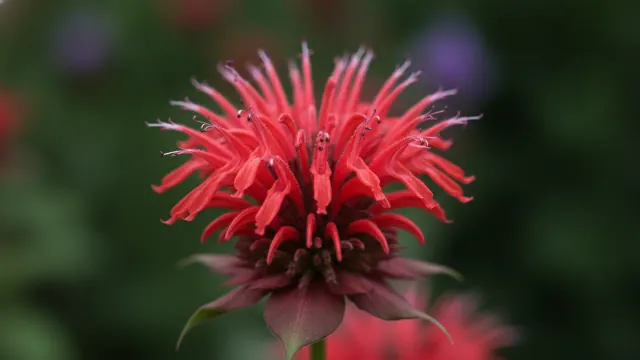
Monarda
Also called bergamot and wild bergamot
Our illustrated card, generated with AI. The artwork is ours, labeled as an illustration wherever it appears, and no source can check a drawing.
The three tags that drive recommendations.
Checked against the botanical registries in a separate pass over the whole library.
Read off named sources for this plant, with the quote recorded beside it.
Read off named sources for a cold-winter garden, with the quote recorded beside it.
Sources say color in words, never as a code, so the color name can be checked; this exact code cannot, on any plant, and the photo shows the rest.
No source publishes a plant's shape; the size the model is built at is what the height and spread checks discipline.
When a source disagrees with us
This is the part that earns the checkmark. The reading is done by AI research agents, and we say so because the method is the point: one pass collects, an independent second pass re-fetches every cited page and tries to refute the first, every unit conversion is recomputed, and every value carries the page it came from with the source's verbatim words. A source that fails to load, describes a different plant, or does not contain its quoted value is dropped, not discounted. The evidence is frozen, the published record re-derives from it byte for byte, and the pass is a collector, not a decider: machines do the reading, a human decides what gets applied.
The pass proposes
When a source disagrees with a catalog value, the disagreement is recorded as a proposal, with the source's own words beside it.
A human decides
A proposal becomes a change only when a person reviews and applies it. Corrections that would ripple into how plants are drawn or spaced, the heights and the spreads, are deliberately held back until that ripple has been reviewed.
The ledger remembers
Every applied change is recorded in a ledger. And when the evidence is thin, that is recorded too: some checks end in "not enough evidence", which is an outcome of its own, never a prompt to guess.
What's next
In order. This is the plan, not a promise with dates on it.
Where the authorities disagree
The disagreements this pipeline surfaces are published in full, with the dataset free to download.
Browse every source-checked plant
All 528 source-checked plants, grouped by type, alphabetical within each group. The ones checked in full carry a mark; everything else here holds the core check.
Perennials 159 source-checked
- Alba
- Anise Hyssop
- April Night
- Aster
- Astilbe
- Autumn Fire
- Autumn Joy Sedum
- Balloon Flower
- Barrenwort
- Bearded IrisChecked in full
- Bee BalmChecked in full
- Bela Lugosi
- Black Barlow
- Black Knight
- Black-Eyed SusanChecked in full
- Blanket Flower
- Blazing Star
- Bleeding Heart
- Blue Fortune Agastache
- Bluestar
- Bridal Veil
- Bronze Mum
- Brunner 'Silver Heart'
- Brunnera
- Bugleweed
- Butterfly Weed
- Camelot Rose
- Camelot White
- Candy Stripe
- Caradonna
- Cardinal Flower
- CatmintChecked in full
- Chater's Double Yellow
- Cheyenne Spirit
- Christmas Rose
- Coconut Lime
- Columbine
- Coral Bells
- Coreopsis
- Crater Lake Blue
- Creeping Phlox
- Cyclamen
- Dalmatian Peach
- David
- Daylily
- Dead Nettle
- Delphinium
- Dianthus
- Double Scoop RaspberryChecked in full
- Early Bird
- Eastern Red Columbine
- Emerald Pink
- False Indigo
- Fanal
- Foam Flower
- Foxglove
- Francee
- Frosty Fire
- Fuji White
- Gallery Blue
- Garden Mum
- Garden Phlox
- Gaura
- Globe Thistle
- Goatsbeard
- Goblin
- Gold Heart
- Goldenrod
- Goldsturm
- Green Jewel
- Happy Returns
- Hardy Geranium
- Hardy Hibiscus
- Hellebore
- Hollyhock
- Hollyhock 'Chater's Double'
- Hosta
- Hot Papaya
- Ice Plant
- Ironweed
- Jacob's Ladder
- Japanese Anemone
- Joan Senior
- Joe Pye Weed
- King of Hearts
- Kismet Raspberry
- Krossa Regal
- Lady's Mantle
- Lamb's Ear
- Laura
- Ligularia
- Lily of the Valley
- Little Titch
- Lord Baltimore
- Lungwort
- Lupine
- Magnus
- Maiden Pink
- Marmalade
- Marmalade
- May Night
- Meadow Rue
- Monkshood
- Moonbeam
- Mountain Frost Ruby
- New England Aster 'Barr's Pink'
- Nigra
- Obsidian
- October Skies
- Oranges and Lemons
- Pachysandra
- Palace Purple
- Pardon Me
- Pardon My Purple
- Peach Blossom
- Penstemon
- Peony
- Perennial Salvia
- Periwinkle
- Pink Double Delight
- Pink Frost
- Pink Mum
- Pink Profusion
- PowWow Wild Berry
- Professor Kippenberg
- Purple ConeflowerChecked in full
- Purple Dome
- Purple Rooster
- Raspberry Wine
- Raydon's Favorite
- Rose Marvel
- Royal Candles
- Rozanne
- Rust Mum
- Sarah Bernhardt
- Sea Holly
- Sensation Rose
- Shasta Daisy
- Sneezeweed
- Snow Hill
- Snow-in-Summer
- Sombrero Adobe Orange
- Sombrero Hot Coral
- Sombrero Lemon Yellow
- Sombrero Salsa Red
- Sprite
- Stella de Oro
- Strawberry Candy
- Sutton's Apricot
- The Chatelaine
- Tomato Soup
- Veronica
- Violet Riot
- Walker's Low
- White Pinks
- White Swan
- YarrowChecked in full
- Yellow Foxglove
- Zagreb
Annuals 75 source-checked
- African Daisy
- Ageratum
- Angelonia
- Annual Phlox
- Bachelor's Button
- Bacopa
- Begonia
- Bidens
- Black Ball
- Bright Lights
- Browallia
- Caladium
- Calendula
- Calibrachoa
- California Poppy
- Canterbury Bells
- Celosia
- Cherry Queen
- Cleome
- Coleus
- Confetti
- Cosmos
- Cuphea (Cigar Plant)
- Dragon Wing Pink
- Dusty Miller
- Fan Flower
- Flowering Tobacco
- Four O'Clock
- Fuchsia
- Gazania
- Geranium (Annual)
- Gerbera Daisy
- Globe Amaranth
- Impatiens
- Indian Prince
- Lantana
- Larkspur
- Lisianthus
- Lobelia
- Love-Lies-Bleeding
- Magenta Zinnia
- Marguerite Daisy
- Marigold
- Nasturtium
- Ornamental Kale
- Pansy
- Pentas
- Petunia
- Pink African Daisy
- Plum Wine
- Portulaca
- Red Kiss Rex Begonia
- Red Pentas
- Rex Begonia
- Rose Lisianthus
- Royal White Sweet Pea
- Snapdragon
- Statice
- Stock
- Strawflower
- Sunflower
- Sweet Alyssum
- Sweet Pea
- Sweet Potato Vine
- Tuberous Begonia
- Verbena
- Vinca
- White Gazania
- White Mexican Heather
- Wishbone Flower
- Yellow California Poppy
- Yellow Gerbera
- Yellow Marigold
- Yellow Snapdragon
- Zinnia
Bulbs 62 source-checked
- Agapanthus
- Alba
- Amaryllis
- Arabian Night
- Asiatic Lily
- Australia
- Autumn Crocus
- Bishop of Llandaff
- Black Magic
- Black Star Calla
- Blue Jacket
- Café au Lait
- Calla Lily
- Canna Lily
- Chincherinchee
- Couleur Cardinal
- Crocosmia
- Crocus
- Crown Imperial
- Daffodil
- Dahlia
- David Howard
- Dutch Iris
- Dutch Master
- Early Squill
- Elephant Ear
- Emily McKenzie
- February Gold
- Fleurel
- Freesia
- Giant Allium
- Giant Snowdrop
- Gladiolus
- Globemaster
- Glory of the Snow
- Grape Hyacinth
- Hyacinth
- Lavender Gladiolus
- Lucifer
- Millenium
- Mount Everest
- Mount Hood
- Orange Sovereign
- Oriental Lily
- Poppy Anemone
- Purple Freesia
- Purple Sensation
- Ranunculus
- Red Calla
- Red Ranunculus
- Ruby Giant
- Siberian Squill
- Snowdrop
- Snowflake
- Star of Bethlehem
- Sylphide
- Tête-à-Tête
- Tulip
- Turkestan Onion
- White Agapanthus
- Windflower
- Wyoming
Shrubs 57 source-checked
- Amber Jubilee
- Arnold Promise
- August Beauty
- Azalea
- Beautyberry
- Belle Étoile
- Bigleaf Hydrangea
- Black Knight
- Bloomerang Purple
- Blue Chiffon
- Boxwood
- Butterfly Bush
- California Flannel Bush 'Ken Taylor'
- Camellia
- Capistrano
- Crape Myrtle
- Crown Jewel
- Diabolo
- Double Play Candy Corn
- Early Amethyst
- Encore Autumn Amethyst
- Forsythia
- Gardenia
- Gibraltar
- Green Velvet
- Lilac
- Madame Lemoine
- Magical Candle HydrangeaChecked in full
- McKay's White
- Minuet
- Mock Orange
- Nanho Blue
- Ninebark
- Oakleaf Hydrangea
- Panicle Hydrangea
- Phantom HydrangeaChecked in full
- Potentilla
- Professor Sargent
- Pugster Blue
- Quick Fire HydrangeaChecked in full
- Red Rocket
- Rhododendron
- Rose of Sharon
- Ruby Spice
- Smokebush
- Spirea
- Summersweet
- Tropical Hibiscus
- Viburnum
- Wedgwood Blue
- Weigela
- Wine & Roses
- Winter Gem
- Winterberry
- Witch Hazel
- Yellow Tropical Hibiscus
- Yuletide
Roses 52 source-checked
- Angel FaceChecked in full
- Beryl BachChecked in full
- Blue GirlChecked in full
- BoleroChecked in full
- Boscobel
- Carding Mill
- Claire Austin
- Crown Princess Margareta
- Darcey Bussell
- Desdemona
- Dolly PartonChecked in full
- Don Juan
- Double Delight
- Drift Rose
- Earth AngelChecked in full
- Eden
- Emily Brontë
- Eustacia VyeChecked in full
- Floribunda Rose
- Fragrant CloudChecked in full
- Gentle Hermione
- Gold MedalChecked in full
- Golden Celebration
- Hybrid Tea Rose
- Iceberg
- James L. AustinChecked in full
- Jeanne MoreauChecked in full
- Julia Child
- Knock Out Rose
- Lady Emma Hamilton
- Lady of Shalott
- Louise ClementsChecked in full
- Martha StewartChecked in full
- MichelangeloChecked in full
- Mister Lincoln
- Molineux
- Munstead Wood
- New Dawn
- Olivia Rose Austin
- OregoldChecked in full
- Peace
- Princess Alexandra of Kent
- Red EdenChecked in full
- Royal JubileeChecked in full
- SavannahChecked in full
- Shrub Rose
- St. TropezChecked in full
- Stephen RuloChecked in full
- Susan Williams-Ellis
- Teasing Georgia
- The Alnwick RoseChecked in full
- TiamoChecked in full
Climbers 32 source-checked
- Amethyst Falls Wisteria
- Black-Eyed Susan Vine
- Blushing Susie
- Boston Ivy
- Bright Eyes
- Clematis
- Climbing Hydrangea
- Climbing Rose
- Crimson Rambler
- Doctor Ruppel
- Flava (Yellow Trumpet)
- Hagley Hybrid
- Honeysuckle
- Jackmanii
- Jasmine
- Madame Galen
- Mandevilla
- Moonflower
- Morning Glory
- Nelly Moser
- Passionflower
- Red Passionflower
- Scarlett O'Hara
- Scentsation Honeysuckle
- Star Jasmine
- Sun Parasol Apricot
- Sun Parasol Sunbeam
- Sweet Autumn Clematis
- Trumpet Vine
- Ville de Lyon
- Winter Jasmine
- Wisteria
Conifers 30 source-checked
- Arborvitae
- Baby Blue
- Bald Cypress
- Bird's Nest Spruce
- Blue Pacific Juniper
- Blue Rug Juniper
- Blue Star Juniper
- Colorado Blue Spruce
- Danica
- Douglas Fir
- Dwarf Alberta Spruce
- Dwarf White Pine
- Eastern Hemlock
- Eastern White Pine
- Emerald Green
- Falling Waters
- Gold Coast Juniper
- Golden Globe
- Green Giant
- Holmstrup
- Hoopsii
- Italian Cypress
- Jeddeloh Hemlock
- Juniper
- Mugo Pine
- Sea Green Juniper
- Shawnee Brave
- Skyrocket Juniper
- Techny
- Tiny Tower
Grass 21 source-checked
Herbs 19 source-checked
Trees 12 source-checked
- Chinese StewartiaChecked in full
- Eastern Redbud
- Flowering Cherry
- Flowering Crabapple
- Flowering Dogwood
- Ginkgo
- Japanese Maple
- Japanese StewartiaChecked in full
- Korean StewartiaChecked in full
- Mountain StewartiaChecked in full
- Saucer Magnolia
- Serviceberry