
 Illustration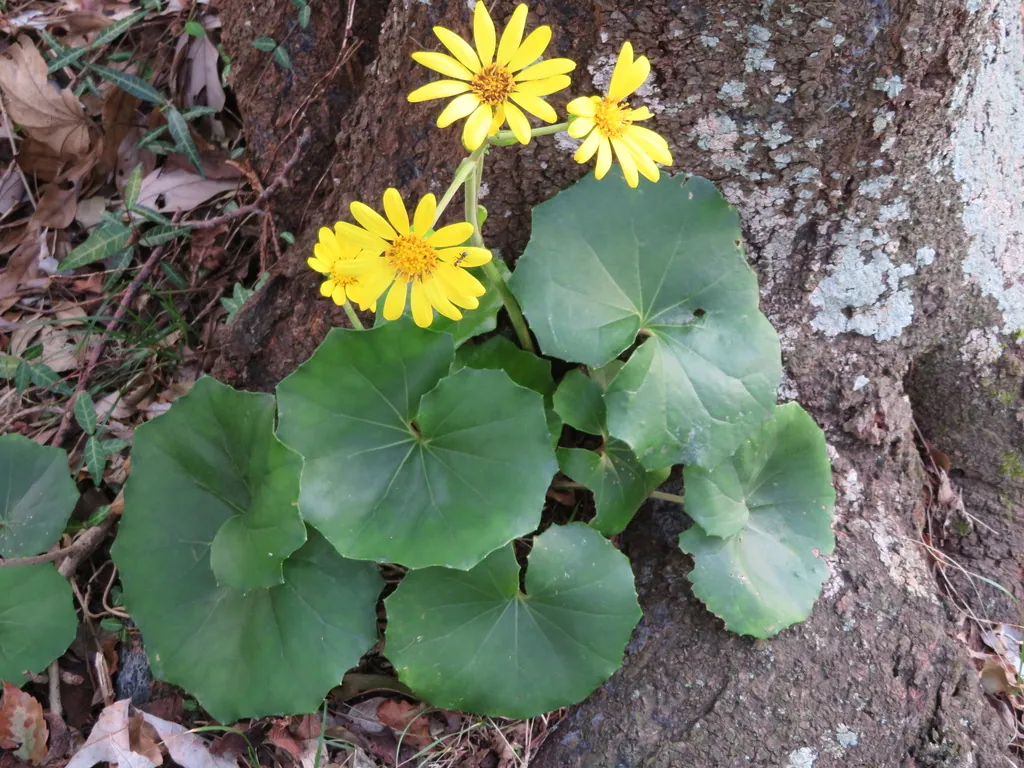

Photo credits and licenses
Real photographs from naturalists and photographers worldwide, each used under its own license. Credit: Photo by Marco Mussita / iNaturalist (CC BY). How photos are sourced →

Ligularia
Ligularia
Ligularia blooms from July through August.
Months here are Northern Hemisphere months; in the Southern Hemisphere, shift them by six months.
Growing Ligularia
Plant it in part shade. It prefers high water. It is hardy in USDA zones 4–8. Expect it to reach about 4 ft tall and 2.5 ft wide at maturity, in roughly 2 years (not yet checked).
What was checked
Mature height and spread, hardiness zones, sun and the trait tags were checked against named botanical sources for this plant. The bloom months and water need on this page were not, and each fact above says which. The planting, spacing and size sections are derived from these checked facts by a fixed rule, not checked separately, and the plant type is the library's own classification.
When to plant Ligularia
Plant Ligularia in early spring as soon as the soil is workable, or in early fall at least six weeks before your first frost, so roots establish in cool weather. In zone 6, the middle of its hardy zones 4 to 8, spring means March to May and fall means August or September. Once settled, it blooms from July to August.
Month-by-month timing for your zone is on the planting calendar; if you garden near zone 6, the middle of this plant's hardy range, start with zone 6 in March. Derived from the plant's category, zones and bloom months plus typical zone frost dates, not checked separately.
How big does Ligularia get?
 4 fttall5 ft 7 inan adult2.5 ftwide
See Ligularia in a garden plan: the planner shows it in 3D beside everything else you add, growing toward this size over the years.
How far apart to plant Ligularia
Derived from the mature spread above by a fixed rule, not checked separately: spacing is the spread, center to center.
Space Ligularia about 2.5 ft apart, center to center, so each plant has room to reach its full width.
Add Ligularia to a garden plan and the planner draws it at its full width, so you see the spacing before you buy.
Where these facts come from
Ligularia's height, spread, hardiness zones, sun and trait tags were checked against 19 published sources on July 31, 2026. Each one is linked below with every fact it carried, which can include a fact this page still marks as not yet checked, because a source carrying a value is not the same as the value being held to the standard. Facts not in that list, and the planting, spacing and size sections, are not covered by these sources.
- Perennials.com (Heritage Perennials)Heritage Perennials (perennials.com) - Ligularia 'The Rocket'height, spread, hardiness zones, sun, years to mature size and trait tags
- Perennials.com (Heritage Perennials)Heritage Perennials (perennials.com) - Ligularia 'Bottle Rocket'height, spread, hardiness zones, sun, years to mature size and trait tags
- Perennials.com (Heritage Perennials)Heritage Perennials (perennials.com) - Ligularia wilsonianaheight, spread, hardiness zones, sun, years to mature size and trait tags
- Perennials.com (Heritage Perennials)Heritage Perennials (perennials.com) - Ligularia przewalskii 'Dragon W...height, spread, hardiness zones, sun, years to mature size and trait tags
- Perennials.com (Heritage Perennials)Heritage Perennials (perennials.com) - Ligularia dentata 'Othello'height, spread, hardiness zones, sun, years to mature size and trait tags
- Missouri Botanical GardenPlant Finder - Ligularia 'Bottle Rocket'height, spread, hardiness zones, sun and trait tags
- Missouri Botanical GardenPlant Finder - Ligularia 'Britt Marie Crawford'height, spread, hardiness zones, sun and trait tags
- Missouri Botanical GardenPlant Finder - Ligularia dentataheight, spread, hardiness zones, sun and trait tags
- Missouri Botanical GardenPlant Finder - Ligularia dentata 'Desdemona'height, spread, hardiness zones, sun and trait tags
- Missouri Botanical GardenPlant Finder - Ligularia dentata 'Othello'height, spread, hardiness zones, sun and trait tags
- Missouri Botanical GardenPlant Finder - Ligularia 'Osiris Fantaisie'height, spread, hardiness zones, sun and trait tags
- Missouri Botanical GardenPlant Finder - Ligularia przewalskiiheight, spread, hardiness zones, sun and trait tags
- Missouri Botanical GardenPlant Finder - Ligularia sibiricaheight, spread, hardiness zones, sun and trait tags
- Missouri Botanical GardenPlant Finder - Ligularia 'The Rocket'height, spread, hardiness zones, sun and trait tags
- NC State ExtensionPlant Toolbox - Ligularia stenocephalaheight, hardiness zones, sun, years to mature size and trait tags
- Proven Winners'Bottle Rocket' Ligularia hybridheight, spread, hardiness zones, sun and trait tags
- Proven WinnersLigularia dentataheight, spread, hardiness zones, sun and trait tags
- terranovanurseries.comTerra Nova Nurseries - Ligularia 'Dragon Wings'height, spread, hardiness zones, sun and trait tags
- terranovanurseries.comTerra Nova Nurseries - Ligularia 'Britt-Marie Crawford'height, spread, hardiness zones and sun
How the checking works, and what each standard covers, is on the verified plants page.
Good to know about Ligularia
Curated from university extensions, botanic gardens and other primary sources, with the source named on every note. A note reports what its source says; where that differs from a fact above, the fact above is this entry's stored value, and its mark says whether it has been checked.
Safety
Contains hepatotoxic pyrrolizidine alkaloids, so treat it as not for eating. ASPCA does not list it, so cat, dog and horse risk is unclassified rather than cleared. per PubMed Central and ASPCA
Worth knowing
Its big thin leaves flop dramatically in hot midday sun, even in moist soil, then perk up again by evening. A limp midday look is usually heat, not damage. per NC State and Missouri Botanical
Heat sets the real limit
NC State lists zones 4a to 8b, Minnesota Extension stretches to 9. All agree it struggles in hot summers whatever the number. Heat, not cold, is the real limit. per NC State and Minnesota
Bloom time depends on species
Rounded-leaf dentata types flower June to July; the tall narrow-spike types bloom later, from mid summer into early fall. Buy the species that matches the timing you want. per Missouri Botanical and NC State
Slugs are the main pest
The cool, moist shade it loves is exactly what slugs and snails want. They rasp irregular smooth-edged holes in the big leaves, so plan control from the start. per UC Statewide IPM and NC State
Deer usually pass it by
The University of Minnesota says the thick, tough, serrated leaves put deer off. As with any deer-resistant plant, hungry deer may still browse it when food is scarce. per Minnesota
Dark purple-leaf cultivars
Several dentata cultivars, including 'Desdemona' and 'Othello', carry dark bronze-purple leaves with purple undersides and stems: a bold reason to grow it beyond the yellow flowers. per Missouri Botanical and Penn State
What pairs well with Ligularia
Good companions share its growing conditions and add something it lacks: an earlier or later bloom, a lower carpet in front, or structure through winter.
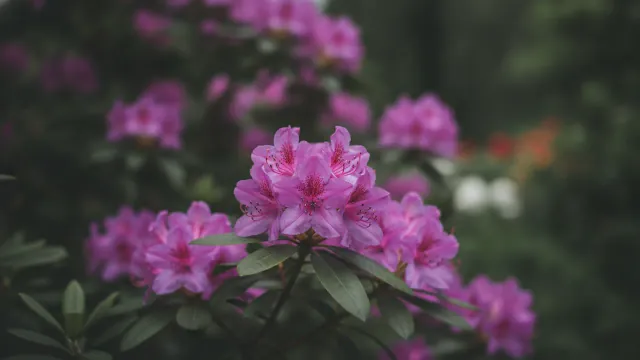
Rhododendron
Shares part shade and moderate to high water; blooms in late spring, before this one opens; both are strong pollinator plants, and they feed in different months; evergreen, so the bed keeps its shape through winter.
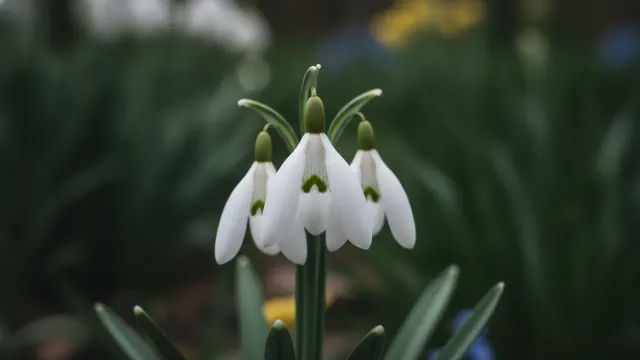
Snowdrop
Shares part shade and moderate to high water; blooms in late winter, before this one opens; low at 5 in, to carpet the ground beneath; both are strong pollinator plants, and they feed in different months.
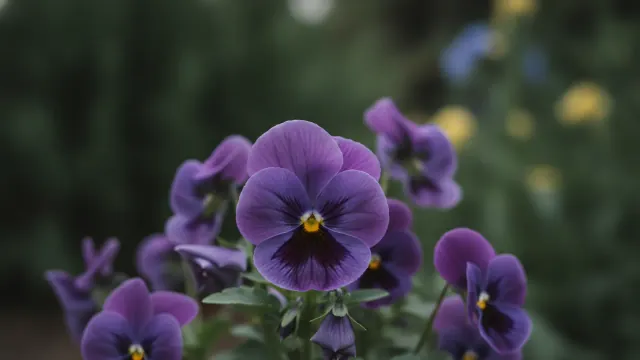
Pansy
Takes part sun to part shade and moderate to high water; blooms in early spring, before this one opens; lower at 8 in, for the front of the border; both offer pollinator forage, in different months.
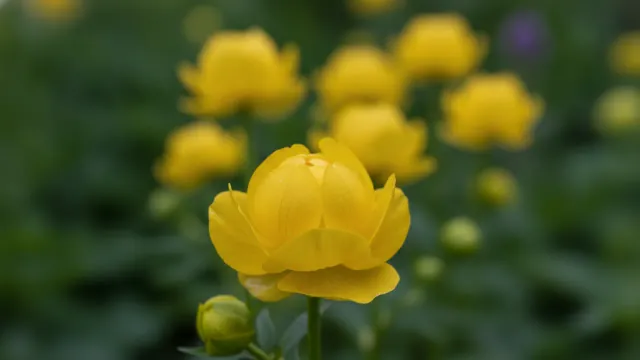
Globeflower
Takes part sun to part shade and high water; blooms in late spring, before this one opens; both offer pollinator forage, in different months; lower at 2 ft, for the front of the border.
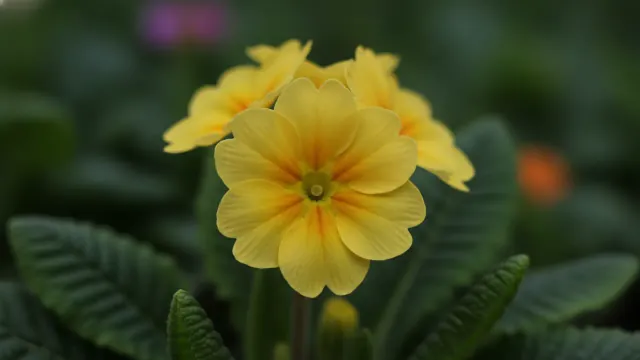
Primrose
Shares part shade and moderate to high water; blooms in early spring, before this one opens; lower at 8 in, for the front of the border; both offer pollinator forage, in different months.
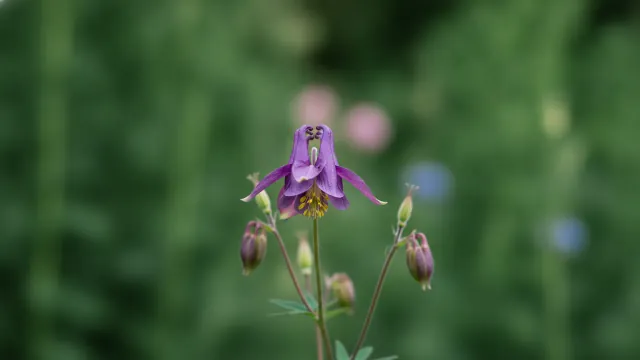
Columbine
Shares part shade and moderate to high water; blooms in mid spring, before this one opens; both are strong pollinator plants, and they feed in different months; lower at 2 ft, for the front of the border.

Windflower
Takes part sun to part shade and moderate to high water; blooms in early spring, before this one opens; low at 6 in, to carpet the ground beneath; both are strong pollinator plants, and they feed in different months.
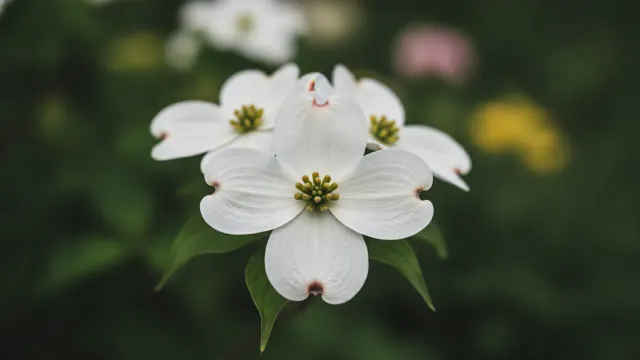
Flowering Dogwood
Shares part shade and moderate to high water; blooms in mid spring, before this one opens; both are strong pollinator plants, and they feed in different months; taller at 23 ft, for the layer behind it.
Featured in these guides
Explore similar plants
You might also like
Design a garden with this
Drop this plant onto a 3D plan, see how it fills in, and watch your whole garden bloom across the year.