
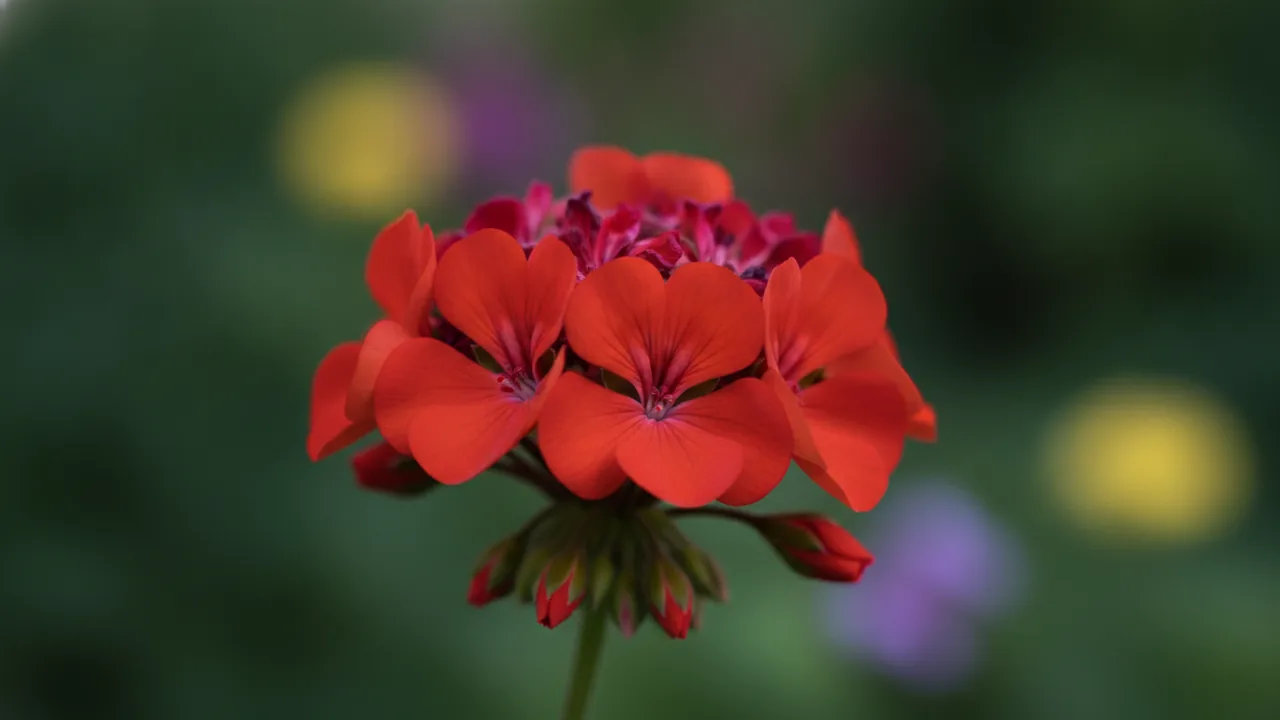
 Illustration

Geranium (Annual)
Pelargonium
Geranium (Annual) blooms from May through October.
Months here are Northern Hemisphere months; in the Southern Hemisphere, shift them by six months.
Growing Geranium (Annual)
Plant it in full sun. It prefers moderate water. Expect it to reach about 16 in tall and 16 in wide at maturity, in roughly 1 year (not yet checked).
What was checked
Mature height and spread, hardiness zones, sun and the trait tags were checked against named botanical sources for this plant. The bloom months and water need on this page were not, and each fact above says which. The planting, spacing and size sections are derived from these checked facts by a fixed rule, not checked separately, and the plant type is the library's own classification.
When to plant Geranium (Annual)
Wait until all danger of frost has passed, then plant out Geranium (Annual) into warm soil; in most zones that means late spring. Planted then, it flowers from May to October.
Month-by-month timing for your zone is on the planting calendar. Derived from the plant's category, zones and bloom months plus typical zone frost dates, not checked separately.
How big does Geranium (Annual) get?
 16 intall5 ft 7 inan adult16 inwide
See Geranium (Annual) in a garden plan: the planner shows it in 3D beside everything else you add, growing toward this size over the years.
How far apart to plant Geranium (Annual)
Derived from the mature spread above by a fixed rule, not checked separately: spacing is the spread, center to center.
Space Geranium (Annual) about 16 in apart, center to center, so each plant has room to reach its full width.
Add Geranium (Annual) to a garden plan and the planner draws it at its full width, so you see the spacing before you buy.
Where these facts come from
Geranium (Annual)'s height, spread, hardiness zones, sun and trait tags were checked against 8 published sources on July 30, 2026. Each one is linked below with every fact it carried, which can include a fact this page still marks as not yet checked, because a source carrying a value is not the same as the value being held to the standard. Facts not in that list, and the planting, spacing and size sections, are not covered by these sources.
- Proven WinnersAmericana Cherry Rose zonal geranium, Pelargonium zonaleheight, spread, hardiness zones, sun and trait tags
- Missouri Botanical GardenPelargonium x hortorum, zonal geraniumheight, spread, hardiness zones and sun
- NC State ExtensionPelargonium, the genus entryheight, spread, sun and trait tags
- RHSPelargonium x hortorum, zonal geraniumheight, spread, sun and trait tags
- NC State ExtensionPelargonium x hybridum, zonal pelargoniumheight, sun and trait tags
- University of Illinois ExtensionGeranium, Pelargonium x hortorumheight and sun
- University of Minnesota Extensiongrowing geraniums as annual flowers in Minnesotasun and trait tags
- Clemson Home and Garden Information CenterAnnual Geranium, Pelargoniumsun
How the checking works, and what each standard covers, is on the verified plants page.
10 more colors in the Geraniums group
Same genus, similar care - pick the one you are growing.
- Bicolor Geranium
- Burgundy Geranium
- Coral Geranium
- Ivy Geranium
- Lavender Geranium
- Magenta Geranium
- Pink Geranium
- Purple Geranium
- Salmon Geranium
- White Geranium
Compare every variety in the Geraniums group
Every figure is the variety's own page fact. Tap a name to open it.
| Variety | Color | Blooms | Hardiness | Sun | Size (H × W) |
|---|---|---|---|---|---|
| Bicolor Geranium | Pink | May–Oct | Annual (replant yearly) | Full sun | 16 in × 16 in |
| Burgundy Geranium | Red | May–Oct | Annual (replant yearly) | Full sun | 16 in × 16 in |
| Coral Geranium | Orange | May–Oct | Annual (replant yearly) | Full sun | 16 in × 16 in |
| Geraniumthis page | Red | May–Oct | Annual (replant yearly) | Full sun | 16 in × 16 in |
| Ivy Geranium | Red | May–Oct | Annual (replant yearly) | Full sun | 12 in × 20 in |
| Lavender Geranium | Purple | May–Oct | Annual (replant yearly) | Full sun | 16 in × 16 in |
| Magenta Geranium | Pink | May–Oct | Annual (replant yearly) | Full sun | 16 in × 16 in |
| Pink Geranium | Pink | May–Oct | Annual (replant yearly) | Full sun | 16 in × 16 in |
| Purple Geranium | Purple | May–Oct | Annual (replant yearly) | Full sun | 16 in × 16 in |
| Salmon Geranium | Pink | May–Oct | Annual (replant yearly) | Full sun | 16 in × 16 in |
| White Geranium | White | May–Oct | Annual (replant yearly) | Full sun | 16 in × 16 in |
Good to know about Geranium (Annual)
Curated from university extensions, botanic gardens and other primary sources, with the source named on every note. A note reports what its source says; where that differs from a fact above, the fact above is this entry's stored value, and its mark says whether it has been checked.
Safety
Toxic to dogs, cats and horses via geraniol and linalool, mostly causing vomiting, loss of appetite and dermatitis; NC State rates it low-severity, with cats most sensitive. per ASPCA and NC State
Worth knowing
The annual 'geranium' is really Pelargonium, a different genus from the hardy perennial cranesbill (true Geranium). Only the Pelargonium is the pet-toxic one. per NC State
How much sun it needs
Full sun everywhere, but the minimum varies by climate: NC State wants at least 6 hours; Clemson allows 4 hours, with afternoon shade helping in the hot South. per NC State and Clemson
How drought-tolerant it is
Established plants in the ground take brief dry spells, but containers and heavily flowering plants want even moisture and should never wilt. Never waterlog: wet feet rot the roots. per University of Minnesota and Clemson
Keep a favorite over winter
Though grown as an annual, you can overwinter a cultivar: as a cool sunny houseplant, from 3 to 4 in stem cuttings, or stored bare-root and dormant. per Wisconsin
Corky leaf blisters (edema)
Overwatering plus low light causes edema: tiny water-soaked blisters that turn brown and corky on leaf undersides. Water in the morning, add light, and never waterlog. per Cornell
Bacterial blight has no cure
Bacterial blight (Xanthomonas), specific to geraniums, causes V-shaped leaf spots, wilting and stem rot, spreads fast, and has no chemical cure: destroy infected plants and sanitize your tools. per Penn State
A modest pollinator draw
NC State notes the fragrant flowers and leaves attract butterflies and pollinators, but many double-flowered zonal types offer little nectar or pollen, so treat this as a light benefit. per NC State
What pairs well with Geranium (Annual)
Good companions share its growing conditions and add something it lacks: an earlier or later bloom, a lower carpet in front, or structure through winter.
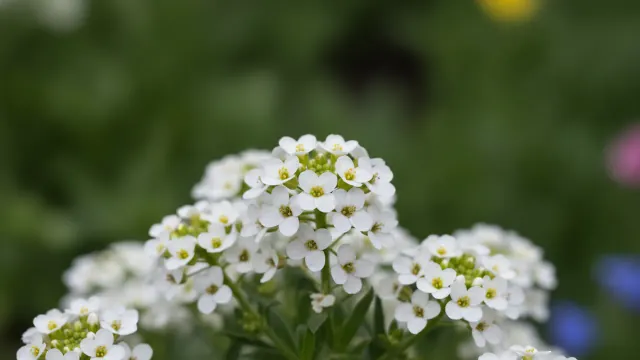
Candytuft
Shares full sun and low to moderate water; opens in mid spring and overlaps into this one's season; evergreen, so the bed keeps its shape through winter; lower at 10 in, for the front of the border.
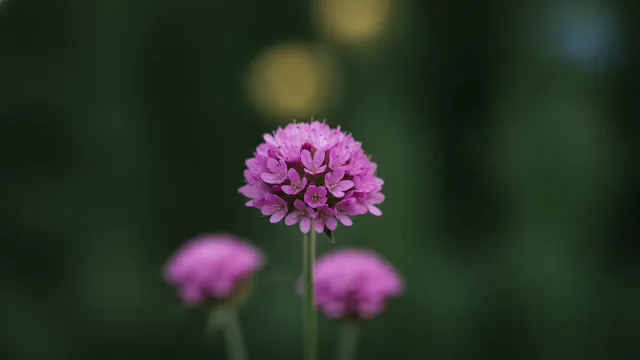
Sea Thrift
Shares full sun and low to moderate water; opens in mid spring and overlaps into this one's season; evergreen, so the bed keeps its shape through winter; lower at 8 in, for the front of the border.
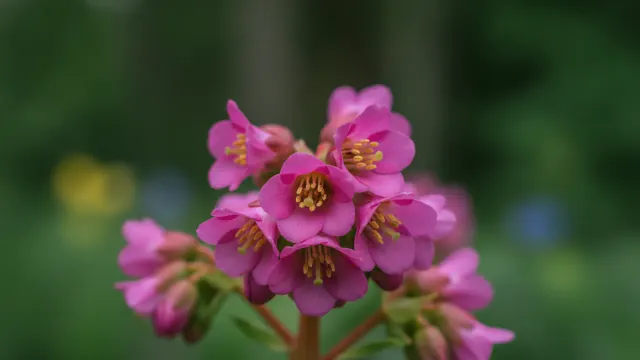
Bergenia
Takes full sun to part sun and moderate water; opens in mid spring and overlaps into this one's season; evergreen, so the bed keeps its shape through winter; pink sits close to red on the wheel.
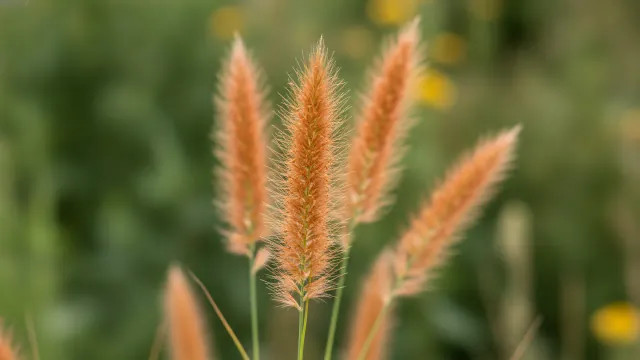
Little Bluestem
Shares full sun and low to moderate water; its seed heads stand through winter, for structure and the birds; taller at 3.5 ft, for the layer behind it; blue against red, for contrast.
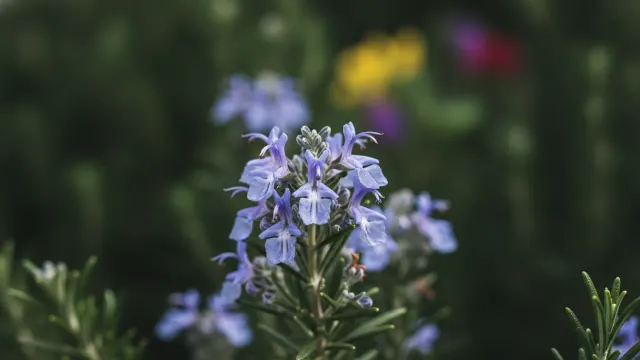
Rosemary
Shares full sun and low to moderate water; opens in early spring and overlaps into this one's season; evergreen, so the bed keeps its shape through winter; taller at 3.5 ft, for the layer behind it.
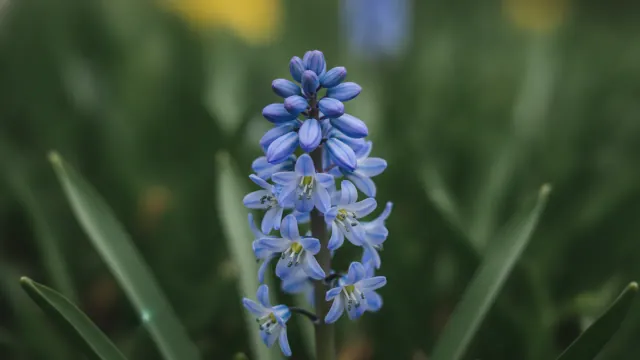
Siberian Squill
Shares full sun and moderate water; blooms in early spring, before this one opens; lower at 6 in, for the front of the border; blue against red, for contrast.
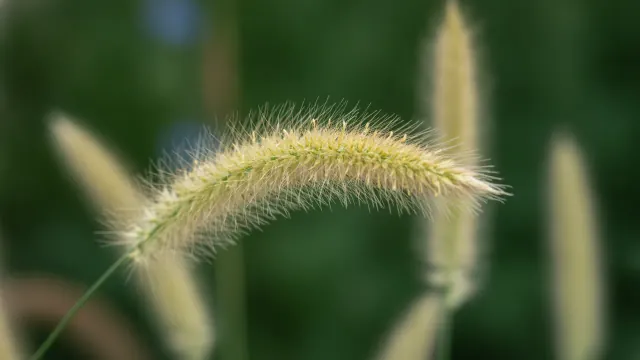
Feather Reed Grass
Shares full sun and moderate water; its seed heads stand through winter, for structure and the birds; taller at 5 ft, for the layer behind it.
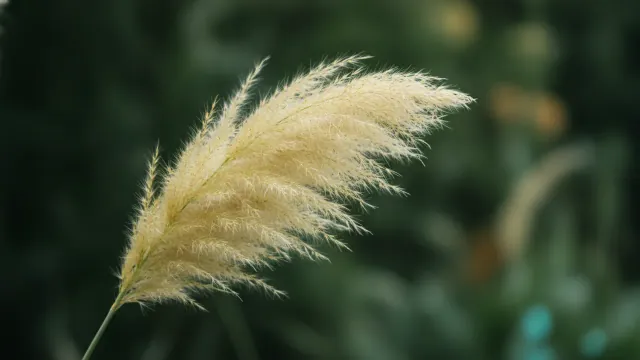
Pampas Grass
Shares full sun and low to moderate water; its seed heads stand through winter, for structure and the birds; stands well above at 8 ft, a canopy to plant beneath; its white flowers settle the red.
Featured in these guides
Explore similar plants
You might also like
Design a garden with this
Drop this plant onto a 3D plan, see how it fills in, and watch your whole garden bloom across the year.