
 Illustration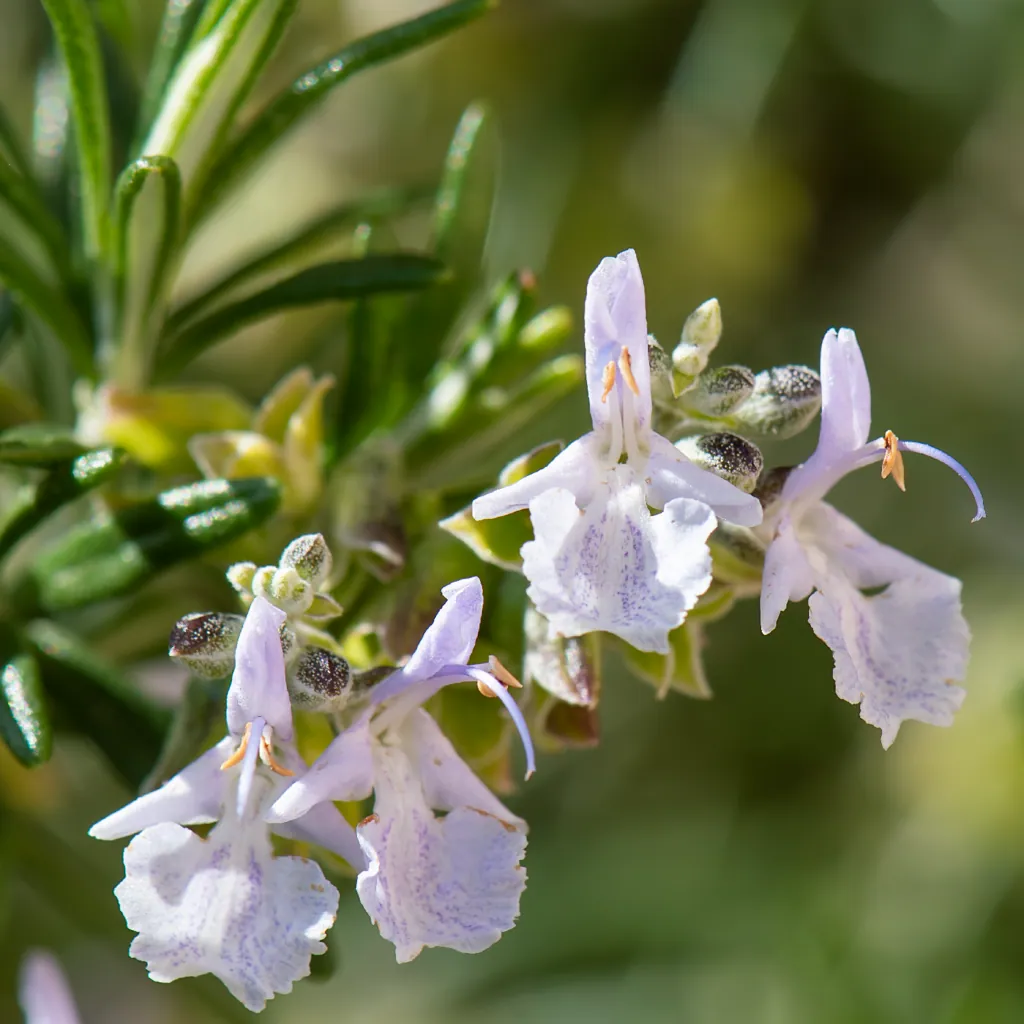
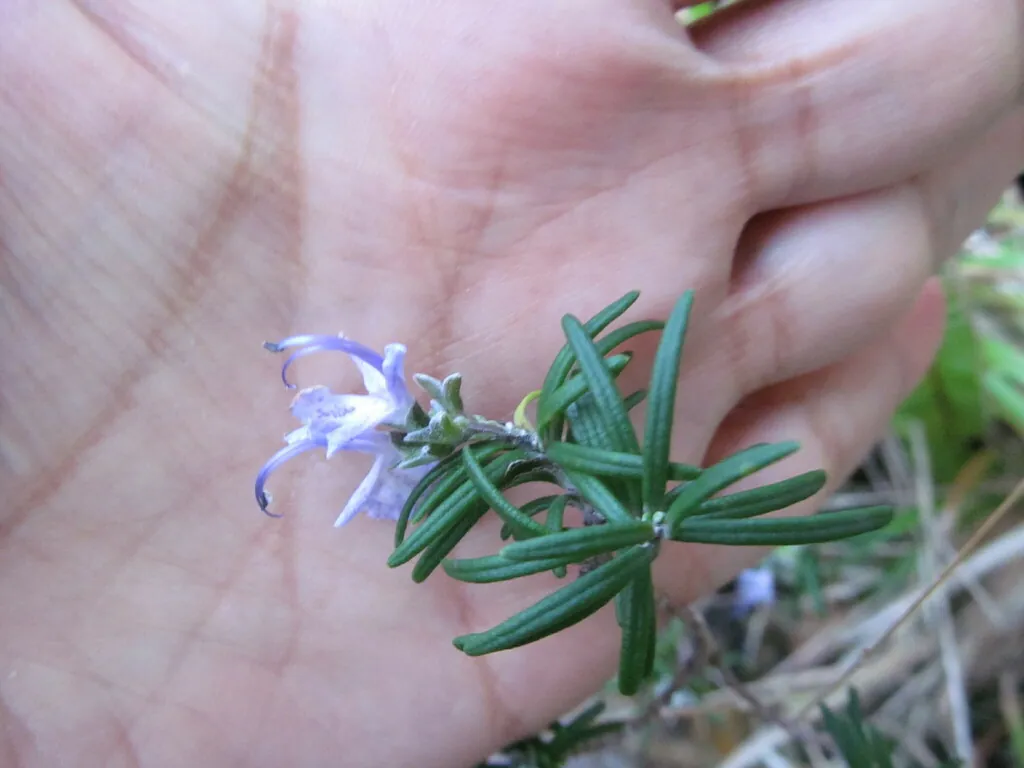
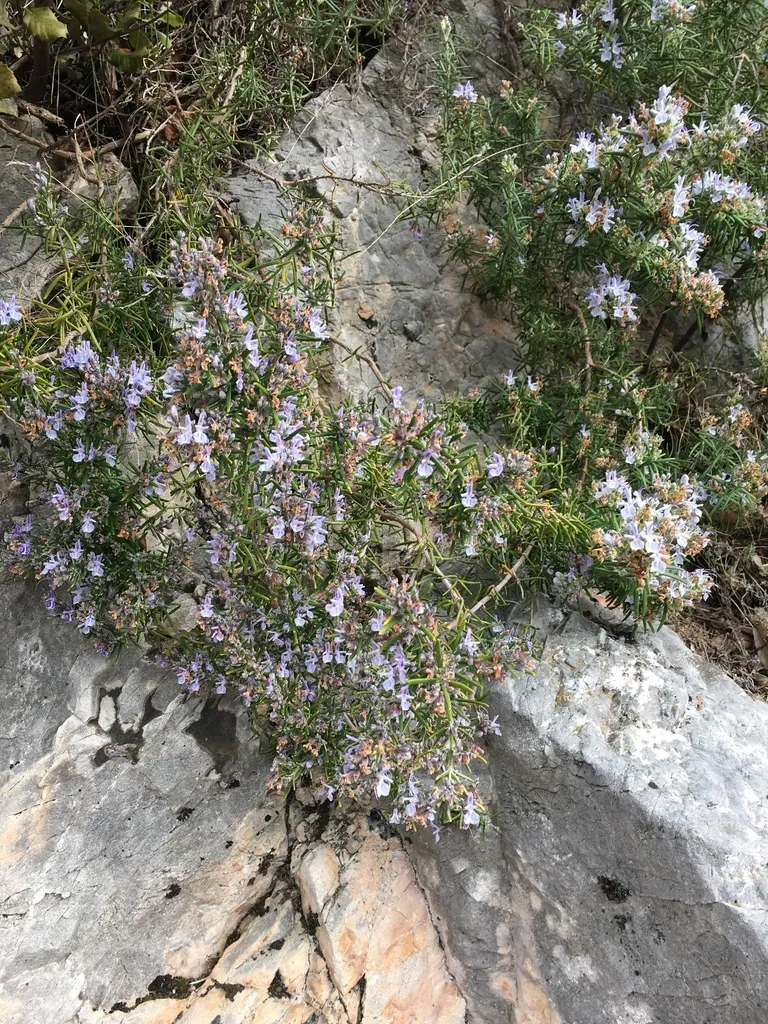

Photo credits and licenses
Real photographs from naturalists and photographers worldwide, each used under its own license. Credit: Photo by Anna C / iNaturalist (CC0), Photo by zebedeugalinha / iNaturalist (CC BY) and Photo by Ryan McMinds / iNaturalist (CC BY). How photos are sourced →

Rosemary
Salvia rosmarinus
Rosemary blooms from March through May.
Months here are Northern Hemisphere months; in the Southern Hemisphere, shift them by six months.
Growing Rosemary
Plant it in full sun. It prefers low water. It is hardy in USDA zones 8–10. Expect it to reach about 3.5 ft tall and 2.5 ft wide at maturity, in roughly 2 years (not yet checked).
What was checked
Mature height and spread, hardiness zones, sun and the trait tags were checked against named botanical sources for this plant. The bloom months and water need on this page were not, and each fact above says which. The planting, spacing and size sections are derived from these checked facts by a fixed rule, not checked separately, and the plant type is the library's own classification.
When to plant Rosemary
Wait until all danger of frost has passed, then plant out Rosemary into warm soil; in most zones that means late spring. It flowers from March to May.
Month-by-month timing for your zone is on the planting calendar; if you garden near zone 9, the middle of this plant's hardy range, start with zone 9 in February. Derived from the plant's category, zones and bloom months plus typical zone frost dates, not checked separately.
How big does Rosemary get?
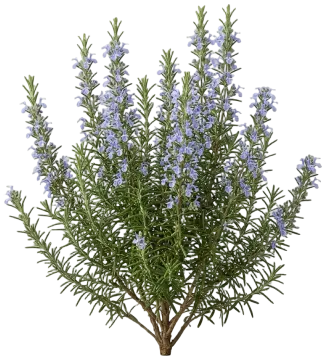 3.5 fttall5 ft 7 inan adult2.5 ftwide
See Rosemary in a garden plan: the planner shows it in 3D beside everything else you add, growing toward this size over the years.
How far apart to plant Rosemary
Derived from the mature spread above by a fixed rule, not checked separately: spacing is the spread, center to center.
Space Rosemary about 2.5 ft apart, center to center, so each plant has room to reach its full width.
Add Rosemary to a garden plan and the planner draws it at its full width, so you see the spacing before you buy.
Where these facts come from
Rosemary's height, spread, hardiness zones, sun and trait tags were checked against 5 published sources on July 29, 2026. Each one is linked below with every fact it carried, which can include a fact this page still marks as not yet checked, because a source carrying a value is not the same as the value being held to the standard. Facts not in that list, and the planting, spacing and size sections, are not covered by these sources.
- Missouri Botanical Gardenheight, spread, hardiness zones, sun and trait tags
- NC State ExtensionPlant Toolboxheight, spread, hardiness zones, sun and trait tags
- Oregon State UniversityLandscape Plantsheight, hardiness zones, sun and trait tags
- University of Florida IFASUF/IFAS Gardening Solutionsheight, spread, sun and trait tags
- University of Wisconsin HorticultureUniversity of Wisconsin-Madison Division of Extension Horticultureheight, hardiness zones and sun
How the checking works, and what each standard covers, is on the verified plants page.
Good to know about Rosemary
Curated from university extensions, botanic gardens and other primary sources, with the source named on every note. A note reports what its source says; where that differs from a fact above, the fact above is this entry's stored value, and its mark says whether it has been checked.
Worth knowing
The same aromatic oils that flavor rosemary are what deter deer and drive its antioxidant power: flavor, deer resistance and the plant's own defense are one chemistry. per NC State and Penn State
Cold-hardiness depends on cultivar
The plain species is reliably hardy only to about zone 8. Named cold-hardy cultivars like 'Arp' or 'Hill Hardy' reach zone 7, and 6b with winter protection. per Wisconsin and Penn State
Overwatering is the top killer
Rosemary rots in wet, heavy clay. Give it lean, sharply drained, sandy or gravelly soil, let it dry between waterings, and when unsure, water less. per NC State
Never cut the bare wood
Shape it lightly, best after flowering, but keep your cuts in the leafy zone. Rosemary does not reliably resprout from the leafless old woody stems. per NC State
Overwinter it indoors up north
Where it is not hardy, grow it in a pot. Bring it in before frost to a cool, very bright, humid spot, and do not overwater. per Penn State
Safe to eat and grow
The leaves are edible for cooking and teas, and ASPCA lists rosemary as non-toxic to dogs, cats and horses. per ASPCA and NC State
What pairs well with Rosemary
Good companions share its growing conditions and add something it lacks: an earlier or later bloom, a lower carpet in front, or structure through winter.
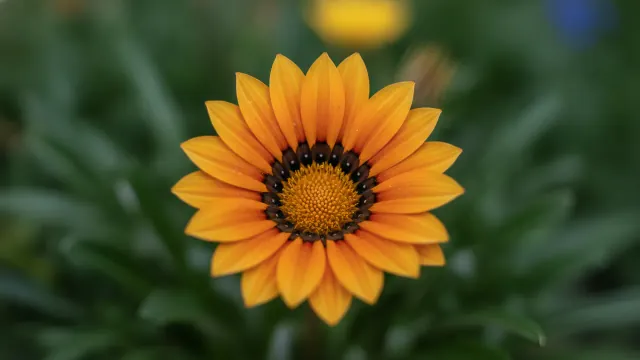
Gazania
Shares full sun and low water; blooms in early summer as this one finishes; lower at 10 in, for the front of the border; both offer pollinator forage, in different months.
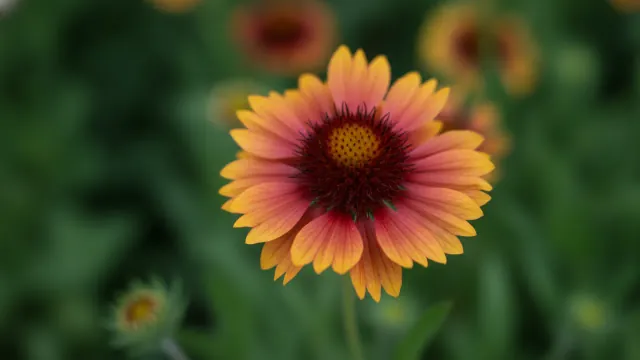
Blanket Flower
Shares full sun and low water; blooms in early summer as this one finishes; both are strong pollinator plants, and they feed in different months; lower at 1.5 ft, for the front of the border.
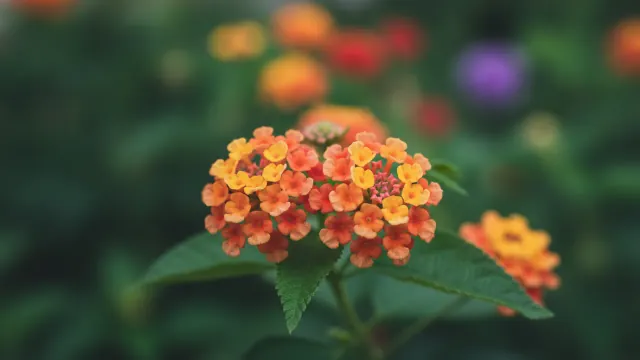
Lantana
Shares full sun and low water; blooms in early summer as this one finishes; both are strong pollinator plants, and they feed in different months; lower at 1.5 ft, for the front of the border.
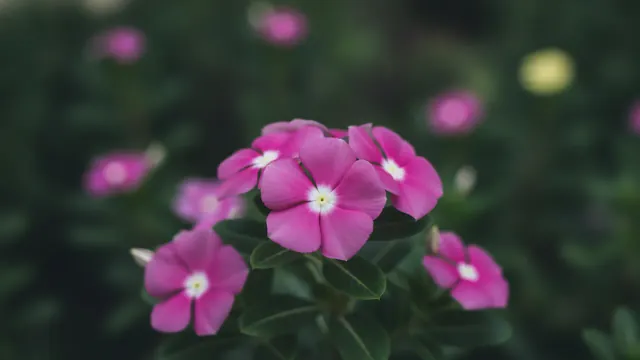
Vinca
Shares full sun and low water; blooms in early summer as this one finishes; both are strong pollinator plants, and they feed in different months; lower at 12 in, for the front of the border.
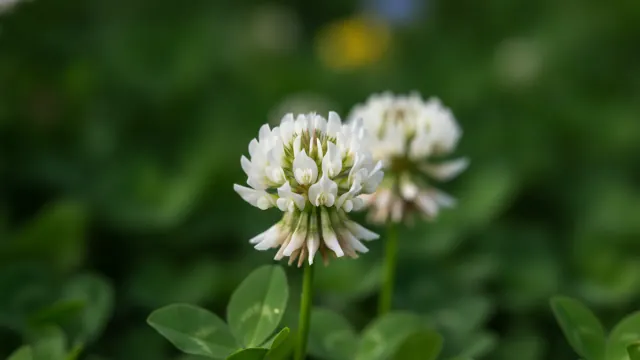
White Clover
Shares full sun and low to moderate water; overlaps, then carries the display into midsummer; low at 4 in, to carpet the ground beneath; both are strong pollinator plants.
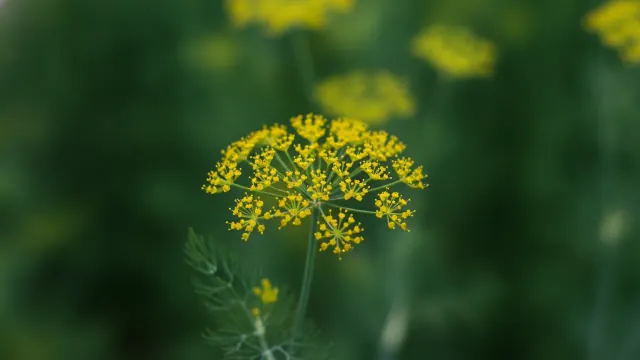
Dill
Shares full sun and low to moderate water; blooms in early summer as this one finishes; both are strong pollinator plants, and they feed in different months.
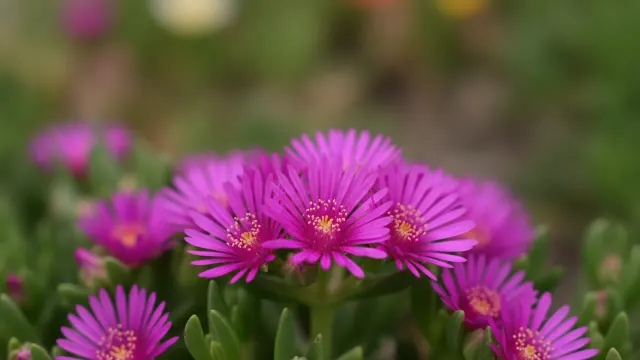
Ice Plant
Shares full sun and low water; blooms in early summer as this one finishes; low at 4 in, to carpet the ground beneath; both offer pollinator forage, in different months; they only overlap in zones 8 to 9.
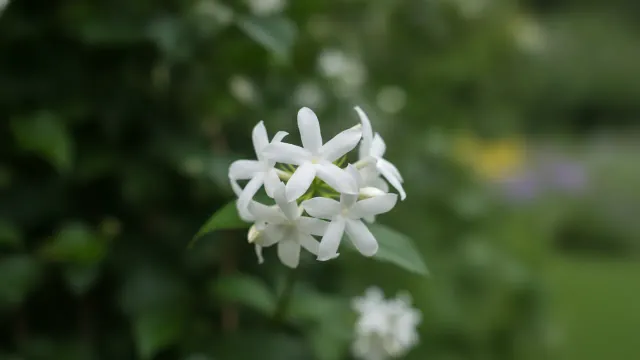
Jasmine
Shares full sun and low to moderate water; blooms in early summer as this one finishes; both are strong pollinator plants, and they feed in different months; its white flowers settle the blue.
Explore similar plants
You might also like
 Foliage
Design a garden with this
Drop this plant onto a 3D plan, see how it fills in, and watch your whole garden bloom across the year.