
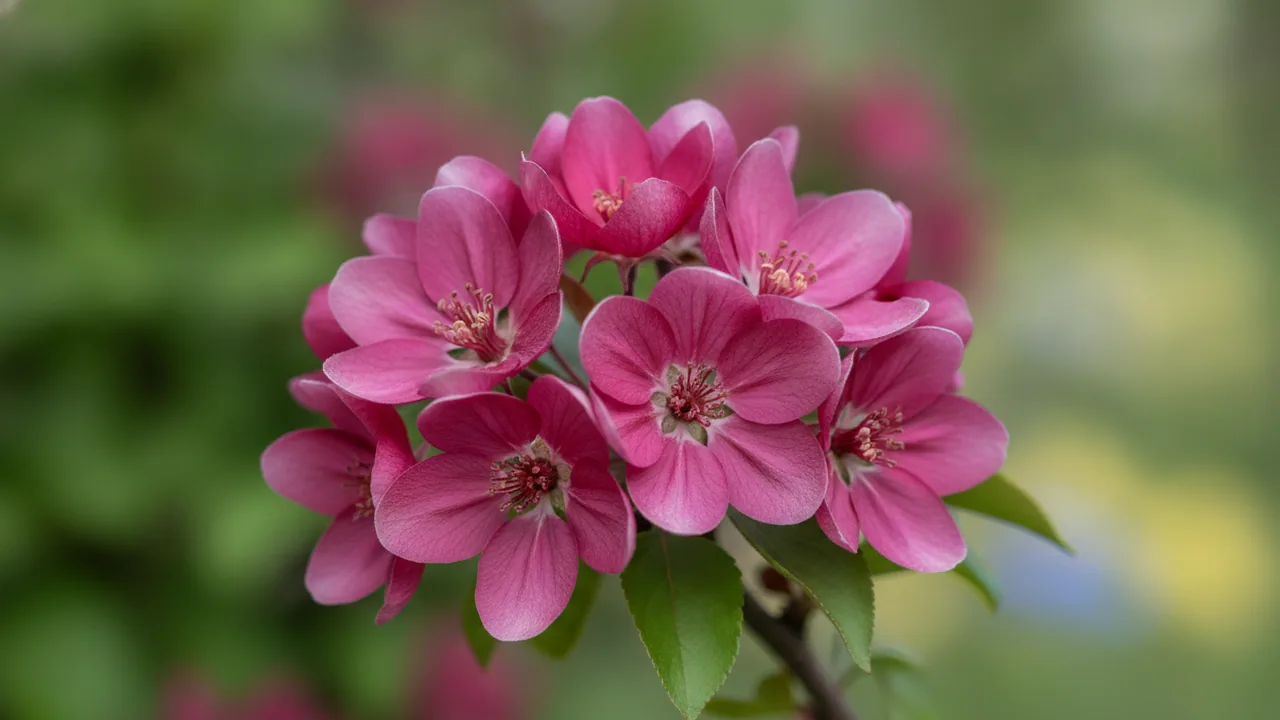
 Illustration

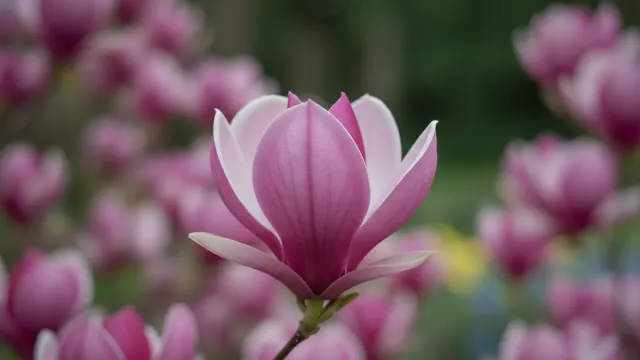
Flowering Crabapple
Malus
Also called sargent crabapple
Flowering Crabapple blooms from April through May.
Months here are Northern Hemisphere months; in the Southern Hemisphere, shift them by six months.
Growing Flowering Crabapple
Plant it in full sun. It prefers moderate water. It is hardy in USDA zones 4–8. Expect it to reach about 20 ft tall and 20 ft wide at maturity, in roughly 10 years (not yet checked).
What was checked
Mature height and spread, hardiness zones, sun and the trait tags were checked against named botanical sources for this plant. The bloom months and water need on this page were not, and each fact above says which. The planting, spacing and size sections are derived from these checked facts by a fixed rule, not checked separately, and the plant type is the library's own classification.
When to plant Flowering Crabapple
Plant Flowering Crabapple in early spring as soon as the soil is workable, or in early fall at least six weeks before your first frost, so roots establish in cool weather. In zone 6, the middle of its hardy zones 4 to 8, spring means March to May and fall means August or September. Once settled, it blooms from April to May.
Month-by-month timing for your zone is on the planting calendar; if you garden near zone 6, the middle of this plant's hardy range, start with zone 6 in March. Derived from the plant's category, zones and bloom months plus typical zone frost dates, not checked separately.
How big does Flowering Crabapple get?
 20 fttall5 ft 7 inan adult20 ftwide
See Flowering Crabapple in a garden plan: the planner shows it in 3D beside everything else you add, growing toward this size over the years.
How far apart to plant Flowering Crabapple
Derived from the mature spread above by a fixed rule, not checked separately: spacing is the spread, center to center.
Give Flowering Crabapple about 20 ft of clear ground in every direction, measured from its center. It is one plant with room around it, not a row, and a raised bed is too small for it.
Add Flowering Crabapple to a garden plan and the planner draws it at its full width, so you see the spacing before you buy.
Where these facts come from
Flowering Crabapple's height, spread, hardiness zones, sun and trait tags were checked against 16 published sources on July 29, 2026. Each one is linked below with every fact it carried, which can include a fact this page still marks as not yet checked, because a source carrying a value is not the same as the value being held to the standard. Facts not in that list, and the planting, spacing and size sections, are not covered by these sources.
- Missouri Botanical GardenMalus '5-28'height, spread, hardiness zones, sun and trait tags
- Missouri Botanical GardenMalus floribundaheight, spread, hardiness zones, sun and trait tags
- Missouri Botanical GardenMalus sargentiiheight, spread, hardiness zones, sun and trait tags
- Missouri Botanical GardenMalus baccataheight, spread, hardiness zones, sun and trait tags
- NC State ExtensionPlant Toolboxheight, spread, hardiness zones, sun and trait tags
- NC State ExtensionMalus toringoheight, spread, hardiness zones, sun and trait tags
- NC State ExtensionMalus coronariaheight, spread, hardiness zones, sun and trait tags
- The Morton ArboretumSargent's crabappleheight, spread, hardiness zones, sun and trait tags
- Clemson Home and Garden Information CenterClemson Cooperative Extension HGIC 1007height, spread, sun and trait tags
- NC State ExtensionMalus angustifoliaheight, hardiness zones, sun and trait tags
- The Morton ArboretumCrabapple cultivarsheight, hardiness zones, sun and trait tags
- The Morton ArboretumJapanese flowering crabappleheight, hardiness zones, sun and trait tags
- Chicago Botanic GardenPlant Profilesheight, sun and trait tags
- Lady Bird Johnson Wildflower CenterMalus ioensisheight, sun and trait tags
- Lady Bird Johnson Wildflower CenterMalus angustifoliaheight, sun and trait tags
- University of Wisconsin HorticultureUniversity of Wisconsin-Madison Extension Horticulturetrait tags
How the checking works, and what each standard covers, is on the verified plants page.
10 more colors in the Crabapple group
Same genus, similar care - pick the one you are growing.
- Adirondack
- Golden Raindrops
- Indian Magic
- Prairifire
- Profusion
- Purple Prince
- Red Jewel
- Royal Raindrops
- Snowdrift
- Sugar Tyme
Compare every variety in the Crabapple group
Every figure is the variety's own page fact. Tap a name to open it.
| Variety | Color | Blooms | Hardiness | Sun | Size (H × W) |
|---|---|---|---|---|---|
| Adirondack | White | Apr–May | Zones 4–8 | Full sun | 16 ft × 10 ft |
| Floweringthis page | Pink | Apr–May | Zones 4–8 | Full sun | 20 ft × 20 ft |
| Golden Raindrops | White | Apr–May | Zones 4–8 | Full sun | 20 ft × 16 ft |
| Indian Magic | Pink | Apr–May | Zones 4–8 | Full sun | 16 ft × 16 ft |
| Prairifire | Red | Apr–May | Zones 4–8 | Full sun | 20 ft × 20 ft |
| Profusion | Pink | Apr–May | Zones 4–8 | Full sun | 20 ft × 20 ft |
| Purple Prince | Pink | Apr–May | Zones 4–8 | Full sun | 16 ft × 16 ft |
| Red Jewel | White | Apr–May | Zones 4–8 | Full sun | 13 ft × 13 ft |
| Royal Raindrops | Pink | Apr–May | Zones 4–8 | Full sun | 20 ft × 16 ft |
| Snowdrift | White | Apr–May | Zones 4–8 | Full sun | 16 ft × 16 ft |
| Sugar Tyme | White | Apr–May | Zones 4–8 | Full sun | 16 ft × 13 ft |
Good to know about Flowering Crabapple
Curated from university extensions, botanic gardens and other primary sources, with the source named on every note. A note reports what its source says; where that differs from a fact above, the fact above is this entry's stored value, and its mark says whether it has been checked.
Safety
Toxic to dogs, cats and horses: the seeds, stems and wilting leaves hold cyanogenic glycosides. The ripe flesh is not the hazard; the seeds and wilting foliage are. per ASPCA
Worth knowing
One choice controls four diseases: a broadly resistant cultivar handles apple scab, cedar-apple rust, fire blight and powdery mildew together, which is why every source ranks it above spraying. per Morton and Wisconsin
Zone range varies by source
Sources give USDA 4a to 8b, 3 to 7, or 4 to 7; all overlap at 4 to 7. Match the cultivar to your zone, not the genus range. per NC State and Minnesota
Apple scab
Apple scab is the most common and serious disease: velvety olive-green to black leaf spots cause yellowing and early leaf drop, often by July on susceptible trees. per Clemson and Wisconsin
Fire blight
Fire blight, a bacterial disease, can kill a susceptible tree: shoots blacken as if scorched and curl into a shepherd's-crook. There is no cure once it reaches the trunk. per Minnesota and Morton
Cedar-apple rust
Cedar-apple rust needs two hosts: it cannot complete its cycle without a juniper or eastern red cedar nearby. Site the tree away from them, or resistance matters more. per Minnesota and Clemson
Single-flowered forms feed bees
For bees or bird fruit, choose a single-flowered cultivar. Double-flowered ornamentals give bees little accessible pollen and set less fruit, so they feed neither pollinators nor birds well. per Wisconsin and Minnesota
What pairs well with Flowering Crabapple
Good companions share its growing conditions and add something it lacks: an earlier or later bloom, a lower carpet in front, or structure through winter.
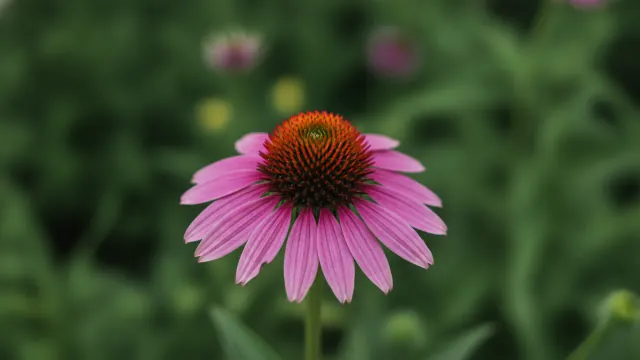
Purple Coneflower
Shares full sun and low to moderate water; blooms in early summer as this one finishes; both are strong pollinator plants, and they feed in different months; its seed heads stand through winter, for structure and the birds.
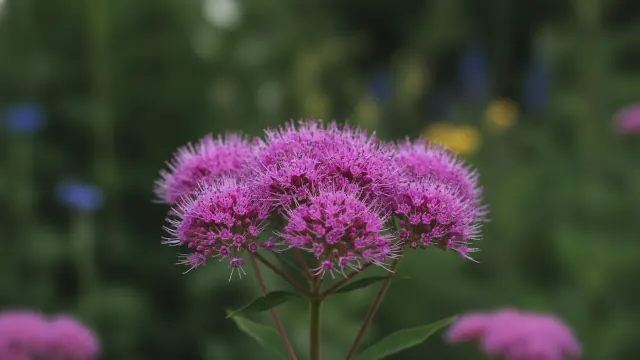
Joe Pye Weed
Shares full sun and moderate to high water; blooms in midsummer, extending the bed's season; both are strong pollinator plants, and they feed in different months; its seed heads stand through winter, for structure and the birds.
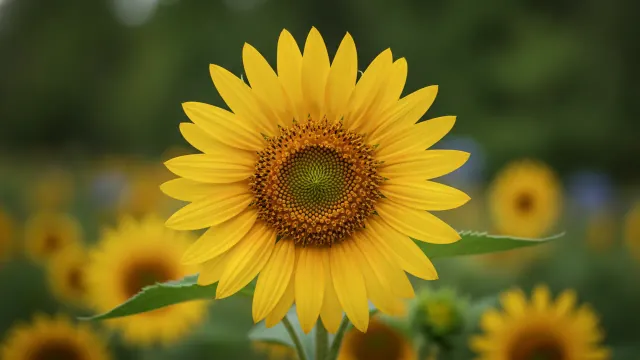
Perennial Sunflower
Shares full sun and moderate water; blooms in late summer, extending the bed's season; both are strong pollinator plants, and they feed in different months; its seed heads stand through winter, for structure and the birds.
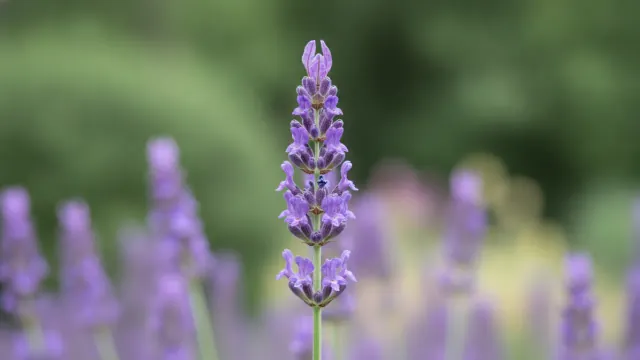
Lavender
Shares full sun and low to moderate water; blooms in early summer as this one finishes; both are strong pollinator plants, and they feed in different months; evergreen, so the bed keeps its shape through winter.
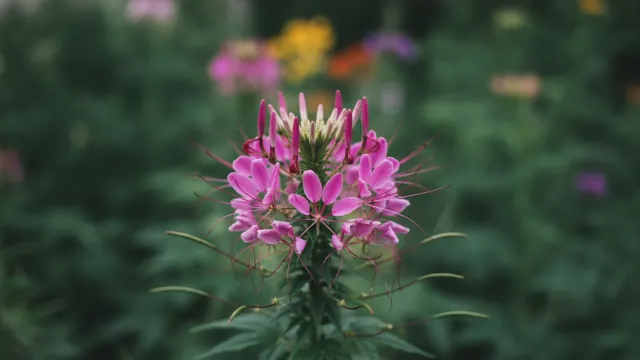
Cleome
Shares full sun and moderate water; blooms in early summer as this one finishes; both are strong pollinator plants, and they feed in different months; shorter at 4 ft, an understory layer.
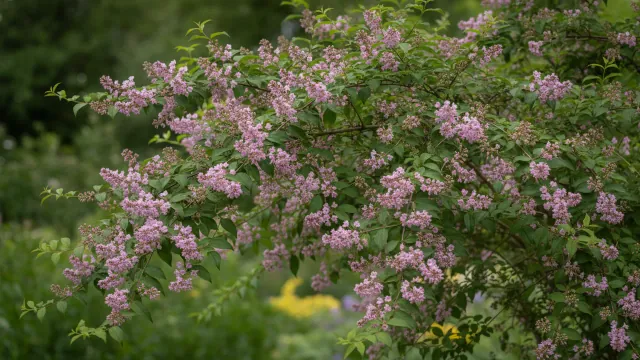
Beautyberry
Takes full sun to part sun and moderate water; blooms in early summer as this one finishes; both are strong pollinator plants, and they feed in different months; shorter at 5 ft, an understory layer.
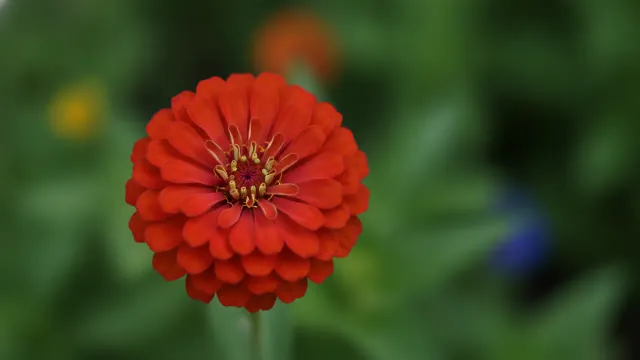
Zinnia
Shares full sun and moderate water; blooms in early summer as this one finishes; both are strong pollinator plants, and they feed in different months; low at 2.5 ft, to carpet the ground beneath it.
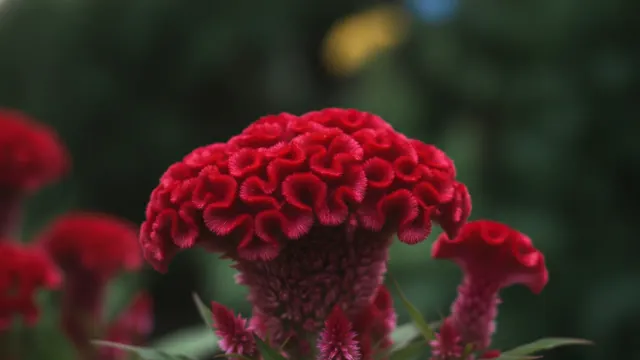
Celosia
Shares full sun and moderate water; blooms in early summer as this one finishes; both are strong pollinator plants, and they feed in different months; red sits close to pink on the wheel.
All 8 companion pairings for Flowering Crabapple →
Try Flowering Crabapple with its top companions in a garden →
Explore similar plants
You might also like
Design a garden with this
Drop this plant onto a 3D plan, see how it fills in, and watch your whole garden bloom across the year.