
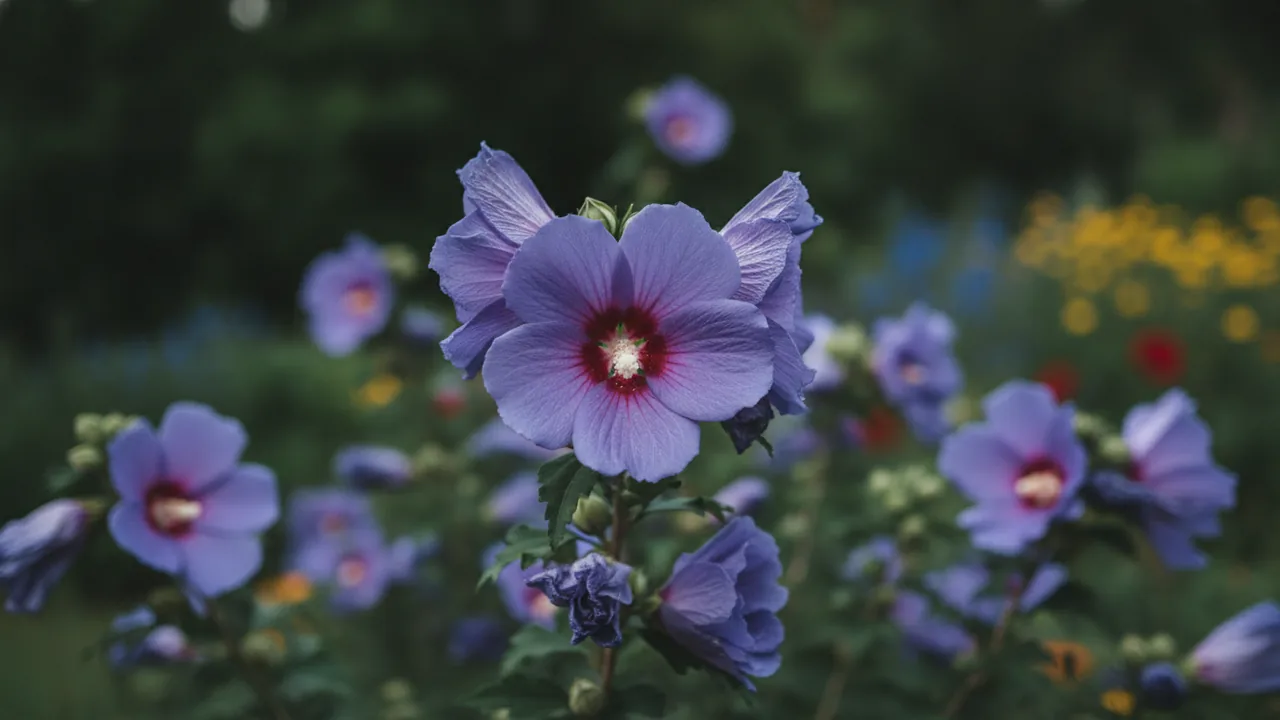
 Illustration

Rose of Sharon
Hibiscus syriacus
Also called althea and althaea
Rose of Sharon blooms from July through September.
Months here are Northern Hemisphere months; in the Southern Hemisphere, shift them by six months.
Growing Rose of Sharon
Plant it in full sun. It prefers moderate water. It is hardy in USDA zones 5–9. Expect it to reach about 8 ft tall and 6 ft wide at maturity, in roughly 4 years (not yet checked).
What was checked
Mature height and spread, hardiness zones, sun and the trait tags were checked against named botanical sources for this plant. The bloom months and water need on this page were not, and each fact above says which. The planting, spacing and size sections are derived from these checked facts by a fixed rule, not checked separately, and the plant type is the library's own classification.
When to plant Rose of Sharon
Plant Rose of Sharon in early spring as soon as the soil is workable, or in early fall at least six weeks before your first frost, so roots establish in cool weather. In zone 7, the middle of its hardy zones 5 to 9, spring means March to May and fall means September or October. Once settled, it blooms from July to September.
Month-by-month timing for your zone is on the planting calendar; if you garden near zone 7, the middle of this plant's hardy range, start with zone 7 in March. Derived from the plant's category, zones and bloom months plus typical zone frost dates, not checked separately.
How big does Rose of Sharon get?
 8 fttall5 ft 7 inan adult6 ftwide
See Rose of Sharon in a garden plan: the planner shows it in 3D beside everything else you add, growing toward this size over the years.
How far apart to plant Rose of Sharon
Derived from the mature spread above by a fixed rule, not checked separately: spacing is the spread, center to center.
Space Rose of Sharon about 6 ft apart, center to center, so each plant has room to reach its full width.
Add Rose of Sharon to a garden plan and the planner draws it at its full width, so you see the spacing before you buy.
Where these facts come from
Rose of Sharon's height, spread, hardiness zones, sun and trait tags were checked against 9 published sources on July 30, 2026. Each one is linked below with every fact it carried, which can include a fact this page still marks as not yet checked, because a source carrying a value is not the same as the value being held to the standard. Facts not in that list, and the planting, spacing and size sections, are not covered by these sources.
- NC State ExtensionHibiscus syriacusheight, spread, hardiness zones, sun, years to mature size and trait tags
- Proven WinnersRose of Sharon growing guideheight, spread, hardiness zones, sun, years to mature size and trait tags
- depts.ttu.eduTexas Tech University Woody Plant Finder (Hibiscus syriacus)height, spread, hardiness zones, sun and trait tags
- Missouri Botanical GardenHibiscus syriacusheight, spread, hardiness zones, sun and trait tags
- The Morton ArboretumRose-of-Sharonhardiness zones, sun, years to mature size and trait tags
- University of Florida IFASUF/IFAS Extension Nassau County fact sheet (Rose-of-Sharon)height, spread, sun and years to mature size
- Clemson Home and Garden Information CenterHibiscusheight, spread and hardiness zones
- Oregon State UniversityHibiscus syriacusheight, hardiness zones and sun
- dendro.cnre.vt.eduVirginia Tech Dendrology Fact Sheet (Hibiscus syriacus)height
How the checking works, and what each standard covers, is on the verified plants page.
Comes in 12 varieties across 5 colors
Same plant, same care - pick the color you are growing.
- Aphrodite
- Blue Bird
- Blue Chiffon
- Blushing Bride
- Diana
- Helene
- Lavender Chiffon
- Lucy
- Minerva
- Purple Pillar
- Red Heart
- White Chiffon
Compare every variety in the Rose of Sharon group
Every figure is the variety's own page fact. Tap a name to open it.
| Variety | Color | Blooms | Hardiness | Sun | Size (H × W) |
|---|---|---|---|---|---|
| Aphrodite | Pink | Jul–Sep | Zones 5–9 | Full sun | 8 ft × 6 ft |
| Blue Bird | Blue | Jul–Sep | Zones 5–9 | Full sun | 8 ft × 6 ft |
| Blue Chiffon | Blue | Jul–Sep | Zones 5–9 | Full sun | 8 ft × 6 ft |
| Blushing Bride | Pink | Jul–Sep | Zones 5–9 | Full sun | 8 ft × 6 ft |
| Diana | White | Jul–Sep | Zones 5–9 | Full sun | 8 ft × 6 ft |
| Helene | White | Jul–Sep | Zones 5–9 | Full sun | 8 ft × 6 ft |
| Lavender Chiffon | Purple | Jul–Sep | Zones 5–9 | Full sun | 8 ft × 6 ft |
| Lucy | Red | Jul–Sep | Zones 5–9 | Full sun | 8 ft × 6 ft |
| Minerva | Pink | Jul–Sep | Zones 5–9 | Full sun | 8 ft × 6 ft |
| Purple Pillar | Purple | Jul–Sep | Zones 5–9 | Full sun | 10 ft × 2.5 ft |
| Red Heart | White | Jul–Sep | Zones 5–9 | Full sun | 8 ft × 6 ft |
| Rose ofthis page | Purple | Jul–Sep | Zones 5–9 | Full sun | 8 ft × 6 ft |
| White Chiffon | White | Jul–Sep | Zones 5–9 | Full sun | 8 ft × 6 ft |
Good to know about Rose of Sharon
Curated from university extensions, botanic gardens and other primary sources, with the source named on every note. A note reports what its source says; where that differs from a fact above, the fact above is this entry's stored value, and its mark says whether it has been checked.
Worth knowing
Native to south China and Taiwan, not Syria or the Mediterranean as the name 'syriacus' and 'Rose of Sharon' suggest. per NC State
Can outgrow its compact size
Sources split on size: a compact 5 to 8 ft shrub, a large 8 to 12 ft one, even 15 ft as a tree. Prune to keep it small. per Morton and NC State
Warm-end limit varies
Every source agrees it is cold-hardy to zone 5. The warm end splits: NC State allows zone 9, but Illinois, Virginia Tech and Morton stop at zone 8. per NC State and Illinois
Reseeds heavily; can be weedy
Fertile forms self-sow heavily, scattering volunteer seedlings and even escaping into wild areas; it is listed invasive in several states. Deadheading the seed capsules stops most of it. per NC State and UConn
Sterile cultivars avoid seedlings
Single-flowered triploids 'Diana', 'Helene', 'Aphrodite' and 'Minerva' set almost no seed yet keep the open flowers pollinators feed on, unlike fully double sterile forms. per Clemson and Virginia Tech
Blooms on new wood
It flowers on the current season's growth, so prune while dormant in late winter to early spring. Cutting back a third each year boosts flower size. per Illinois and UConn
Safe for pets
The ASPCA lists it non-toxic to dogs, cats and horses, and NC State agrees. A pet that gorges on it may still get a mild, brief stomach upset. per ASPCA and NC State
What pairs well with Rose of Sharon
Good companions share its growing conditions and add something it lacks: an earlier or later bloom, a lower carpet in front, or structure through winter.
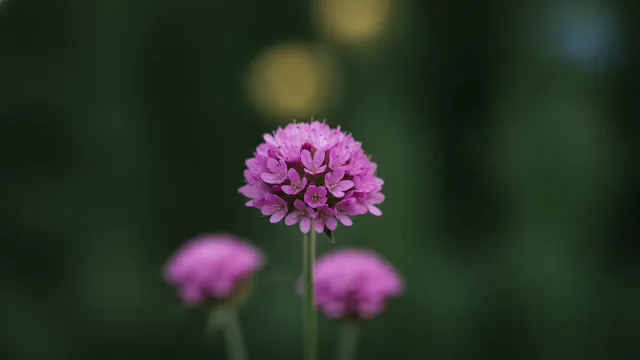
Sea Thrift
Shares full sun and low to moderate water; blooms in mid spring, before this one opens; low at 8 in, to carpet the ground beneath; evergreen, so the bed keeps its shape through winter.
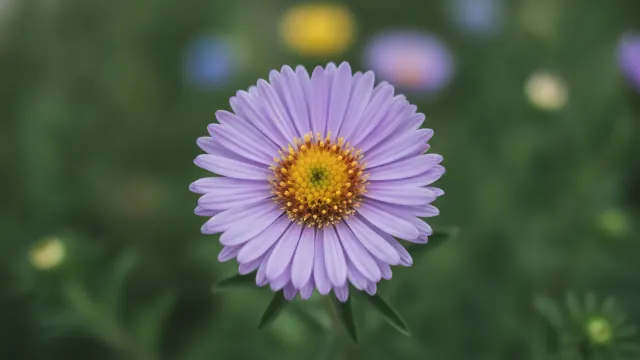
Aster
Shares full sun and moderate water; overlaps, then carries the display into mid fall; its seed heads stand through winter, for structure and the birds; both offer pollinator forage.
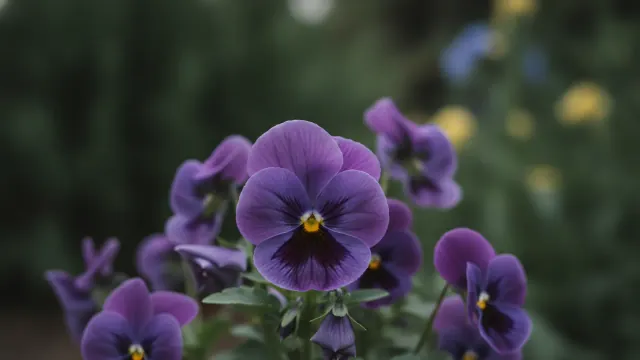
Pansy
Takes full sun to part sun and moderate water; blooms in early spring, before this one opens; low at 8 in, to carpet the ground beneath; both offer pollinator forage, in different months.
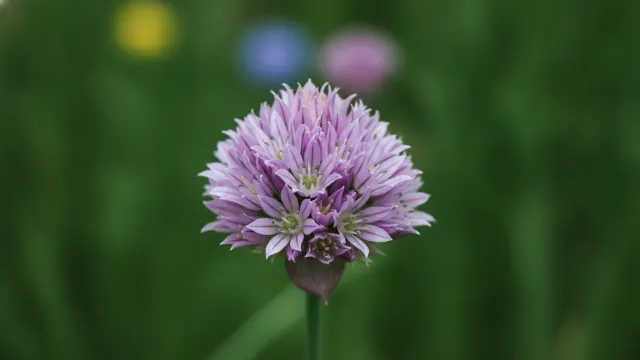
Chives
Shares full sun and moderate water; blooms in late spring, before this one opens; both offer pollinator forage, in different months; low at 12 in, to carpet the ground beneath.
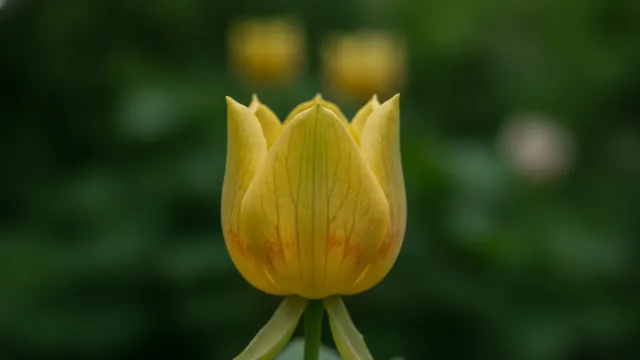
Tulip Tree
Shares full sun and moderate water; blooms in late spring, before this one opens; both offer pollinator forage, in different months; stands well above at 66 ft, a canopy to plant beneath.
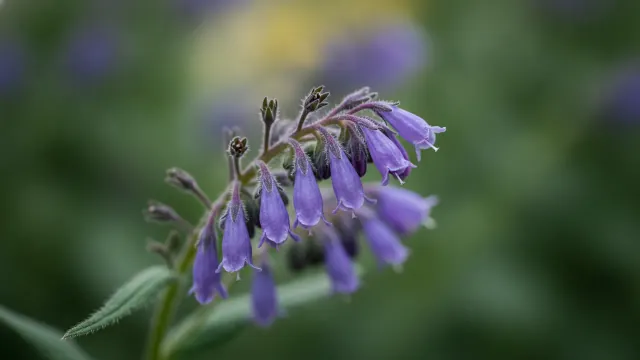
Common Comfrey
Shares full sun and moderate water; blooms in late spring, before this one opens; both offer pollinator forage, in different months; lower at 2.5 ft, for the front of the border.
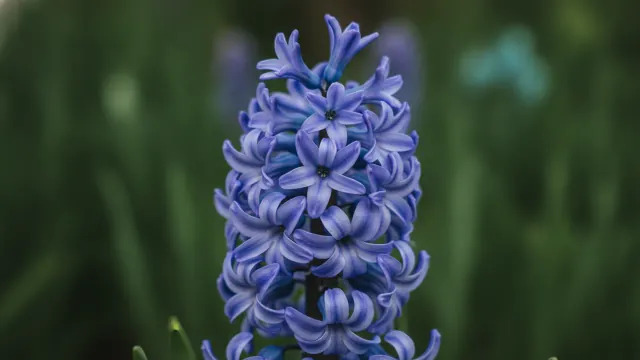
Hyacinth
Shares full sun and moderate water; blooms in early spring, before this one opens; low at 10 in, to carpet the ground beneath; both offer pollinator forage, in different months.
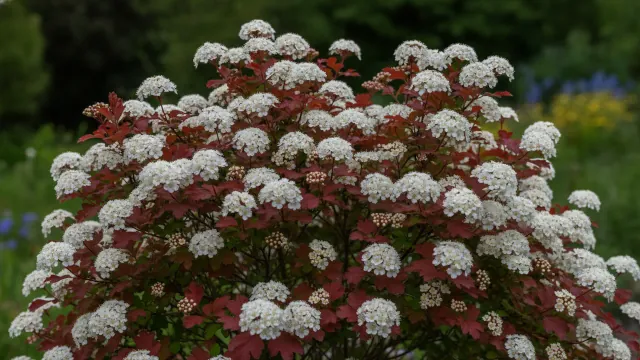
Ninebark
Shares full sun and moderate water; blooms in late spring, before this one opens; both offer pollinator forage, in different months; its white flowers settle the purple.
Featured in these guides
Explore similar plants
You might also like
Design a garden with this
Drop this plant onto a 3D plan, see how it fills in, and watch your whole garden bloom across the year.