
Color
Purple Flowers: The Garden's Most Generous Color, Season by Season
Where nature rations blue, it spends purple freely. The library's best purples from February to October, and where the color blurs.
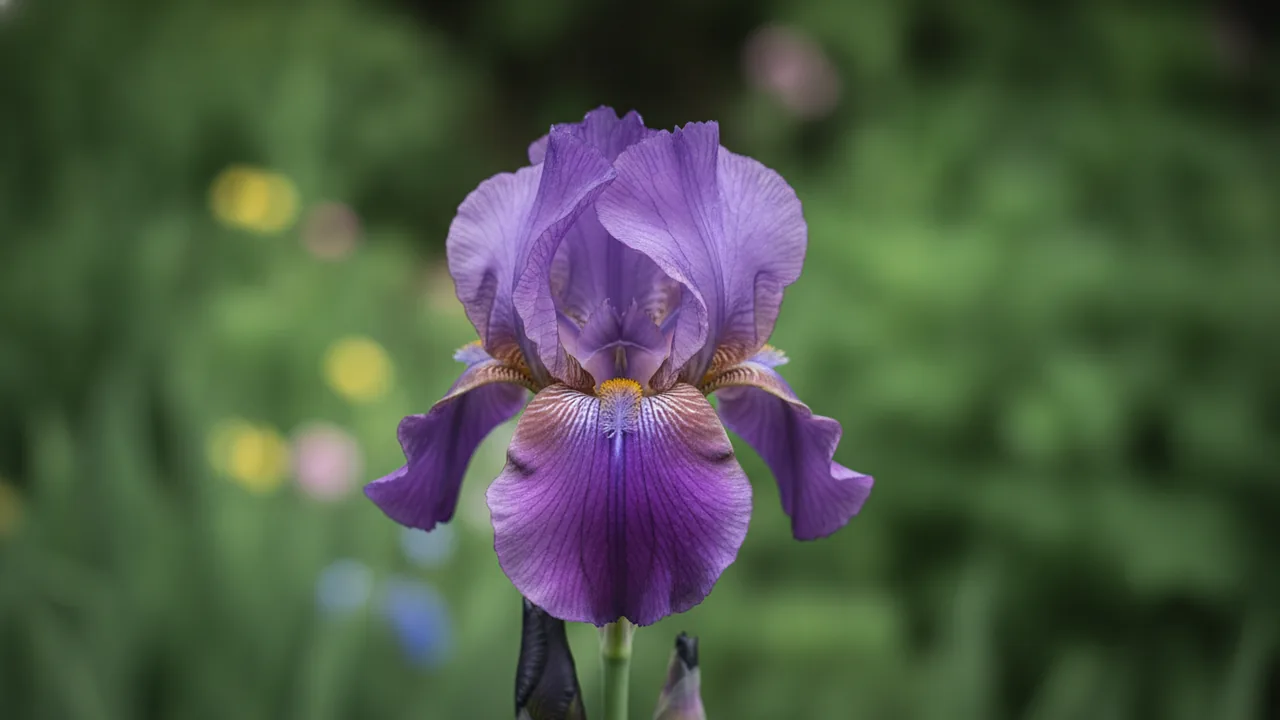
Purple is the color nature actually hands out. Where our blue flowers guide is a story of scarcity, purple is the opposite problem: our library files 366 plants under its purple filter, more than any color except pink, and the season runs from the first crocuses in February to asters whose records reach into November. So this guide is not about finding purple; it is about spending it well, season by season, and about the two honest borders where purple blurs into violet-blue on one side and cerise pink on the other.
What are the best purple flowers?
Season by season: crocuses open the year in February, lilacs and bearded irises own late spring, the alliums bridge into summer, and then the choice widens, clematis on the fence, blazing star and rose of sharon in high summer, asters closing the year in fall. For pots and gaps, purple petunias and verbena run from May to frost. Every pick below carries its real bloom months from the records.
Spring: from the first crocus to the lilacs
Purple arrives with the first crocuses and owns some of spring's biggest set pieces. All four below except the crocus are permanent structure; the crocus is the cheap, hundred-at-a-time opener.
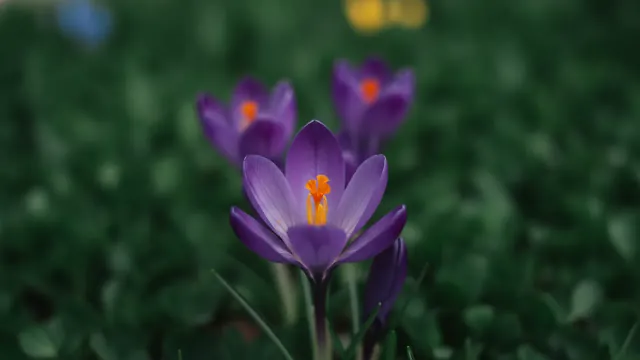
Crocus
The year's first purple, February and March at 4 inches, zones 3 to 8. The classic varieties, 'Remembrance', 'Grand Maître', 'Pickwick', are all purples and violets, which is why a naturalized crocus lawn reads purple from the street.
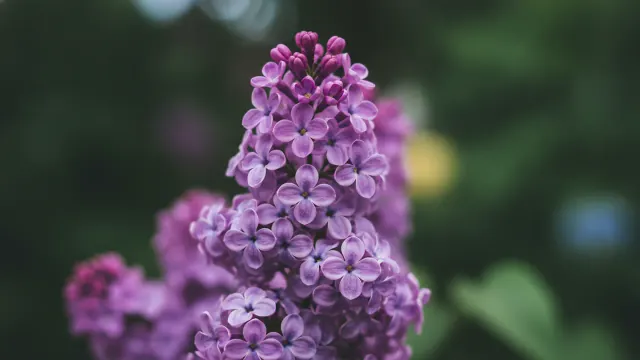
Syringa vulgaris
April and May, zones 3 to 7, and still the scent by which every other purple is judged. It is a nearly 10-foot commitment in full sun, so site it where the perfume can ambush you, by a door, a path, a window that opens.
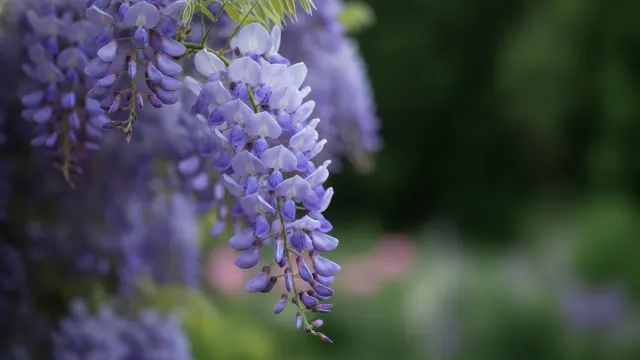
Wisteria
April and May under violet racemes a foot long, zones 5 to 9, on the strongest plant in this guide by a distance; our flowering-vines guide files it, fondly, with the thugs. Given a structure built like furniture, nothing in spring is more theatrical.
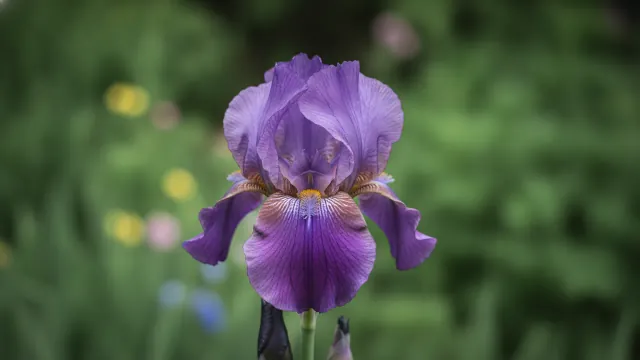
Iris germanica
May and June, zones 3 to 9, with ruffles and a velvet depth of purple nothing else matches. Full sun and a rhizome set proud of the soil are the whole trick, and late summer is when it plants and divides.
Early summer: the handover
Late spring into early summer is when purple's famous workhorses arrive, the salvias, catmints, and lavenders that hold borders for months. They have their own pages here, a whole salvia guide among them, so these picks are the early-summer purples the workhorse lists skip.
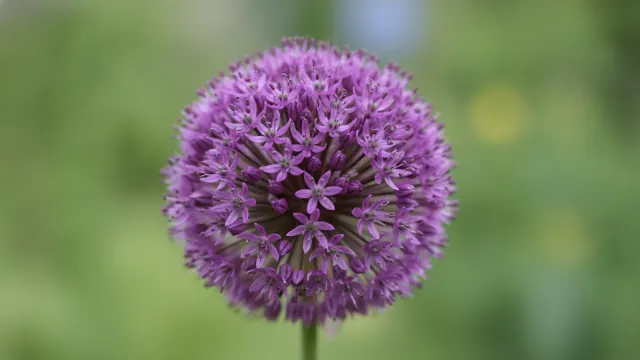
Allium giganteum
The purple punctuation mark: violet spheres at eye level in May and June, zones 4 to 8, floating above everything shorter in the border. Fall-planted and architectural twice over, first in flower, then as standing seed heads.
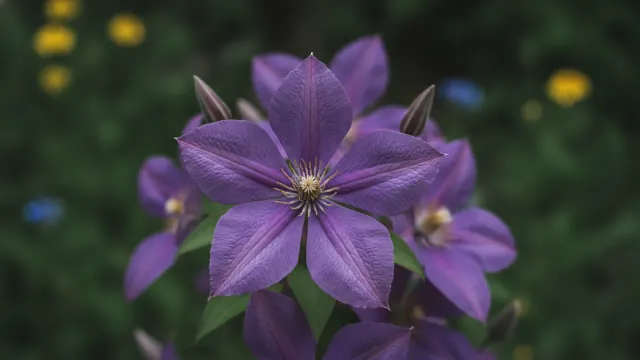
Clematis 'Jackmanii'
The famous purple clematis since 1862, and the record explains the staying power: June to September, zones 4 to 9, on an 11-foot climber. One plant turns a fence panel into a wall of violet-purple for the whole summer.
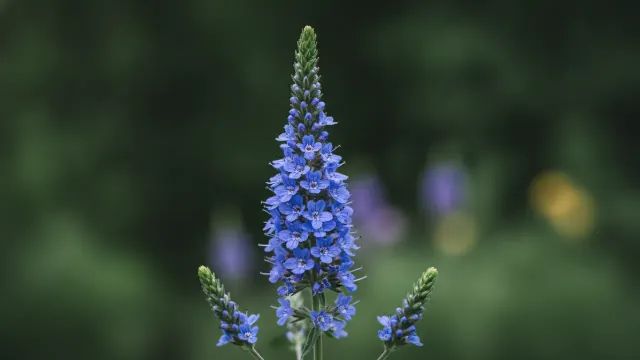
Veronica spicata
Neat 20-inch spikes of blue-purple from June to August, zones 3 to 8: the vertical accent for the front of a border, doing in miniature what delphiniums do at the back, with none of the staking.
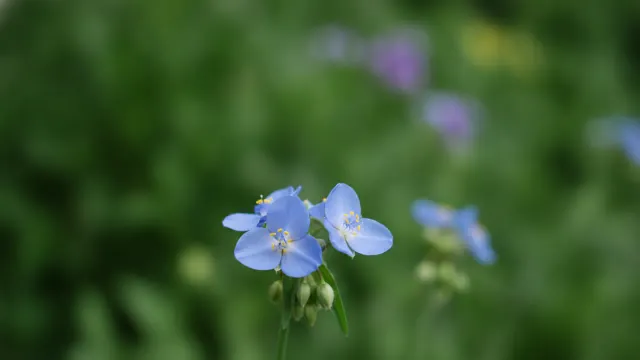
Tradescantia
Three-petaled purple flowers from June to August, zones 3 to 9, each lasting a single morning and replaced daily from a fat bud cluster. It thrives in the damp, half-shaded corners where most of this guide's sun-lovers sulk.
High summer: purple takes the heat
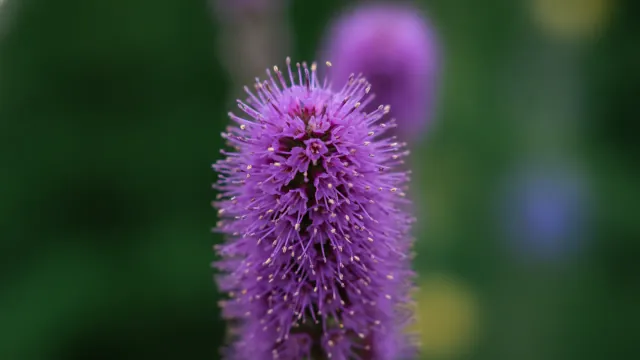
Liatris
Blazing star: vertical purple exclamation marks in July and August, zones 3 to 9, from a prairie native that asks for nothing but sun. Its signature trick is opening each spike from the top down, opposite to nearly every other spire in the garden.
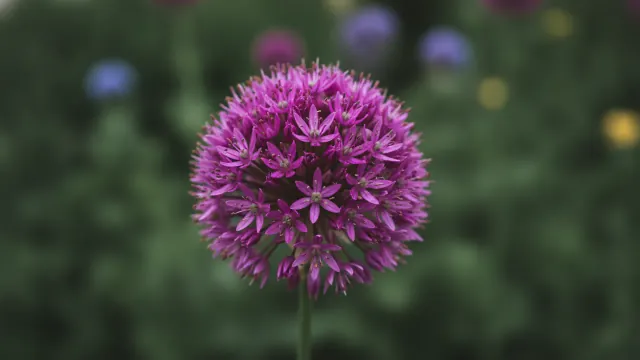
Allium 'Millenium'
The allium that is not a fall bulb: 'Millenium' is planted as a potted perennial and blooms rose-purple in July and August at 18 inches, zones 4 to 9, humming with bees. The tidiest edging plant in the onion tribe.
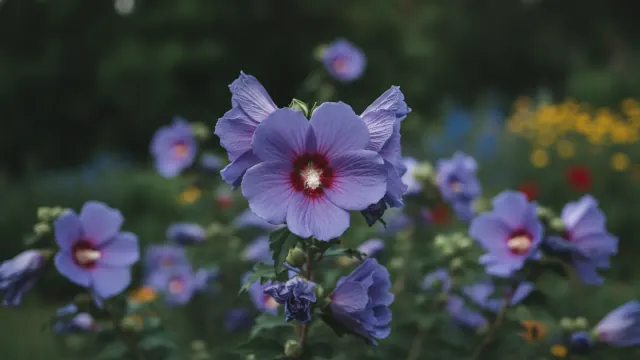
Hibiscus syriacus
July to September on an 8-foot shrub, zones 5 to 9: big hibiscus flowers in a season when most shrubs have finished, the group default a true violet-purple. The name is a double geography lesson: not a rose, and from East Asia, not Syria.
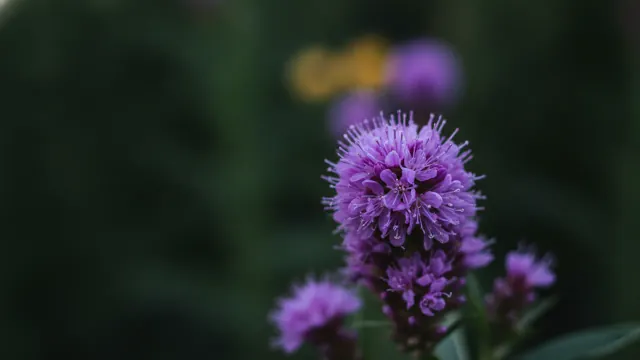
Vernonia
August and September, zones 4 to 9: saturated royal purple at nearly 5 feet on a native the late butterflies mob. The name is about the tough stems, which never need staking; plant it where the back of the border needs conviction.
Fall: purple closes the year
October's purple is the asters', with two stranger companions worth knowing beside them.
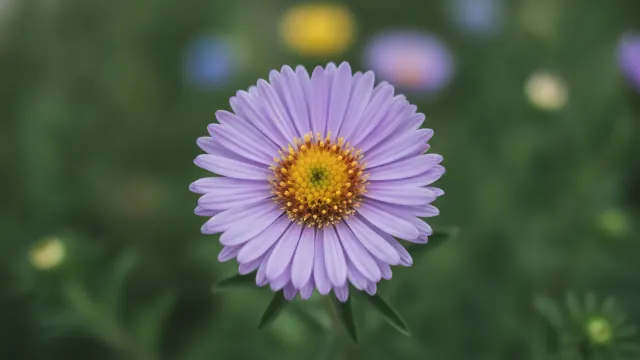
Symphyotrichum
September and October, zones 3 to 8: the definitive fall purple, 3 feet of daisies over everything the frost has not yet claimed, and one of the last big nectar events of the year. Leave the stalks standing after; the winter birds take the seeds.
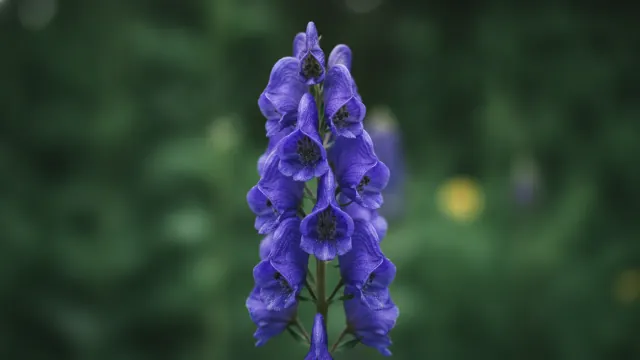
Aconitum
August and September, zones 3 to 7: hooded deep-purple spires at nearly 4 feet for part shade, delphinium-dramatic where delphiniums have given up. Every part of it is seriously poisonous, so plant it at the back, out of reach, and wash your hands after handling.
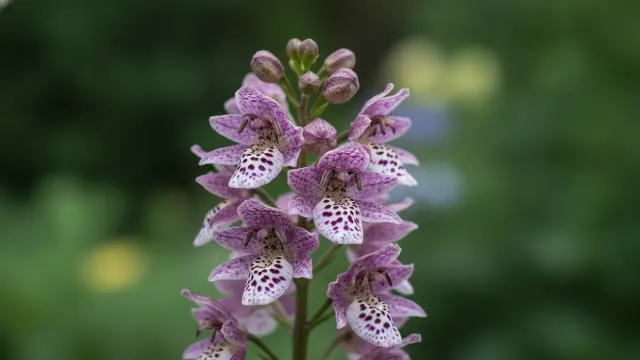
Tricyrtis
September and October in the shade, zones 4 to 8: intricate purple-speckled flowers built like tiny orchids, at their best beside a path where the detail can be inspected. Purple's quietest finish, and one of its best.
Purple annuals for pots and gaps
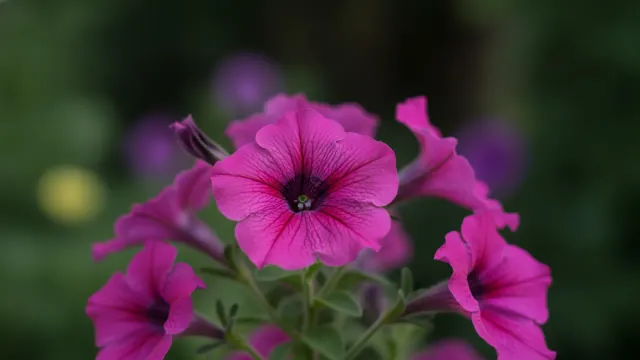
Petunia
May to October, and purple is petunia country: the deep velvet purples are among the most saturated flowers in the entire library, and a single basket of them carries a doorway for the whole season.
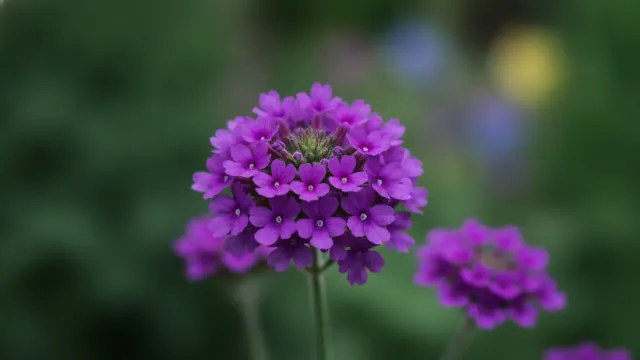
Verbena
The deepest purples in the basket trade: annual verbena's violet forms saturate like little else at 10 inches, May to October, pouring over rims and edges. When midsummer thins it, a light shear refills it within a fortnight.
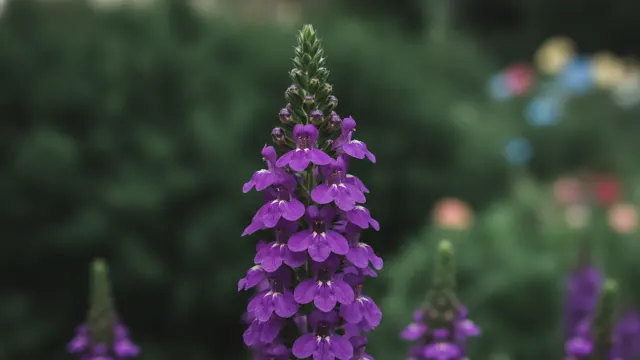
Angelonia angustifolia
The summer snapdragon: upright purple spikes from June to October that shrug at real heat and humidity, at 18 inches. It brings the vertical line to containers that trailing annuals cannot.
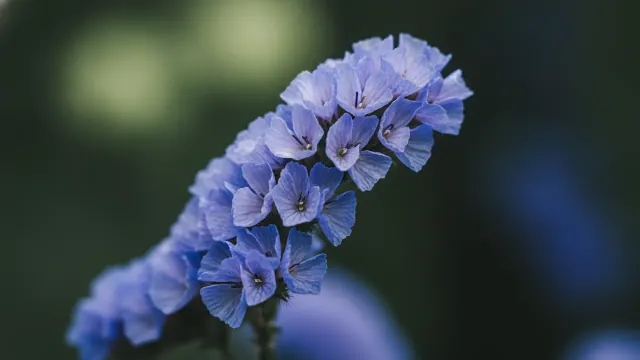
Limonium
June to September, and the purple that never fades, literally: the papery flowers dry to exactly the color they grew. Cut it for everlasting arrangements and the vase looks the same in January.
The borders of purple
Now the honest part, in both directions. On one side, purple blurs into blue: catmint reads lavender-violet, many "blue" salvias lean purple, and our blue guide's violet line is the same border viewed from the other bank. On the other side, purple blurs into cerise: the purple coneflower is the famous case, a plant whose name says purple and whose petals read pink-magenta in most light, which is exactly how our records file it. None of this is a flaw in the flowers. It just means that if a scheme depends on the exact shade, buy one plant in bloom before you buy nine, and let your own light make the call. For schemes that use the whole violet neighborhood at once, our cool border and dark garden guides are built on it.
What colors go with purple flowers?
Three reliable moves. Silver foliage and white flowers cool it into elegance, the cottage classic. Yellows and golds sit opposite purple on the wheel and make both sides sing, the reason catmint under golden roses never fails. And purple with orange is the boldest pairing in gardening; our orange flowers guide is the other half of that argument.
Which purple flowers bloom the longest?
By the records, the annuals win: purple petunias and verbena run May to October. Among perennials, the border salvias hold May to September with a midsummer shear, clematis 'Jackmanii' flowers June to September, and rose of sharon carries the shrub layer from July to September. Chain those onto crocuses in February and the last asters, whose records run into November, and purple never leaves the garden.
Are purple flowers good for pollinators?
Conspicuously, yes. Bees see the blue-violet end of the spectrum far better than they see red, and it is no accident that the great pollinator plants, catmint, salvia, lavender, liatris, asters, alliums, cluster in exactly this color. A purple border is very nearly a pollinator garden by default; our pollinator guide makes it official.
Why does my purple flower look blue in photos?
Because purple is the color cameras and screens handle worst: violet sits at the edge of what a phone sensor records, so deep purples routinely photograph blue. If a plant's color matters to you, trust your eyes over the listing photo, and trust a plant in bloom at the nursery over both.
Design a garden with these plants
Open BloomsEye Studio with this guide's plants ready to drop onto a plan, then watch the whole bed bloom across the year. New to it? See what the free garden planner does.