
Color
Blue Flowers: The Hardest Color in the Garden, Season by Season
Nature guards its rarest flower color jealously. The truly blue flowers in the library, laid out spring to fall.
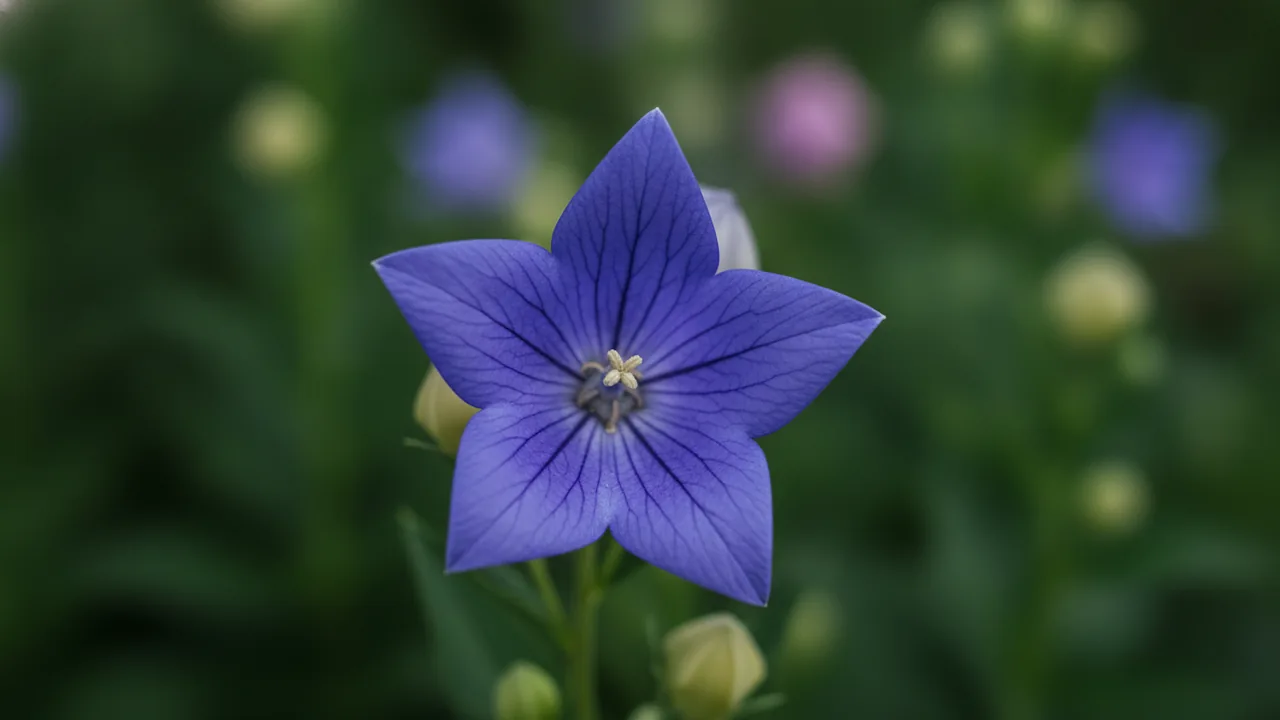
Blue is the color gardeners chase hardest, because nature makes so little of it: true blue pigment is vanishingly rare in flowers, which is why there is no blue rose and no blue tulip, only clever marketing. Our library files 159 plants under its blue filter, and we will be honest with you before we start: a good share of those lean violet in real light. This guide leads with the ones our own records put on the truly blue side of the line, laid out by season so blue can run through the whole year rather than arrive in one June wave.
What are the best blue flowers?
For blue with no asterisk: grape hyacinths and virginia bluebells in spring, baptisia and delphiniums for early summer, then balloon flowers, sea holly, and russian sage carrying high summer, with the aromatic asters finishing in fall. Between them they cover March to November, sun and shade, and every height from an 8-inch bulb to a 4.5-foot spire.
Spring: blue starts at the bulbs
The earliest blues in the library are almost all small bulbs, planted the previous fall and worth every hole. Plant them in drifts of dozens; blue at six inches tall only reads from a distance when there is a lot of it.
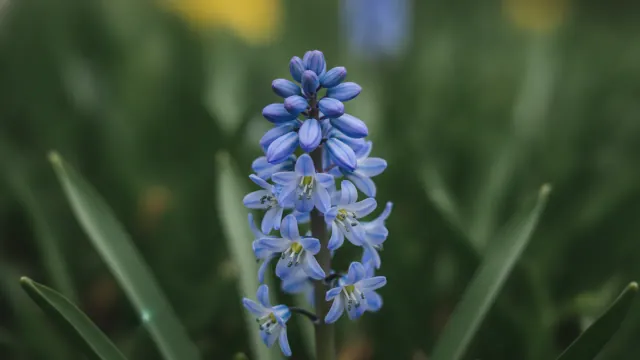
Scilla siberica
Siberian squill: nodding true-blue bells at 6 inches in March and April, hardy all the way to zone 2, which makes it the blue for the coldest gardens on the map. It naturalizes into a haze under trees.
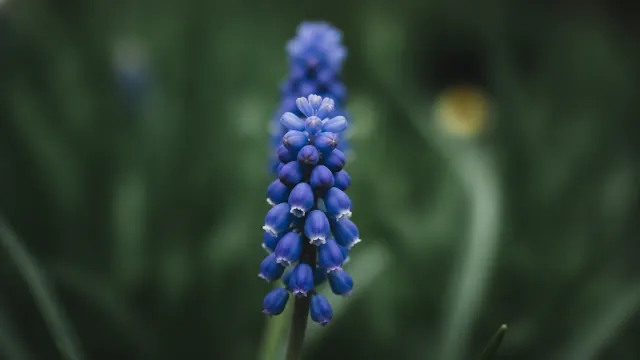
Muscari
True cobalt at 8 inches, March and April, zones 3 to 8, and the cheapest reliable blue there is. A bag of a hundred bulbs disappears into one afternoon of planting and comes back wider every spring after.
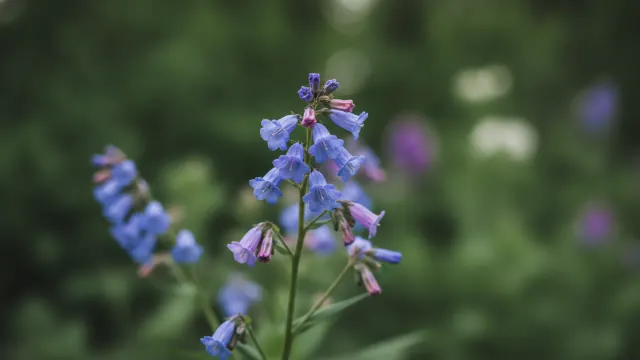
Mertensia virginica
A native woodlander with clusters of sky-blue trumpets in April and May, opening from pink buds in part shade. It is a true spring ephemeral, above ground for only a few months, so give it fern and hosta neighbors to take over the space by July.
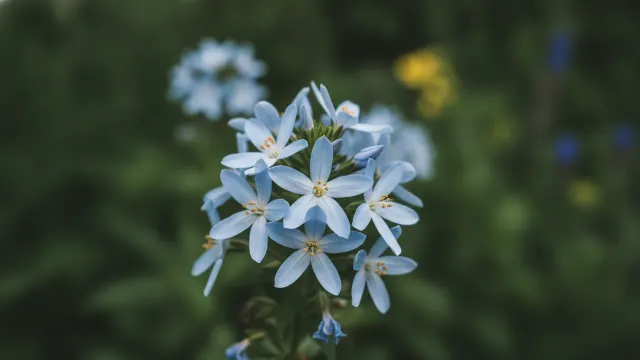
Amsonia
Steel-blue stars in April and May on a tough native that ends up a 3-foot shrub-shaped perennial, zones 4 to 9. The bonus round is fall, when the whole plant turns gold.
Early summer: the tall blues
Late spring into early summer is when blue gets architectural: spires and domes instead of drifts.
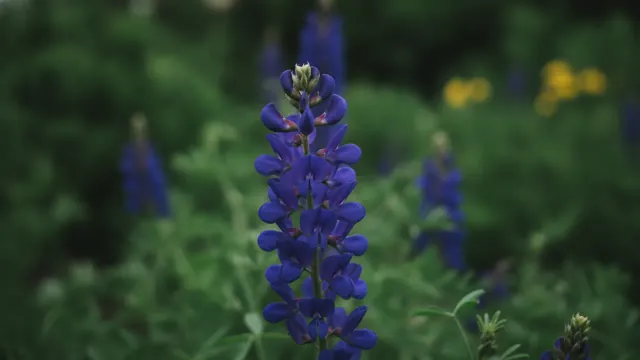
Baptisia
Spires of indigo pea flowers in May and June on a native as tough as a shrub: zones 3 to 9, drought-tolerant once established, and untouched by deer. Plant it where you mean it; a taproot hates moving.
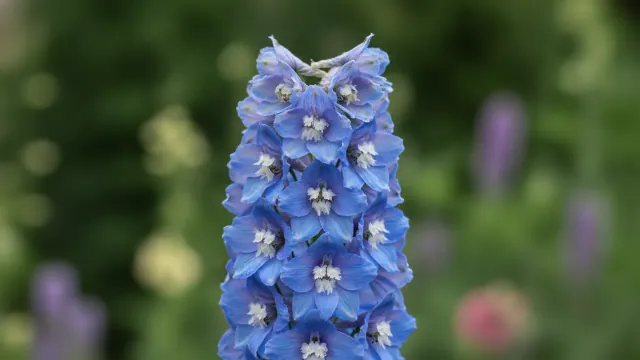
Delphinium
The most dramatic blue in gardening: 4.5-foot spikes in June and July, in shades from powder to gentian. It is a cool-climate diva, zones 3 to 7, and repays staking, feeding, and a cut-back with a second flush.
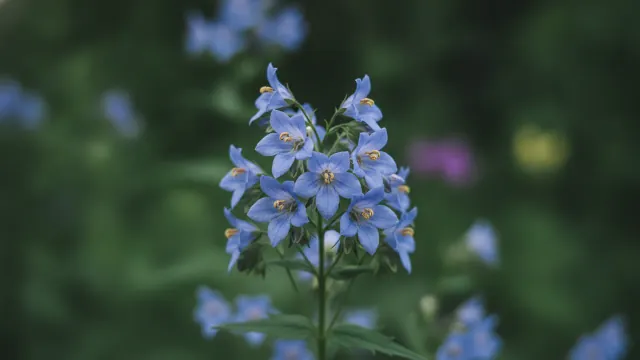
Polemonium
Sky-blue bells over ladder-rung foliage in May and June, and one of the few real blues for part shade, zones 3 to 7. Happiest in the same cool, rich ground as astilbes.
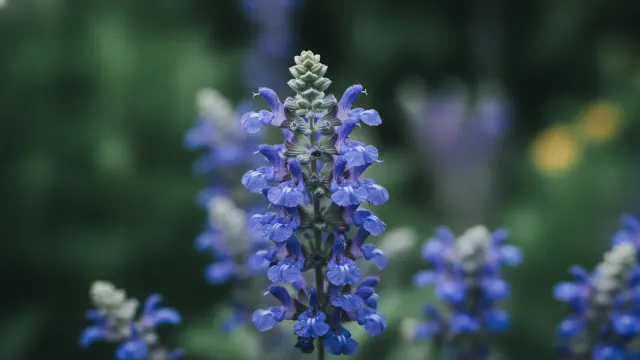
Salvia × sylvestris 'Blauhügel'
One of the truest blues in the salvia tribe, 'Blue Hill' holds its color from May to August at a tidy 18 inches. Shear it after the first flush and it rebuilds; bees never leave it alone.
High summer: blue that takes the heat
Midsummer blues earn their place twice over, because most of them shrug at drought while everything around them wilts.
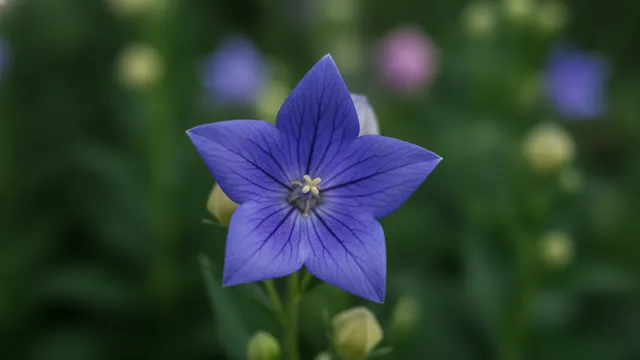
Platycodon
Fat balloon buds that pop open into five-pointed blue stars, July and August, zones 3 to 8. Slow to wake in spring, impossible to kill after, and happy for decades in the same spot.
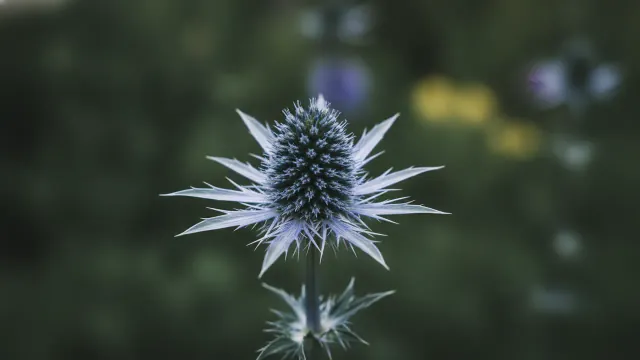
Eryngium
Steel-blue thistle heads on silver stems, June to August, that seem to get bluer as the soil gets poorer. Give it sun and sharp drainage and it asks for nothing again; superb dried.
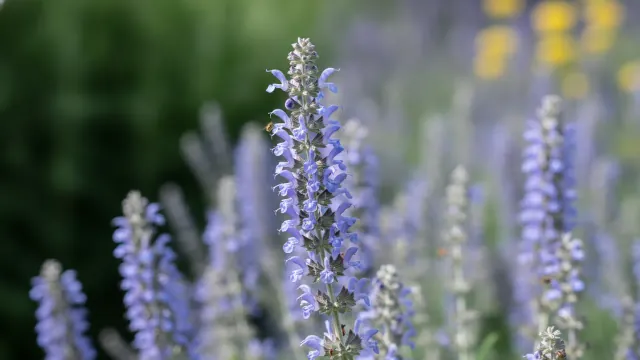
Salvia yangii
The workhorse of late-summer blue: a 4-foot cloud of tiny violet-blue flowers over silvered stems, July to October, at its best in the hottest, driest spot you own. Stand it behind anything orange and both colors turn the volume up.
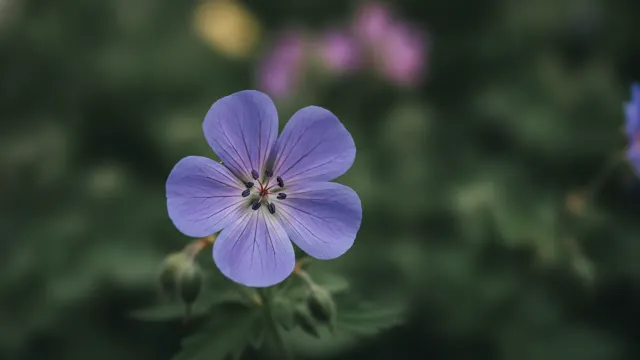
Geranium 'Rozanne'
June all the way to October, the marathon runner of the summer blues, and it runs unattended: no staking, no deadheading, nothing. Let its white-eyed flowers thread between bigger neighbors and fill every gap they find.
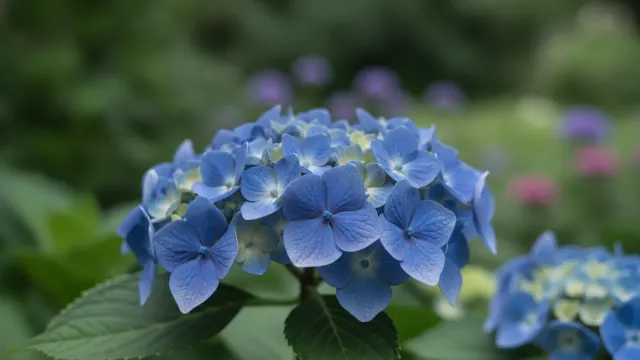
Hydrangea macrophylla
The famous one, with the famous catch: bigleaf hydrangeas bloom June to September, but only acidic soil turns the mopheads blue, and it is the thirstiest plant on this page. Our hydrangea guide explains the chemistry.
Fall: the asters close the year
By October, blue belongs to the aromatic asters, and they hold the door open longest of anything here.
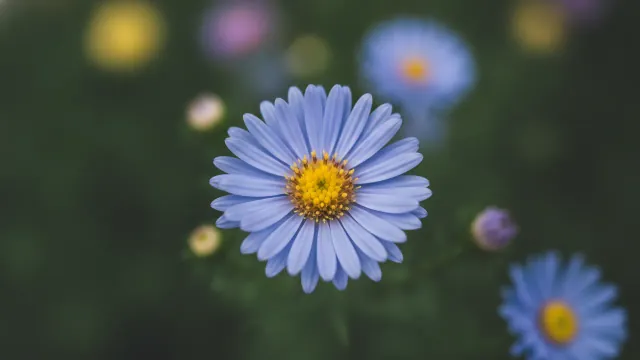
Symphyotrichum oblongifolium 'October Skies'
Exactly what the name promises: a 20-inch dome of sky-blue daisies through September and October, mobbed by every late bee in the neighborhood. Zones 3 to 8, and drought-tolerant once settled.
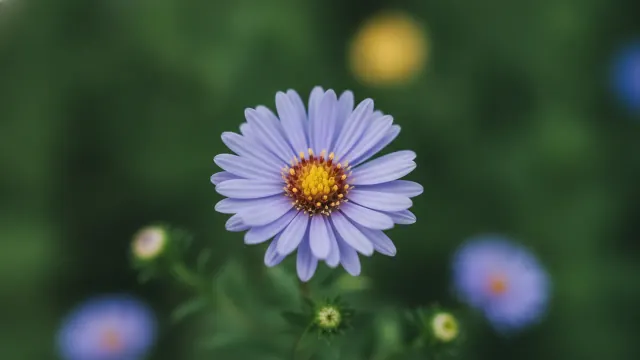
Symphyotrichum oblongifolium 'Raydon's Favorite'
The last blue of the year, September into November, on a taller 3-foot aromatic aster that fades violet as the light goes cold. When this one finishes, the year is truly done.
Blue annuals for pots and gaps
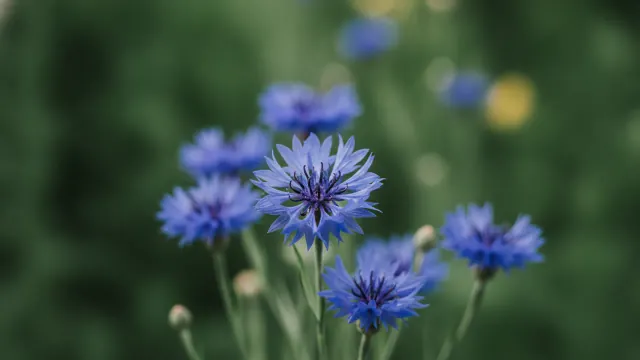
Centaurea cyanus
The blue the crayon was named after: fringed cornflower-blue buttons from May to July on an easy hardy annual you can sow straight into the ground. Let a few go to seed and it returns on its own.
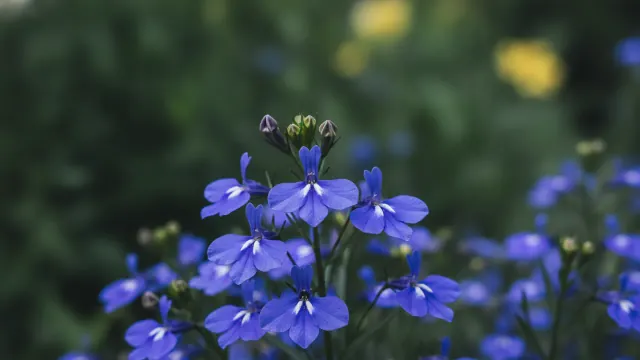
Lobelia erinus
The container classic: a foam of small intense-blue flowers from May to September, spilling from pots, baskets, and edges. It sulks in hot afternoons; part sun keeps it going.
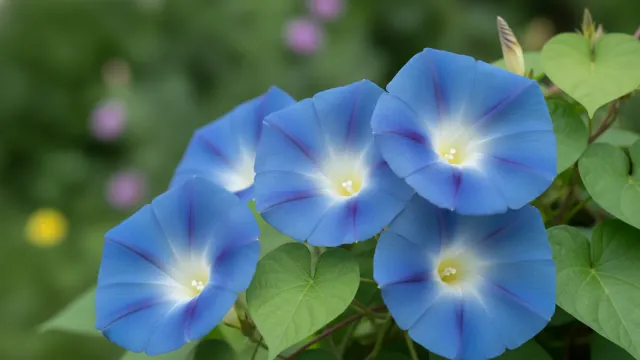
Ipomoea
The annual vine answer to blue: fresh sky-colored trumpets every morning from June to October on a fast 10-foot climber ('Heavenly Blue' is the shade to shop for). Each flower lasts a day; the vine never runs out.
The violet line
Now the honest part. Plenty of beloved "blue" plants sit on the violet side of the line in real light: catmint reads lavender-violet the moment it opens, and even some cultivars with blue in their name, the 'Blue Paradise' phlox and the 'Blue Chip' butterfly bush among them, lean purple in the flesh however the filter files them. None of that is a fault, violet is glorious, but if you have ever bought a "blue" plant and squinted at it in disappointment, the label was the problem, not your eyes. For schemes that use the violets and purples well, our cool border guide is the place to start.
Why are blue flowers so rare?
Because no flower makes a true blue pigment. The blues that exist are conjuring tricks of pigment chemistry and cell pH, which is also why so many "blues" drift violet: the trick only half-works. It is the same reason a genuinely blue rose or tulip still does not exist despite a century of breeders trying.
What is the truest blue flower I can grow?
From our own records: grape hyacinth and Siberian squill among the bulbs, virginia bluebells in spring shade, delphiniums and 'Blue Hill' salvia in early summer, and balloon flower in high summer. Gentians are the legendary answer, but they are collectors' plants and not in our library.
Are there blue flowers for shade?
A few, and they are good ones: virginia bluebells and jacob's ladder both flower blue in part shade, and lobelia keeps its blue going in a shadier container all summer. True deep-shade blue barely exists; for those corners, our shade guide leans on foliage instead.
What colors pair best with blue?
Silver foliage and white make blue look bluer, soft pinks and violets make it romantic, and its opposite, orange, makes it electric. That last pairing is the boldest move in the color wheel; our orange flowers guide is the other half of it.
Design a garden with these plants
Open BloomsEye Studio with this guide's plants ready to drop onto a plan, then watch the whole bed bloom across the year. New to it? See what the free garden planner does.