
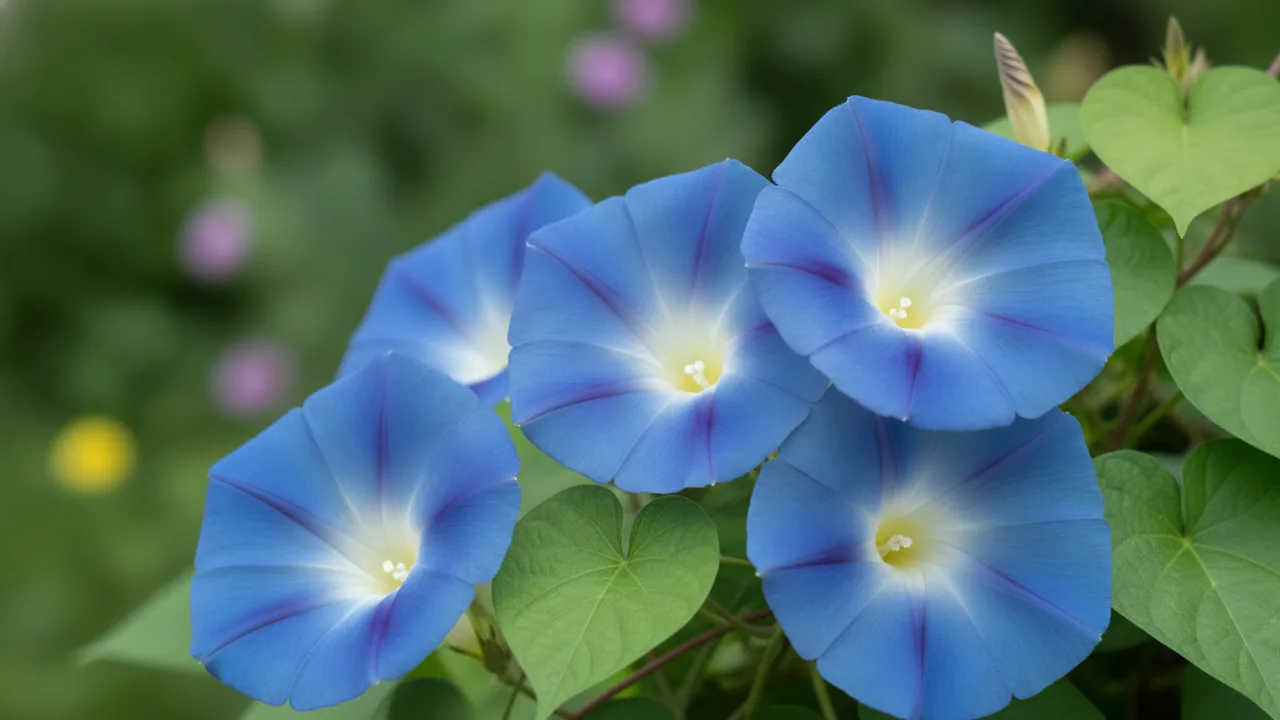
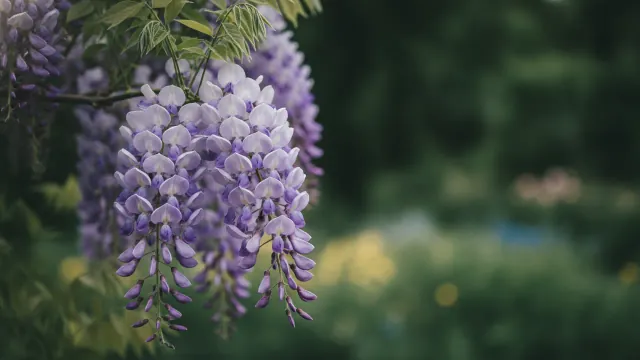
 Illustration

Morning Glory
Ipomoea
Morning Glory blooms from June through October.
Months here are Northern Hemisphere months; in the Southern Hemisphere, shift them by six months.
Growing Morning Glory
Plant it in full sun. It prefers moderate water. Expect it to reach about 10 ft tall and 3.5 ft wide at maturity, in roughly 1 year (not yet checked).
What was checked
Mature height and spread, hardiness zones, sun and the trait tags were checked against named botanical sources for this plant. The bloom months and water need on this page were not, and each fact above says which. The planting, spacing and size sections are derived from these checked facts by a fixed rule, not checked separately, and the plant type is the library's own classification.
How big does Morning Glory get?
 10 fttall5 ft 7 inan adult3.5 ftwide
See Morning Glory in a garden plan: the planner shows it in 3D beside everything else you add, growing toward this size over the years.
How far apart to plant Morning Glory
Derived from the mature spread above by a fixed rule, not checked separately: spacing is the spread, center to center.
Space Morning Glory about 3.5 ft apart, center to center, so each plant has room to reach its full width.
Add Morning Glory to a garden plan and the planner draws it at its full width, so you see the spacing before you buy.
Where these facts come from
Morning Glory's height, spread, hardiness zones, sun and trait tags were checked against 8 published sources on July 30, 2026. Each one is linked below with every fact it carried, which can include a fact this page still marks as not yet checked, because a source carrying a value is not the same as the value being held to the standard. Facts not in that list, and the planting, spacing and size sections, are not covered by these sources.
- Missouri Botanical GardenIpomoea purpureaheight, spread, hardiness zones, sun and trait tags
- NC State ExtensionIpomoea tricolorheight, spread, hardiness zones, sun and trait tags
- NC State ExtensionIpomoea purpureahardiness zones, sun and trait tags
- RHSIpomoea purpurea, common morning gloryheight, spread and sun
- University of Illinois ExtensionIllinois Extension, Flowers (Morning Glory, Ipomoea tricolor)height, sun and trait tags
- extension.oregonstate.eduOregon State University Extension, Growing annual morning glory (Ipomo...height and sun
- Iowa State University ExtensionIpomoea purpurea paragraphheight and sun
- NC State ExtensionIpomoea, the genus entryhardiness zones and sun
How the checking works, and what each standard covers, is on the verified plants page.
Comes in 5 varieties across 4 colors
Same genus, similar care - pick the color you are growing.
Compare every variety in the Morning Glory group
Every figure is the variety's own page fact. Tap a name to open it.
| Variety | Color | Blooms | Hardiness | Sun | Size (H × W) |
|---|---|---|---|---|---|
| Crimson Rambler | Red | Jun–Oct | - | Full sun | 10 ft × 3.5 ft |
| Grandpa Ott's | Purple | Jun–Oct | - | Full sun | 10 ft × 3.5 ft |
| Morningthis page | Blue | Jun–Oct | - | Full sun | 10 ft × 3.5 ft |
| Pearly Gates | White | Jun–Oct | - | Full sun | 10 ft × 3.5 ft |
| Scarlett O'Hara | Red | Jun–Oct | - | Full sun | 10 ft × 3.5 ft |
| Sunrise Serenade | Pink | Jun–Oct | - | Full sun | 10 ft × 3.5 ft |
Good to know about Morning Glory
Curated from university extensions, botanic gardens and other primary sources, with the source named on every note. A note reports what its source says; where that differs from a fact above, the fact above is this entry's stored value, and its mark says whether it has been checked.
Safety
Toxic to dogs, cats and horses. The seeds are the most dangerous part: they carry ergoline (LSA) alkaloids that are poisonous and hallucinogenic if eaten. per ASPCA and NC State
Worth knowing
Each showy funnel flower opens fresh at dawn and lasts a single day, then a new set opens the next morning. Colors span blue, purple, pink, red and white. per NC State
Poor or average soil?
NC State says it flowers well in poor soil with little fertilizer; Missouri Botanical prefers average soil. Both agree: lean, well-drained ground, no heavy feeding. per NC State and Missouri Botanical
Self-seeds and can turn weedy
It self-seeds heavily and escapes gardens; NC State calls it potentially invasive and Missouri Botanical notes it has naturalized across much of the US. Volunteers return for years. per NC State and Missouri Botanical
Needs a support to climb
It climbs by twining its soft stems, with no pads or clinging roots, so give it a trellis, arbor, fence, netting or strings at planting. Otherwise it sprawls. per NC State
Grow from seed each year
Frost-tender, so grow it as a warm-season annual. Sow after the last frost in warm soil; nick the hard seed coat and soak overnight to speed germination. per NC State
Draws specialist native bees
Attracts butterflies, hummingbirds and bees, including two specialist morning-glory bees NC State documents. The wide funnel feeds them, though the flowers are largely spent by afternoon. per NC State
What pairs well with Morning Glory
Good companions share its growing conditions and add something it lacks: an earlier or later bloom, a lower carpet in front, or structure through winter.
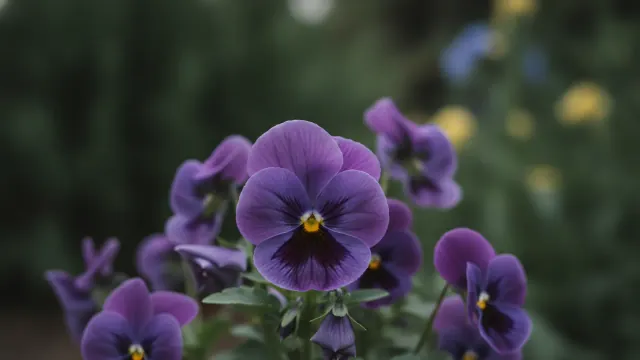
Pansy
Takes full sun to part sun and moderate water; opens in early spring and overlaps into this one's season; low at 8 in, to carpet the ground beneath; purple sits close to blue on the wheel.
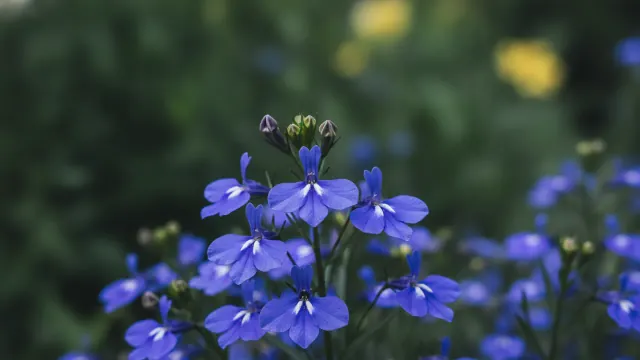
Lobelia
Takes full sun to part sun and moderate water; low at 8 in, to carpet the ground beneath; both offer pollinator forage; echoes the blue.
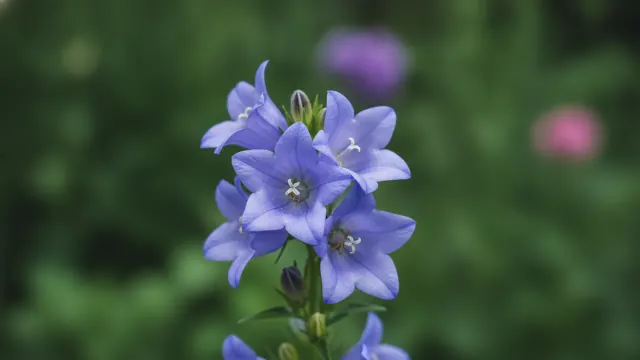
Canterbury Bells
Shares full sun and moderate water; opens in late spring and overlaps into this one's season; lower at 2.5 ft, for the front of the border; purple sits close to blue on the wheel.
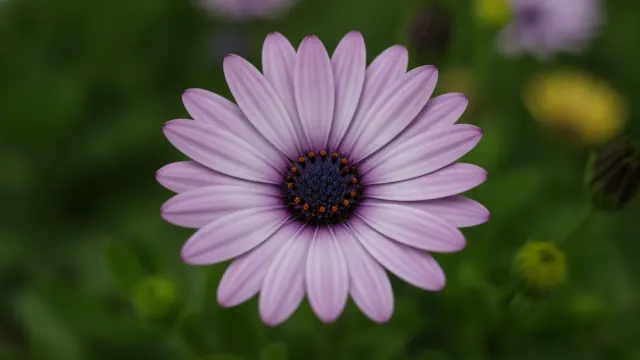
African Daisy
Shares full sun and moderate water; opens in mid spring and overlaps into this one's season; low at 12 in, to carpet the ground beneath.
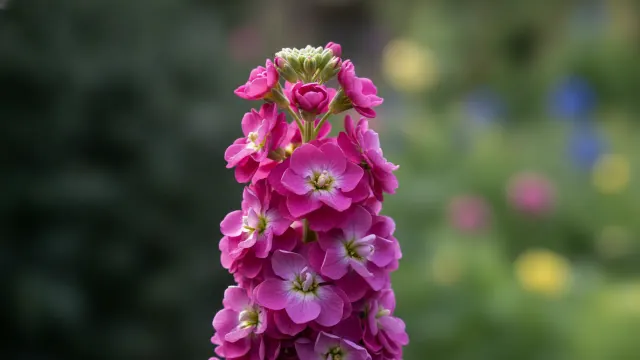
Stock
Shares full sun and moderate water; opens in mid spring and overlaps into this one's season; lower at 1.5 ft, for the front of the border.

Sunflower
Shares full sun and moderate water; its seed heads stand through winter, for structure and the birds; both offer pollinator forage; yellow against blue, for contrast.
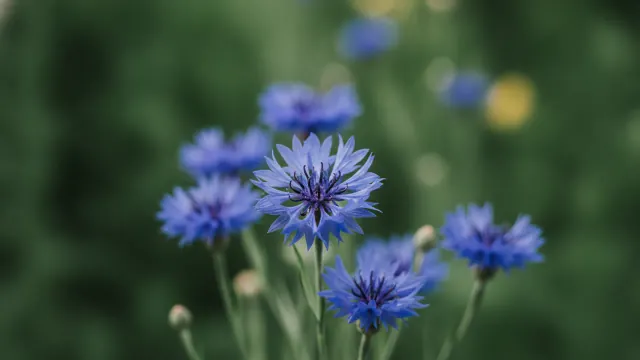
Bachelor's Button
Shares full sun and low to moderate water; opens in late spring and overlaps into this one's season; both offer pollinator forage; lower at 2.5 ft, for the front of the border.
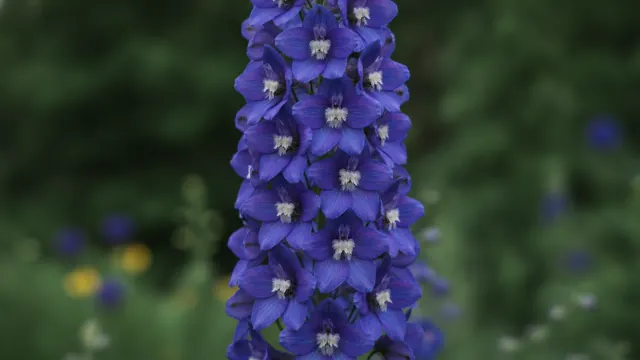
Larkspur
Shares full sun and moderate water; opens in late spring and overlaps into this one's season; lower at 3 ft, for the front of the border; purple sits close to blue on the wheel.
Featured in these guides
Explore similar plants
You might also like
Design a garden with this
Drop this plant onto a 3D plan, see how it fills in, and watch your whole garden bloom across the year.