
Climbers
Flowering Vines: The Best Climbers for Fences, Arches, and Walls
The most under-used space in a garden is vertical. The climbers that fill it with flowers, and the honest word on the thugs.
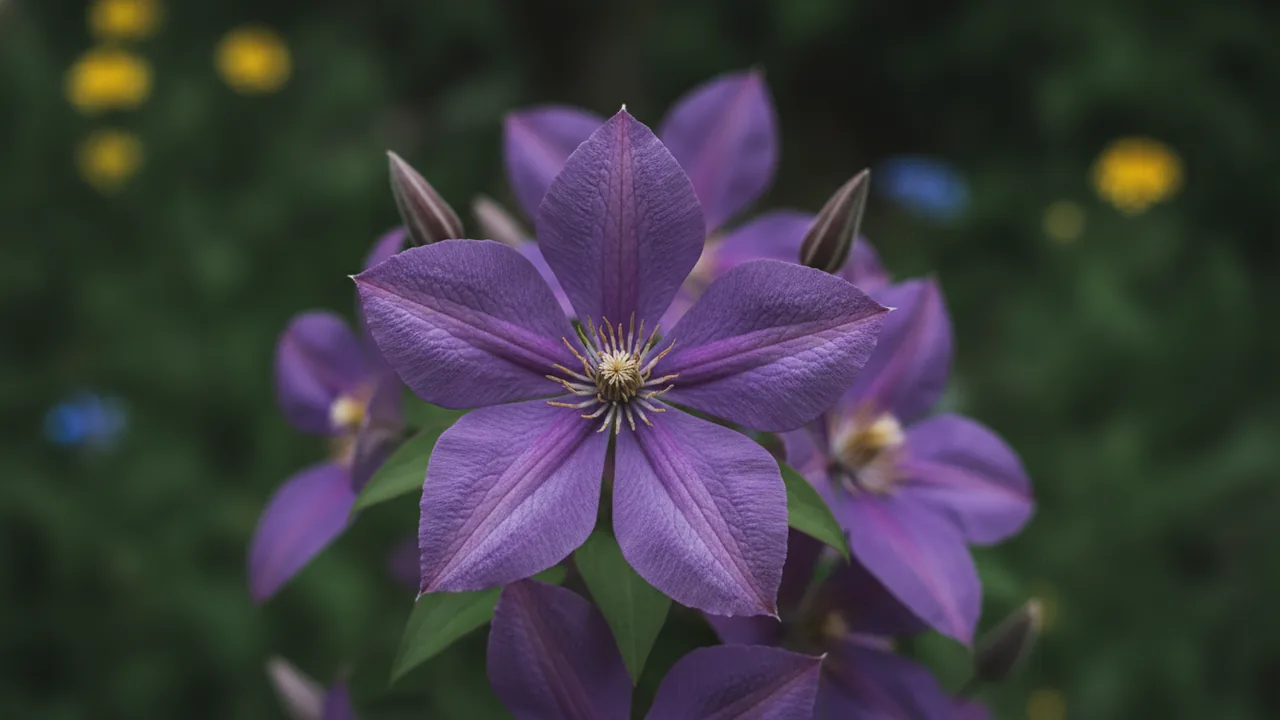
Every garden runs out of ground eventually, but almost none runs out of fence. Our library files 64 plants as climbers (the sweet peas that climb with them are filed with the annuals), and this guide is about using them for what they do best: turning a bare fence, an arch, or a pergola into a wall of flowers. It is a different job from screening out the neighbors, which is a leaf-and-evergreen question our privacy guide answers; here the point is bloom. One rule before the list: match the vine's vigor to the structure. A clematis and a wisteria are both "a vine" the way a housecat and a leopard are both "a cat".
Which flowering vine should I plant?
For most structures, a clematis: flowers from May to September, a polite 8 to 11 feet, and a cultivar in nearly every color. Add honeysuckle where you want fragrance and hummingbirds, climbing hydrangea for a shaded wall, and sweet peas for one fast, scented season in any zone. Wisteria and trumpet vine are glorious, but they are commitments: plant them only on structures built to carry them.
The well-behaved core
These four give the most flower per square foot of fence with the least drama: vigorous enough to cover, polite enough to share a garden.
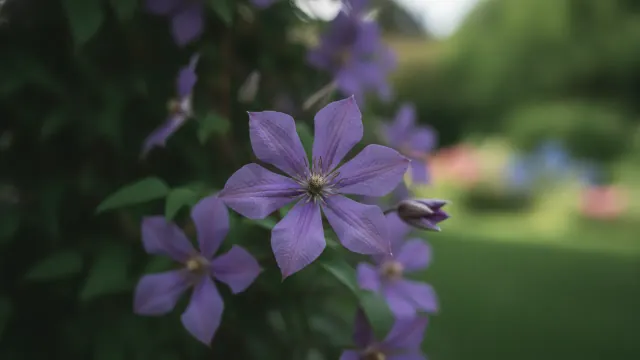
Clematis
First among the climbers for good reason: large open flowers from May to September at around 10 feet, zones 4 to 9, twining by its leaf stalks around anything wire-thin. The classic formula still works: face in the sun, roots shaded by a neighboring plant or a flat stone.
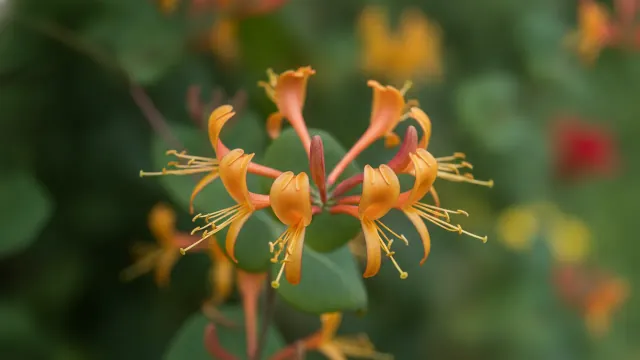
Lonicera
Tubular flowers from May to August at about 13 feet, zones 4 to 9, with the evening fragrance the name promises and hummingbirds all day. Give it a sturdy trellis and it repays you for decades; 'Major Wheeler', the red native form, is the hummingbird favorite.
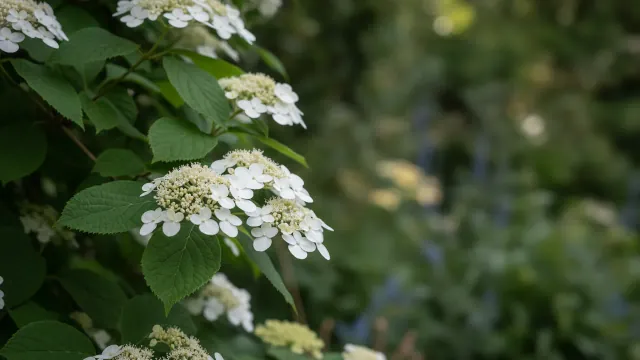
Hydrangea petiolaris
The shade specialist: white lacecap flowers in June and July, zones 4 to 8, on a climber that grips stone and brick by itself, no trellis required. Gardeners joke that it sleeps, then creeps, then leaps: expect little for two or three years, then a flowering wall for the next thirty. Its shrub cousins are compared in our hydrangea guide.
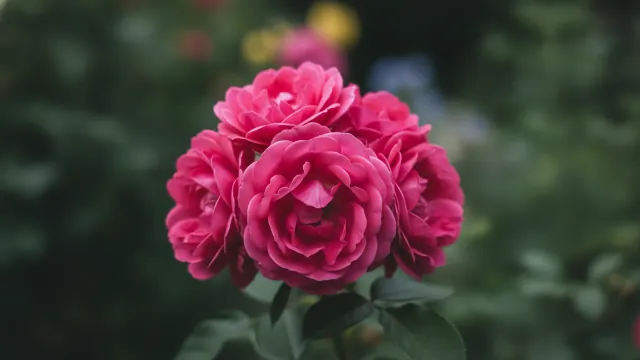
Rosa
Not a true vine at all, it holds on with thorns and your training, but nothing else drapes an arch in flowers from May to September, zones 5 to 9. Tie the main stems in as close to horizontal as you can; horizontal stems are the ones that flower.
The beautiful thugs
Now the honest section. These three are among the most spectacular plants in the entire library, and every one of them will outgrow, outmuscle, or out-seed a gardener who was not warned. Plant them with eyes open, on structures that can carry a small tree, and they are magnificent.
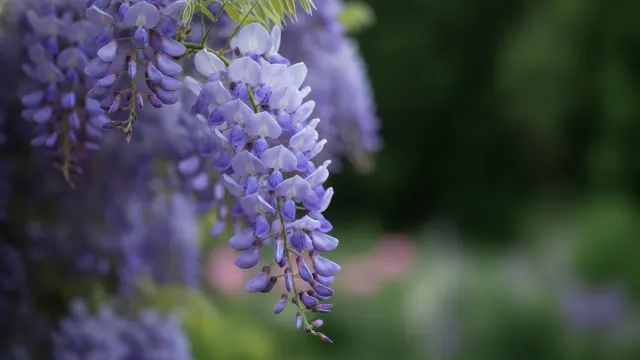
Wisteria
The most beautiful thug in gardening: dripping violet chains in April and May, zones 5 to 9, on a woody twiner that reaches 26 feet and, famously, crushes flimsy trellises and pries at gutters as it thickens. It needs serious support, patience (young plants can take years to first bloom), and a twice-yearly prune. The American native 'Amethyst Falls' is the gentler choice: smaller, quicker to reach flowering age, and far less rampant.
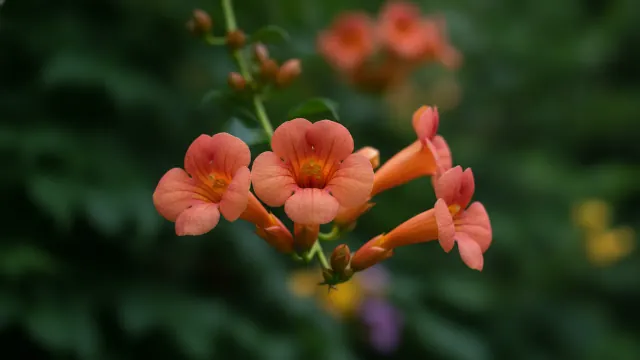
Campsis radicans
A 26-foot native engine of orange trumpets from June to September, zones 4 to 9, and the single best hummingbird plant you can put on a wall (our hummingbird guide builds the rest of the menu). It self-clings, suckers relentlessly from the roots, and laughs at drought; give it a masonry wall or a heavy pergola far from the house, then mow the runners without mercy.
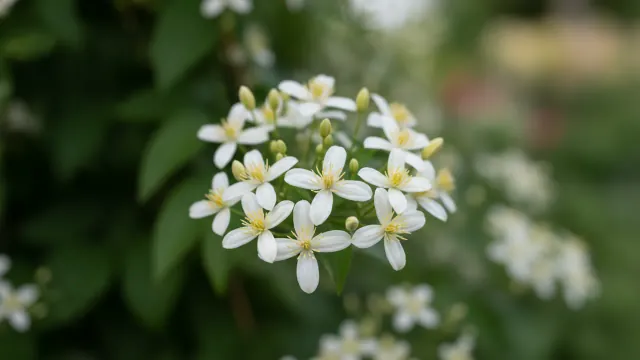
Clematis terniflora
The one clematis that belongs in this section: a 13-foot cloud of small, honey-scented white stars from August to October, zones 4 to 9, when nothing else vertical is flowering. It can put on a whole story of growth in a season and self-seeds enthusiastically in some regions, so check how it behaves locally before letting it loose.
Annual vines: a wall of flowers by August
The fastest answer of all: annual climbers race from seed to full coverage in one season, which makes them the cheap way to audition a bare fence before committing to something woody. In the warmest zones a few behave as perennials; everywhere else they finish with the frost.
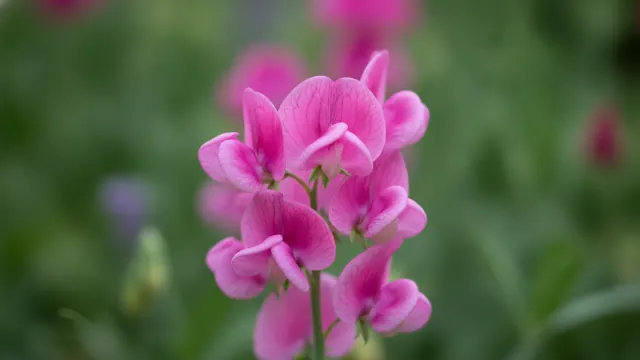
Lathyrus odoratus
The scented one: ruffled flowers in every soft color from May to July on a 6-foot annual that grows happily in any zone. Sow early, pick constantly (cutting is deadheading here), and it perfumes the whole garden until real heat shuts it down.
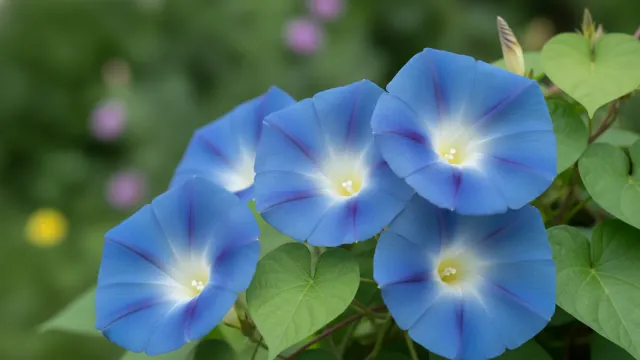
Ipomoea
Sown after frost against strings or netting, it is a flowering curtain by late summer: big saucers opening at dawn, June to October, spent by dusk. Expect self-sown volunteers next year, and for evening perfume plant its true cousin the moonflower alongside, which takes over the night shift in white.
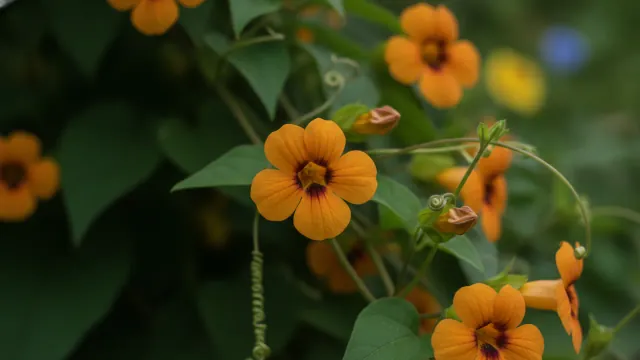
Thunbergia alata
Cheerful dark-eyed orange flowers from June to October at 8 feet, scrambling up anything it can reach. Perennial only in zones 10 and 11, and a beloved one-season container climber everywhere colder; give it a tripod of canes in a big pot and it makes a flowering pillar.
Match the vine to the structure
Vines climb in different ways, and the mismatch is where the damage stories come from. Twiners (clematis, honeysuckle, wisteria) need something thin to wrap: wire, netting, slats. Self-clingers (climbing hydrangea, trumpet vine) glue themselves to surfaces, fine on solid masonry, unkind to wood siding and old mortar. Climbing roses hold on with thorns and need tying. No vine should climb the house itself unless the wall can take it.
What is the fastest-growing flowering vine?
For one season, the annuals win outright: a morning glory sown after frost is a 10-foot flowering curtain by August. Among the perennials, trumpet vine and wisteria are the fastest once established, which is exactly why they sit in the thug section. Fast and polite rarely come in the same plant.
Which vines flower in shade?
Climbing hydrangea is the classic, flowering on north and east walls in June and July. Among clematis, pale cultivars like 'Nelly Moser' flower in part shade, and their colors hold better out of harsh sun. True deep shade defeats every flowering vine; there, an evergreen screen planted in front of the wall, our privacy guide's territory, is the honest fix.
Will a vine damage my house?
The self-clingers can: climbing hydrangea and trumpet vine grip with adhesive pads and rootlets that are unkind to wood siding, old mortar, and anything that ever needs repainting. On sound masonry they are generally fine. Twiners and roses on a trellis set a few inches off the wall are the safe answer anywhere.
Why is my wisteria not blooming?
The most-asked vine question there is. Usually youth: seed-grown wisteria can take many years to mature, which is why you buy a named, grafted plant. After that, it is pruning: wisteria flowers on short spurs, so the standard advice is to cut the whips back in midsummer and again harder in late winter. Feed it nothing; a hungry wisteria blooms better than a fat one.
Design a garden with these plants
Open BloomsEye Studio with this guide's plants ready to drop onto a plan, then watch the whole bed bloom across the year. New to it? See what the free garden planner does.