
Color
Orange Flowers: The Color Most Gardens Are Missing
Everyone plants pink and purple; almost nobody plants enough orange. The warmest color in the library, spring to frost.
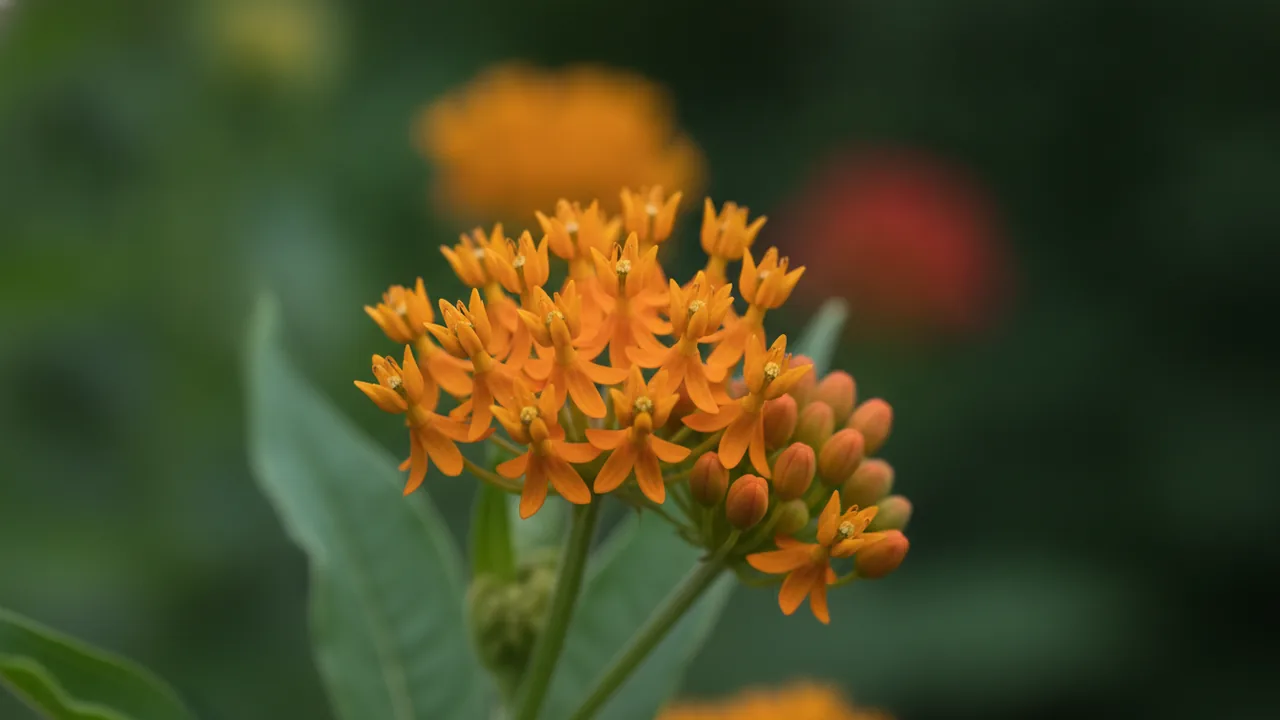
Here is a pattern we see in real gardens all the time: plenty of pink, plenty of purple, a little white and yellow, and almost no orange anywhere. Which is a shame, because orange is the color that makes every other one work harder: it warms the pinks, electrifies the blues, and carries a border through late summer when the pastels have gone quiet. Our library files 209 plants under its orange filter, from soft apricots to full marmalade, and this guide walks the best of them season by season. If your garden feels pretty but a bit polite, orange is usually the missing ingredient.
What are the best orange flowers?
Season by season: 'Princess Irene' tulips and crown imperials in spring, butterfly weed and red hot pokers for early summer, then crocosmia, helenium, and dahlias carrying high summer into fall, where bronze mums close the year. For instant orange in pots and gaps, marigolds run May to October and nasturtiums spill it into September. Every pick below carries its real bloom months, plus hardiness zones where a plant has any to claim.
Spring: orange arrives early
Orange is rarest in spring, which is exactly why a little of it among all that pink and yellow looks so good. Two bulbs and one shrub do most of the work.
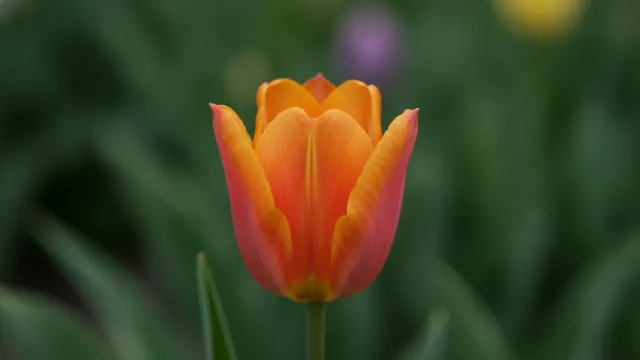
Tulipa 'Princess Irene'
The connoisseur's tulip: soft orange feathered with purple flames, in April, at a wind-proof 14 inches. It is fragrant too, which almost no tulip is. Plant it with anything blue and take the credit.
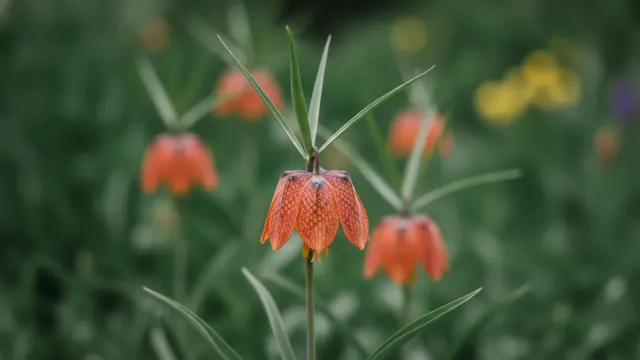
Fritillaria imperialis
The crown imperial: a 3-foot spring exclamation mark topped with a ring of hanging orange bells in April and May, zones 5 to 8. Regal, slightly eccentric, and famously ignored by rodents.
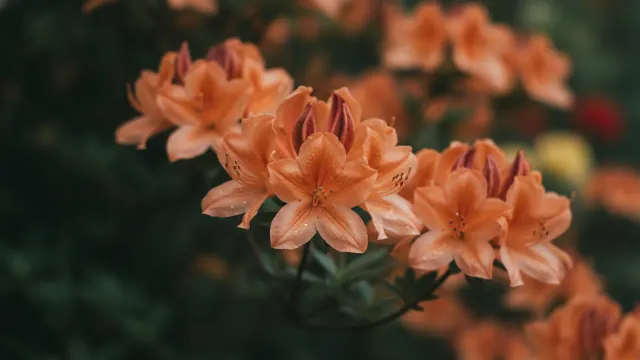
Rhododendron 'Gibraltar'
A deciduous azalea that turns flame-orange for April and May in part shade, zones 5 to 8. Where rhododendrons sulk in pastels, 'Gibraltar' burns.
Early summer: the native heart of it
Early summer is when the tough oranges take over, and the best of them are as low-maintenance as perennials get.
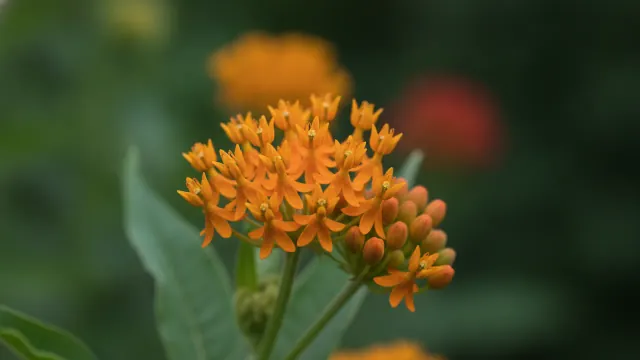
Asclepias tuberosa
The best orange decision a garden can make: a 2-foot native milkweed in pure saturated orange from June to August, hardy zones 3 to 9, drought-tolerant, and the host plant monarch butterflies actually lay eggs on. Slow to emerge in spring, eternal once established.
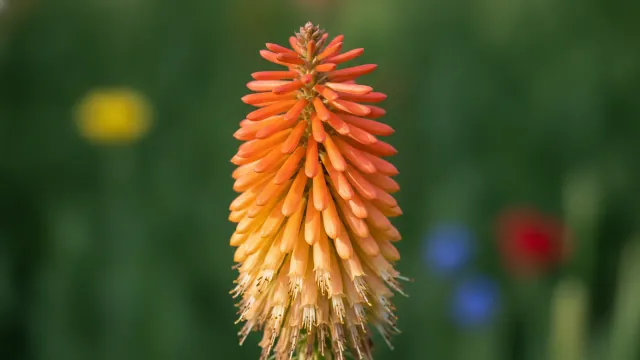
Kniphofia
Two-tone pokers that open orange and mature through amber to cream-yellow, June to August, over a 3.5-foot clump of grassy leaves. Zones 5 to 9, steady summer water but drought-tolerant once established, and impossible to overlook.
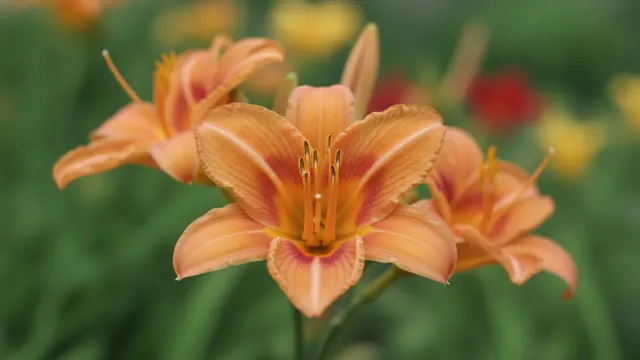
Hemerocallis
The original tawny daylily: cheerful orange trumpets, June to August, zones 3 to 9, on a plant that survives everything short of pavement. The classic orange for the laziest corner of the garden.
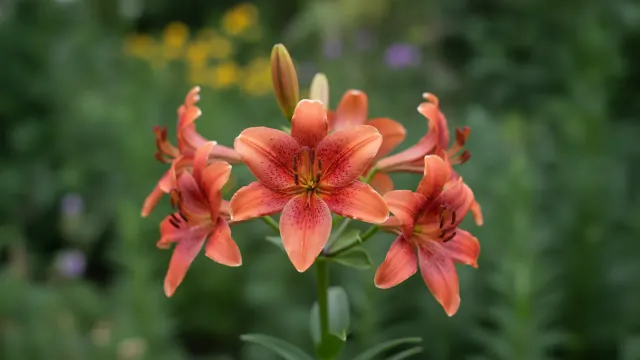
Lilium
Asiatic lilies do orange better than nearly any flower: upfacing blooms in June and July on 3.5-foot stems, zones 3 to 8. Plant the bulbs in fall or early spring and cut some for the house; they last a week in water.
High summer into fall: the crescendo
This is orange's home season. From July onward the warm colors peak, and these four carry the border right to the first frosts.
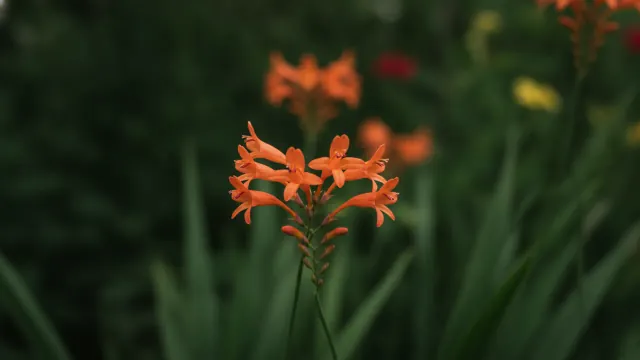
Crocosmia 'Emily McKenzie'
Arching wands of wide-open orange trumpets with mahogany throats, July to September, zones 6 to 9. The refined sibling of the scarlet 'Lucifer' every hot border already has.
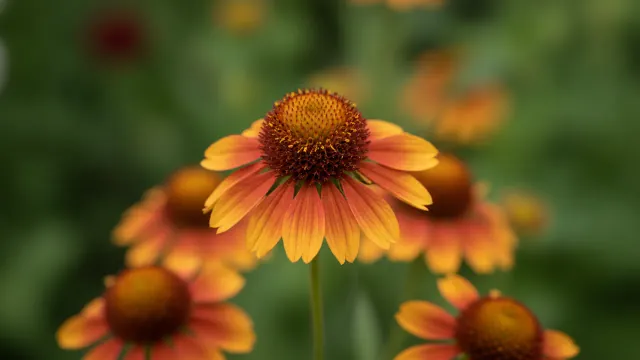
Helenium
Sneezeweed, terrible name, wonderful plant: copper-and-orange daisies with velvet button centers from July to September, zones 3 to 8. Bees queue for it just as the summer perennials tire.
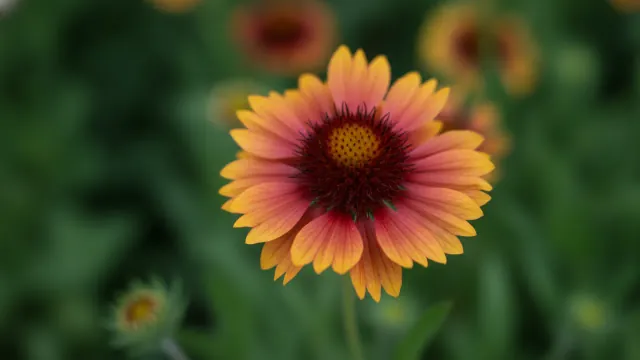
Gaillardia
Blanket flower: red-and-orange pinwheels from June to September at 20 inches, on one of the widest zone ranges in the library, 3 to 10. Lean soil and neglect suit it perfectly; rich ground is the one thing it cannot handle.
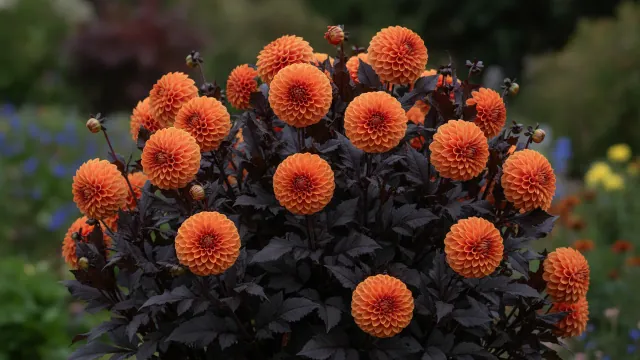
Dahlia 'David Howard'
The famous bronze-leaved dahlia: soft burnt-orange doubles over dark chocolate foliage, July to October. Hardy in the ground only in zones 8 to 10; everywhere colder, lift the tubers after frost and store them dry.
And when October arrives, the season hands over to the mums: a bronze chrysanthemum flowering September to November is the exact color of the leaves coming down around it, which is why no fall container looks finished without one. Our fall color guide builds the whole late-season picture.
Annual orange, from spring to frost
Annuals are the cheapest way to test whether your garden wants more orange (it does), and several of the best run half the year.
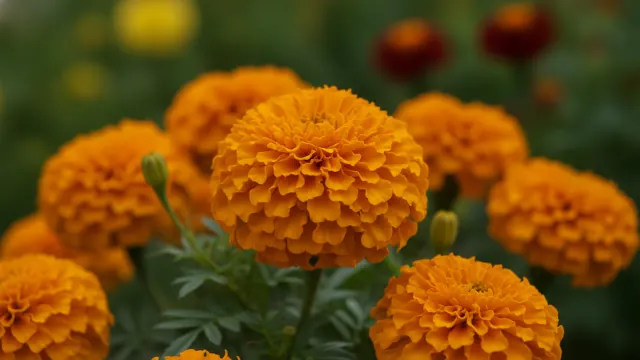
Tagetes
The workhorse: nonstop orange from May to October in every size from pompom to single daisy. Unfussy, edging-proof, and one of the longest-flowering annuals in the whole library.
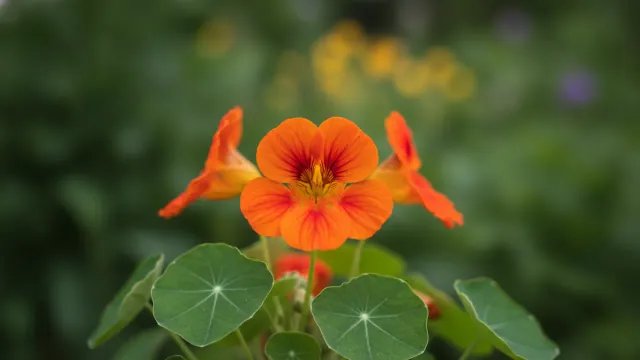
Tropaeolum
Round leaves and spurred flowers in orange, mahogany, and cream from June to September, trailing out of pots and over edges. Poor soil makes it flower harder, and yes, the flowers are edible.
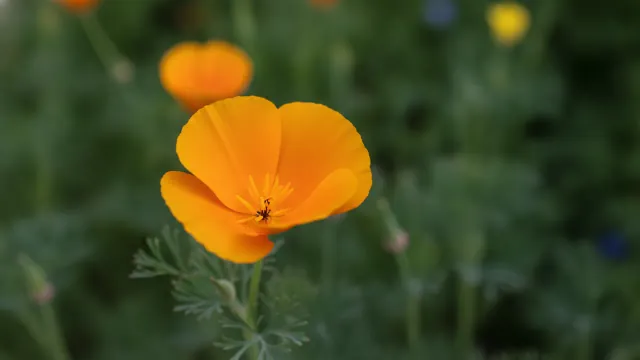
Eschscholzia
Silky orange cups over ferny blue-green foliage, May to August, on a Western native that thrives on neglect and self-sows politely. Sow it once on a dry sunny bank and you may never need to again.
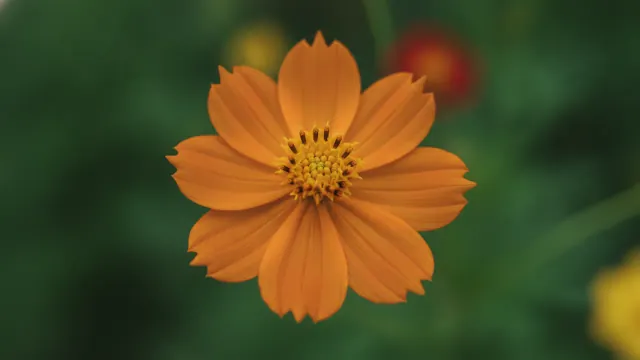
Cosmos sulphureus 'Bright Lights'
The airy one: semi-double orange and gold cups dancing on 3-foot stems from June to October. Superb for cutting, loved by pollinators, and happiest in soil that is not too rich.
Using orange without the shout
If full marmalade feels like a leap, start at the soft end: apricot and bronze read as warmth rather than volume. The English rose 'Lady of Shalott' flowers in exactly that register from May to October and convinces most orange skeptics on sight. Then use the color wheel: orange next to blue and violet is the most electric pairing gardening has (our blue flowers guide supplies the other side), and orange massed with reds and golds becomes the full furnace of a hot border. Either way, plant it in threes; one orange flower reads as an accident, three read as a decision.
What colors go with orange flowers?
Blue and violet are the classic answer, opposites on the color wheel, and the pairing makes both sides more vivid: think crocosmia against russian sage. For a harmonious scheme, run orange with reds and golds in a hot border; for a softer one, use apricot shades with bronze foliage and cream.
Which orange flowers are native?
The star is butterfly weed, an orange milkweed native across most of the continent and the host plant for monarch caterpillars. California poppy is the great Western native annual. Both are drought-tolerant, which makes them the backbone of a tough, wildlife-friendly orange scheme.
Are there orange flowers for shade?
A few. The deciduous azalea 'Gibraltar' is the best shrub answer, flaming away in part shade each April and May. Most other oranges are sun plants; in real shade, warm color usually comes from foliage instead, which our shade guide covers.
What is the longest-blooming orange flower?
Among the classic border perennials, gaillardia's June to September run is the one to beat. But the honest answer is an annual: marigolds flower May to October, a six-month run that puts them in the top tier of our longest-blooming annuals ranking.
Design a garden with these plants
Open BloomsEye Studio with this guide's plants ready to drop onto a plan, then watch the whole bed bloom across the year. New to it? See what the free garden planner does.