
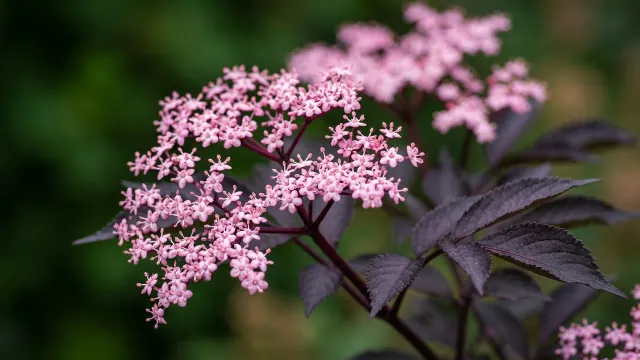
 Illustration

Lilac
Syringa vulgaris
Lilac blooms from April through May.
Months here are Northern Hemisphere months; in the Southern Hemisphere, shift them by six months.
Growing Lilac
Plant it in full sun. It prefers moderate water. It is hardy in USDA zones 3–7. Expect it to reach about 10 ft tall and 8 ft wide at maturity, in roughly 4 years (not yet checked).
What was checked
Mature height and spread, hardiness zones, sun and the trait tags were checked against named botanical sources for this plant. The bloom months and water need on this page were not, and each fact above says which. The planting, spacing and size sections are derived from these checked facts by a fixed rule, not checked separately, and the plant type is the library's own classification.
When to plant Lilac
Plant Lilac in early spring as soon as the soil is workable, or in early fall at least six weeks before your first frost, so roots establish in cool weather. In zone 5, the middle of its hardy zones 3 to 7, spring means April to June and fall means August or September. Once settled, it blooms from April to May.
Month-by-month timing for your zone is on the planting calendar; if you garden near zone 5, the middle of this plant's hardy range, start with zone 5 in April. Derived from the plant's category, zones and bloom months plus typical zone frost dates, not checked separately.
How big does Lilac get?
 10 fttall5 ft 7 inan adult8 ftwide
See Lilac in a garden plan: the planner shows it in 3D beside everything else you add, growing toward this size over the years.
How far apart to plant Lilac
Derived from the mature spread above by a fixed rule, not checked separately: spacing is the spread, center to center.
Give Lilac about 8 ft of clear ground in every direction, measured from its center. It is one plant with room around it, not a row, and a raised bed is too small for it.
Add Lilac to a garden plan and the planner draws it at its full width, so you see the spacing before you buy.
Where these facts come from
Lilac's height, spread, hardiness zones, sun and trait tags were checked against 6 published sources on July 30, 2026. Each one is linked below with every fact it carried, which can include a fact this page still marks as not yet checked, because a source carrying a value is not the same as the value being held to the standard. Facts not in that list, and the planting, spacing and size sections, are not covered by these sources.
- Missouri Botanical GardenSyringa vulgarisheight, spread, hardiness zones, sun and trait tags
- NC State ExtensionSyringa vulgarisheight, spread, hardiness zones, sun and trait tags
- Purdue ArboretumSyringa vulgarisheight, spread, hardiness zones, sun and trait tags
- trees.umn.eduUniversity of Minnesota Urban Forestry Outreach and Research, tree and...height, spread, hardiness zones, sun and trait tags
- University of Illinois ExtensionSyringa vulgaris, Common Lilacheight, spread, hardiness zones, sun and trait tags
- Oregon State UniversitySyringa vulgarisheight, hardiness zones, sun and trait tags
How the checking works, and what each standard covers, is on the verified plants page.
Comes in 13 varieties across 5 colors
Same genus, similar care - pick the color you are growing.
- Beauty of Moscow
- Bloomerang Purple
- Charles Joly
- Katherine Havemeyer
- Ludwig Späth
- Madame Lemoine
- Miss Kim
- President Grevy
- President Lincoln
- Primrose
- Sensation
- Wedgwood Blue
- Yankee Doodle
Compare every variety in the Lilac group
Every figure is the variety's own page fact. Tap a name to open it.
| Variety | Color | Blooms | Hardiness | Sun | Size (H × W) |
|---|---|---|---|---|---|
| Beauty of Moscow | White | Apr–May | Zones 3–7 | Full sun | 10 ft × 7 ft |
| Bloomerang Purple | Purple | Apr–Sep | Zones 3–7 | Full sun | 5 ft × 5 ft |
| Charles Joly | Purple | Apr–May | Zones 3–7 | Full sun | 10 ft × 8 ft |
| Katherine Havemeyer | Pink | Apr–May | Zones 3–7 | Full sun | 10 ft × 8 ft |
| Lilacthis page | Purple | Apr–May | Zones 3–7 | Full sun | 10 ft × 8 ft |
| Ludwig Späth | Purple | Apr–May | Zones 3–7 | Full sun | 10 ft × 8 ft |
| Madame Lemoine | White | Apr–May | Zones 3–7 | Full sun | 10 ft × 8 ft |
| Miss Kim | Blue | May–Jun | Zones 3–8 | Full sun | 6 ft × 5 ft |
| President Grevy | Blue | Apr–May | Zones 3–7 | Full sun | 10 ft × 8 ft |
| President Lincoln | Blue | Apr–May | Zones 3–7 | Full sun | 10 ft × 8 ft |
| Primrose | Yellow | Apr–May | Zones 3–7 | Full sun | 8 ft × 7 ft |
| Sensation | Purple | Apr–May | Zones 3–7 | Full sun | 10 ft × 8 ft |
| Wedgwood Blue | Blue | Apr–May | Zones 3–7 | Full sun | 5.5 ft × 7 ft |
| Yankee Doodle | Purple | Apr–May | Zones 3–7 | Full sun | 8 ft × 7 ft |
Good to know about Lilac
Curated from university extensions, botanic gardens and other primary sources, with the source named on every note. A note reports what its source says; where that differs from a fact above, the fact above is this entry's stored value, and its mark says whether it has been checked.
Worth knowing
Full sun fixes two problems at once: shade that starves bloom also raises humidity and drives powdery mildew, so a sunny, open spot means more flowers, less disease. per NC State and Iowa State
Renewing an overgrown lilac
To renew an old lilac, remove a third of the oldest stems yearly over three years and keep bloom, or cut it low and lose three years of flowers. per Nebraska and Minnesota
Prune right after flowering
Lilac blooms on old wood and sets next year's buds the summer after it flowers, so prune right after bloom; a later cut removes next year's flowers. per NC State and Penn State
Needs a cold winter
Common lilac needs a long winter chill for its flower buds to mature, so it blooms poorly in the deep South and other mild-winter regions. per NC State and Minnesota
Safe, but mind the name
True lilac (Syringa vulgaris) is generally non-toxic to pets and people. Do not confuse it with 'Persian lilac' or chinaberry (Melia azedarach), an unrelated, genuinely poisonous plant. per Extension Horses and NC State
It suckers from the roots
Lilac suckers from the roots and can slowly form a thicket. Most plants are grafted, so remove rootstock suckers, or you get a different plant than the named top. per NC State and Minnesota
What pairs well with Lilac
Good companions share its growing conditions and add something it lacks: an earlier or later bloom, a lower carpet in front, or structure through winter.

Purple Coneflower
Shares full sun and low to moderate water; blooms in early summer as this one finishes; both offer pollinator forage, in different months; its seed heads stand through winter, for structure and the birds.

Lavender
Shares full sun and low to moderate water; blooms in early summer as this one finishes; both offer pollinator forage, in different months; evergreen, so the bed keeps its shape through winter.

Aster
Shares full sun and moderate water; blooms in early fall, extending the bed's season; both offer pollinator forage, in different months; its seed heads stand through winter, for structure and the birds.
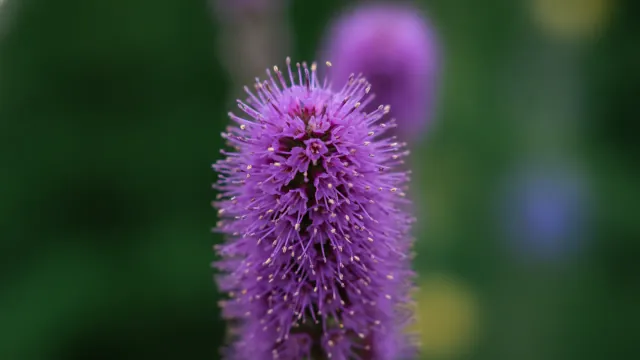
Blazing Star
Shares full sun and low to moderate water; blooms in midsummer, extending the bed's season; both offer pollinator forage, in different months; its seed heads stand through winter, for structure and the birds.
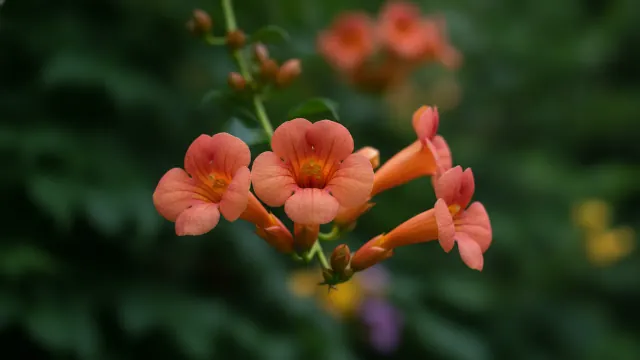
Trumpet Vine
Shares full sun and moderate water; blooms in early summer as this one finishes; both offer pollinator forage, in different months; climbs to 26 ft behind it, height without the footprint.
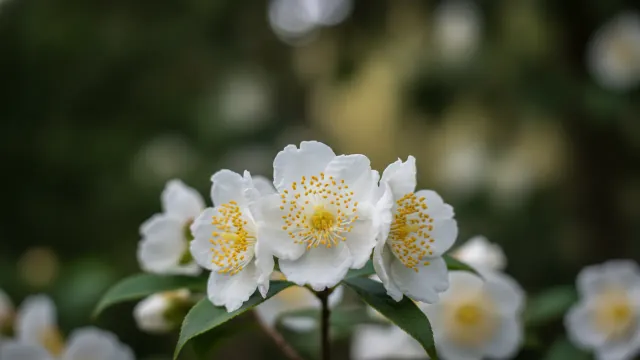
Japanese Stewartia
Takes full sun to part sun and moderate water; blooms in early summer as this one finishes; both offer pollinator forage, in different months; taller at 16 ft, for the layer behind it.
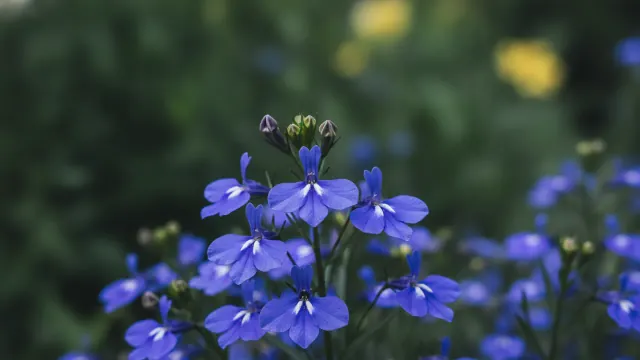
Lobelia
Takes full sun to part sun and moderate water; overlaps, then carries the display into early fall; low at 8 in, to carpet the ground beneath; both offer pollinator forage.

Fan Flower
Shares full sun and moderate water; overlaps, then carries the display into mid fall; low at 8 in, to carpet the ground beneath; echoes the purple.
Featured in these guides
Explore similar plants
You might also like

Design a garden with this
Drop this plant onto a 3D plan, see how it fills in, and watch your whole garden bloom across the year.