
Practical
Lilac Varieties Compared: From Dwarf Rebloomers to the Classics
One big spring flush on a 10-foot shrub, or a smaller lilac that flowers again into fall: here is which to plant, and the pruning rule they all share.
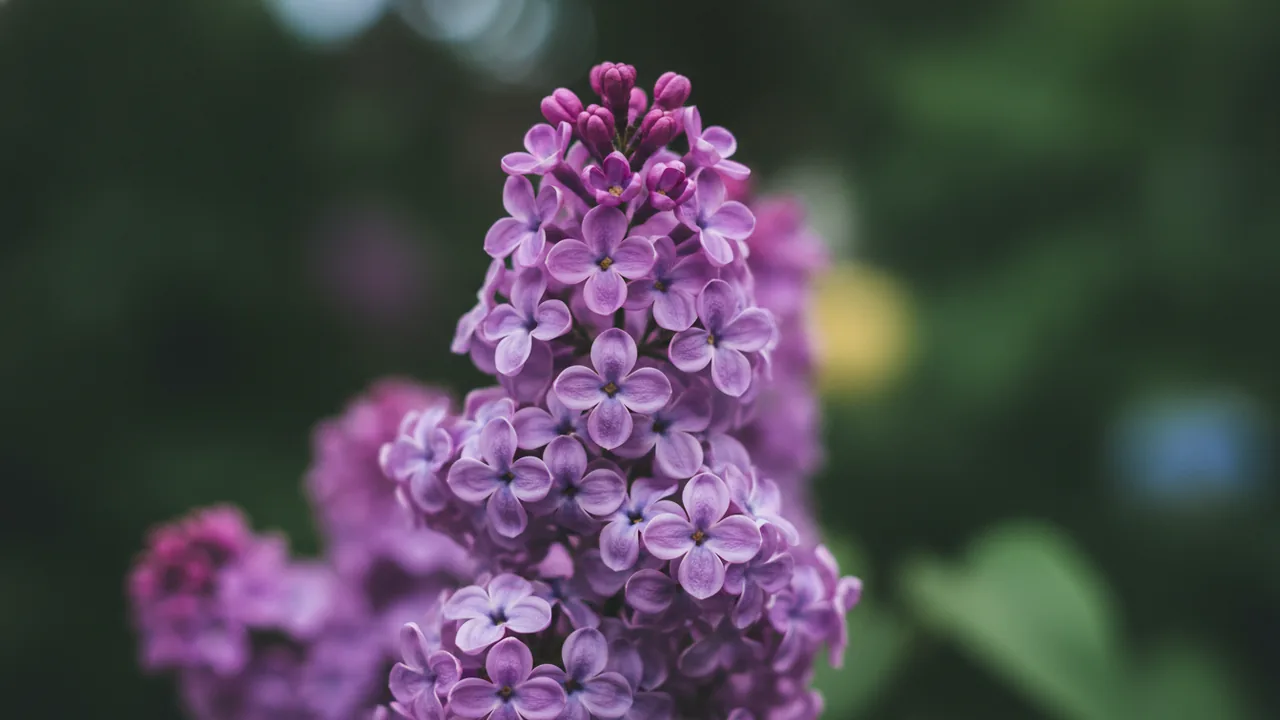
The lilac most gardeners picture is the common lilac: a 10-foot shrub that scents the whole yard in spring and has little to show the rest of the year. It is still the benchmark, but breeders have since added dwarfs small enough for a pot and rebloomers that flower again into fall. Our library holds twenty lilacs, all in the variety table on that page, and choosing comes down to three questions: how much room you have, whether you want a second flush, and how mild your winters are.
Which lilac should I plant?
For most gardens, 'Bloomerang Dark Purple': a fragrant 5-foot shrub that flowers in spring and again from midsummer into fall, with better disease resistance than the old lilacs. With room for a 10-foot shrub, plant the common lilac itself; without it, 'Wedgwood Blue' gives the classic look and scent at about half the height. For a pot or the front of a border, 'Baby Kim' stays at 2.5 feet; 'Bloomerang Showmound' reblooms at the same size, though its page is not yet checked. In hot, humid zone 8 gardens, where common lilacs bloom unreliably, plant 'Betsy Ross'.
| Variety | Type | Color | Blooms | Zones | Height |
|---|---|---|---|---|---|
| 'Baby Kim' | Dwarf | Purple | May | 3 to 7 | 2.5 ft |
| 'Bloomerang Ballet' | Rebloomer | Pink | May to September | 3 to 7 | 4 ft |
| 'Bloomerang Dark Purple' | Rebloomer | Purple | May to September | 3 to 7 | 5 ft |
| 'Bloomerang Purple' | Rebloomer | Purple | April to September | 3 to 7 | 5 ft |
| 'Wedgwood Blue' | Common lilac, compact | Blue | April to May | 3 to 7 | 5.5 ft |
| 'Betsy Ross' | Warm-climate hybrid | White | April | 5 to 8 | 9.5 ft |
| Common lilac | The species | Purple | April to May | 3 to 7 | 10 ft |
| 'Madame Lemoine' | Common lilac, double | White | April to May | 3 to 7 | 10 ft |
| 'Bloomerang Showmound' | Dwarf rebloomer | White | April to September | 3 to 7 | 2.5 ft |
| 'Miss Kim' | Korean lilac | Blue | May to June | 3 to 8 | 6 ft |
The rebloomers: spring, then again into fall
Every Bloomerang flowers in spring with the other lilacs, rests while it grows new shoots, then blooms on them into fall; our long-blooming shrubs guide measures the waves. The repeat runs on vigor, so give it six hours of sun or more, steady water, and mulch through early summer; the Morton Arboretum notes that it slows in hot summers. A light trim right after the spring flush is optional: it encourages the rebloom but delays it by a few weeks. The first of the series, 'Bloomerang Purple', is no longer offered by its introducer, which still carries 'Bloomerang Dark Purple'.
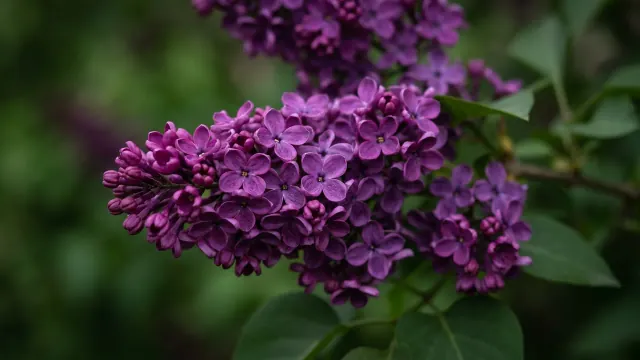
Syringa 'SMSJBP7'
The pick of the series: big dark purple buds open to fragrant purple flowers, May to September, on a 5-foot shrub for zones 3 to 7. It has improved resistance to leaf disease, and the repeat makes it a fine shrub for cutting.
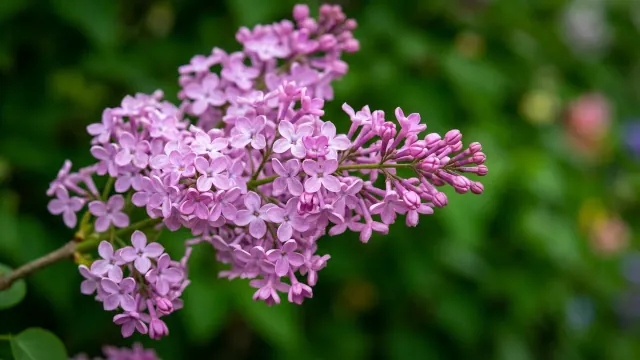
Bloomerang Ballet Reblooming Lilac
Syringa pubescens 'SMNSPH'
The pink one: frilly medium-pink flowers, May to September, on an upright 4-foot shrub for zones 3 to 7. Its breeder notes a brief pause in early summer, then a rebloom from late summer into fall.
Small spaces: the dwarfs
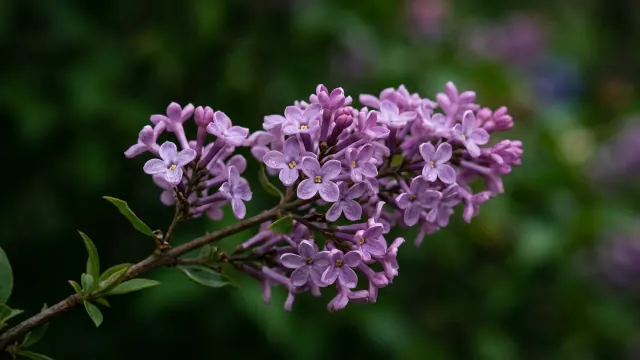
Syringa 'SMNSDTP'
Billed by its breeder as an improved 'Miss Kim', about half the size, with fragrant purple flowers that do not fade to white. A 2.5-foot mound for zones 3 to 7; its record promises May only, so count any repeat as a bonus.
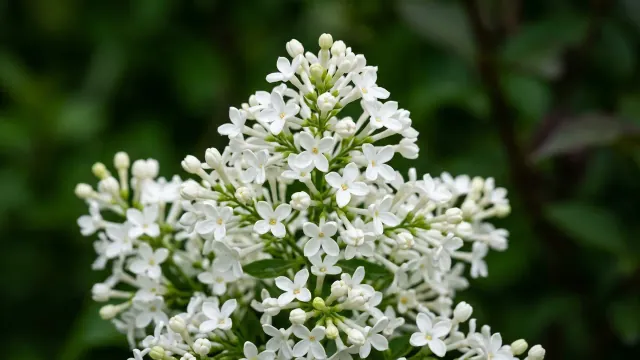
Syringa pubescens 'SMNSPWF'
The dwarf that repeats, and by its breeder's account the first white Bloomerang: a 2.5-foot mound flowering in waves from April to September, zones 3 to 7. Its page is not yet source-checked, so treat those numbers as a starting point.
The classics: one big spring show
The common lilac and its named forms flower once, in spring, and most grow big, repaying the space with the classic scent (our fragrant plants guide leads with it), armloads of cut flowers, and a screen tall enough to hide a fence, the job our privacy screens guide gives it. The lilac page lists more named classics, among them the white-edged purple 'Sensation', the pale yellow 'Primrose' and the dark purple-red 'Ludwig Späth', none of the three source-checked when this guide was written.
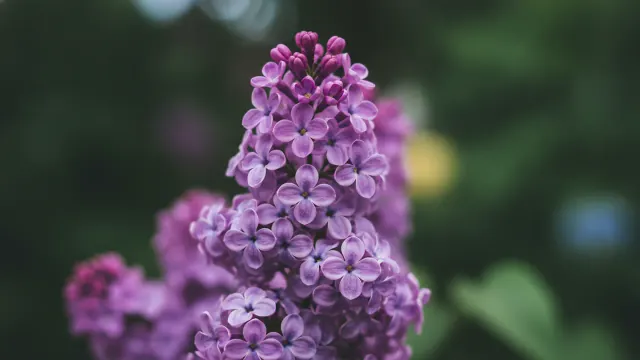
Syringa vulgaris
The benchmark: lilac-purple flowers with the classic scent, April to May, on a 10-foot shrub for zones 3 to 7. With little fall color and not much to show after bloom, it belongs along a boundary or as an informal screen, where it can fade into the green once the flowers are over.
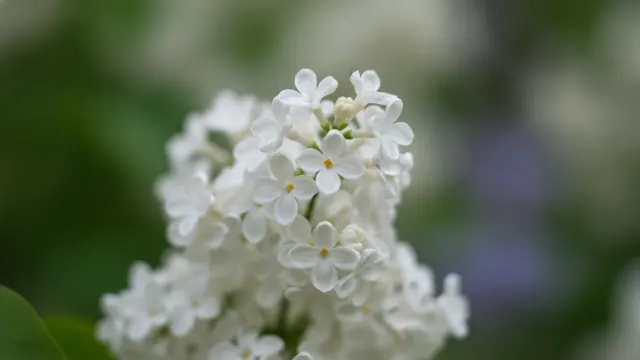
Syringa vulgaris 'Madame Lemoine'
The classic double white, introduced in 1890 and holder of the RHS Award of Garden Merit: yellowish buds open to fragrant double flowers, April to May, on a 10-foot shrub for zones 3 to 7. It flowers freely even when young.
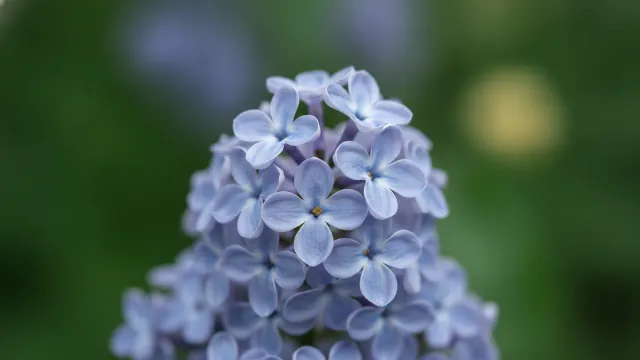
Syringa vulgaris 'Wedgwood Blue'
The classic at about half the height: pink buds open to soft lavender-blue, sweetly fragrant flowers in wisteria-like clusters, April to May, on a 5.5-foot shrub for zones 3 to 7. The common lilac for a spot where the full-size shrub would be too tall.
Zone 8 and mild winters
Nearly all lilacs need a cold winter to bloom well: the common lilac's buds need a long chill to mature, so in hot, humid zone 8 and warmer it flowers unreliably. In zone 8, try these two instead; neither is rated for zone 9.
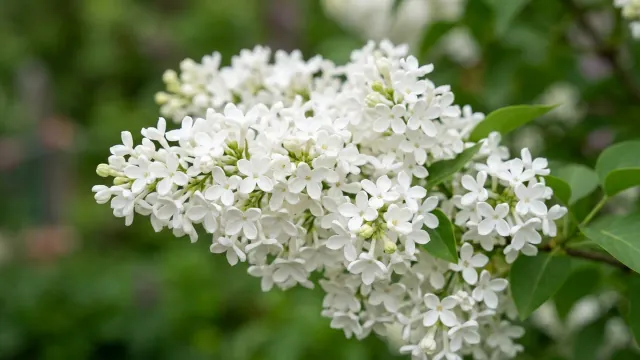
Syringa 'Betsy Ross'
Bred by the U.S. National Arboretum for warmer climates, with greater resistance to powdery mildew. Fragrant white flowers in April, among the earliest lilacs to open, on a 9.5-foot shrub for zones 5 to 8.
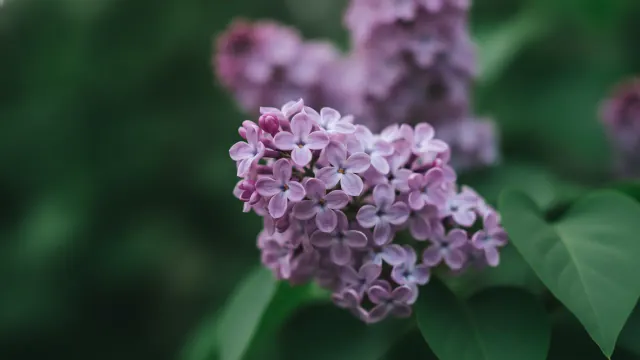
Syringa pubescens 'Miss Kim'
Purdue's arboretum says it grows better in warmer climates than other lilacs, and its page rates it for zones 3 to 8. Fragrant flowers follow the common lilacs, May to June, on a 6-foot shrub whose leaves turn burgundy in fall; its record is not yet checked.
Why is my lilac not blooming?
Four usual causes. Pruning at the wrong time: lilacs set next year's buds right after flowering, so a cut in late summer, fall, or winter removes them. Shade: they want six or more hours of direct sun. Too much nitrogen, often lawn fertilizer, which buys leaves instead of flowers. And youth: a new lilac spends its first years on roots. Where winters are mild, there is a fifth: too little chill.
When should I prune lilacs?
Routine pruning goes right after the spring flowers fade: lilacs bloom on wood made the year before, so a cut from fall to spring removes the flower buds. On a Bloomerang, that means after the spring flush, not the fall flowers. Renewal is the exception: to renew an old, leggy common lilac, cut a third of the thickest stems to the ground each late winter for three years. The rest keep flowering, while cutting the whole shrub down costs about three years of bloom.
Can lilacs grow in shade?
Not well. Every lilac here is rated for full sun, ideally six hours or more; in light shade they flower less and catch more powdery mildew, and an old lilac can fade as nearby trees grow over it. Our shade guide has better candidates.
What is the white powder on my lilac's leaves?
Powdery mildew, which frequently attacks lilacs in summer. Extension services call it cosmetic: it spoils the leaves for the season but does little lasting harm. Sun and room for air to move are the prevention; for a new planting, the Bloomerangs, 'Betsy Ross' and 'Miss Kim' all carry better resistance.
Sources for these facts
8 of the 10 plants in this guide's table are source-checked, one plant at a time against published sources; each plant's own page names its sources and the facts each one carried. Every source behind their growing facts, with how many of these plants it covers:
- Missouri Botanical Garden6 plants
- NC State Extension6 plants
- Plant Addicts5 plants
- Proven Winners4 plants
- The Morton Arboretum4 plants
- University of Minnesota Extension4 plants
- nvknurseries.com3 plants
- Sooner Plant Farm3 plants
- springmeadownursery.com3 plants
- US plant patent (Google Patents)3 plants
- active.inspection.gc.ca2 plants
- Chicago Botanic Garden2 plants
- gardencrossings.com2 plants
- internationallilacsociety.org2 plants
- jeffriesnurseries.com2 plants
- Nature Hills Nursery2 plants
- Oregon State University2 plants
- plants.platthillnursery.com2 plants
- shop.wassonnursery.com2 plants
- University of Wisconsin Horticulture2 plants
- wasconursery.com2 plants
- acornfarms.com1 plant
- ars.usda.gov1 plant
- backyardgardener.com1 plant
- canr.udel.edu1 plant
- conservationgardenpark.jvwcd.gov1 plant
- dawesarb.arboretumexplorer.org1 plant
- diggingdog.com1 plant
- digitaleditions.walsworth.com1 plant
- e-katalogroslin.pl1 plant
- Gardenia1 plant
- havlis.cz1 plant
- Internet Archive (archived page)1 plant
- jcra.ncsu.edu1 plant
- online.fliphtml5.com1 plant
- plants.gertens.com1 plant
- plants.greenhavengarden.ca1 plant
- plants.thegrowingplace.com1 plant
- plants.westonnurseries.com1 plant
- Pleasant Run Nursery1 plant
- Purdue Arboretum1 plant
- RHS1 plant
- The Tree Center1 plant
- trees.umn.edu1 plant
- treesandshrubsonline.org1 plant
- University of Illinois Extension1 plant
- vdberk.co.uk1 plant
- waukesha.extension.wisc.edu1 plant
- whiteflowerfarm.com1 plant
The other 2 plants in the table are not yet checked, and their pages say so. What each level of checking covers: how plants are checked.
Design a garden with these plants
Open BloomsEye Studio with this guide's plants ready to drop onto a plan, then watch the whole bed bloom across the year. New to it? See what the free garden planner does.