
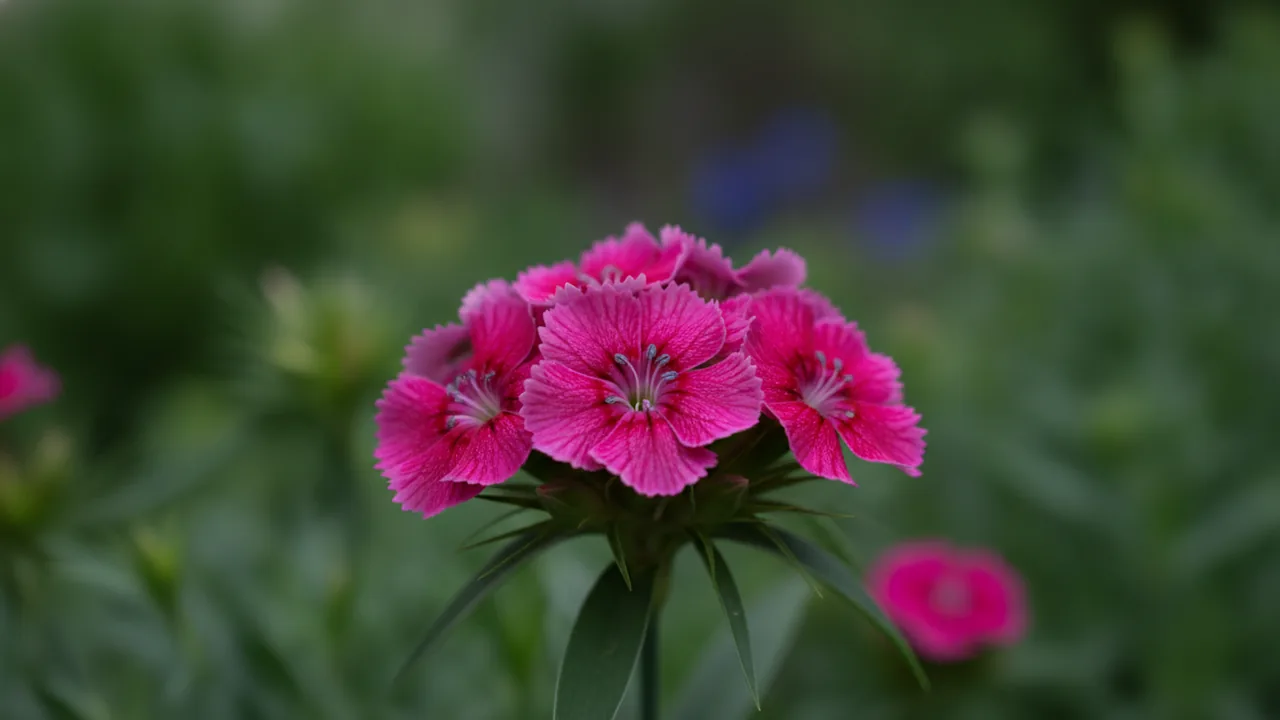
 Illustration

Dianthus
Dianthus
Dianthus blooms from May through August.
Months here are Northern Hemisphere months; in the Southern Hemisphere, shift them by six months.
Growing Dianthus
Plant it in full sun. It prefers low water. It is hardy in USDA zones 3–9. Expect it to reach about 12 in tall and 12 in wide at maturity, in roughly 2 years (not yet checked).
What was checked
Mature height and spread, hardiness zones, sun and the trait tags were checked against named botanical sources for this plant. The bloom months and water need on this page were not, and each fact above says which. The planting, spacing and size sections are derived from these checked facts by a fixed rule, not checked separately, and the plant type is the library's own classification.
When to plant Dianthus
Plant Dianthus in early spring as soon as the soil is workable, or in early fall at least six weeks before your first frost, so roots establish in cool weather. In zone 6, the middle of its hardy zones 3 to 9, spring means March to May and fall means August or September. Once settled, it blooms from May to August.
Month-by-month timing for your zone is on the planting calendar; if you garden near zone 6, the middle of this plant's hardy range, start with zone 6 in March. Derived from the plant's category, zones and bloom months plus typical zone frost dates, not checked separately.
How big does Dianthus get?
 12 intall5 ft 7 inan adult12 inwide
See Dianthus in a garden plan: the planner shows it in 3D beside everything else you add, growing toward this size over the years.
How far apart to plant Dianthus
Derived from the mature spread above by a fixed rule, not checked separately: spacing is the spread, center to center.
Space Dianthus about 12 in apart, center to center, so each plant has room to reach its full width.
Add Dianthus to a garden plan and the planner draws it at its full width, so you see the spacing before you buy.
Where these facts come from
Dianthus' height, spread, hardiness zones, sun and trait tags were checked against 11 published sources on July 29, 2026. Each one is linked below with every fact it carried, which can include a fact this page still marks as not yet checked, because a source carrying a value is not the same as the value being held to the standard. Facts not in that list, and the planting, spacing and size sections, are not covered by these sources.
- Missouri Botanical GardenDianthus gratianopolitanusheight, spread, hardiness zones, sun and trait tags
- Missouri Botanical GardenDianthus deltoidesheight, spread, hardiness zones, sun and trait tags
- Missouri Botanical GardenDianthus barbatusheight, spread, hardiness zones, sun and trait tags
- Missouri Botanical GardenDianthus chinensisheight, spread, hardiness zones, sun and trait tags
- NC State Extensiongenus Dianthusheight, spread, hardiness zones, sun and trait tags
- NC State ExtensionDianthus plumariusheight, spread, hardiness zones, sun and trait tags
- NC State ExtensionDianthus gratianopolitanusheight, spread, hardiness zones, sun and trait tags
- University of Wisconsin HorticultureWisconsin Horticulture, Division of Extension (Dianthus gratianopolita...height, spread, hardiness zones, sun and trait tags
- RHSDianthus plumariusheight, spread, sun and trait tags
- University of Illinois ExtensionIllinois Extension (Maiden Pink Dianthus, Dianthus deltoides)height, hardiness zones and sun
- University of Illinois ExtensionIllinois Extension (Garden Pink, Dianthus chinensis)height, sun and trait tags
How the checking works, and what each standard covers, is on the verified plants page.
Comes in 13 varieties across 4 colors
Same genus, similar care - pick the color you are growing.
- Bath's Pink
- Brilliant
- Coconut Surprise
- Firewitch
- Frosty Fire
- Georgia Peach Pie
- Maiden Pink
- Mountain Frost Ruby
- Neon Star
- Paint the Town Fancy
- Pink Fire
- Tiny Rubies
- White Pinks
Compare every variety in the Dianthus group
Every figure is the variety's own page fact. Tap a name to open it.
| Variety | Color | Blooms | Hardiness | Sun | Size (H × W) |
|---|---|---|---|---|---|
| Bath's Pink | Pink | May–Jun | Zones 3–9 | Full sun | 10 in × 12 in |
| Brilliant | Red | May–Jul | Zones 3–9 | Full sun | 8 in × 14 in |
| Coconut Surprise | White | May–Jul | Zones 3–9 | Full sun | 10 in × 12 in |
| Dianthusthis page | Pink | May–Aug | Zones 3–9 | Full sun | 12 in × 12 in |
| Firewitch | Pink | May–Jul | Zones 3–9 | Full sun | 8 in × 12 in |
| Frosty Fire | Red | May–Jul | Zones 3–9 | Full sun | 10 in × 12 in |
| Georgia Peach Pie | Pink | May–Aug | Zones 3–9 | Full sun | 10 in × 12 in |
| Maiden Pink | Red | May–Jul | Zones 3–9 | Full sun | 8 in × 16 in |
| Mountain Frost Ruby | Red | May–Aug | Zones 3–9 | Full sun | 10 in × 12 in |
| Neon Star | Pink | May–Jul | Zones 3–9 | Full sun | 8 in × 12 in |
| Paint the Town Fancy | Pink | May–Jun | Zones 4–9 | Full sun | 8 in × 16 in |
| Pink Fire | Pink | May–Jul | Zones 3–9 | Full sun | 8 in × 12 in |
| Tiny Rubies | Pink | May–Jun | Zones 3–9 | Full sun | 6 in × 10 in |
| White Pinks | White | May–Jul | Zones 3–9 | Full sun | 10 in × 12 in |
Good to know about Dianthus
Curated from university extensions, botanic gardens and other primary sources, with the source named on every note. A note reports what its source says; where that differs from a fact above, the fact above is this entry's stored value, and its mark says whether it has been checked.
Safety
Mildly toxic to dogs and cats: an unknown irritant causes mild stomach upset, and the leaves' saponins can cause mild skin dermatitis in sensitive people. per ASPCA and NC State
Worth knowing
The name 'pinks' comes from the fringed, toothed petal edges, as if trimmed with pinking shears, not from the color. Many are strongly clove-scented. per NC State
Rabbit resistance is uncertain
The species pages and Wisconsin call garden pinks rabbit resistant, but NC State's genus page lists them as vulnerable. Deer resistance is unanimous; rabbit protection is not. per NC State and Wisconsin
The main killer
Crown and root rot in wet, poorly drained soil is the main way garden pinks are lost. Sharp drainage and drying between waterings largely prevent it. per NC State
Short-lived; divide to renew
Garden pinks are short-lived and open up after a few years. Dividing the clumps every 2 to 3 years, in early spring, keeps them vigorous and floriferous. per NC State
Deer resistant
Consistently rated deer resistant across sources: the aromatic, sharp-tasting foliage deters browsing, so deer leave it alone. per NC State
Draws bees and butterflies
The fragrant, nectar-bearing flowers attract bees and butterflies; cheddar pink also draws moths and cottage pink is visited by hummingbirds. A modest but genuine pollinator plant. per NC State
What pairs well with Dianthus
Good companions share its growing conditions and add something it lacks: an earlier or later bloom, a lower carpet in front, or structure through winter.
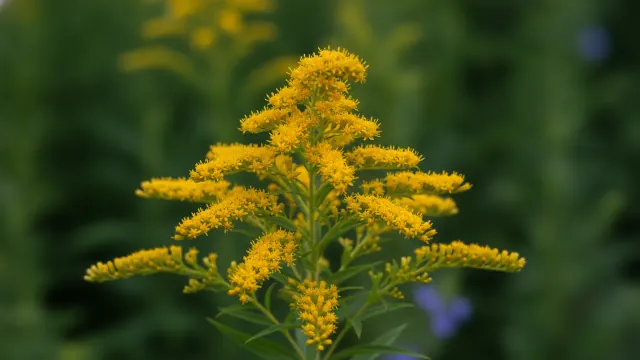
Goldenrod
Shares full sun and low water; overlaps, then carries the display into mid fall; its seed heads stand through winter, for structure and the birds; both offer pollinator forage.
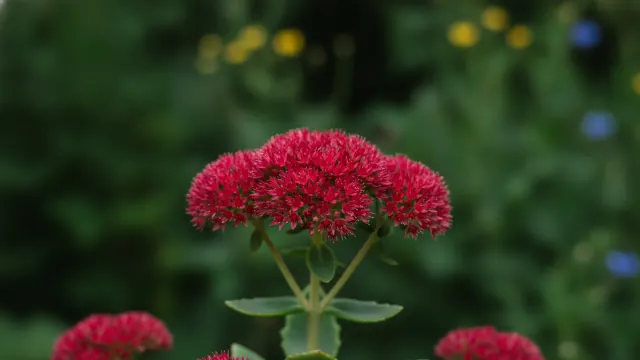
Autumn Joy Sedum
Shares full sun and low water; overlaps, then carries the display into mid fall; its seed heads stand through winter, for structure and the birds; both offer pollinator forage.

Aster
Shares full sun and low to moderate water; blooms in early fall as this one finishes; both offer pollinator forage, in different months; its seed heads stand through winter, for structure and the birds.
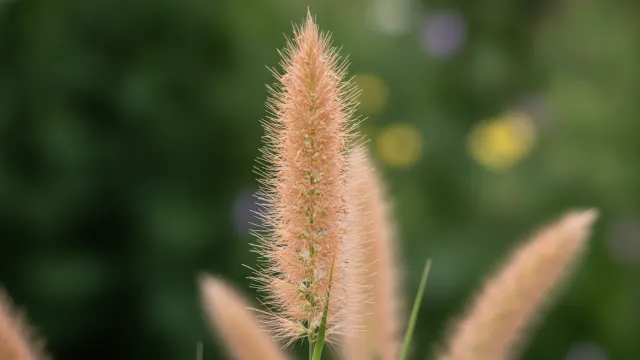
Switchgrass
Shares full sun and low water; overlaps, then carries the display into mid fall; its seed heads stand through winter, for structure and the birds; both offer pollinator forage.

Pampas Grass
Shares full sun and low water; overlaps, then carries the display into mid fall; its seed heads stand through winter, for structure and the birds; stands well above at 8 ft, a canopy to plant beneath.
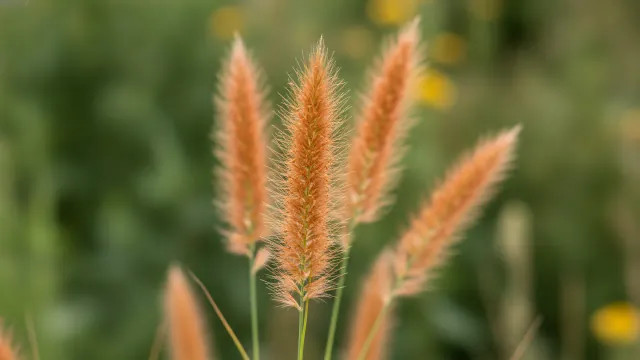
Little Bluestem
Shares full sun and low water; overlaps, then carries the display into early fall; its seed heads stand through winter, for structure and the birds; taller at 3.5 ft, for the layer behind it.
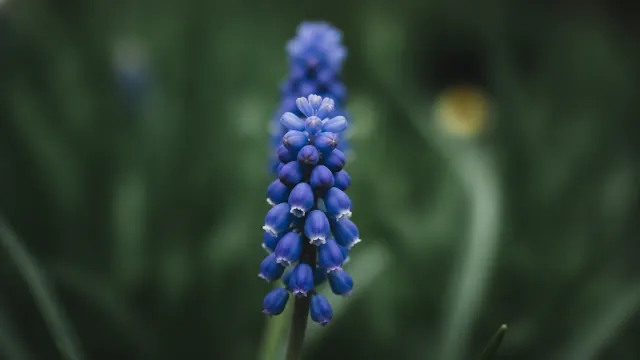
Grape Hyacinth
Shares full sun and low water; blooms in early spring, before this one opens; lower at 8 in, for the front of the border; both offer pollinator forage, in different months.
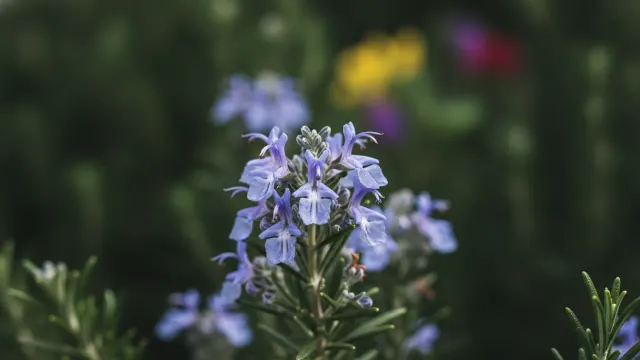
Rosemary
Shares full sun and low water; opens in early spring and overlaps into this one's season; evergreen, so the bed keeps its shape through winter; both offer pollinator forage; they only overlap in zones 8 to 9.
Featured in these guides
Explore similar plants
You might also like

Design a garden with this
Drop this plant onto a 3D plan, see how it fills in, and watch your whole garden bloom across the year.