
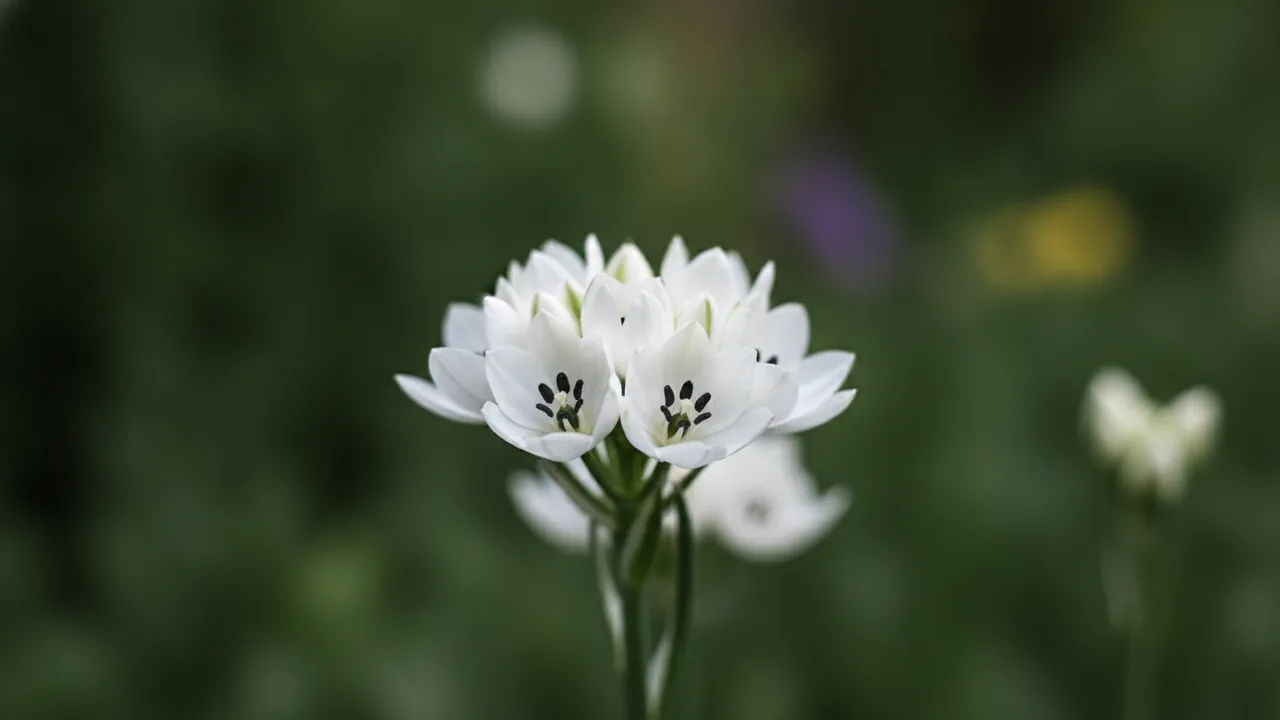
 Illustration

Arabicum
Ornithogalum arabicum
Arabicum blooms from May through June.
Months here are Northern Hemisphere months; in the Southern Hemisphere, shift them by six months.
Growing Arabicum
Plant it in full sun. It prefers moderate water. It is hardy in USDA zones 7–10. Expect it to reach about 24 in tall and 6 in wide at maturity, in roughly 1 year (not yet checked).
What this means
Written with AI assistance and not yet checked plant by plant against recorded sources, so treat every fact above as a starting point. Its scientific name was checked against botanical registries, an audit keeps its values consistent with the rest of the library, and a July 2026 review re-read the main facts of every plant then in the library against horticultural authorities without recording a source for each, which is why none of that counts as checked here. The source-by-source check is working through the whole library in the open, and a checked plant says so in this row.
When to plant Arabicum
Arabicum is a fall-planted bulb: get it in the ground 6 to 8 weeks before the ground freezes, typically October or November in zone 8, the middle of its hardy zones 7 to 10. It pays you back the following May to June.
Month-by-month timing for your zone is on the planting calendar; if you garden near zone 8, the middle of this plant's hardy range, start with zone 8 in October. Derived from the plant's category, zones and bloom months plus typical zone frost dates, not checked separately.
How big does Arabicum get?
 24 intall5 ft 7 inan adult6 inwide
See Arabicum in a garden plan: the planner shows it in 3D beside everything else you add, growing toward this size over the years.
Good to know about Arabicum
Curated from university extensions, botanic gardens and other primary sources, with the source named on every note.
Safety
All parts are poisonous to dogs, cats, horses, livestock and people; cardiac glycosides, most concentrated in the bulb, cause vomiting and, in larger amounts, heart-rhythm changes. per Pet Poison Helpline
Explore similar plants
You might also like
Design a garden with this
Drop this plant onto a 3D plan, see how it fills in, and watch your whole garden bloom across the year.