
 Illustration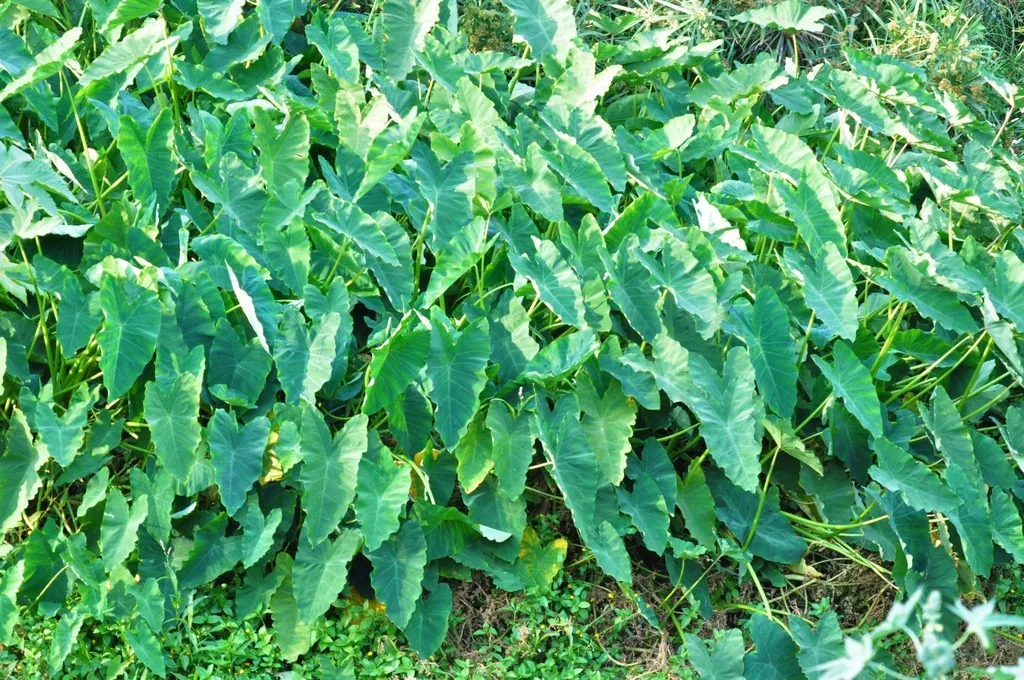
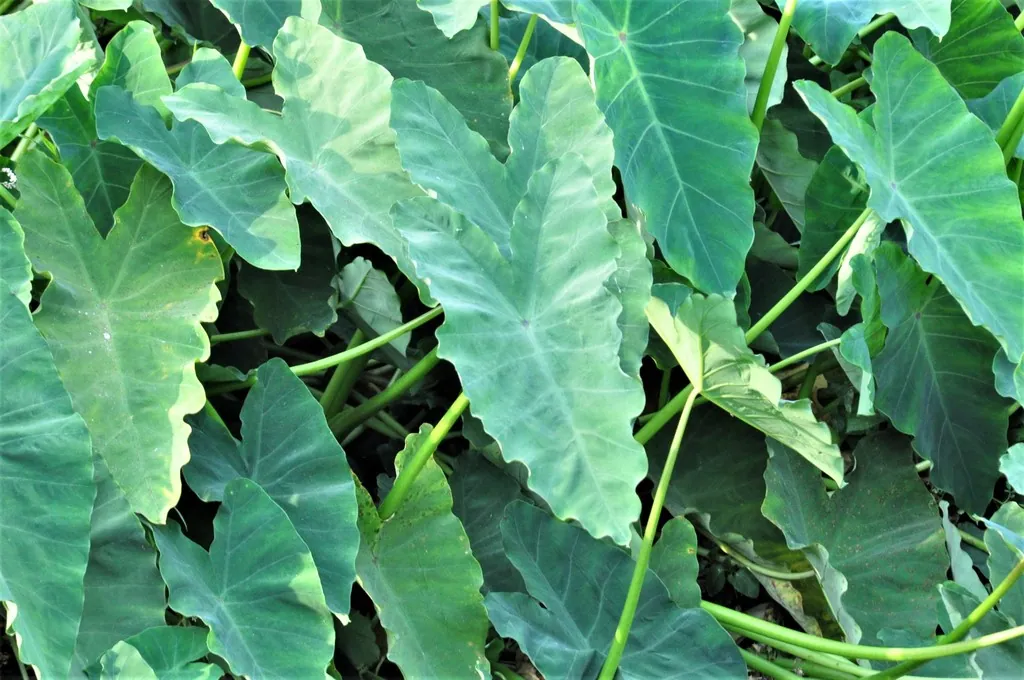
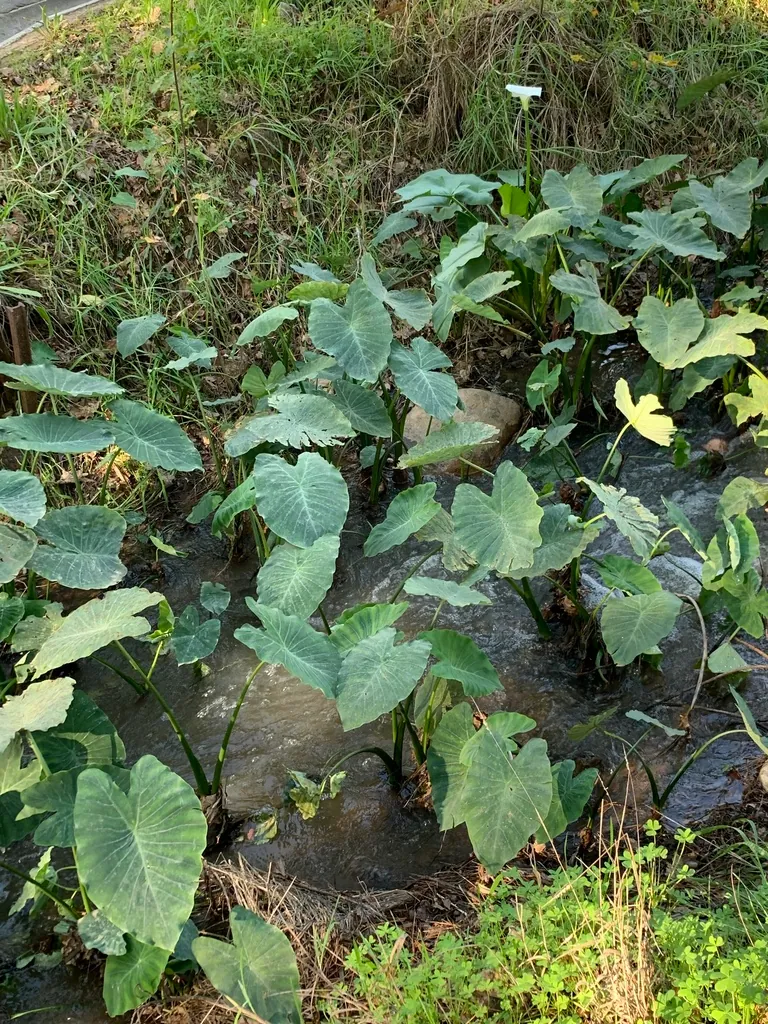

Photo credits and licenses
Real photographs from naturalists and photographers worldwide, each used under its own license. Credit: Photo by Adriana Nelly Correa Sandoval / iNaturalist (CC BY), Photo by Adriana Nelly Correa Sandoval / iNaturalist (CC BY) and Photo by Dave Richardson / iNaturalist (CC BY). How photos are sourced →

Elephant Ear
Colocasia
Elephant Ear is grown for its foliage rather than flowers, giving the garden structure and color all season long.
Months here are Northern Hemisphere months; in the Southern Hemisphere, shift them by six months.
Growing Elephant Ear
Plant it in part sun. It prefers high water. It is hardy in USDA zones 8–11. Expect it to reach about 4 ft tall and 3.5 ft wide at maturity, in roughly 1 year (not yet checked).
What was checked
Mature height and spread, hardiness zones, sun and the trait tags were checked against named botanical sources for this plant. The bloom months and water need on this page were not, and each fact above says which. The planting, spacing and size sections are derived from these checked facts by a fixed rule, not checked separately, and the plant type is the library's own classification.
How big does Elephant Ear get?
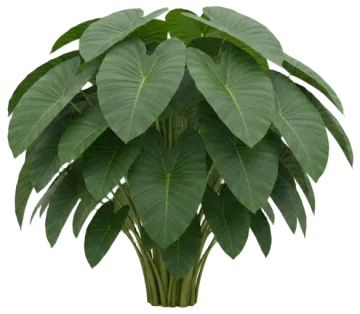 4 fttall5 ft 7 inan adult3.5 ftwide
See Elephant Ear in a garden plan: the planner shows it in 3D beside everything else you add, growing toward this size over the years.
Where these facts come from
Elephant Ear's height, spread, hardiness zones, sun and trait tags were checked against 9 published sources on July 29, 2026. Each one is linked below with every fact it carried, which can include a fact this page still marks as not yet checked, because a source carrying a value is not the same as the value being held to the standard. Facts not in that list, and the planting, spacing and size sections, are not covered by these sources.
- Missouri Botanical GardenPlant Finder, Colocasia esculentaheight, spread, hardiness zones, sun and trait tags
- NC State ExtensionPlant Toolbox, Colocasia esculentaheight, spread, hardiness zones, sun and trait tags
- NC State ExtensionPlant Toolbox, Colocasiaheight, spread, hardiness zones and sun
- Plant Delights NurseryCool Colocasias: Types of Elephant Ears for the Gardenheight, hardiness zones, sun and trait tags
- University of Wisconsin HorticultureUniversity of Wisconsin-Madison Division of Extension, Wisconsin Horti...height, hardiness zones, sun and trait tags
- RHSRoyal Horticultural Society, Colocasia esculentaheight, spread and sun
- University of Illinois ExtensionIllinois Extension, ILRiverHort: Giant Elephant Ears Accent the Gardenheight and sun
- University of Florida IFASUF/IFAS Extension Nassau County, Fact sheet: Black elephant earsun
- University of Illinois ExtensionIllinois Extension, Plants: Colocasiasun
How the checking works, and what each standard covers, is on the verified plants page.
Comes in 6 varieties
Related plants, similar care - pick the variety you are growing.
Compare every variety in the Elephant Ear group
Every figure is the variety's own page fact. Tap a name to open it.
| Variety | Color | Blooms | Hardiness | Sun | Size (H × W) |
|---|---|---|---|---|---|
| Alocasia Polly | Foliage | Foliage plant | Zones 9–11 | Part sun | 24 in × 20 in |
| Black Magic | Foliage | Foliage plant | Zones 8–11 | Part sun | 4 ft × 3.5 ft |
| Elephantthis page | Foliage | Foliage plant | Zones 8–11 | Part sun | 4 ft × 3.5 ft |
| Illustris | Foliage | Foliage plant | Zones 8–11 | Part sun | 3.5 ft × 3 ft |
| Lime Zinger | Foliage | Foliage plant | Zones 8–11 | Part sun | 5 ft × 4 ft |
| Mojito | Foliage | Foliage plant | Zones 8–11 | Part sun | 3.5 ft × 3 ft |
| Pink China | Foliage | Foliage plant | Zones 7–10 | Part sun | 4 ft × 3.5 ft |
Good to know about Elephant Ear
Curated from university extensions, botanic gardens and other primary sources, with the source named on every note. A note reports what its source says; where that differs from a fact above, the fact above is this entry's stored value, and its mark says whether it has been checked.
Safety
Toxic to dogs, cats, horses and people. Every part holds insoluble calcium oxalate crystals that burn and swell the mouth, tongue, and throat when chewed. per ASPCA
Worth knowing
This is the food crop taro (dasheen), yet every part is poisonous raw. Only thorough cooking, drying, or steeping neutralizes the irritant, making the corm edible. per NC State
Cold hardiness varies by cultivar
Most types are tender to about zone 8a and must be lifted and stored, but a few cultivars like 'Pink China' survive to zone 6b. per Wisconsin
Grows in standing water
It tolerates wetter ground than most ornamentals: happy in boggy soil, at pond and rain-garden margins, and even in a few inches of standing water. per NC State
Invasive in warm, wet regions
In mild, wet climates it escapes and chokes wetlands, forming dense 'wild taro' stands along the US Gulf Coast. Keep it clear of natural waterways. per Florida
Deer and rabbit resistant
Deer and rabbits leave it alone: the same acrid calcium oxalate that makes it toxic deters browsers, though very hungry wildlife may still sample it. per NC State
Lift the tuber for winter
In cold climates, lift the tuber after the first frost blackens the leaves: cut back, dig, dry it several days, then store dry at about 45 to 55 F. per Clemson
What pairs well with Elephant Ear
Good companions share its growing conditions and add something it lacks: an earlier or later bloom, a lower carpet in front, or structure through winter.
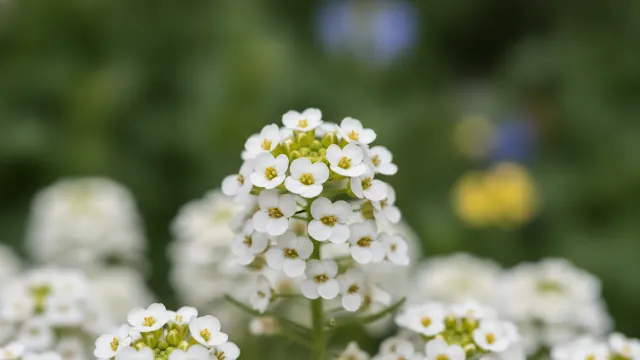
Sweet Alyssum
Takes full sun to part sun and moderate to high water; low at 5 in, to carpet the ground beneath.
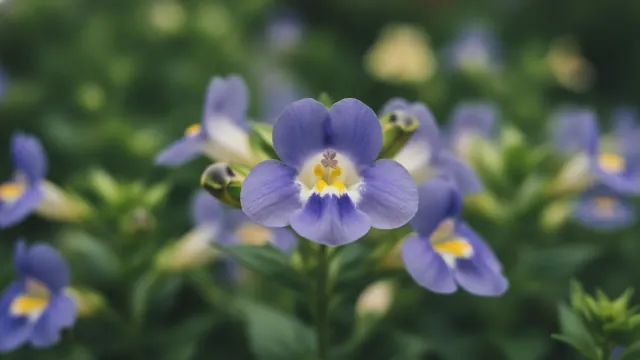
Wishbone Flower
Takes part sun to part shade and moderate to high water; lower at 10 in, for the front of the border.
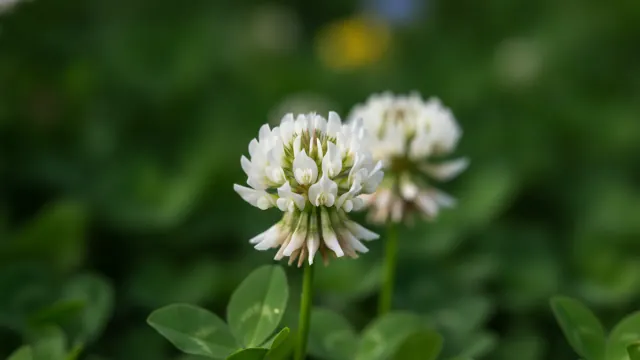
White Clover
Takes full sun to part sun and moderate to high water; low at 4 in, to carpet the ground beneath.
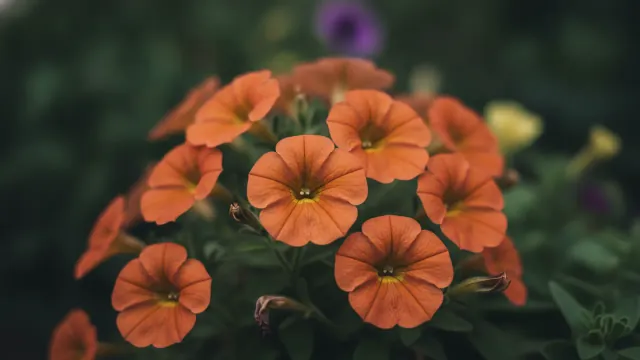
Calibrachoa
Takes full sun to part sun and moderate to high water; lower at 8 in, for the front of the border.
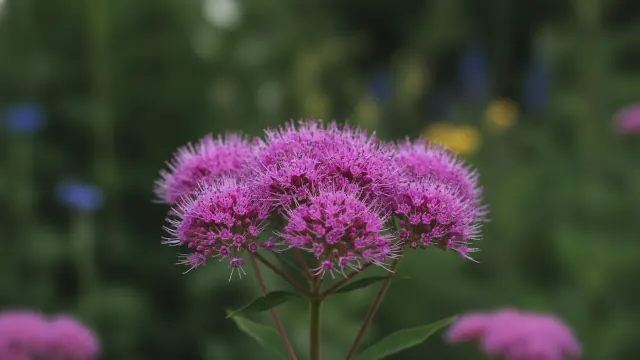
Joe Pye Weed
Takes full sun to part sun and high water; its seed heads stand through winter, for structure and the birds; they only overlap in zones 8 to 9.
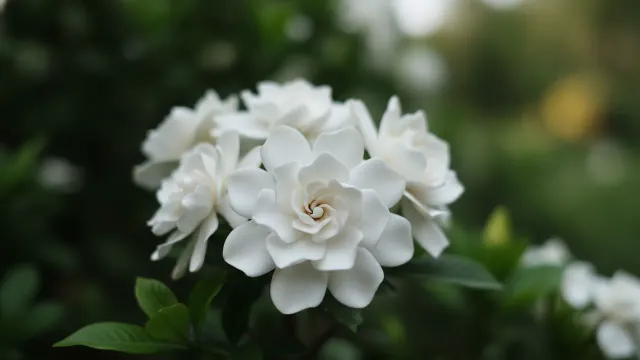
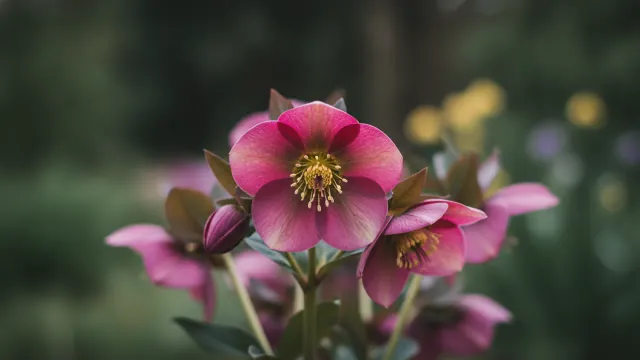
Hellebore
Takes part sun to part shade and moderate to high water; evergreen, so the bed keeps its shape through winter; lower at 1.5 ft, for the front of the border; they only overlap in zones 8 to 9.
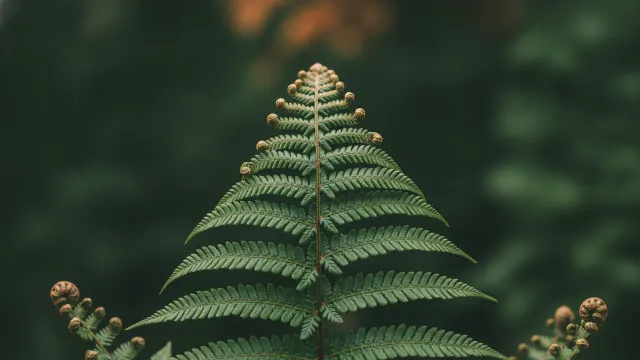
Autumn Fern
Takes part sun to part shade and moderate to high water; evergreen, so the bed keeps its shape through winter; lower at 1.5 ft, for the front of the border; they only overlap in zones 8 to 9.
Explore similar plants
You might also like
 Foliage
Design a garden with this
Drop this plant onto a 3D plan, see how it fills in, and watch your whole garden bloom across the year.