
 Illustration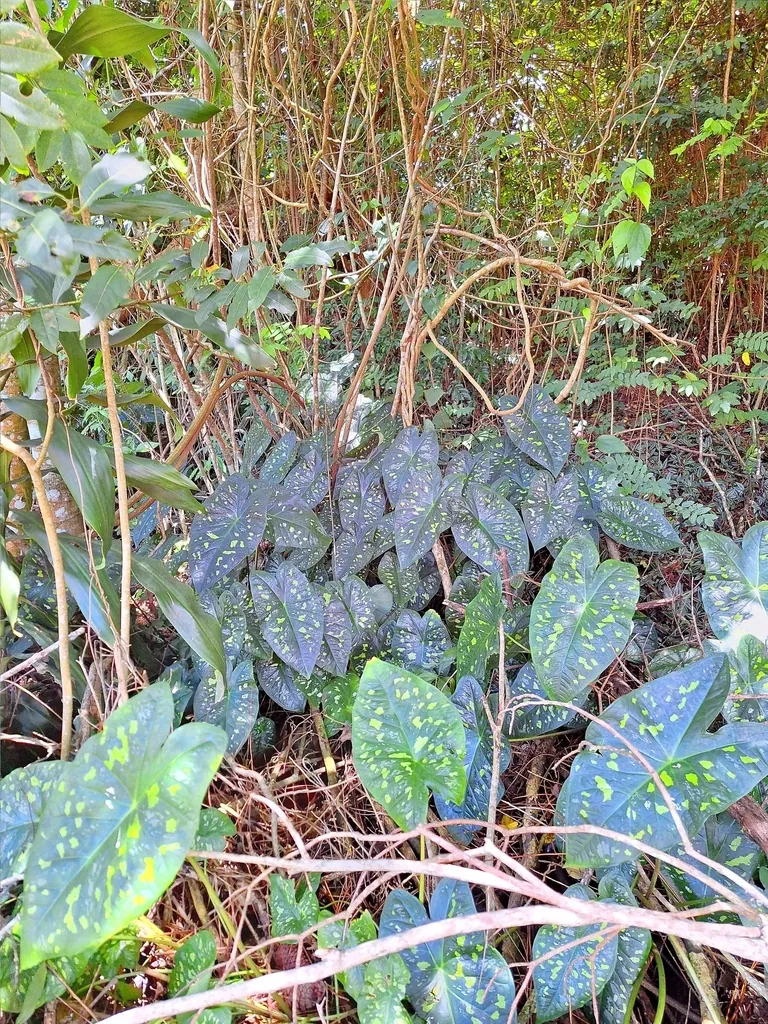
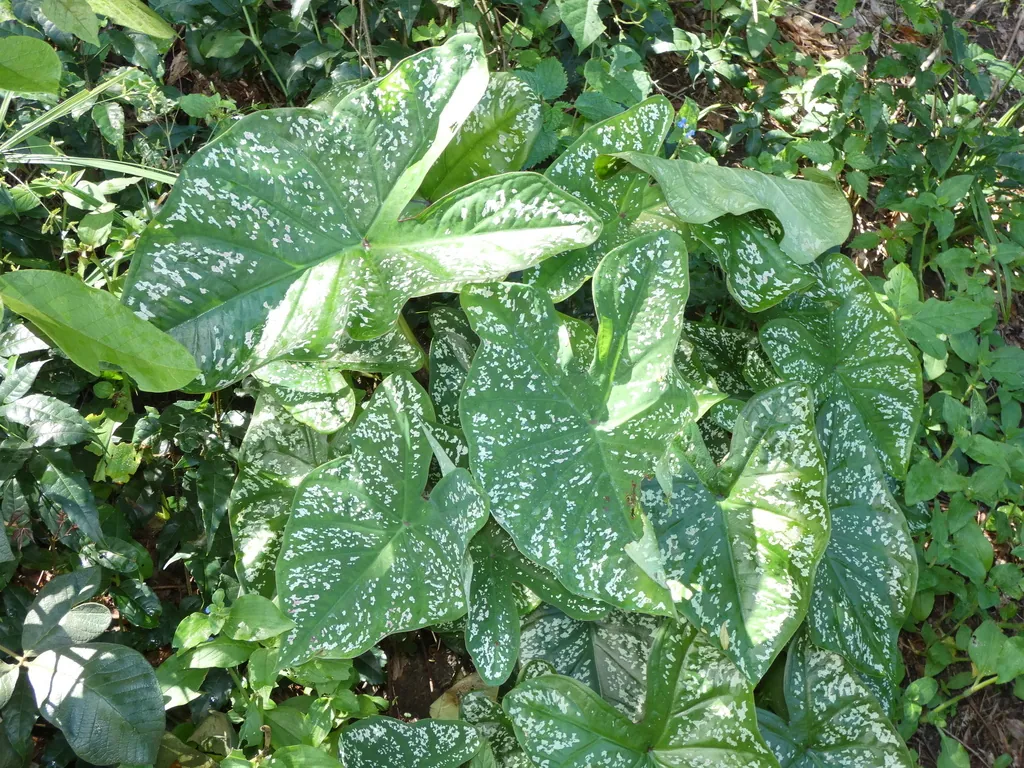
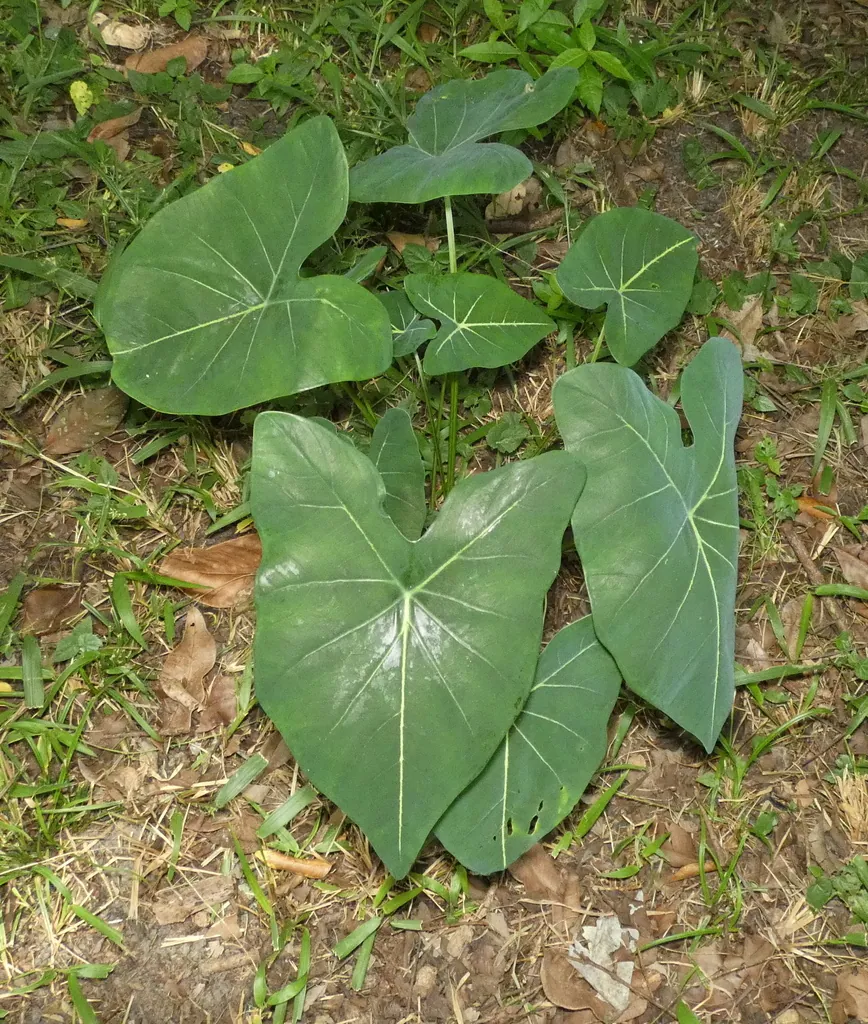

Photo credits and licenses
Real photographs from naturalists and photographers worldwide, each used under its own license. Credit: Photo by Jefferson Ferreira / iNaturalist (CC BY), Photo by Helio Lourencini / iNaturalist (CC BY) and Photo by Helio Lourencini / iNaturalist (CC BY). How photos are sourced →

Caladium
Caladium
Caladium is grown for its foliage rather than flowers, giving the garden structure and color all season long.
Months here are Northern Hemisphere months; in the Southern Hemisphere, shift them by six months.
Growing Caladium
Plant it in part shade. It prefers high water. It is hardy in USDA zones 9–11. Expect it to reach about 16 in tall and 16 in wide at maturity, in roughly 1 year (not yet checked).
What was checked
Mature height and spread, hardiness zones, sun and the trait tags were checked against named botanical sources for this plant. The bloom months and water need on this page were not, and each fact above says which. The planting, spacing and size sections are derived from these checked facts by a fixed rule, not checked separately, and the plant type is the library's own classification.
When to plant Caladium
Wait until all danger of frost has passed, then plant out Caladium into warm soil; in most zones that means late spring.
Month-by-month timing for your zone is on the planting calendar; if you garden near zone 9, the middle of this plant's hardy range, start with zone 9 in February. Derived from the plant's category, zones and bloom months plus typical zone frost dates, not checked separately.
How big does Caladium get?
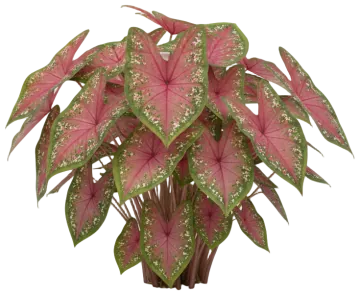 16 intall5 ft 7 inan adult16 inwide
See Caladium in a garden plan: the planner shows it in 3D beside everything else you add, growing toward this size over the years.
How far apart to plant Caladium
Derived from the mature spread above by a fixed rule, not checked separately: spacing is the spread, center to center.
Space Caladium about 16 in apart, center to center, so each plant has room to reach its full width.
Add Caladium to a garden plan and the planner draws it at its full width, so you see the spacing before you buy.
Where these facts come from
Caladium's height, spread, hardiness zones, sun and trait tags were checked against 9 published sources on July 29, 2026. Each one is linked below with every fact it carried, which can include a fact this page still marks as not yet checked, because a source carrying a value is not the same as the value being held to the standard. Facts not in that list, and the planting, spacing and size sections, are not covered by these sources.
- NC State Extensiongenus pageheight, spread, hardiness zones, sun and trait tags
- NC State ExtensionCaladium bicolorheight, spread, hardiness zones, sun and trait tags
- Clemson Home and Garden Information CenterClemson Cooperative Extension Home & Garden Information Centerheight, hardiness zones, sun and trait tags
- Missouri Botanical Gardenheight, spread, hardiness zones and sun
- Missouri Botanical GardenCaladium 'Burning Heart'height, spread, hardiness zones and sun
- University of Florida IFASGardening Solutionsheight, hardiness zones and sun
- University of Wisconsin HorticultureWisconsin Horticultureheight, hardiness zones and sun
- University of Georgia ExtensionB918height and sun
- University of Illinois Extensionsun
How the checking works, and what each standard covers, is on the verified plants page.
Comes in 4 varieties
Same genus, similar care - pick the variety you are growing.
Compare every variety in the Caladium group
Every figure is the variety's own page fact. Tap a name to open it.
| Variety | Color | Blooms | Hardiness | Sun | Size (H × W) |
|---|---|---|---|---|---|
| Caladiumthis page | Foliage | Foliage plant | Zones 9–11 | Part shade | 16 in × 16 in |
| Carolyn Whorton | Foliage | Foliage plant | Zones 9–11 | Part shade | 16 in × 16 in |
| Green | Foliage | Foliage plant | Zones 9–11 | Part shade | 16 in × 16 in |
| Red Flash | Foliage | Foliage plant | Zones 9–11 | Part shade | 16 in × 16 in |
| White Christmas | Foliage | Foliage plant | Zones 9–11 | Part shade | 16 in × 16 in |
Good to know about Caladium
Curated from university extensions, botanic gardens and other primary sources, with the source named on every note. A note reports what its source says; where that differs from a fact above, the fact above is this entry's stored value, and its mark says whether it has been checked.
Safety
Every part holds insoluble calcium oxalate crystals; toxic to dogs, cats and horses, and poisonous to humans. Chewing causes intense oral burning, swelling and drooling. per ASPCA and NC State
Worth knowing
Grown entirely for its leaves, not flowers. It rarely blooms, and extensions say to snip off any flower stalk so it keeps making leaves instead of going dormant. per NC State
Tuber storage temperature
Extensions disagree on the minimum storage temperature. Play it safe and keep dug tubers on the warm side, around 60 to 70 F, never chilled or refrigerated. per Illinois and Penn State
Sun depends on leaf type
Fancy-leaved (heart-shaped) types want dappled or part shade; hot sun scorches them. Strap-leaved and newer sun-tolerant cultivars take more sun if kept moist. Match sun to leaf. per Clemson and Wisconsin
Tender tuber: dig or replace
The tuber won't survive a freeze in the ground. In cold zones, dig and store it dry before frost, or grow it fresh as an annual each spring. per NC State
Wait for warm soil
Don't plant until the soil warms to about 68 to 70 F. Cold, wet soil rots the tuber and it won't sprout. Start it indoors for a head start. per Clemson and Penn State
Thirsty but hates wet feet
Caladium is a water guzzler wanting constant moisture, yet soggy, poorly drained soil rots the tuber. Keep it evenly moist in rich, free-draining soil, never waterlogged. per Clemson
What pairs well with Caladium
Good companions share its growing conditions and add something it lacks: an earlier or later bloom, a lower carpet in front, or structure through winter.
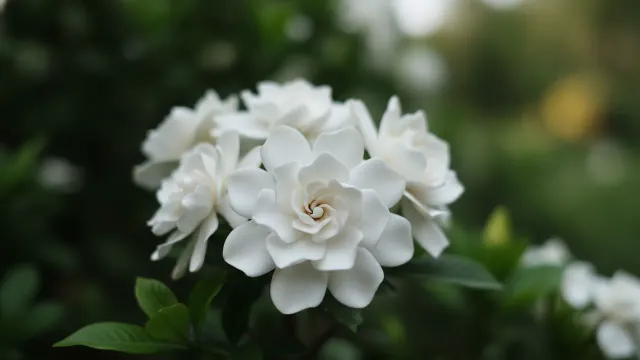
Gardenia
Takes part sun to part shade and high water; evergreen, so the bed keeps its shape through winter; taller at 4 ft, for the layer behind it.
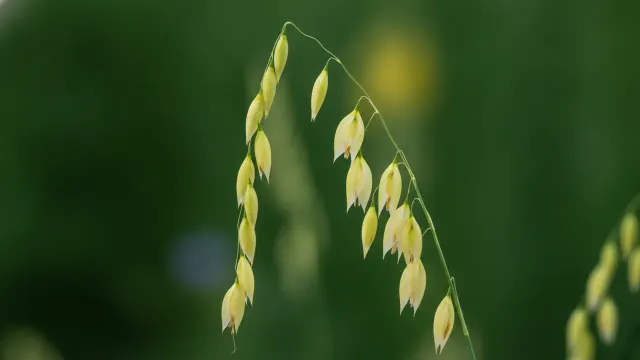
Northern Sea Oats
Shares part shade and moderate to high water; its seed heads stand through winter, for structure and the birds; taller at 3.5 ft, for the layer behind it.
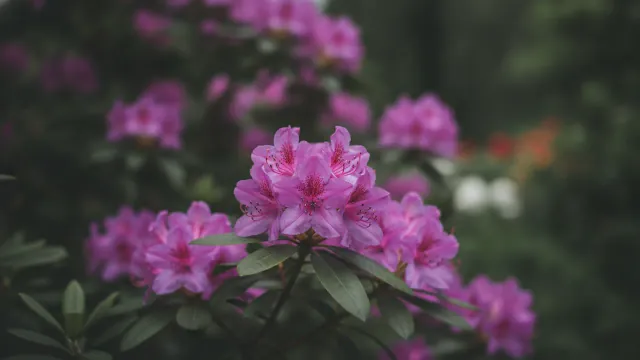
Rhododendron
Shares part shade and moderate to high water; evergreen, so the bed keeps its shape through winter; taller at 6 ft, for the layer behind it.
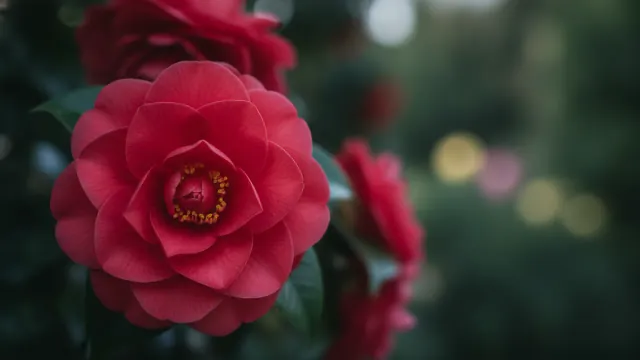
Camellia
Shares part shade and moderate to high water; evergreen, so the bed keeps its shape through winter; taller at 6.5 ft, for the layer behind it.
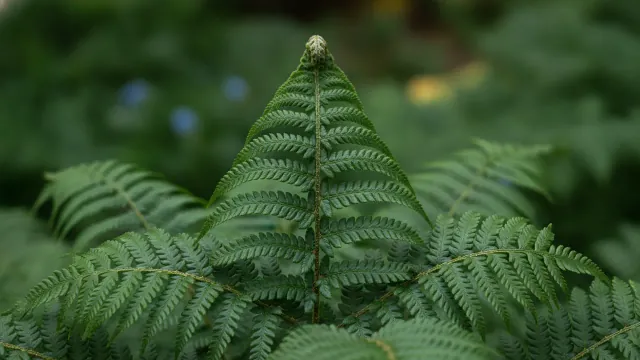
Christmas Fern
Takes part shade to full shade and moderate to high water; evergreen, so the bed keeps its shape through winter.
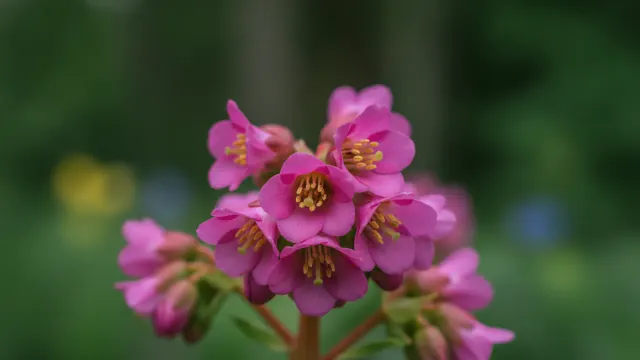
Bergenia
Takes part sun to part shade and moderate to high water; evergreen, so the bed keeps its shape through winter.
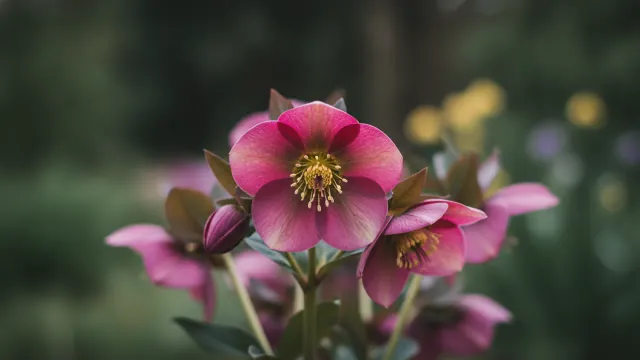
Hellebore
Shares part shade and moderate to high water; evergreen, so the bed keeps its shape through winter.
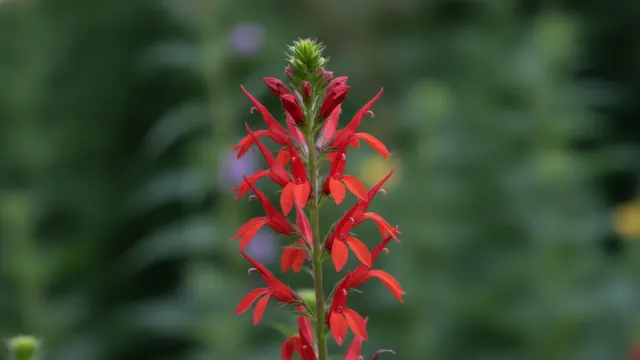
Cardinal Flower
Takes part sun to part shade and high water; taller at 3.5 ft, for the layer behind it.
Explore similar plants
You might also like
Design a garden with this
Drop this plant onto a 3D plan, see how it fills in, and watch your whole garden bloom across the year.