
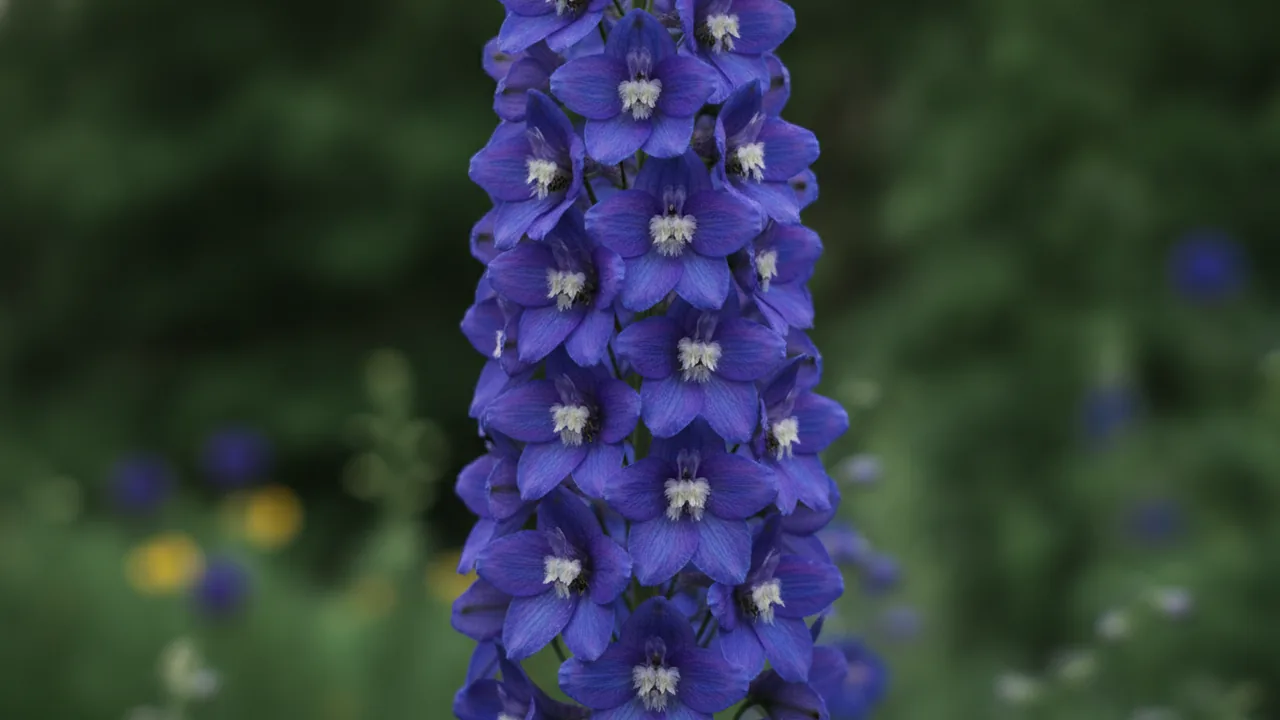
 Illustration

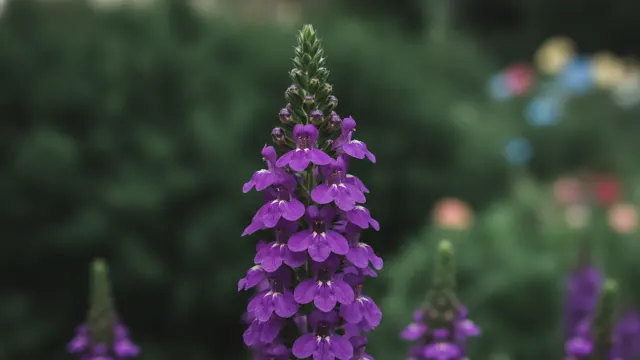
Larkspur
Consolida
Larkspur blooms from May through July.
Months here are Northern Hemisphere months; in the Southern Hemisphere, shift them by six months.
Growing Larkspur
Plant it in full sun. It prefers moderate water. It is hardy in USDA zones 2–11. Expect it to reach about 3 ft tall and 0.5 ft wide at maturity, in roughly 1 year (not yet checked).
What was checked
Mature height and spread, hardiness zones, sun and the trait tags were checked against named botanical sources for this plant. The bloom months and water need on this page were not, and each fact above says which. The planting, spacing and size sections are derived from these checked facts by a fixed rule, not checked separately, and the plant type is the library's own classification.
When to plant Larkspur
Wait until all danger of frost has passed, then plant out Larkspur into warm soil; in most zones that means late spring. Planted then, it flowers from May to July.
Month-by-month timing for your zone is on the planting calendar; if you garden near zone 6, the middle of this plant's hardy range, start with zone 6 in April. Derived from the plant's category, zones and bloom months plus typical zone frost dates, not checked separately.
How big does Larkspur get?
 3 fttall5 ft 7 inan adult0.5 ftwide
See Larkspur in a garden plan: the planner shows it in 3D beside everything else you add, growing toward this size over the years.
How far apart to plant Larkspur
Derived from the mature spread above by a fixed rule, not checked separately: spacing is the spread, center to center.
Space Larkspur about 0.5 ft apart, center to center, so each plant has room to reach its full width.
Add Larkspur to a garden plan and the planner draws it at its full width, so you see the spacing before you buy.
Where these facts come from
Larkspur's height, spread, hardiness zones, sun and trait tags were checked against 8 published sources on July 30, 2026. Each one is linked below with every fact it carried, which can include a fact this page still marks as not yet checked, because a source carrying a value is not the same as the value being held to the standard. Facts not in that list, and the planting, spacing and size sections, are not covered by these sources.
- dallascountymastergardeners.orgDallas County Master Gardeners Association, Texas A&M AgriLife (Consol...height, spread, hardiness zones, sun and trait tags
- jerseyyards.orgJersey-Friendly Yards plant database, Barnegat Bay Partnership (Consol...height, spread, hardiness zones, sun and trait tags
- Missouri Botanical GardenConsolida ajacis, giant larkspurheight, spread, hardiness zones, sun and trait tags
- RHSConsolida ajacis, larkspurheight, spread, sun and trait tags
- Johnny's Selected SeedsLarkspur, Consolida sppheight, sun and trait tags
- Swallowtail Garden SeedsLarkspur, Consolidaheight, sun and trait tags
- University of Arkansas Extensionlarkspur, Consolida ajacisheight, sun and trait tags
- blogs.cornell.eduCornell University High Tunnels, cut flower crops (Larkspur, Consolida)height and trait tags
How the checking works, and what each standard covers, is on the verified plants page.
Comes in 5 varieties across 4 colors
Same genus, similar care - pick the color you are growing.
Compare every variety in the Larkspur group
Every figure is the variety's own page fact. Tap a name to open it.
| Variety | Color | Blooms | Hardiness | Sun | Size (H × W) |
|---|---|---|---|---|---|
| Blue | Blue | May–Jul | Zones 2–11 | Full sun | 3 ft × 0.5 ft |
| Larkspurthis page | Purple | May–Jul | Zones 2–11 | Full sun | 3 ft × 0.5 ft |
| Lavender | Purple | May–Jul | Zones 2–11 | Full sun | 3 ft × 0.5 ft |
| Pink | Pink | May–Jul | Zones 2–11 | Full sun | 3 ft × 0.5 ft |
| Rose | Pink | May–Jul | Zones 2–11 | Full sun | 3 ft × 0.5 ft |
| White | White | May–Jul | Zones 2–11 | Full sun | 3 ft × 0.5 ft |
Good to know about Larkspur
Curated from university extensions, botanic gardens and other primary sources, with the source named on every note. A note reports what its source says; where that differs from a fact above, the fact above is this entry's stored value, and its mark says whether it has been checked.
Safety
Every part is poisonous to people, dogs, cats, horses and livestock; seeds and young foliage are worst. Serious illness or death is possible. per ASPCA and NC State
Worth knowing
The very toxicity that makes larkspur dangerous is what makes it deer- and rabbit-proof: browsing animals avoid the poisonous foliage. per NC State
A cool-season annual
It is a cool-season annual: direct-sow in fall or very early spring so it flowers before summer heat arrives and ends the display. per Penn State and Iowa State
Stake the tall spikes
Tall flower spikes tend to flop and may need staking or grow-through support, set early in the season. per NC State
Deadheading removes toxic seeds
Deadheading spent spikes does double duty: it limits self-seeding and removes the seeds, which are among the most poisonous parts, from reach. per NC State and ASPCA
Draws bees and hummingbirds
The spurred, nectar-bearing flowers draw butterflies, hummingbirds and bumblebees; the backward nectar spur suits long-tongued visitors. A moderate, not top-tier, pollinator plant. per NC State and Penn State
What pairs well with Larkspur
Good companions share its growing conditions and add something it lacks: an earlier or later bloom, a lower carpet in front, or structure through winter.
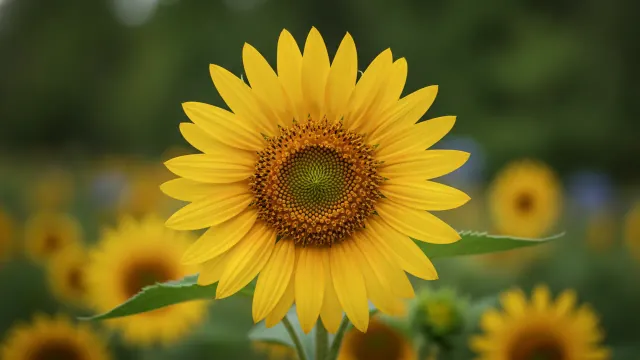
Perennial Sunflower
Shares full sun and moderate water; blooms in late summer as this one finishes; both offer pollinator forage, in different months; its seed heads stand through winter, for structure and the birds.
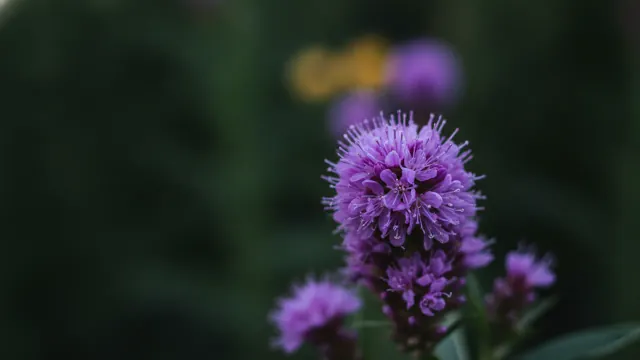
Ironweed
Shares full sun and moderate water; blooms in late summer as this one finishes; both offer pollinator forage, in different months; its seed heads stand through winter, for structure and the birds.
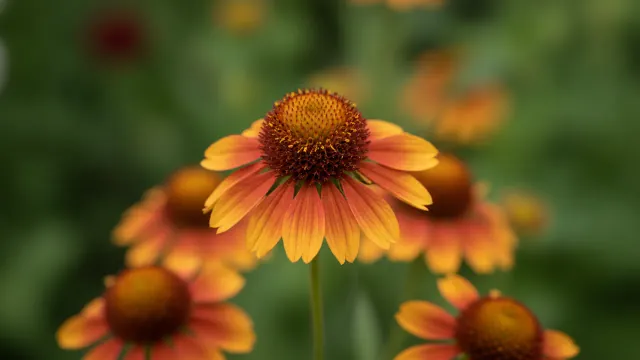
Sneezeweed
Shares full sun and moderate water; overlaps, then carries the display into early fall; its seed heads stand through winter, for structure and the birds; both offer pollinator forage.
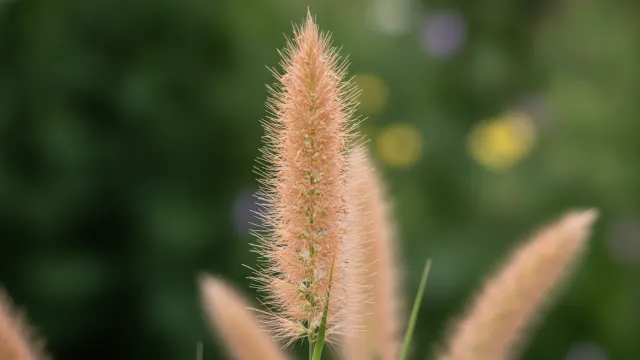
Switchgrass
Shares full sun and low to moderate water; blooms in late summer as this one finishes; both offer pollinator forage, in different months; its seed heads stand through winter, for structure and the birds.
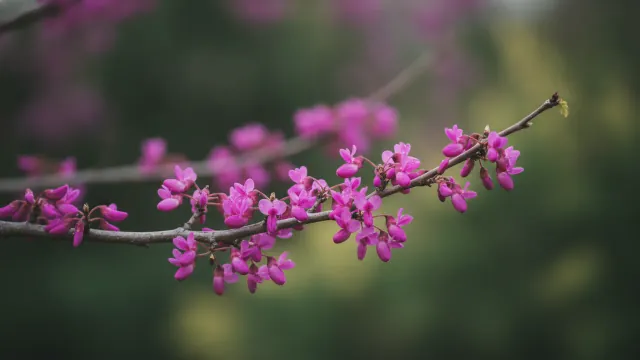
Eastern Redbud
Takes full sun to part sun and moderate water; blooms in mid spring, before this one opens; both offer pollinator forage, in different months; stands well above at 23 ft, a canopy to plant beneath.
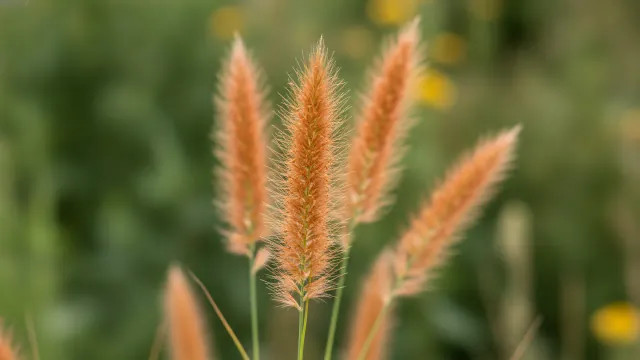
Little Bluestem
Shares full sun and low to moderate water; blooms in late summer as this one finishes; its seed heads stand through winter, for structure and the birds; blue sits close to purple on the wheel.
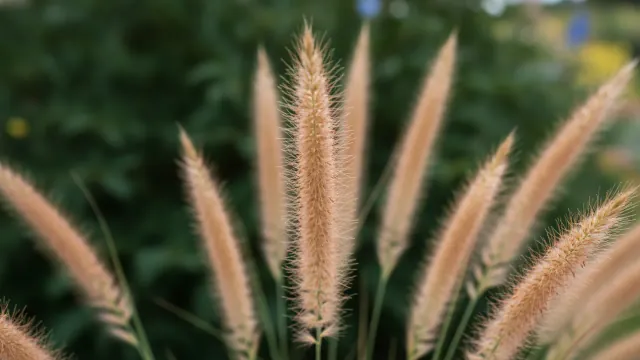
Fountain Grass
Shares full sun and low to moderate water; blooms in late summer as this one finishes; its seed heads stand through winter, for structure and the birds; orange against purple, for contrast.
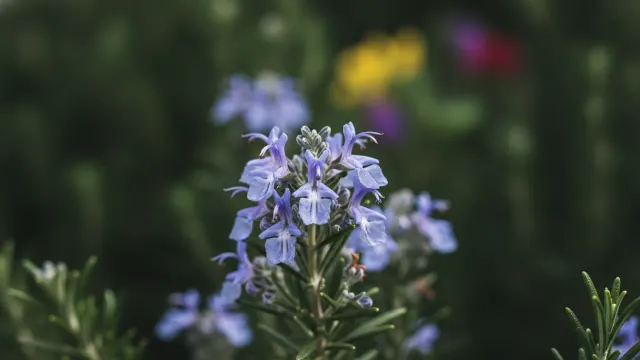
Rosemary
Shares full sun and low to moderate water; opens in early spring and overlaps into this one's season; evergreen, so the bed keeps its shape through winter; both offer pollinator forage.
Featured in these guides
Explore similar plants
You might also like
 Foliage
 Foliage
Design a garden with this
Drop this plant onto a 3D plan, see how it fills in, and watch your whole garden bloom across the year.