
 Illustration

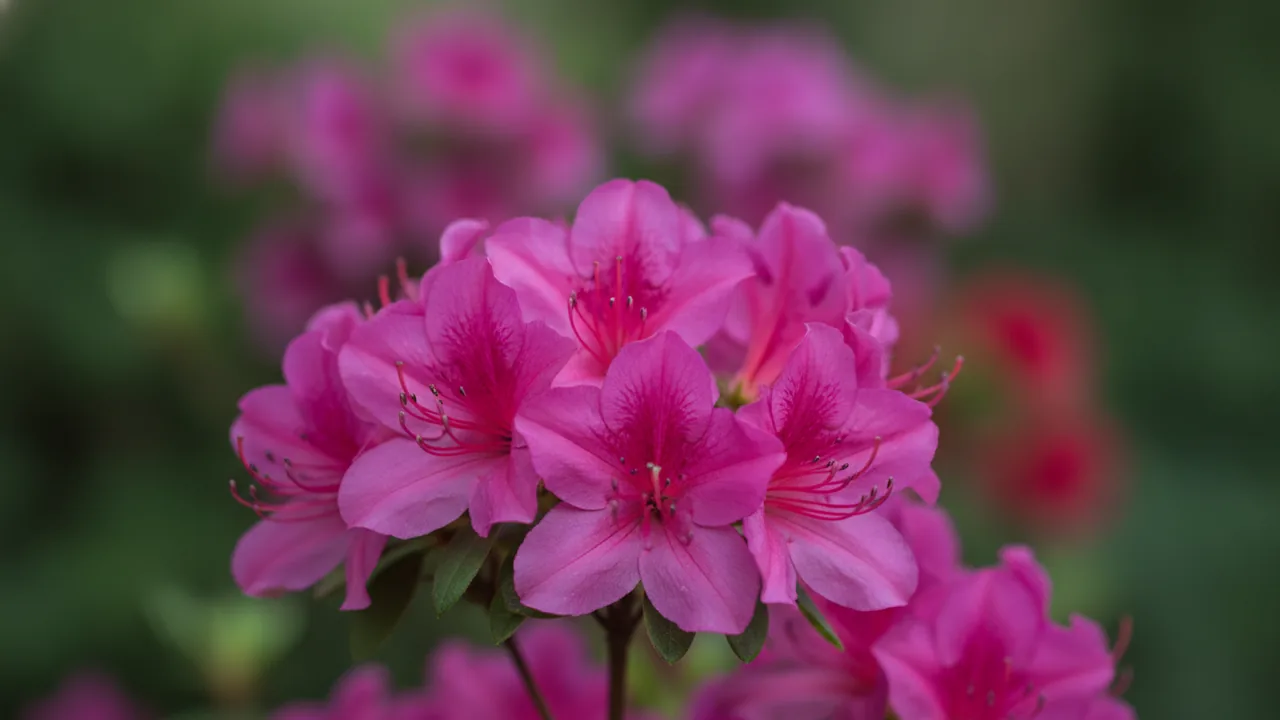
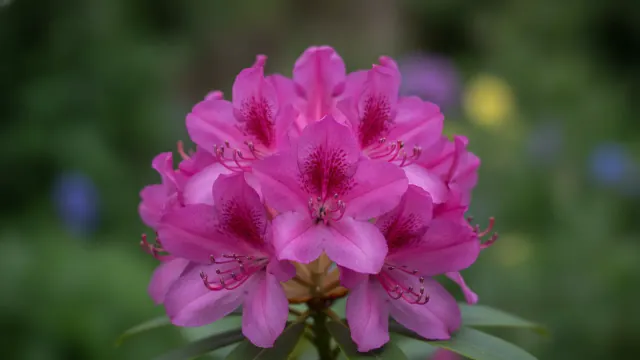
Azalea
Rhododendron
Azalea blooms from April through May.
Months here are Northern Hemisphere months; in the Southern Hemisphere, shift them by six months.
Growing Azalea
Plant it in part shade. It prefers moderate water. It is hardy in USDA zones 5–9. Expect it to reach about 4 ft tall and 4 ft wide at maturity, in roughly 4 years (checked).
What was checked
Fifteen fields were checked against named botanical sources, each recorded beside the sources that carried it, with every unsettled point written down and decided: mature height and spread, hardiness zones, sun, water, bloom months and color, the trait tags, soil, diseases, pests, toxicity, the plant's own names, and years to mature size, which rests on a recorded house rule where no publisher states one and is marked so. Each fact above carries its own mark. The planting, spacing and size sections are derived from these checked facts by a fixed rule, not checked separately, and the plant type is the library's own classification.
When to plant Azalea
Plant Azalea in early spring as soon as the soil is workable, or in early fall at least six weeks before your first frost, so roots establish in cool weather. In zone 7, the middle of its hardy zones 5 to 9, spring means March to May and fall means September or October. Once settled, it blooms from April to May.
Month-by-month timing for your zone is on the planting calendar; if you garden near zone 7, the middle of this plant's hardy range, start with zone 7 in March. Derived from the plant's category, zones and bloom months plus typical zone frost dates, not checked separately.
How big does Azalea get?
 4 fttall5 ft 7 inan adult4 ftwide
See Azalea in a garden plan: the planner shows it in 3D beside everything else you add, growing toward this size over the years.
How far apart to plant Azalea
Derived from the mature spread above by a fixed rule, not checked separately: spacing is the spread, center to center.
Space Azalea about 4 ft apart, center to center, so each plant has room to reach its full width.
Add Azalea to a garden plan and the planner draws it at its full width, so you see the spacing before you buy.
Where these facts come from
Azalea's height, spread, hardiness zones, sun, water, bloom months and color, years to mature size, trait tags, soil, diseases, pests and toxicity were checked against 15 published sources on August 24, 2026. Each one is linked below with every fact it carried, which can include a fact this page still marks as not yet checked, because a source carrying a value is not the same as the value being held to the standard. Facts not in that list, and the planting, spacing and size sections, are not covered by these sources.
- NC State ExtensionRhododendron, genus pageheight, spread, hardiness zones, sun, bloom months and color, years to mature size, trait tags, soil, diseases, pests and toxicity
- University of Georgia ExtensionSelecting and Growing Azaleasheight, spread, hardiness zones, sun, water, bloom months and color, trait tags, soil, diseases and pests
- Missouri Botanical GardenRhododendron catawbienseheight, spread, hardiness zones, sun, bloom months and color, trait tags and toxicity
- NC State ExtensionRhododendron catawbienseheight, spread, hardiness zones, sun, bloom months and color and trait tags
- Missouri Botanical GardenRhododendron periclymenoidesheight, spread, hardiness zones, sun, water and trait tags
- University of Illinois ExtensionCarolina Rhododendron, Rhododendron carolinianumheight, spread, hardiness zones, sun and trait tags
- Internet Archive (archived page)Clemson HGIC (factsheet 1058, 'Azalea Planting', archived via Wayback...height, spread, sun and soil
- Penn State ExtensionEvergreen Shrubs and Trees for Pennsylvania, Rhododendron catawbiense...height, spread, hardiness zones and sun
- The Morton ArboretumCatawba rhododendronheight, hardiness zones and sun
- azaleas.orgAzalea Society of America ('Growing Azaleas')water and soil
- Chicago Botanic GardenRhododendron plant profile, genus pagesun and trait tags
- Clemson Home and Garden Information CenterHow to Grow Rhododendrons in South Carolinaheight and sun
- Oregon State UniversityRhododendron catawbienseheight and sun
- ASPCAtoxicity
- Clemson Home and Garden Information CenterAzalea Plantingsun
How the checking works, and what each standard covers, is on the verified plants page.
Comes in 19 varieties across 5 colors
Same genus, similar care - pick the color you are growing.
- Arctic Rose
- Autumn Bonfire Encore
- Autumn Bravo Encore
- Bloom-A-Thon Pink Double
- Delaware Valley White
- Encore Autumn Amethyst
- Encore Autumn Rouge
- Fireball
- Formosa
- George Tabor
- Gibraltar
- Girard's Crimson
- Golden Lights
- Gumpo Pink
- Hino-Crimson
- Karen
- Rosebud
- Stewartstonian
- White Lights
Compare every variety in the Azaleas group
Every figure is the variety's own page fact. Tap a name to open it.
| Variety | Color | Blooms | Hardiness | Sun | Size (H × W) |
|---|---|---|---|---|---|
| Arctic Rose | Red | May–Jun | Zones 5–8 | Part shade | 3.5 ft × 4.5 ft |
| Autumn Bonfire Encore | Red | Apr–Oct | Zones 6–9 | Part shade | 2.5 ft × 3 ft |
| Autumn Bravo Encore | Red | Apr–Oct | Zones 6–10 | Part shade | 3.5 ft × 4.5 ft |
| Azaleathis page | Pink | Apr–May | Zones 5–9 | Part shade | 4 ft × 4 ft |
| Bloom-A-Thon Pink Double | Pink | Apr–Oct | Zones 6–9 | Part sun | 4 ft × 3.5 ft |
| Delaware Valley White | White | Apr–May | Zones 6–8 | Part shade | 3.5 ft × 4 ft |
| Encore Autumn Amethyst | Purple | Apr–Oct | Zones 6–9 | Part shade | 4 ft × 4 ft |
| Encore Autumn Rouge | Pink | Apr–Oct | Zones 6–9 | Part shade | 4 ft × 4 ft |
| Fireball | Orange | May | Zones 5–8 | Part shade | 5 ft × 4 ft |
| Formosa | Purple | Apr–May | Zones 7–9 | Part shade | 6 ft × 5 ft |
| George Tabor | Pink | Mar–Apr | Zones 8–10 | Part shade | 6 ft × 5 ft |
| Gibraltar | Orange | Apr–May | Zones 5–8 | Part shade | 5 ft × 4 ft |
| Girard's Crimson | Red | Apr–May | Zones 5–8 | Part shade | 3 ft × 3.5 ft |
| Golden Lights | Yellow | May–Jun | Zones 4–7 | Part shade | 5 ft × 5 ft |
| Gumpo Pink | Pink | May–Jun | Zones 6–9 | Part shade | 1.5 ft × 2.5 ft |
| Hino-Crimson | Red | Apr–May | Zones 6–8 | Part shade | 2.5 ft × 3.5 ft |
| Karen | Purple | Apr–May | Zones 5–8 | Part shade | 3.5 ft × 3.5 ft |
| Rosebud | Pink | May | Zones 6–9 | Part shade | 2.5 ft × 3.5 ft |
| Stewartstonian | Red | Apr–May | Zones 5–8 | Part shade | 4 ft × 4 ft |
| White Lights | White | May–Jun | Zones 4–7 | Part shade | 4 ft × 4 ft |
Good to know about Azalea
Curated from university extensions, botanic gardens and other primary sources, with the source named on every note. A note reports what its source says; where that differs from a fact above, the fact above is this entry's stored value, and its mark says whether it has been checked.
Safety
All parts contain grayanotoxins. Toxic to dogs, cats and horses: vomiting, diarrhea, weakness, and in serious cases cardiac failure. Pets and livestock are poisoned more readily than people. per ASPCA
Worth knowing
The same nectar can turn dangerous: bees foraging azalea and rhododendron flowers make 'mad honey' that carries grayanotoxins and can sicken people who eat it. per NC State
One name, two plants
The azalea group splits in two: evergreen hybrids stay leafy, mound low, and bloom April to May; deciduous natives drop their leaves, grow taller, and bloom later. per NC State and UGA
Yellow leaves, green veins
If leaves yellow while the veins stay green, the soil is too alkaline. Above about pH 6.5 iron is present but unusable; lower the pH rather than adding iron. per University of Maryland
Prune right after bloom
Azaleas set next spring's buds on old wood in summer, so prune just after the flowers fade and finish by early summer. A later cut removes next year's flowers. per UGA
Plant high to dodge rot
The shallow roots rot in wet, poorly drained ground. Phytophthora root rot, the main killer, has no cure, so set the root ball slightly above grade and drain sharply. per Clemson
Toxic but not deer-proof
Being poisonous does not stop deer: azaleas are frequently browsed and damaged, so protect new plants in deer country. Rabbits, though, tend to leave them alone. per NC State
What pairs well with Azalea
Good companions share its growing conditions and add something it lacks: an earlier or later bloom, a lower carpet in front, or structure through winter.
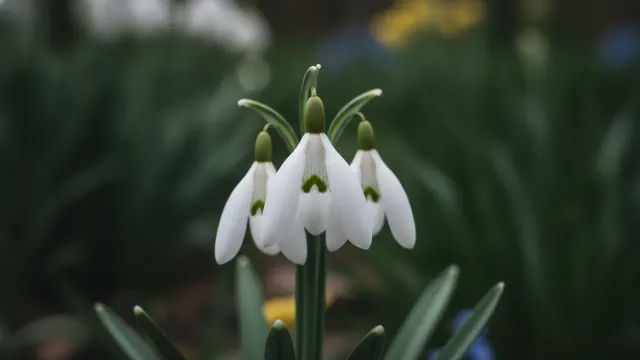
Snowdrop
Shares part shade and moderate water; blooms in late winter, before this one opens; low at 5 in, to carpet the ground beneath; both are strong pollinator plants, and they feed in different months.
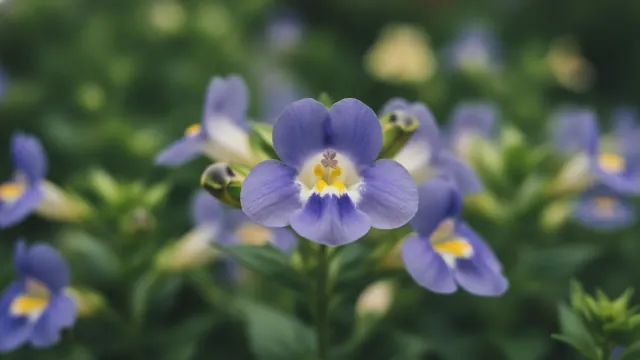
Wishbone Flower
Shares part shade and moderate water; blooms in early summer as this one finishes; lower at 10 in, for the front of the border; both are strong pollinator plants, and they feed in different months.
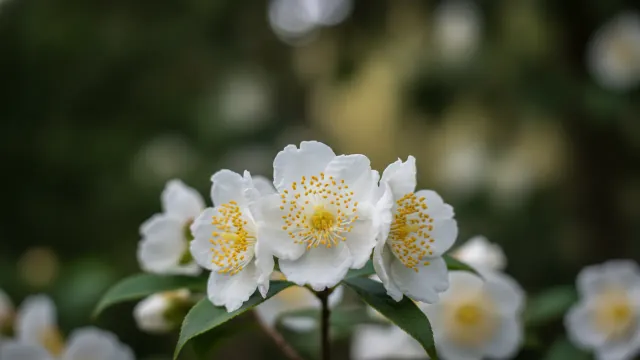
Japanese Stewartia
Takes part sun to part shade and moderate water; blooms in early summer as this one finishes; both are strong pollinator plants, and they feed in different months; taller at 16 ft, for the layer behind it.
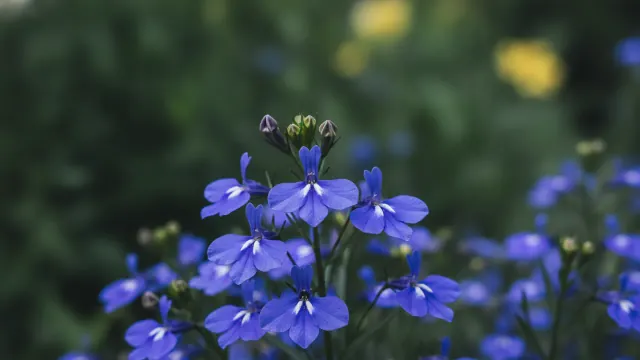
Lobelia
Takes part sun to part shade and moderate water; overlaps, then carries the display into early fall; lower at 8 in, for the front of the border; both are strong pollinator plants.
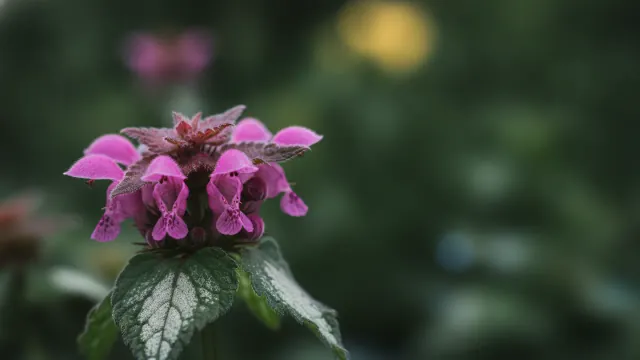
Dead Nettle
Shares part shade and moderate water; overlaps, then carries the display into midsummer; lower at 8 in, for the front of the border; both offer pollinator forage.
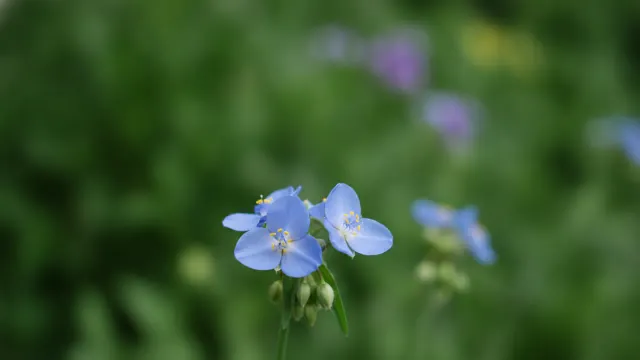
Spiderwort
Takes part sun to part shade and moderate water; blooms in early summer as this one finishes; both offer pollinator forage, in different months; lower at 1.5 ft, for the front of the border.
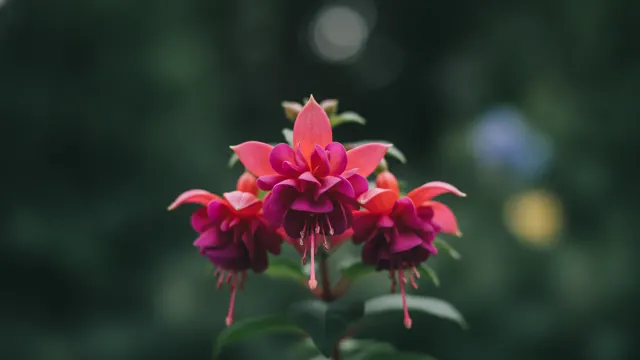
Fuchsia
Shares part shade and moderate water; blooms in early summer as this one finishes; both offer pollinator forage, in different months; lower at 1.5 ft, for the front of the border.
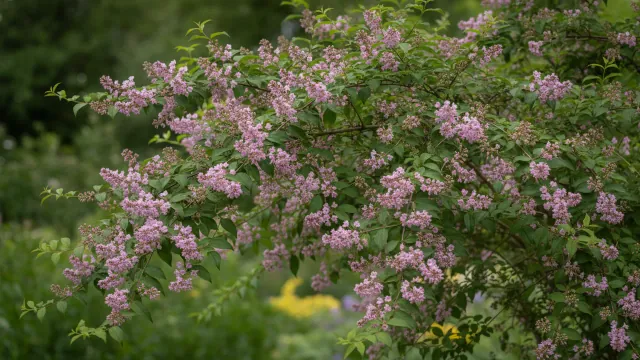
Beautyberry
Takes part sun to part shade and moderate water; blooms in early summer as this one finishes; both are strong pollinator plants, and they feed in different months; purple sits close to pink on the wheel.
Featured in these guides
Explore similar plants
You might also like
Design a garden with this
Drop this plant onto a 3D plan, see how it fills in, and watch your whole garden bloom across the year.