
 Illustration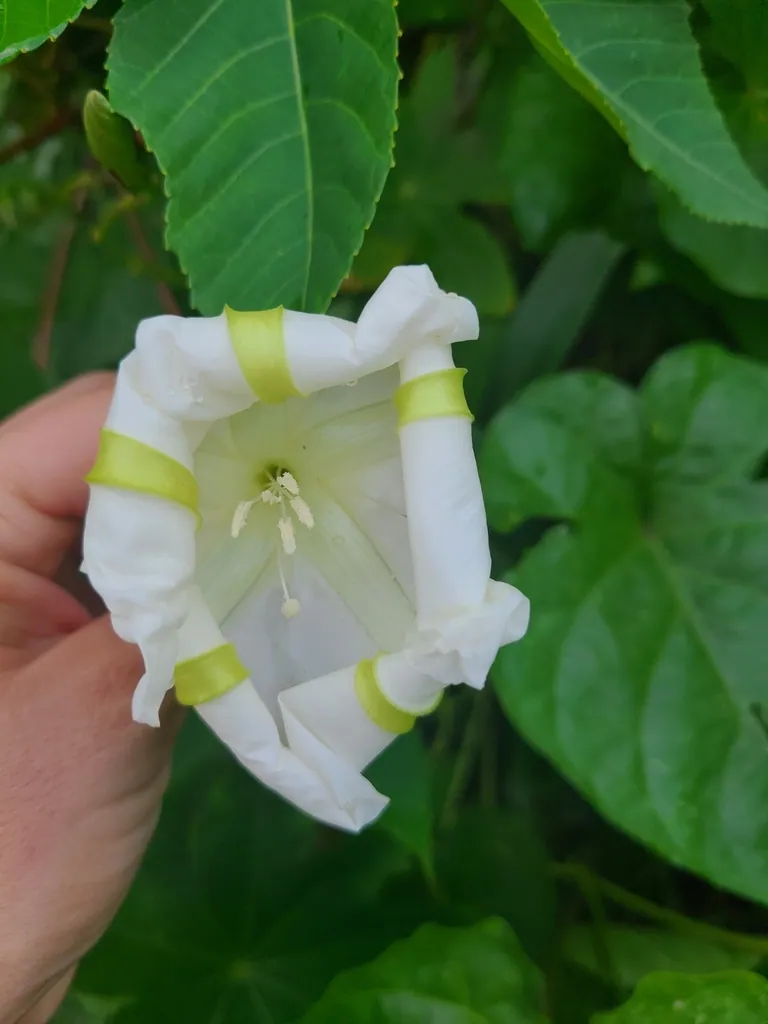

Photo credits and licenses
Real photographs from naturalists and photographers worldwide, each used under its own license. Credit: Photo by ritirene / iNaturalist (CC BY). How photos are sourced →

Moonflower
Ipomoea alba
Moonflower blooms from July through September.
Months here are Northern Hemisphere months; in the Southern Hemisphere, shift them by six months.
Growing Moonflower
Plant it in full sun. It prefers moderate water. It is hardy in USDA zones 9–11. Expect it to reach about 13 ft tall and 5 ft wide at maturity, in roughly 1 year (not yet checked).
What was checked
Mature height and spread, hardiness zones, sun and the trait tags were checked against named botanical sources for this plant. The bloom months and water need on this page were not, and each fact above says which. The planting, spacing and size sections are derived from these checked facts by a fixed rule, not checked separately, and the plant type is the library's own classification.
When to plant Moonflower
Plant Moonflower in early spring as soon as the soil is workable, or in early fall at least six weeks before your first frost, so roots establish in cool weather. In zone 9, the middle of its hardy zones 9 to 11, spring means January to March and fall means October or November. Once settled, it blooms from July to September.
Month-by-month timing for your zone is on the planting calendar; if you garden near zone 9, the middle of this plant's hardy range, start with zone 9 in January. Derived from the plant's category, zones and bloom months plus typical zone frost dates, not checked separately.
How big does Moonflower get?
 13 fttall5 ft 7 inan adult5 ftwide
See Moonflower in a garden plan: the planner shows it in 3D beside everything else you add, growing toward this size over the years.
How far apart to plant Moonflower
Derived from the mature spread above by a fixed rule, not checked separately: spacing is the spread, center to center.
Space Moonflower about 5 ft apart, center to center, so each plant has room to reach its full width.
Add Moonflower to a garden plan and the planner draws it at its full width, so you see the spacing before you buy.
Where these facts come from
Moonflower's height, spread, hardiness zones, sun and trait tags were checked against 12 published sources on August 1, 2026. Each one is linked below with every fact it carried, which can include a fact this page still marks as not yet checked, because a source carrying a value is not the same as the value being held to the standard. Facts not in that list, and the planting, spacing and size sections, are not covered by these sources.
- Missouri Botanical GardenPlant Finderheight, spread, hardiness zones, sun, years to mature size and trait tags
- NC State ExtensionGardener Plant Toolboxheight, spread, hardiness zones, sun, years to mature size and trait tags
- University of Florida IFASUF/IFAS Extension Gardening Solutionsheight, spread, hardiness zones, sun, years to mature size and trait tags
- fnps.orgFlorida Native Plant Societyheight, hardiness zones, sun, years to mature size and trait tags
- Outsidepridehardiness zones, sun, years to mature size and trait tags
- Swallowtail Garden Seedsheight, sun, years to mature size and trait tags
- University of Arkansas ExtensionUniversity of Arkansas Cooperative Extension Serviceheight, sun and years to mature size
- harrisseeds.comHarris Seedsheight and trait tags
- Clemson Home and Garden Information CenterClemson Cooperative Extension Home & Garden Information Centertrait tags
- Lady Bird Johnson Wildflower CenterNative Plant Databaseheight
- Penn State Extensiontrait tags
- University of Minnesota Extensiontrait tags
How the checking works, and what each standard covers, is on the verified plants page.
Good to know about Moonflower
Curated from university extensions, botanic gardens and other primary sources, with the source named on every note. A note reports what its source says; where that differs from a fact above, the fact above is this entry's stored value, and its mark says whether it has been checked.
Safety
Only the seeds are the hazard: they hold LSA ergot alkaloids. Eating them causes vomiting and, in quantity, hallucinations. ASPCA lists it toxic to dogs, cats and horses. per ASPCA and PubMed Central
Worth knowing
The signature show: each large white trumpet, about 6 inches across, unfurls in just a few minutes at dusk, perfumes the evening, and closes by the next morning. per NC State and University of Florida
Full sun versus part shade
Both sources call it a sun plant, but only one allows partial shade. Full sun gives the heaviest bloom; in shade it flowers less. Treat shade as a compromise. per NC State and University of Florida
Two plants share this name
Datura is also sold as 'moonflower' and is far more dangerous: every part is extremely toxic and can be fatal. Check the botanical name, Ipomoea alba, before you buy. per NC State and Wisconsin
Nick or soak the seeds
The hard seed coat blocks water, so germination is unreliable unless you nick each seed with a file or soak it overnight in warm water before sowing. per NC State and University of Florida
Give it a support
It climbs by twining its stems around a support, not by tendrils or sticky pads, so give it a trellis, arbor, fence, or strings at planting. per NC State and University of Florida
Feeds night-flying hawk moths
This is a specialist night-moth flower: large hawk moths, drawn to its pale, tubular, fragrant blooms, hover to sip nectar with a very long tongue and pollinate it. per NC State and USDA
What pairs well with Moonflower
Good companions share its growing conditions and add something it lacks: an earlier or later bloom, a lower carpet in front, or structure through winter.
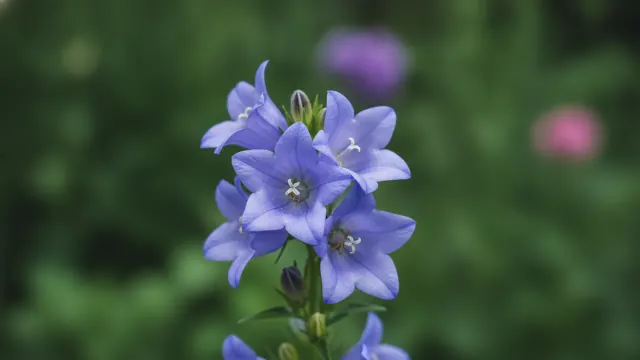
Canterbury Bells
Shares full sun and moderate water; blooms in late spring, before this one opens; lower at 2.5 ft, for the front of the border; both offer pollinator forage, in different months.
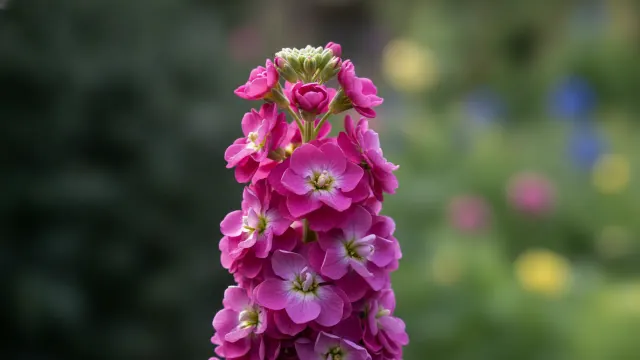
Stock
Shares full sun and moderate water; blooms in mid spring, before this one opens; low at 1.5 ft, to carpet the ground beneath; both offer pollinator forage, in different months.
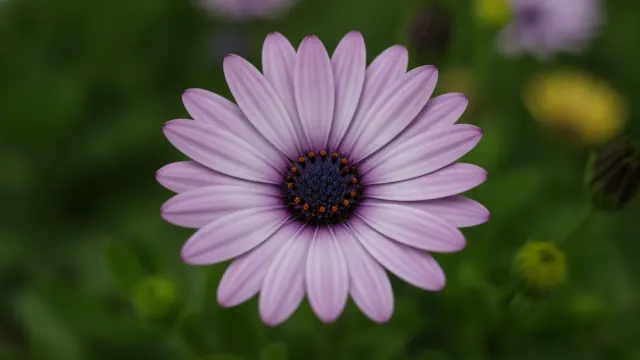
African Daisy
Shares full sun and moderate water; blooms in mid spring, before this one opens; both offer pollinator forage, in different months; a soft color beside the white.
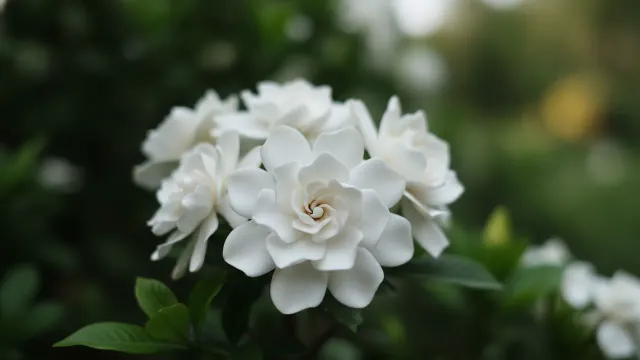
Gardenia
Takes full sun to part sun and moderate to high water; opens in late spring and overlaps into this one's season; evergreen, so the bed keeps its shape through winter; lower at 4 ft, for the front of the border.
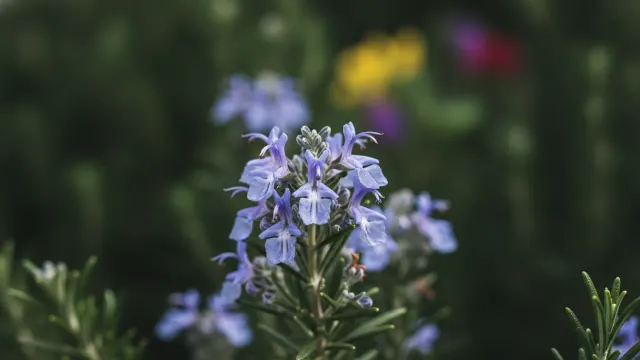
Rosemary
Shares full sun and low to moderate water; blooms in early spring, before this one opens; both offer pollinator forage, in different months; evergreen, so the bed keeps its shape through winter; they only overlap in zones 9 to 10.
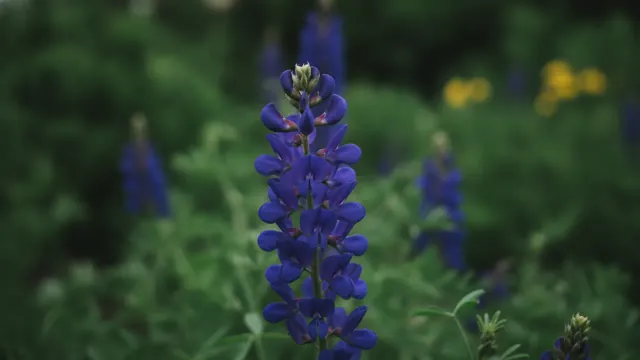
False Indigo
Shares full sun and low to moderate water; blooms in late spring, before this one opens; both offer pollinator forage, in different months; its seed heads stand through winter, for structure and the birds; they only overlap in zone 9.
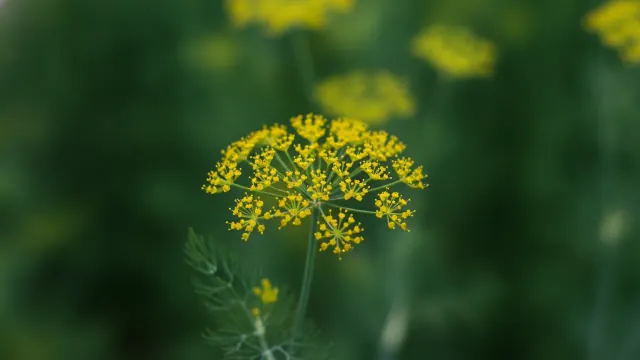
Dill
Shares full sun and moderate water; opens in early summer and overlaps into this one's season; lower at 3 ft, for the front of the border; both offer pollinator forage.
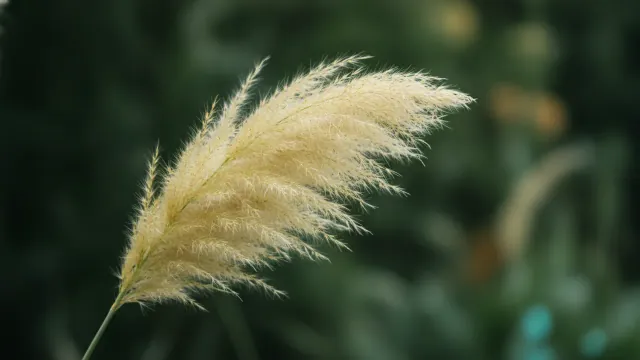
Pampas Grass
Shares full sun and low to moderate water; overlaps, then carries the display into mid fall; its seed heads stand through winter, for structure and the birds; lower at 8 ft, for the front of the border.
Featured in these guides
Explore similar plants
You might also like
Design a garden with this
Drop this plant onto a 3D plan, see how it fills in, and watch your whole garden bloom across the year.