
 Illustration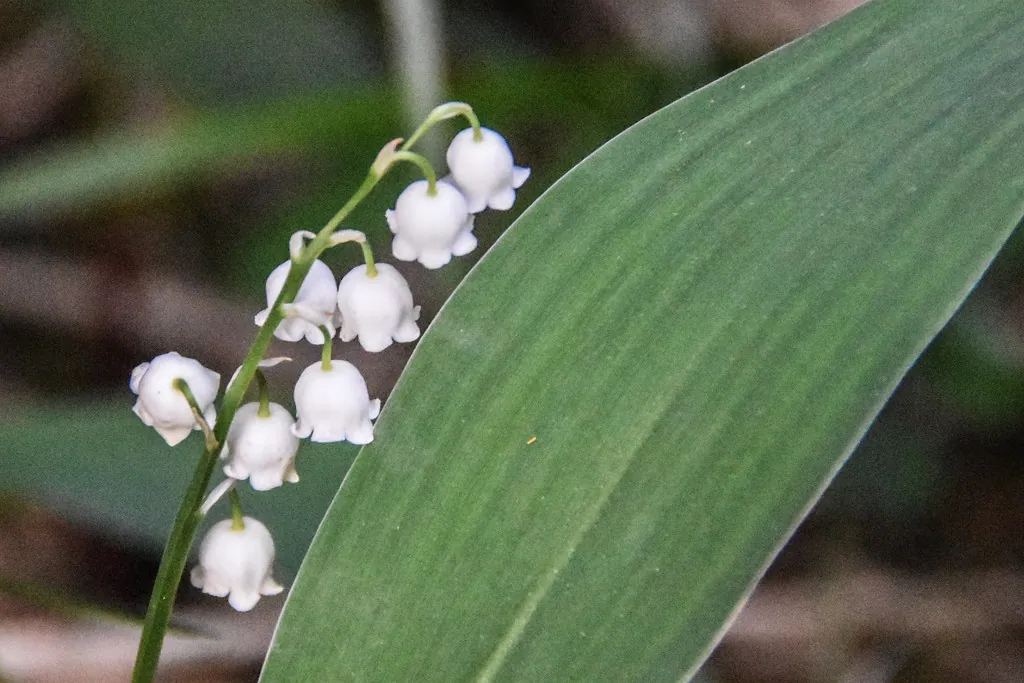

Photo credits and licenses
Real photographs from naturalists and photographers worldwide, each used under its own license. Credit: Photo by Jay Pruett / iNaturalist (CC BY). How photos are sourced →

Lily of the Valley
Convallaria majalis
Lily of the Valley blooms from April through May.
Months here are Northern Hemisphere months; in the Southern Hemisphere, shift them by six months.
Growing Lily of the Valley
Plant it in full shade. It prefers moderate water. It is hardy in USDA zones 2–7. Expect it to reach about 8 in tall and 12 in wide at maturity, in roughly 2 years (not yet checked).
What was checked
Mature height and spread, hardiness zones, sun and the trait tags were checked against named botanical sources for this plant. The bloom months and water need on this page were not, and each fact above says which. The planting, spacing and size sections are derived from these checked facts by a fixed rule, not checked separately, and the plant type is the library's own classification.
When to plant Lily of the Valley
Plant Lily of the Valley in early spring as soon as the soil is workable, or in early fall at least six weeks before your first frost, so roots establish in cool weather. In zone 5, the middle of its hardy zones 2 to 7, spring means April to June and fall means August or September. Once settled, it blooms from April to May.
Month-by-month timing for your zone is on the planting calendar; if you garden near zone 5, the middle of this plant's hardy range, start with zone 5 in April. Derived from the plant's category, zones and bloom months plus typical zone frost dates, not checked separately.
How big does Lily of the Valley get?
 8 intall5 ft 7 inan adult12 inwide
See Lily of the Valley in a garden plan: the planner shows it in 3D beside everything else you add, growing toward this size over the years.
How far apart to plant Lily of the Valley
Derived from the mature spread above by a fixed rule, not checked separately: spacing is the spread, center to center.
Space Lily of the Valley about 12 in apart, center to center, so each plant has room to reach its full width.
Add Lily of the Valley to a garden plan and the planner draws it at its full width, so you see the spacing before you buy.
Where these facts come from
Lily of the Valley's height, spread, hardiness zones, sun and trait tags were checked against 9 published sources on July 31, 2026. Each one is linked below with every fact it carried, which can include a fact this page still marks as not yet checked, because a source carrying a value is not the same as the value being held to the standard. Facts not in that list, and the planting, spacing and size sections, are not covered by these sources.
- gardengoodsdirect.comGarden Goods Directheight, spread, hardiness zones, sun, years to mature size and trait tags
- Missouri Botanical GardenPlant Finderheight, spread, hardiness zones, sun, years to mature size and trait tags
- NC State ExtensionPlant Toolboxheight, spread, hardiness zones, sun, years to mature size and trait tags
- Perennials.com (Heritage Perennials)Heritage Perennials (perennials.com)height, spread, hardiness zones, sun, years to mature size and trait tags
- Brent and Becky's Bulbsheight, hardiness zones, sun, years to mature size and trait tags
- The Morton Arboretumheight, hardiness zones, sun, years to mature size and trait tags
- BBC Gardeners' Worldheight, spread, sun and trait tags
- Holland Bulb Farmsheight, hardiness zones, sun and trait tags
- Clemson Home and Garden Information CenterClemson Cooperative Extension HGIC, Ground Covers factsheetheight, sun and trait tags
How the checking works, and what each standard covers, is on the verified plants page.
Good to know about Lily of the Valley
Curated from university extensions, botanic gardens and other primary sources, with the source named on every note. A note reports what its source says; where that differs from a fact above, the fact above is this entry's stored value, and its mark says whether it has been checked.
Safety
Every part is highly toxic to people, dogs, cats and horses. The cardiac glycosides can cause vomiting, a slow or irregular heartbeat, seizures and, in severe cases, death. per ASPCA and MedlinePlus
Worth knowing
The same poison that makes it dangerous makes it easy: the cardiac glycosides that deter deer, rabbits and insects leave it nearly pest-free, but also help it spread unchecked. per NC State and SEWISC
How much sun it takes
Sources split by climate. In the cool North with moist soil it takes full sun; in hot regions it needs part to full shade. Match your climate. per NC State and University of Illinois
Warm-end zone limit
The warm limit is a soft edge. NC State caps it at zone 7b; Illinois Extension pushes it to 8, where deep-South heat and humidity take over. per NC State and University of Illinois
Spreads hard; can be invasive
Underground rhizomes form dense colonies that choke out neighbors. It naturalizes easily and is listed invasive in Wisconsin and Arkansas; use a deep barrier to contain it. per NC State and SEWISC
Leaves mimic edible wild garlic
Before flowering, its leaves closely resemble edible wild garlic (ramsons), a documented cause of serious human poisonings. Never forage for greens where it grows. per Journal of Applied Laboratory Medicine and PubMed Central
Berries tempt kids and pets
The showy orange-red fall berries are the part most likely to tempt a child or pet, and they are as toxic as the rest of the plant. per NC State and ASPCA
What pairs well with Lily of the Valley
Good companions share its growing conditions and add something it lacks: an earlier or later bloom, a lower carpet in front, or structure through winter.
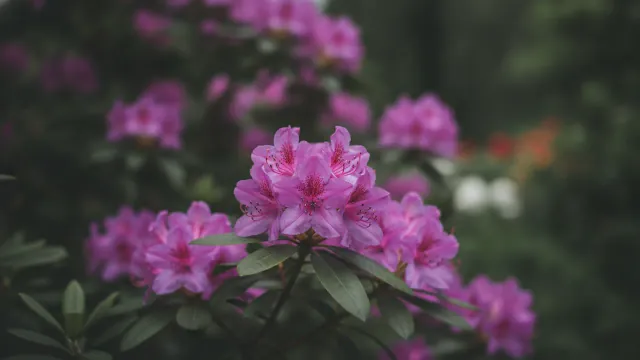
Rhododendron
Takes part shade to full shade and moderate water; overlaps, then carries the display into early summer; stands well above at 6 ft, a canopy to plant beneath; evergreen, so the bed keeps its shape through winter.
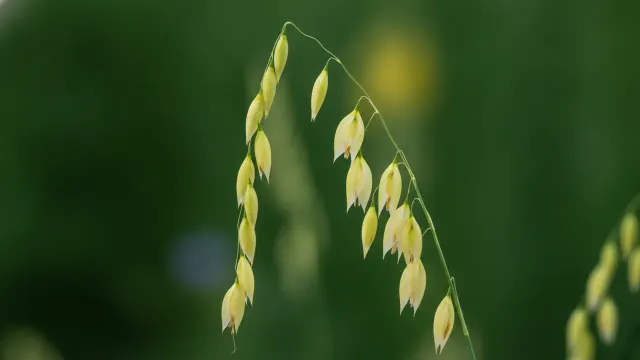
Northern Sea Oats
Takes part shade to full shade and moderate water; blooms in midsummer, extending the bed's season; taller at 3.5 ft, for the layer behind it; its seed heads stand through winter, for structure and the birds; this one spreads, so it will crowd its neighbor in time.
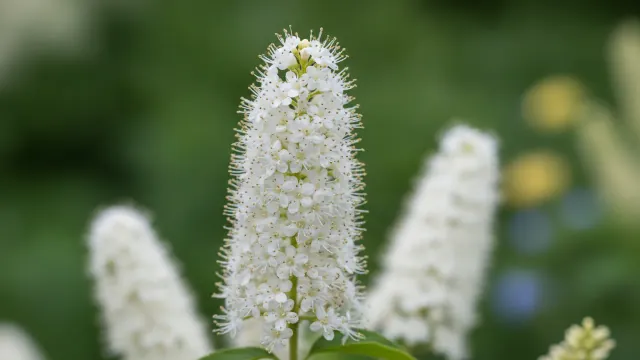
Summersweet
Takes part shade to full shade and moderate to high water; blooms in midsummer, extending the bed's season; stands well above at 6 ft, a canopy to plant beneath; its white flowers settle the white.
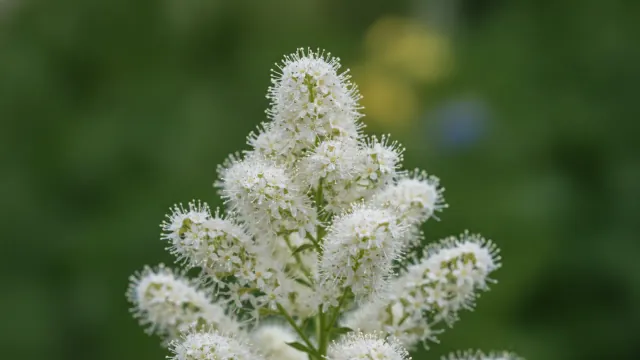
Goatsbeard
Takes part shade to full shade and moderate water; blooms in early summer as this one finishes; taller at 4 ft, for the layer behind it; its white flowers settle the white; this one spreads, so it will crowd its neighbor in time.

Camellia
Takes part shade to full shade and moderate water; blooms in midwinter, before this one opens; stands well above at 6.5 ft, a canopy to plant beneath; evergreen, so the bed keeps its shape through winter; they only overlap in zone 7.
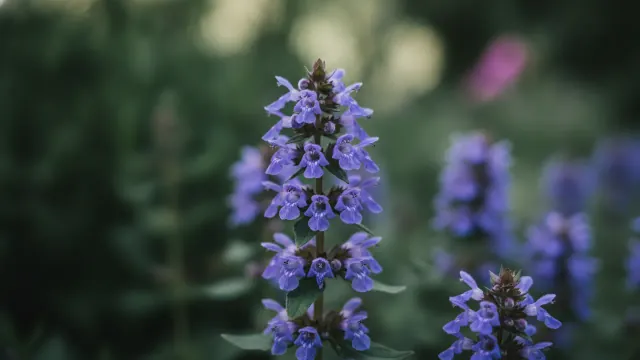
Bugleweed
Takes part shade to full shade and moderate water; evergreen, so the bed keeps its shape through winter; a soft color beside the white.
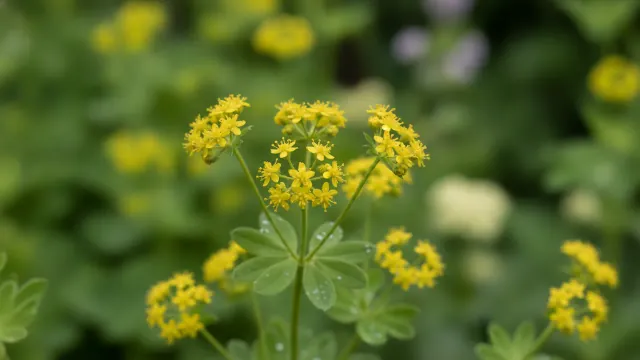
Lady's Mantle
Takes part shade to full shade and moderate water; overlaps, then carries the display into midsummer; taller at 1.5 ft, for the layer behind it; a soft color beside the white.
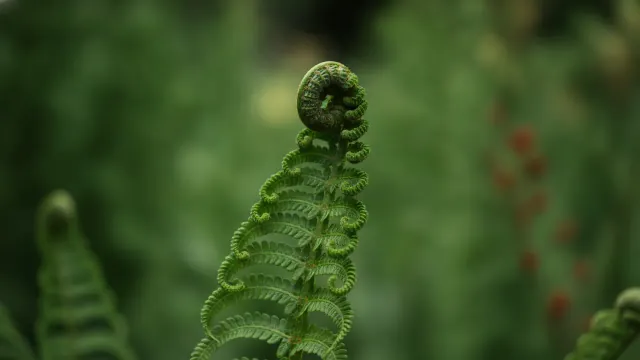
Ostrich Fern
Takes part shade to full shade and moderate to high water; taller at 4 ft, for the layer behind it.
All 8 companion pairings for Lily of the Valley →
Try Lily of the Valley with its top companions in a garden →
Featured in these guides
Explore similar plants
You might also like


Design a garden with this
Drop this plant onto a 3D plan, see how it fills in, and watch your whole garden bloom across the year.