
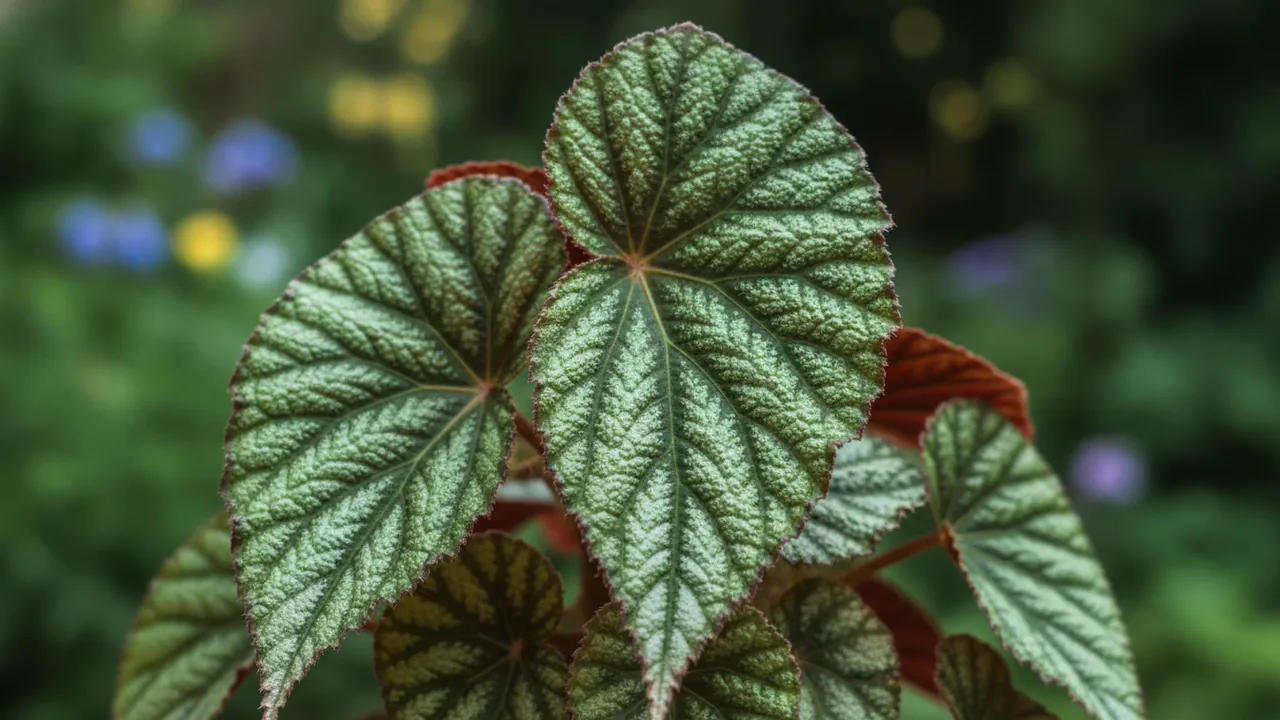
 Illustration

Rex Begonia
Begonia rex
Rex Begonia is grown for its foliage rather than flowers, giving the garden structure and color all season long.
Months here are Northern Hemisphere months; in the Southern Hemisphere, shift them by six months.
Growing Rex Begonia
Plant it in part shade. It prefers moderate water. It is hardy in USDA zones 10–11. Expect it to reach about 12 in tall and 12 in wide at maturity, in roughly 1 year (not yet checked).
What was checked
Mature height and spread, hardiness zones, sun and the trait tags were checked against named botanical sources for this plant. The bloom months and water need on this page were not, and each fact above says which. The planting, spacing and size sections are derived from these checked facts by a fixed rule, not checked separately, and the plant type is the library's own classification.
When to plant Rex Begonia
Wait until all danger of frost has passed, then plant out Rex Begonia into warm soil; in most zones that means late spring.
Month-by-month timing for your zone is on the planting calendar; if you garden near zone 10, the middle of this plant's hardy range, start with zone 10 in January. Derived from the plant's category, zones and bloom months plus typical zone frost dates, not checked separately.
How big does Rex Begonia get?
 12 intall5 ft 7 inan adult12 inwide
See Rex Begonia in a garden plan: the planner shows it in 3D beside everything else you add, growing toward this size over the years.
How far apart to plant Rex Begonia
Derived from the mature spread above by a fixed rule, not checked separately: spacing is the spread, center to center.
Space Rex Begonia about 12 in apart, center to center, so each plant has room to reach its full width.
Add Rex Begonia to a garden plan and the planner draws it at its full width, so you see the spacing before you buy.
Where these facts come from
Rex Begonia's height, spread, hardiness zones and sun were checked against 9 published sources on July 30, 2026. Each one is linked below with every fact it carried, which can include a fact this page still marks as not yet checked, because a source carrying a value is not the same as the value being held to the standard. Facts not in that list, and the planting, spacing and size sections, are not covered by these sources.
- NC State ExtensionBegoniaheight, spread, hardiness zones, sun and years to mature size
- Missouri Botanical GardenBegonia rex-cultorumheight, spread, hardiness zones and sun
- Missouri Botanical GardenBegonia rex-cultorum 'Super Curl'height, spread, hardiness zones and sun
- NC State ExtensionBegonia - Rex Typesheight, spread, hardiness zones and sun
- University of Florida IFASUF/IFAS Gardening Solutions (Begonias)height, hardiness zones and sun
- Clemson Home and Garden Information CenterBegoniaheight and sun
- libguides.nybg.orgNew York Botanical Garden, Mertz Library Plant Guide (Rex Cultorum Gro...sun and years to mature size
- University of Florida IFASUF/IFAS Extension Nassau County (Fact sheet: Begonia)height and sun
- Clemson Home and Garden Information CenterGrowing Begonias Indoorssun
How the checking works, and what each standard covers, is on the verified plants page.
Comes in 5 varieties
Same plant, same care - pick the variety you are growing.
Compare every variety in the Rex Begonia group
Every figure is the variety's own page fact. Tap a name to open it.
| Variety | Color | Blooms | Hardiness | Sun | Size (H × W) |
|---|---|---|---|---|---|
| Escargot | Foliage | Foliage plant | Zones 10–11 | Part shade | 12 in × 12 in |
| Fireworks | Foliage | Foliage plant | Zones 10–11 | Part shade | 12 in × 12 in |
| Raspberry Swirl | Foliage | Foliage plant | Zones 10–11 | Part shade | 12 in × 12 in |
| Red Kiss | Foliage | Foliage plant | Zones 10–11 | Part shade | 12 in × 12 in |
| Rexthis page | Foliage | Foliage plant | Zones 10–11 | Part shade | 12 in × 12 in |
| River Nile | Foliage | Foliage plant | Zones 10–11 | Part shade | 12 in × 12 in |
Good to know about Rex Begonia
Curated from university extensions, botanic gardens and other primary sources, with the source named on every note. A note reports what its source says; where that differs from a fact above, the fact above is this entry's stored value, and its mark says whether it has been checked.
Safety
Toxic to dogs, cats and horses via soluble calcium oxalates, most concentrated in the underground rhizome. Causes mouth irritation, drooling and vomiting; kidney failure in grazing horses. per ASPCA and NC State
Worth knowing
The high humidity above 50% that keeps its leaves happy is exactly what powdery mildew needs, and mildew infects without wet leaves. Raise the air's humidity, never mist. per NC State and UConn
How wet to keep it
Sources split on moisture: keep it evenly moist and drying slightly between, or err on the dry side. All agree the real killer is overwatering, not drought. per NC State and UConn
Grown for its leaves
The show is the boldly patterned, often metallic foliage in greens, reds, silvers, pinks, lavenders and purples. Its tiny pinkish-white flowers are insignificant and easily overlooked. per NC State
A tender houseplant or annual
Frost kills it, so it is hardy outdoors only in the warmest frost-free zones. Everywhere colder, grow it as a houseplant or summer annual and overwinter it indoors. per NC State and Minnesota
Deer resistant
Begonias are listed as deer resistant and are generally left alone by rabbits too. As always, that means seldom browsed, not deer-proof: a hungry deer may still sample it. per NC State and Clemson
Wants steady warmth
A warm-lover: happiest around 66 to 73 F by day with nights above 55 F, and growth slows below 60 F. Cold and frost set it back. per Clemson and UConn
What pairs well with Rex Begonia
Good companions share its growing conditions and add something it lacks: an earlier or later bloom, a lower carpet in front, or structure through winter.
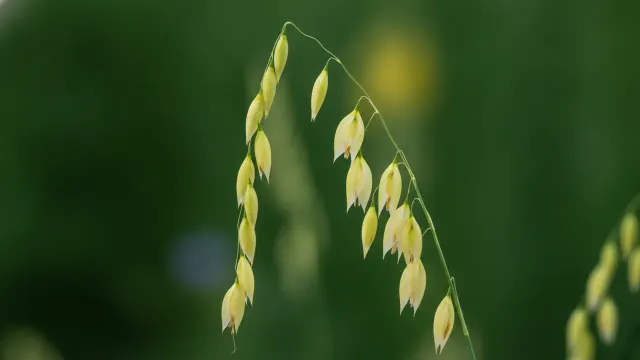
Northern Sea Oats
Shares part shade and moderate water; its seed heads stand through winter, for structure and the birds; taller at 3.5 ft, for the layer behind it.
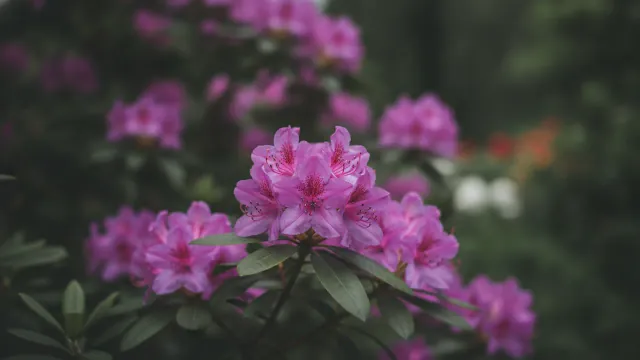
Rhododendron
Shares part shade and moderate water; evergreen, so the bed keeps its shape through winter; taller at 6 ft, for the layer behind it.
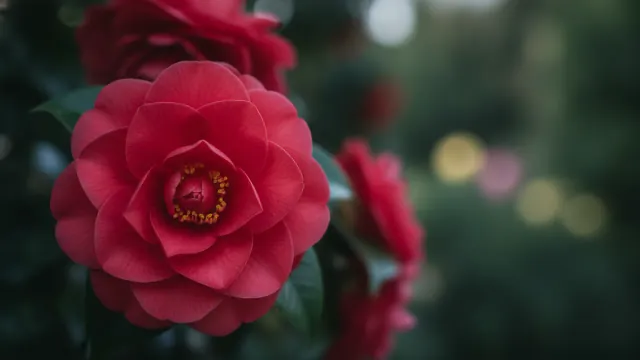
Camellia
Shares part shade and moderate water; evergreen, so the bed keeps its shape through winter; stands well above at 6.5 ft, a canopy to plant beneath.
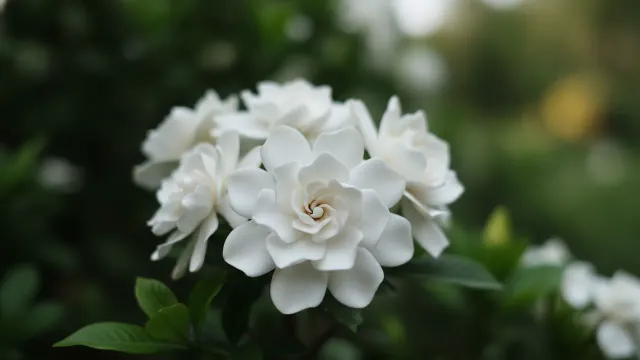
Gardenia
Takes part sun to part shade and moderate to high water; evergreen, so the bed keeps its shape through winter; taller at 4 ft, for the layer behind it.
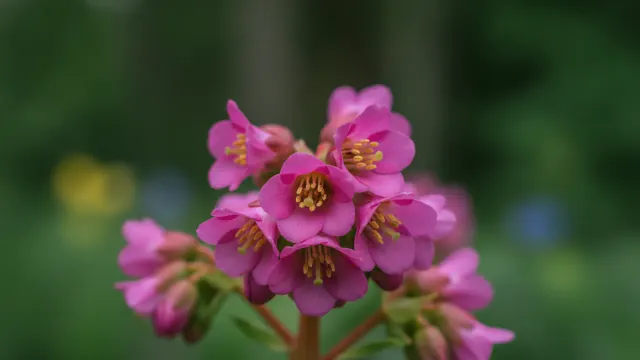
Bergenia
Takes part sun to part shade and moderate water; evergreen, so the bed keeps its shape through winter.
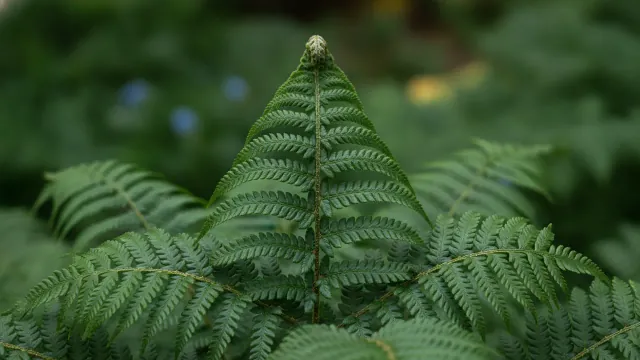
Christmas Fern
Takes part shade to full shade and moderate water; evergreen, so the bed keeps its shape through winter.
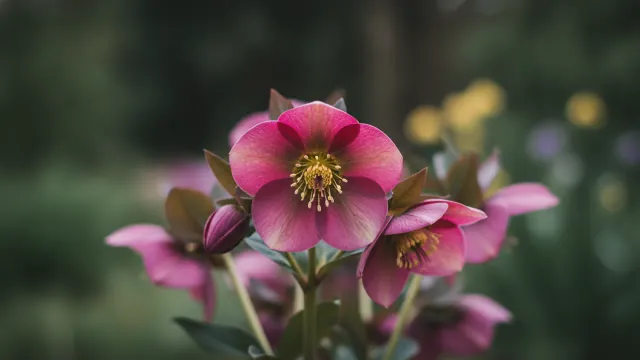
Hellebore
Shares part shade and moderate water; evergreen, so the bed keeps its shape through winter.
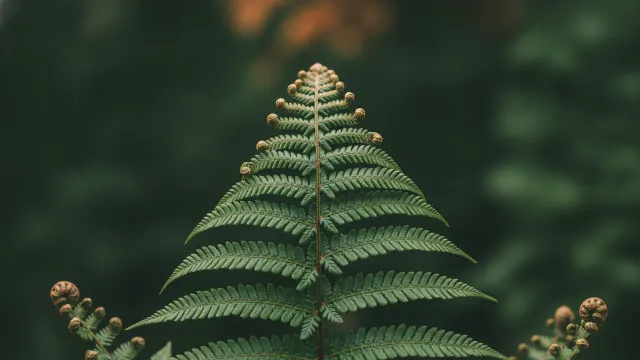
Autumn Fern
Shares part shade and moderate water; evergreen, so the bed keeps its shape through winter.
Explore similar plants
You might also like
Design a garden with this
Drop this plant onto a 3D plan, see how it fills in, and watch your whole garden bloom across the year.