
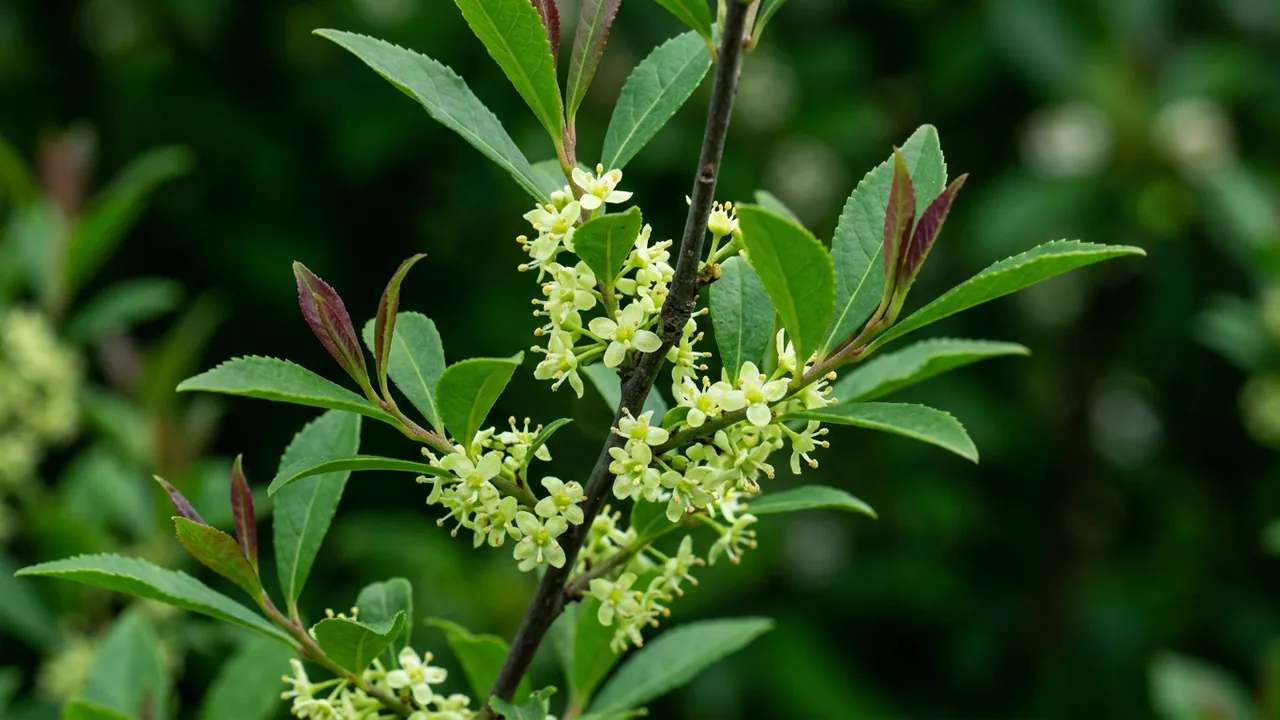
 Illustration

Apollo Winterberry
Ilex 'Apollo'
Apollo Winterberry blooms from May through June.
Months here are Northern Hemisphere months; in the Southern Hemisphere, shift them by six months.
Growing Apollo Winterberry
Plant it in full sun. It prefers moderate water. It is hardy in USDA zones 3–8. Expect it to reach about 11 ft tall and 7 ft wide at maturity, in roughly 4 years (a house reading).
What was checked
Mature height and spread, hardiness zones, sun, water, bloom months and color and the trait tags were checked against named botanical sources for this plant, with what the sources could not settle written down; years to mature size rests on a recorded house rule where no publisher states one, and is marked so; its common name and alternate names have not been checked yet. Each fact above carries its own mark. The planting, spacing and size sections are derived from these checked facts by a fixed rule, not checked separately, and the plant type is the library's own classification.
When to plant Apollo Winterberry
Plant Apollo Winterberry in early spring as soon as the soil is workable, or in early fall at least six weeks before your first frost, so roots establish in cool weather. In zone 5, the middle of its hardy zones 3 to 8, spring means April to June and fall means August or September. Once settled, it blooms from May to June.
Month-by-month timing for your zone is on the planting calendar; if you garden near zone 5, the middle of this plant's hardy range, start with zone 5 in April. Derived from the plant's category, zones and bloom months plus typical zone frost dates, not checked separately.
How big does Apollo Winterberry get?
 11 fttall5 ft 7 inan adult7 ftwide
See Apollo Winterberry in a garden plan: the planner shows it in 3D beside everything else you add, growing toward this size over the years.
How far apart to plant Apollo Winterberry
Derived from the mature spread above by a fixed rule, not checked separately: spacing is the spread, center to center.
Space Apollo Winterberry about 7 ft apart, center to center, so each plant has room to reach its full width.
Add Apollo Winterberry to a garden plan and the planner draws it at its full width, so you see the spacing before you buy.
Where these facts come from
Apollo Winterberry's height, spread, hardiness zones, sun, water, bloom months and color, trait tags, soil, diseases, pests and toxicity were checked against 12 published sources on September 26, 2026. Each one is linked below with every fact it carried, which can include a fact this page still marks as not yet checked, because a source carrying a value is not the same as the value being held to the standard. Facts not in that list, and the planting, spacing and size sections, are not covered by these sources.
- Plant Addictsheight, spread, hardiness zones, sun, water, bloom months and color, trait tags, soil, diseases and pests
- American Meadowsheight, spread, hardiness zones, sun, water, bloom months and color, soil and toxicity
- woodlanders.netWoodlanders (mail-order nursery, Aiken, South Carolina)height, spread, hardiness zones, sun, water, bloom months and color, trait tags and soil
- Missouri Botanical GardenIlex 'Sparkleberry', the SISTER female of the same crosshardiness zones, sun, water, bloom months and color, soil, diseases and pests
- NC State Extensionthe cross's own page, Ilex verticillata x serrata, which lists 'Apollo...hardiness zones, water, bloom months and color, trait tags, soil, diseases and pests
- colesvillenursery.comColesville Nursery (wholesale grower, Ashland, Virginia)height, spread, hardiness zones, sun, water and bloom months and color
- pridescorner.comPrides Corner Farms (wholesale grower, Lebanon, Connecticut)height, spread, hardiness zones, bloom months and color and trait tags
- plantdatabase.uconn.eduUniversity of Connecticut Plant Database (Mark H. Brand)height, bloom months and color and diseases
- mailordernatives.comMail Order Natives (mail-order nursery, Lee, Florida)height, spread and hardiness zones
- NC State Extensionspecies page, Ilex verticillata, one PARENT of this hybriddiseases, pests and toxicity
- woodyplants.cals.cornell.eduCornell University Woody Plants Databasebloom months and color and trait tags
- ASPCAHollytoxicity
How the checking works, and what each standard covers, is on the verified plants page.
Good to know about Apollo Winterberry
Curated from university extensions, botanic gardens and other primary sources, with the source named on every note.
Safety
The berries and leaves are toxic if eaten, by people and pets alike, though low severity. The toxin is saponins, causing vomiting, diarrhea, and depression. per ASPCA and NC State
Explore similar plants
You might also like
Design a garden with this
Drop this plant onto a 3D plan, see how it fills in, and watch your whole garden bloom across the year.