
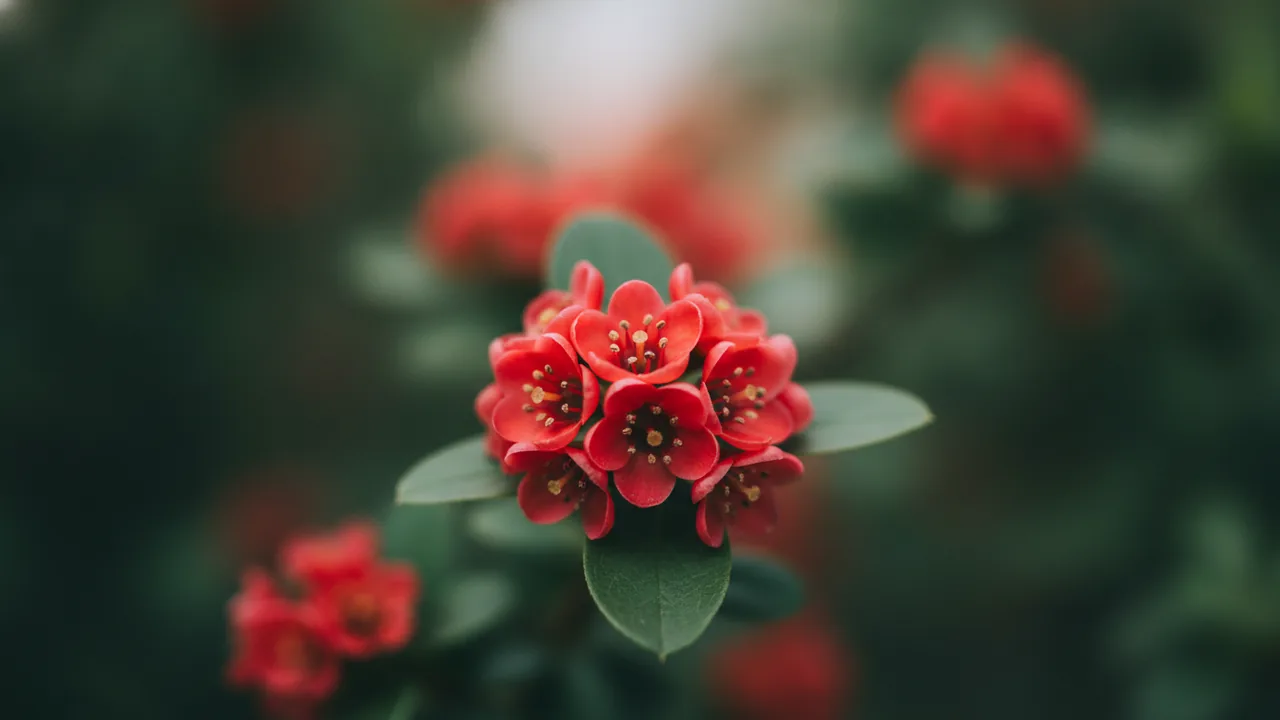
 Illustration

Winterberry
Ilex verticillata
Winterberry blooms from October through December.
Months here are Northern Hemisphere months; in the Southern Hemisphere, shift them by six months.
Growing Winterberry
Plant it in full sun. It prefers high water. It is hardy in USDA zones 3–9. Expect it to reach about 6.5 ft tall and 6.5 ft wide at maturity, in roughly 5 years (not yet checked).
What was checked
Mature height and spread, hardiness zones, sun and the trait tags were checked against named botanical sources for this plant. The bloom months and water need on this page were not, and each fact above says which. The planting, spacing and size sections are derived from these checked facts by a fixed rule, not checked separately, and the plant type is the library's own classification.
When to plant Winterberry
Plant Winterberry in early spring as soon as the soil is workable, or in early fall at least six weeks before your first frost, so roots establish in cool weather. In zone 6, the middle of its hardy zones 3 to 9, spring means March to May and fall means August or September. Once settled, it blooms from October to December.
Month-by-month timing for your zone is on the planting calendar; if you garden near zone 6, the middle of this plant's hardy range, start with zone 6 in March. Derived from the plant's category, zones and bloom months plus typical zone frost dates, not checked separately.
How big does Winterberry get?
 6.5 fttall5 ft 7 inan adult6.5 ftwide
See Winterberry in a garden plan: the planner shows it in 3D beside everything else you add, growing toward this size over the years.
How far apart to plant Winterberry
Derived from the mature spread above by a fixed rule, not checked separately: spacing is the spread, center to center.
Space Winterberry about 6.5 ft apart, center to center, so each plant has room to reach its full width.
Add Winterberry to a garden plan and the planner draws it at its full width, so you see the spacing before you buy.
Where these facts come from
Winterberry's height, spread, hardiness zones, sun and trait tags were checked against 12 published sources on July 30, 2026. Each one is linked below with every fact it carried, which can include a fact this page still marks as not yet checked, because a source carrying a value is not the same as the value being held to the standard. Facts not in that list, and the planting, spacing and size sections, are not covered by these sources.
- Clemson Home and Garden Information CenterRain Garden Plants: Winterberryheight, spread, hardiness zones, sun, years to mature size and trait tags
- Missouri Botanical GardenIlex verticillataheight, spread, hardiness zones, sun, years to mature size and trait tags
- NC State ExtensionIlex verticillataheight, spread, hardiness zones, sun, years to mature size and trait tags
- The Morton ArboretumCommon winterberryheight, spread, hardiness zones, sun and years to mature size
- University of Illinois ExtensionWinterberryheight, spread, hardiness zones, sun and trait tags
- tnyards.utk.eduUniversity of Tennessee Institute of Agriculture, Tennessee Yards (Ile...height, spread, sun and trait tags
- Lady Bird Johnson Wildflower CenterIlex verticillataheight, sun and trait tags
- Oregon State UniversityIlex verticillataheight, hardiness zones and sun
- Prairie Moon NurseryIlex verticillata, Winterberry Hollyheight, hardiness zones and sun
- University of Maryland ExtensionWinterberry Hollyheight, sun and trait tags
- en.wikipedia.orgWikipedia (Ilex verticillata)height and trait tags
- dendro.cnre.vt.eduVirginia Tech Dendrology Fact Sheet (Ilex verticillata)height
How the checking works, and what each standard covers, is on the verified plants page.
Comes in 5 varieties across 2 colors
Same plant, same care - pick the color you are growing.
Compare every variety in the Winterberry group
Every figure is the variety's own page fact. Tap a name to open it.
| Variety | Color | Blooms | Hardiness | Sun | Size (H × W) |
|---|---|---|---|---|---|
| Berry Heavy | Red | Oct–Dec | Zones 3–9 | Full sun | 8 ft × 6.5 ft |
| Berry Poppins | Red | Oct–Dec | Zones 3–9 | Full sun | 4 ft × 4 ft |
| Red Sprite | Red | Oct–Dec | Zones 3–9 | Full sun | 3.5 ft × 4 ft |
| Winter Gold | Orange | Oct–Dec | Zones 3–9 | Full sun | 6.5 ft × 6.5 ft |
| Winter Red | Red | Oct–Dec | Zones 3–9 | Full sun | 8 ft × 8 ft |
| Winterberrythis page | Red | Oct–Dec | Zones 3–9 | Full sun | 6.5 ft × 6.5 ft |
Good to know about Winterberry
Curated from university extensions, botanic gardens and other primary sources, with the source named on every note. A note reports what its source says; where that differs from a fact above, the fact above is this entry's stored value, and its mark says whether it has been checked.
Safety
The berries and leaves are toxic if eaten, by people and pets alike, though low severity. The toxin is saponins, causing vomiting, diarrhea, and depression. per ASPCA and NC State
Worth knowing
Winterberry is dioecious: only female plants make the red berries, and only if a compatible male that blooms at the same time grows nearby. One plant fruits nothing. per NC State
Alkaline soil is a dealbreaker
Most sources say it must have acid soil and goes chlorotic, even dies, in alkaline ground. One outlier (Illinois) claims it tolerates alkaline. Treat it as acid-only. per NC State and Clemson
How many males, how close
Plant at least one bloom-matched male within about 40 to 50 ft of the females. One male can cover roughly 5 to 20 females; closer spacing means more berries. per NC State and Clemson
The winter berry display
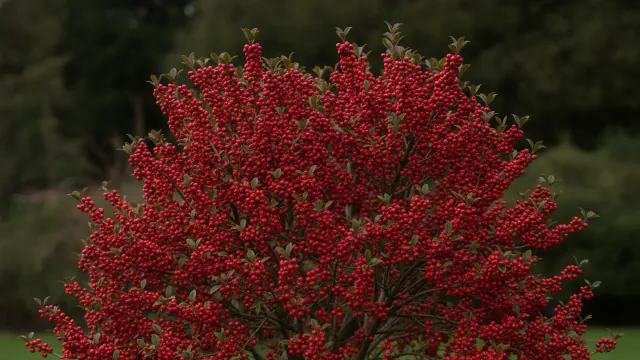
After the leaves drop, bright red berries cling to the bare stems well into winter. That bare-stem show is the plant's whole point; leave the fruit on. per NC State
Feeds over 48 bird species
The persistent red fruit is important winter food for birds and small mammals; NC State and Clemson say over 48 species eat it, cedar waxwings among them. per NC State and Clemson
Spreads into thickets
It spreads by root suckers into thickets, strongest in moist soil. A plus for naturalizing and wildlife cover; for a tidy single shrub, remove suckers now and then. per Clemson and Penn State
What pairs well with Winterberry
Good companions share its growing conditions and add something it lacks: an earlier or later bloom, a lower carpet in front, or structure through winter.
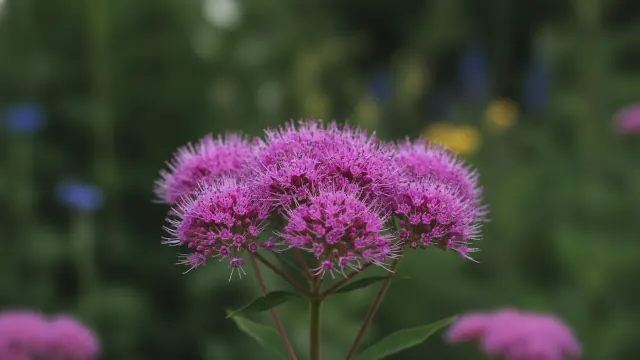
Joe Pye Weed
Shares full sun and high water; blooms in midsummer, before this one opens; both are strong pollinator plants, and they feed in different months; its seed heads stand through winter, for structure and the birds.
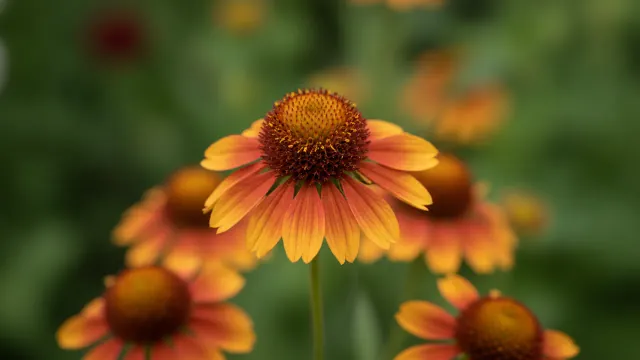
Sneezeweed
Shares full sun and moderate to high water; blooms in midsummer, before this one opens; both are strong pollinator plants, and they feed in different months; its seed heads stand through winter, for structure and the birds.
Turtlehead
Takes full sun to part sun and high water; blooms in late summer, before this one opens; both are strong pollinator plants, and they feed in different months; lower at 3 ft, for the front of the border.
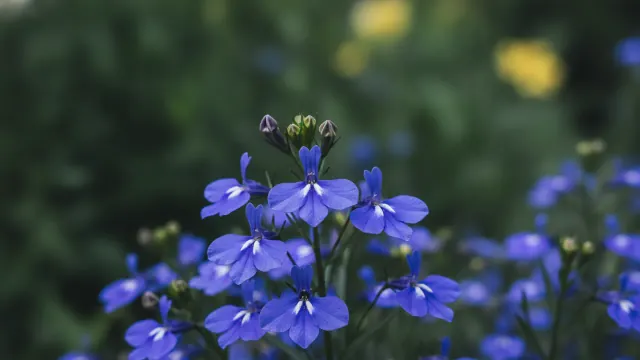
Lobelia
Takes full sun to part sun and moderate to high water; blooms in late spring, before this one opens; low at 8 in, to carpet the ground beneath; both are strong pollinator plants, and they feed in different months.
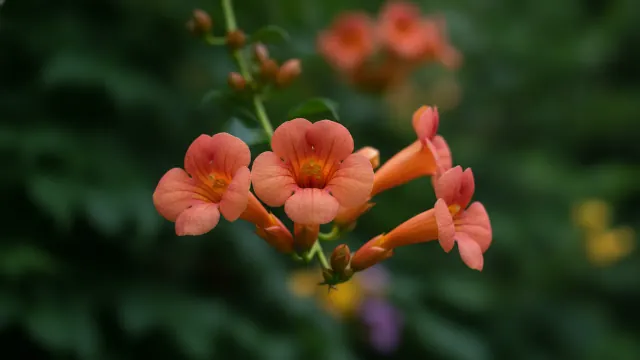
Trumpet Vine
Shares full sun and moderate to high water; blooms in early summer, before this one opens; both are strong pollinator plants, and they feed in different months; climbs to 26 ft behind it, height without the footprint.
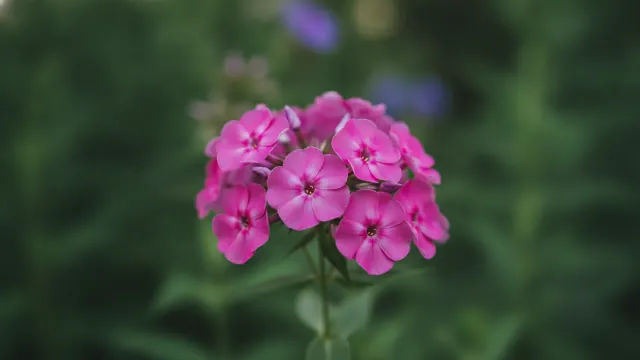
Annual Phlox
Shares full sun and moderate to high water; blooms in late spring, before this one opens; both are strong pollinator plants, and they feed in different months; low at 12 in, to carpet the ground beneath.
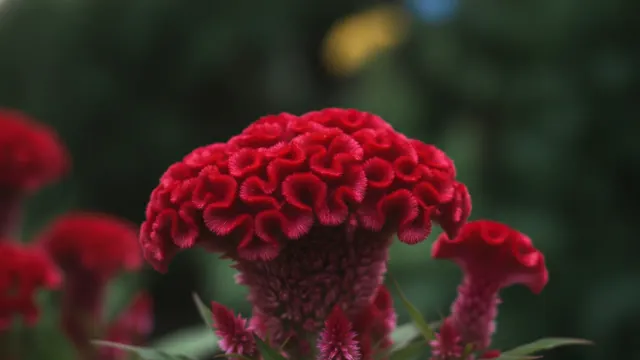
Celosia
Shares full sun and moderate to high water; blooms in early summer, before this one opens; both are strong pollinator plants, and they feed in different months; lower at 1.5 ft, for the front of the border.
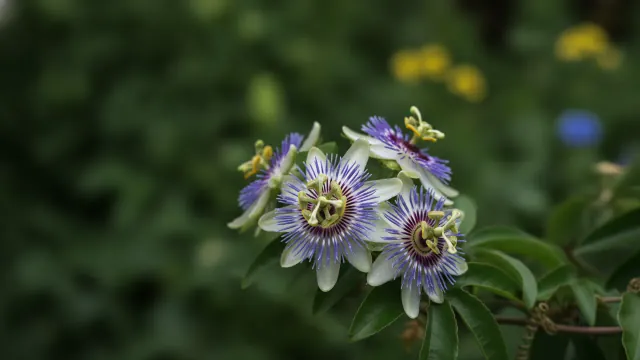
Passionflower
Shares full sun and moderate to high water; blooms in midsummer, before this one opens; both are strong pollinator plants, and they feed in different months; climbs to 13 ft behind it, height without the footprint.
Featured in these guides
Explore similar plants
You might also like
Design a garden with this
Drop this plant onto a 3D plan, see how it fills in, and watch your whole garden bloom across the year.