
 Illustration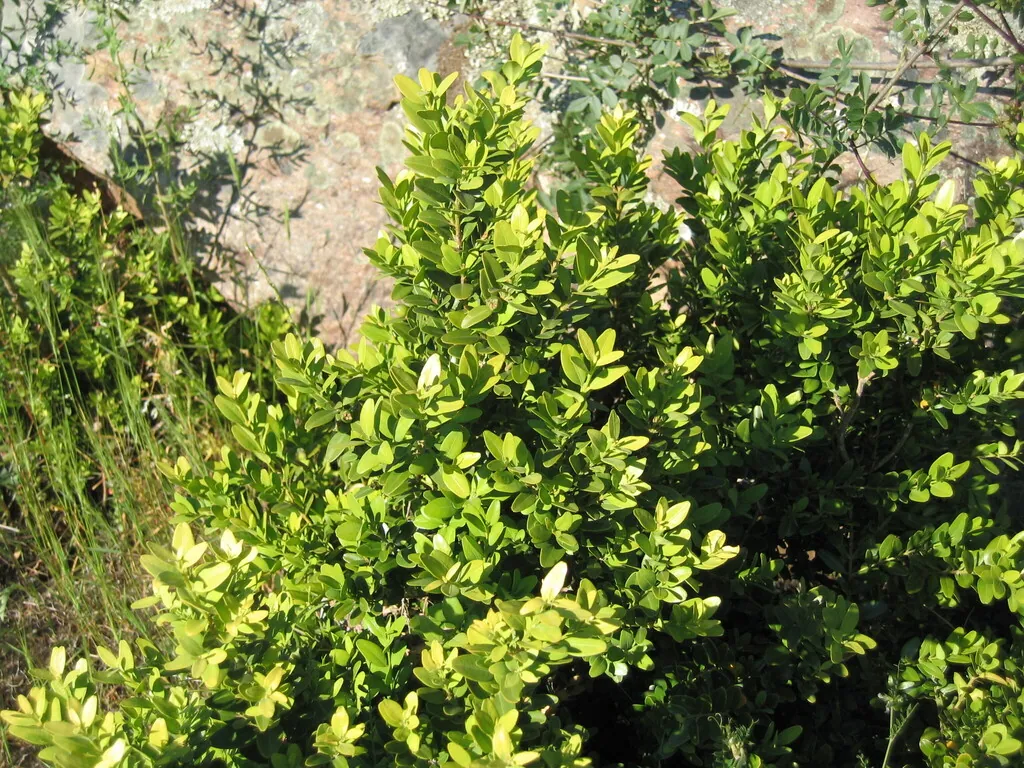
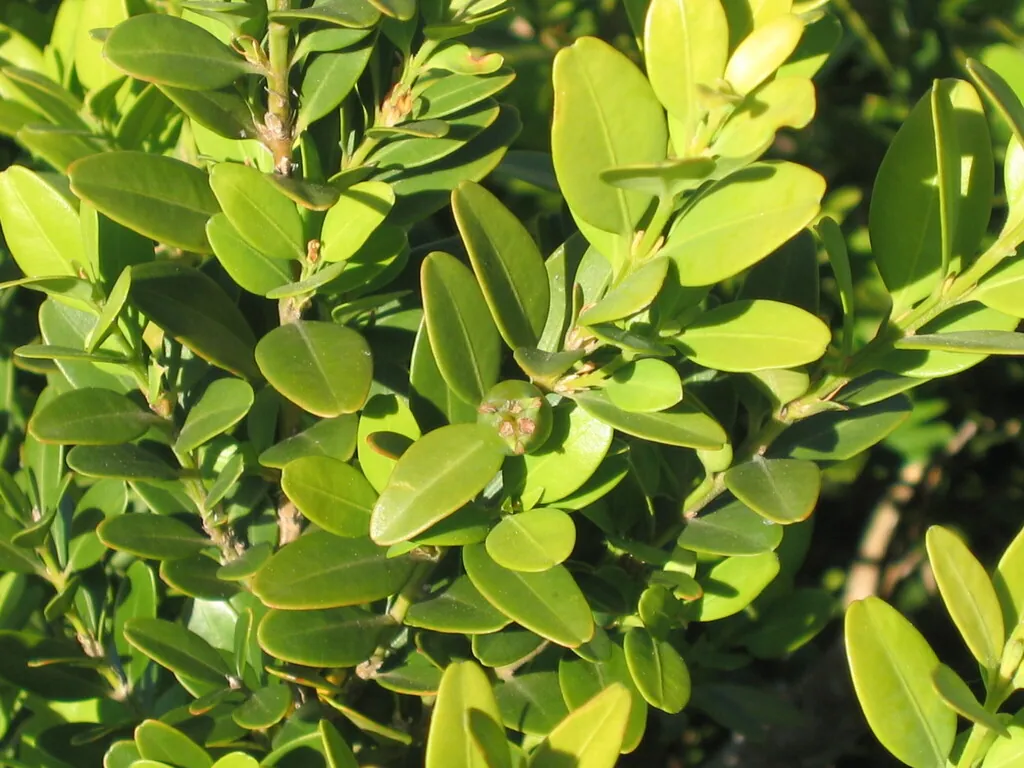

Photo credits and licenses
Real photographs from naturalists and photographers worldwide, each used under its own license. Credit: Photo by zebedeugalinha / iNaturalist (CC BY) and Photo by zebedeugalinha / iNaturalist (CC BY). How photos are sourced →

Boxwood
Buxus
Boxwood is grown for its foliage rather than flowers, giving the garden structure and color all season long.
Months here are Northern Hemisphere months; in the Southern Hemisphere, shift them by six months.
Growing Boxwood
Plant it in full sun. It prefers moderate water. It is hardy in USDA zones 5–9. Expect it to reach about 4 ft tall and 4 ft wide at maturity, in roughly 4 years (not yet checked).
What was checked
Mature height and spread, hardiness zones, sun and the trait tags were checked against named botanical sources for this plant. The bloom months and water need on this page were not, and each fact above says which. The planting, spacing and size sections are derived from these checked facts by a fixed rule, not checked separately, and the plant type is the library's own classification.
When to plant Boxwood
Plant Boxwood in early spring as soon as the soil is workable, or in early fall at least six weeks before your first frost, so roots establish in cool weather. In zone 7, the middle of its hardy zones 5 to 9, spring means March to May and fall means September or October.
Month-by-month timing for your zone is on the planting calendar; if you garden near zone 7, the middle of this plant's hardy range, start with zone 7 in March. Derived from the plant's category, zones and bloom months plus typical zone frost dates, not checked separately.
How big does Boxwood get?
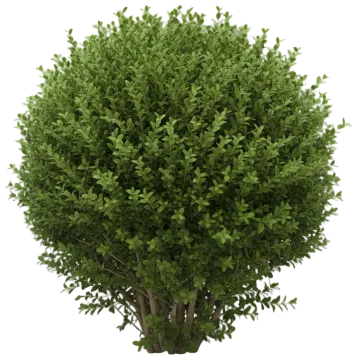 4 fttall5 ft 7 inan adult4 ftwide
See Boxwood in a garden plan: the planner shows it in 3D beside everything else you add, growing toward this size over the years.
How far apart to plant Boxwood
Derived from the mature spread above by a fixed rule, not checked separately: spacing is the spread, center to center.
Space Boxwood about 4 ft apart, center to center, so each plant has room to reach its full width.
Add Boxwood to a garden plan and the planner draws it at its full width, so you see the spacing before you buy.
Where these facts come from
Boxwood's height, spread, hardiness zones, sun and trait tags were checked against 12 published sources on July 29, 2026. Each one is linked below with every fact it carried, which can include a fact this page still marks as not yet checked, because a source carrying a value is not the same as the value being held to the standard. Facts not in that list, and the planting, spacing and size sections, are not covered by these sources.
- Missouri Botanical Gardenheight, spread, hardiness zones, sun and trait tags
- NC State ExtensionPlant Toolboxheight, spread, hardiness zones, sun and trait tags
- NC State ExtensionPlant Toolboxheight, spread, hardiness zones, sun and trait tags
- NC State ExtensionPlant Toolboxheight, spread, hardiness zones, sun and trait tags
- The Morton Arboretumheight, spread, hardiness zones, sun and trait tags
- Missouri Botanical Gardenheight, spread, hardiness zones and sun
- Missouri Botanical Gardenheight, spread, hardiness zones and sun
- Proven Winnersheight, spread, hardiness zones and sun
- The Morton Arboretumheight, hardiness zones, sun and trait tags
- University of Illinois ExtensionHort Answersheight, spread, hardiness zones and sun
- NC State ExtensionPlant Toolboxhardiness zones, sun and trait tags
- Clemson Home and Garden Information CenterClemson Cooperative Extension Home & Garden Information Centersun
How the checking works, and what each standard covers, is on the verified plants page.
Comes in 7 varieties
Same genus, similar care - pick the variety you are growing.
Compare every variety in the Boxwood group
Every figure is the variety's own page fact. Tap a name to open it.
| Variety | Color | Blooms | Hardiness | Sun | Size (H × W) |
|---|---|---|---|---|---|
| American | Foliage | Foliage plant | Zones 5–8 | Full sun | 10 ft × 8 ft |
| Baby Gem | Foliage | Foliage plant | Zones 5–9 | Full sun | 24 in × 24 in |
| Boxwoodthis page | Foliage | Foliage plant | Zones 5–9 | Full sun | 4 ft × 4 ft |
| English | Foliage | Foliage plant | Zones 6–8 | Full sun | 24 in × 24 in |
| Graham Blandy | Foliage | Foliage plant | Zones 6–9 | Full sun | 8 ft × 1.5 ft |
| Green Mountain | Foliage | Foliage plant | Zones 4–9 | Full sun | 5 ft × 3 ft |
| Green Velvet | Foliage | Foliage plant | Zones 5–9 | Full sun | 3.5 ft × 3.5 ft |
| Winter Gem | Foliage | Foliage plant | Zones 4–9 | Full sun | 4 ft × 4 ft |
Good to know about Boxwood
Curated from university extensions, botanic gardens and other primary sources, with the source named on every note. A note reports what its source says; where that differs from a fact above, the fact above is this entry's stored value, and its mark says whether it has been checked.
Safety
All parts are toxic to dogs, cats and horses (bitter steroidal alkaloids); a nibble mostly causes an upset stomach, and the foliage can irritate skin. per ASPCA and NC State
Worth knowing
Orange-brown winter leaves are not a disease but drought stress: frozen or dry soil starves the shallow roots while winter sun and wind pull water from the leaves. per Clemson and NC State
Full sun or some shade?
Not a real disagreement: full sun is fine and grows denser in mild climates, but in cold, windy sites give shelter from winter sun and wind to prevent bronzing. per NC State and Clemson
Shear or thin?
Both work together. Shearing alone builds a dense shell that traps still air and invites fungal disease, so thin out whole stems periodically to open the interior to light. per NC State and Clemson
Boxwood blight has no cure
This fast fungus makes dark leaf spots and black stem streaks, can strip a plant within days, and survives at least five years in fallen leaves. Buy clean, inspected stock. per Clemson and Wisconsin
Deer and rabbit resistant
One of the most deer- and rabbit-resistant evergreens: browsers leave it alone, most likely because the bitter alkaloids that make it toxic also make the foliage taste bad. per NC State
Species grows far larger
Common boxwood can reach 4.5 to 6 m (15 to 20 ft) if left unpruned, but most hedges use compact and dwarf cultivars kept far smaller by breeding and shearing. per NC State
What pairs well with Boxwood
Good companions share its growing conditions and add something it lacks: an earlier or later bloom, a lower carpet in front, or structure through winter.
Featured in these guides
Explore similar plants
You might also like
 Foliage
Design a garden with this
Drop this plant onto a 3D plan, see how it fills in, and watch your whole garden bloom across the year.