
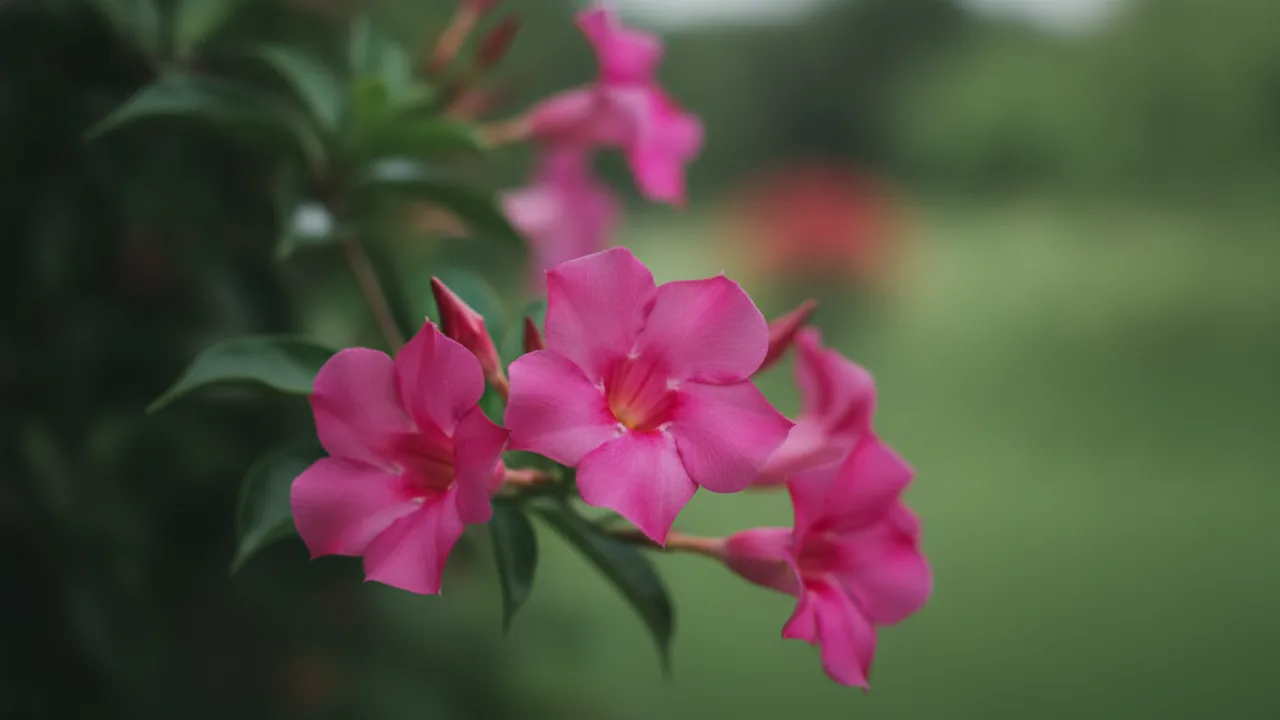
 Illustration

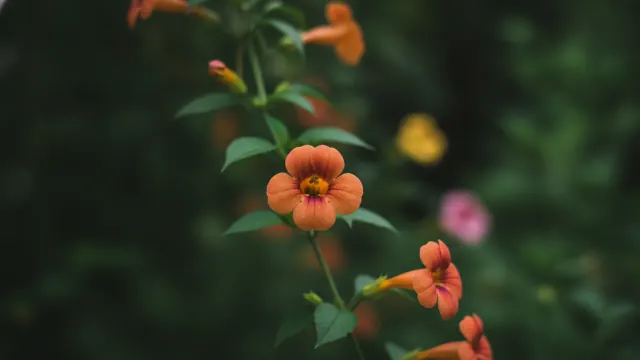
Mandevilla
Mandevilla
Mandevilla blooms from June through October.
Months here are Northern Hemisphere months; in the Southern Hemisphere, shift them by six months.
Growing Mandevilla
Plant it in full sun. It prefers moderate water. It is hardy in USDA zones 10–11. Expect it to reach about 10 ft tall and 3.5 ft wide at maturity, in roughly 1 year (not yet checked).
What was checked
Mature height and spread, hardiness zones, sun and the trait tags were checked against named botanical sources for this plant. The bloom months and water need on this page were not, and each fact above says which. The planting, spacing and size sections are derived from these checked facts by a fixed rule, not checked separately, and the plant type is the library's own classification.
When to plant Mandevilla
Mandevilla sits in a nearly frost-free range (zones 10 to 11): plant it in the cool season, fall through late winter, and let the mild months settle its roots. On the calendar that means October or November, or January or February. Once settled, it blooms from June to October.
Month-by-month timing for your zone is on the planting calendar; if you garden near zone 10, the middle of this plant's hardy range, start with zone 10 in January. Derived from the plant's category, zones and bloom months plus typical zone frost dates, not checked separately.
How big does Mandevilla get?
 10 fttall5 ft 7 inan adult3.5 ftwide
See Mandevilla in a garden plan: the planner shows it in 3D beside everything else you add, growing toward this size over the years.
How far apart to plant Mandevilla
Derived from the mature spread above by a fixed rule, not checked separately: spacing is the spread, center to center.
Space Mandevilla about 3.5 ft apart, center to center, so each plant has room to reach its full width.
Add Mandevilla to a garden plan and the planner draws it at its full width, so you see the spacing before you buy.
Where these facts come from
Mandevilla's height, spread, hardiness zones, sun and trait tags were checked against 8 published sources on July 30, 2026. Each one is linked below with every fact it carried, which can include a fact this page still marks as not yet checked, because a source carrying a value is not the same as the value being held to the standard. Facts not in that list, and the planting, spacing and size sections, are not covered by these sources.
- NC State ExtensionMandevilla, the genus entryheight, spread, hardiness zones, sun and trait tags
- Missouri Botanical GardenMandevilla 'Red Velvet'height, spread, hardiness zones and sun
- Missouri Botanical GardenMandevilla x amabilisheight, spread, hardiness zones and sun
- Missouri Botanical GardenMandevilla boliviensisheight, spread, hardiness zones and sun
- Purdue ArboretumMandevilla x amoenaheight, spread, sun and trait tags
- Clemson Home and Garden Information CenterMandevilla, the genus factsheetsun and trait tags
- The Morton ArboretumMandevilla, its Annual Vine entry for the genusheight and sun
- University of Florida IFASUF/IFAS Gardening Solutions (Mandevilla, the genus page)sun
How the checking works, and what each standard covers, is on the verified plants page.
Comes in 4 colors
Same genus, similar care - pick the color you are growing.
Compare every color in the Mandevilla group
Every figure is the color's own page fact. Tap a name to open it.
| Name | Color | Blooms | Hardiness | Sun | Size (H × W) |
|---|---|---|---|---|---|
| Mandevillathis page | Pink | Jun–Oct | Zones 10–11 | Full sun | 10 ft × 3.5 ft |
| Sun Parasol Apricot | Orange | Jun–Oct | Zones 10–11 | Full sun | 10 ft × 3.5 ft |
| Sun Parasol Crimson | Red | Jun–Oct | Zones 10–11 | Full sun | 10 ft × 3.5 ft |
| Sun Parasol Sunbeam | Yellow | Jun–Oct | Zones 10–11 | Full sun | 10 ft × 3.5 ft |
| Sun Parasol White | White | Jun–Oct | Zones 10–11 | Full sun | 10 ft × 3.5 ft |
Good to know about Mandevilla
Curated from university extensions, botanic gardens and other primary sources, with the source named on every note. A note reports what its source says; where that differs from a fact above, the fact above is this entry's stored value, and its mark says whether it has been checked.
Safety
The milky sap is a skin and eye irritant, so wear gloves. Whether it is toxic to eat is unsettled, so keep it from children and pets as a precaution. per University of Florida and Lady Bird Johnson
Worth knowing
It flowers on new growth, so hard spring pruning never costs the summer display. That is why an overwintered plant cut back to a windowsill still blooms the next summer. per Clemson
How much sun
Full sun gives the most bloom, but in hot, humid regions it needs afternoon or partial shade to prevent heat stress and scorch. Morning sun with afternoon shade satisfies both. per Clemson and NC State
Mandevilla vs Dipladenia
The trade sells 'Mandevilla' as the larger vining climber and 'Dipladenia' as the compact, bushy, shrub-like type with smaller leaves. They are close cousins and care is the same. per Clemson and University of Florida
Overwinter it indoors
Frost kills it, so bring it in before nights fall into the mid-to-low 50s F. Overwinter it in a bright window or near-dormant in a cool, frost-free space. per University of Maryland
Check for pests indoors
The sap-suckers that are minor outdoors, mealybugs, scale, whiteflies and spider mites, become the main problem indoors, where warm dry air suits mites. Inspect and treat before bringing it in. per Clemson and University of Maryland
Draws hummingbirds and butterflies
In the garden it draws hummingbirds and butterflies, though the often-unscented flowers make it a modest nectar source rather than a top pollinator magnet. per NC State and UC Master Gardeners
What pairs well with Mandevilla
Good companions share its growing conditions and add something it lacks: an earlier or later bloom, a lower carpet in front, or structure through winter.
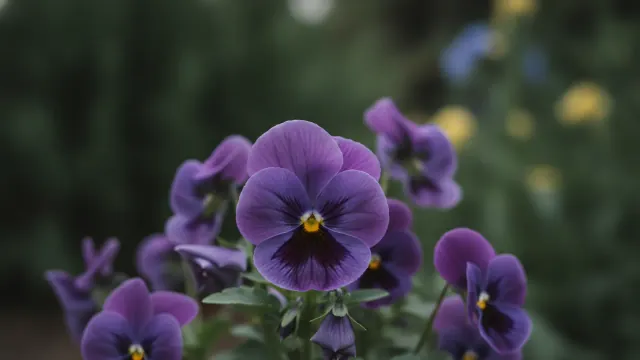
Pansy
Takes full sun to part sun and moderate water; opens in early spring and overlaps into this one's season; low at 8 in, to carpet the ground beneath.
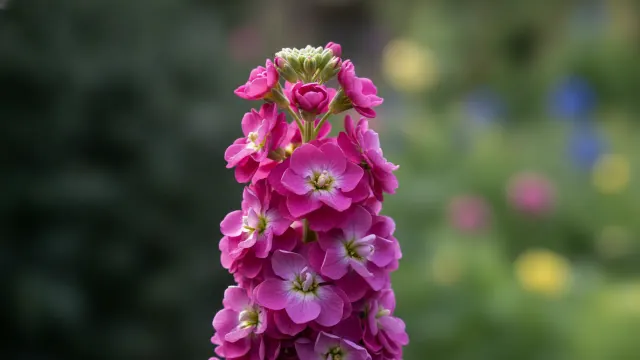
Stock
Shares full sun and moderate water; opens in mid spring and overlaps into this one's season; lower at 1.5 ft, for the front of the border; echoes the pink.
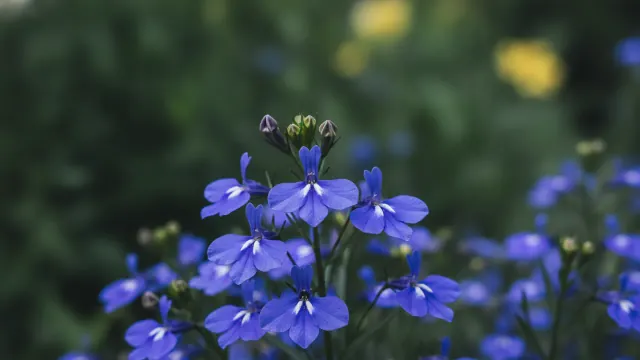
Lobelia
Takes full sun to part sun and moderate water; low at 8 in, to carpet the ground beneath; both offer pollinator forage.
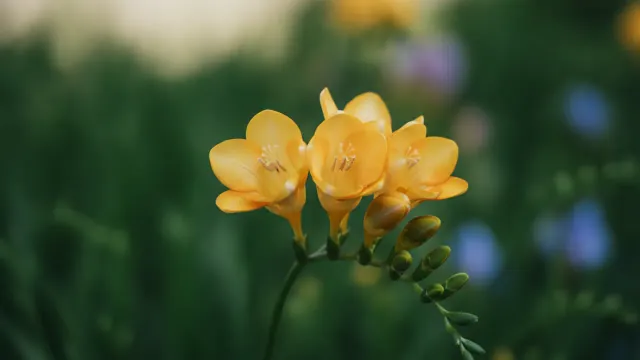
Freesia
Shares full sun and moderate water; blooms in mid spring, before this one opens; both offer pollinator forage, in different months; low at 1.5 ft, to carpet the ground beneath; they only overlap in zone 10.
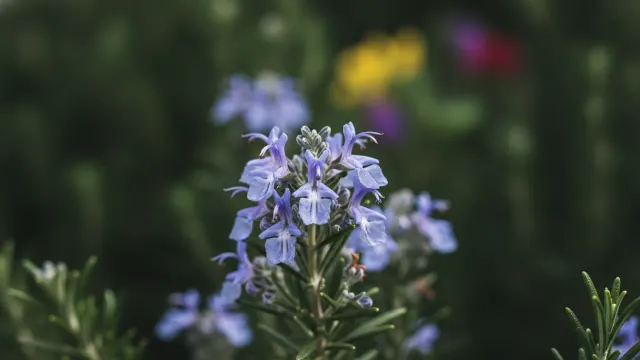
Rosemary
Shares full sun and low to moderate water; blooms in early spring, before this one opens; both offer pollinator forage, in different months; evergreen, so the bed keeps its shape through winter; they only overlap in zone 10.
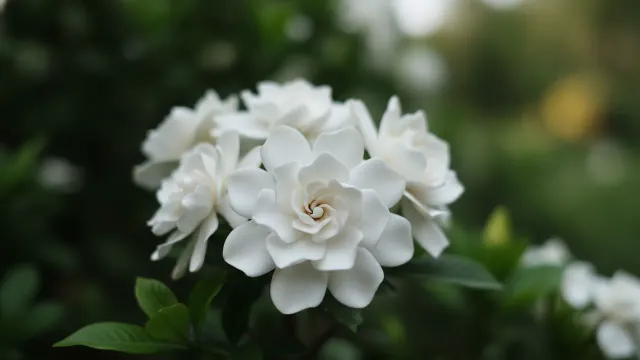
Gardenia
Takes full sun to part sun and moderate to high water; opens in late spring and overlaps into this one's season; evergreen, so the bed keeps its shape through winter; its white flowers settle the pink; they only overlap in zones 10 to 11.
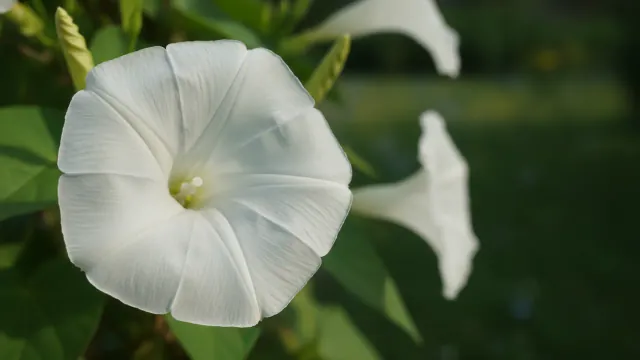
Moonflower
Shares full sun and moderate water; climbs to 13 ft behind it, height without the footprint; its white flowers settle the pink; they only overlap in zones 10 to 11.
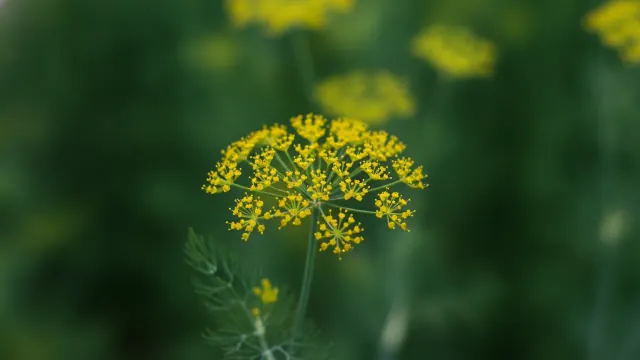
Dill
Shares full sun and moderate water; both offer pollinator forage; lower at 3 ft, for the front of the border; they only overlap in zones 10 to 11.
Featured in these guides
Explore similar plants
You might also like
Design a garden with this
Drop this plant onto a 3D plan, see how it fills in, and watch your whole garden bloom across the year.