
 Illustration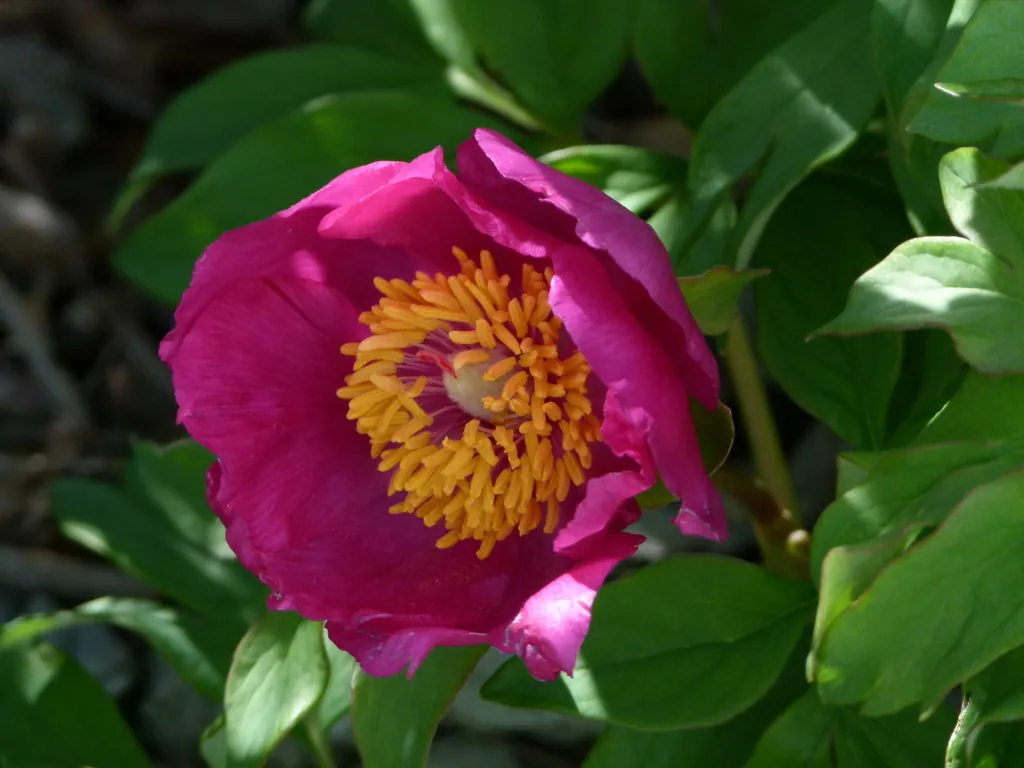
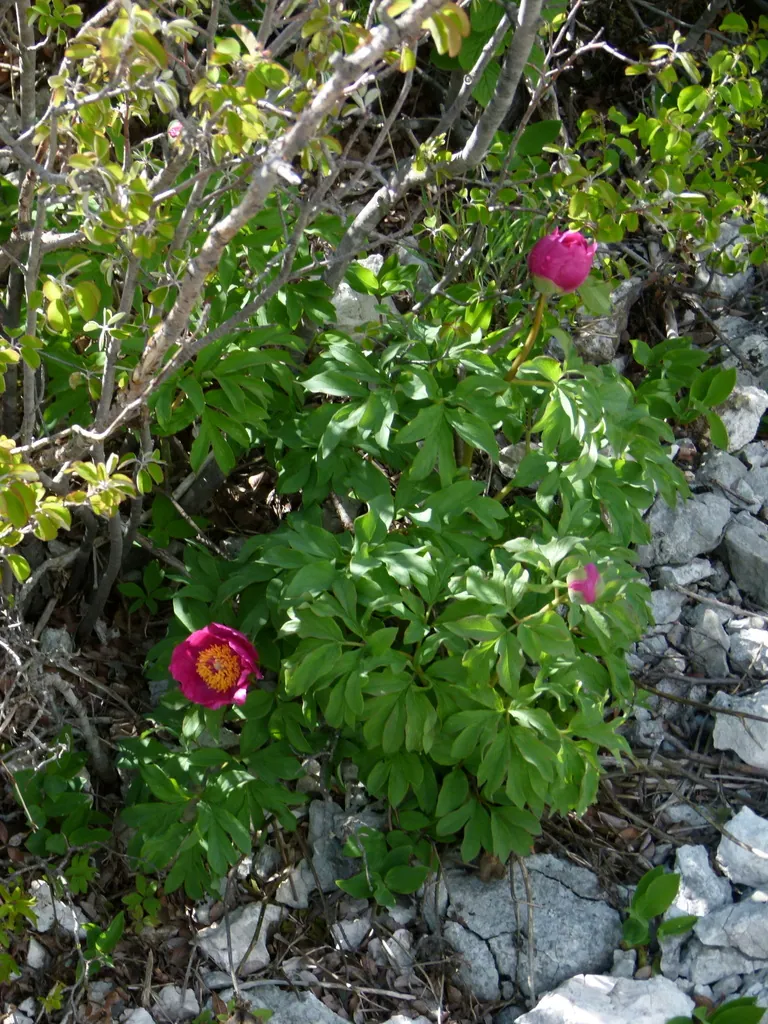

Photo credits and licenses
Real photographs from naturalists and photographers worldwide, each used under its own license. Credit: Photo by Yves Bas / iNaturalist (CC BY) and Photo by Yves Bas / iNaturalist (CC BY). How photos are sourced →

Peony
Paeonia
Peony blooms from May through June.
Months here are Northern Hemisphere months; in the Southern Hemisphere, shift them by six months.
Growing Peony
Plant it in full sun. It prefers moderate water. It is hardy in USDA zones 3–8. Expect it to reach about 3 ft tall and 3 ft wide at maturity, in roughly 3 years (not yet checked).
What was checked
Mature height and spread, hardiness zones, sun and the trait tags were checked against named botanical sources for this plant. The bloom months and water need on this page were not, and each fact above says which. The planting, spacing and size sections are derived from these checked facts by a fixed rule, not checked separately, and the plant type is the library's own classification.
When to plant Peony
Peony is planted in fall: set bare roots out August or September across zones 3 to 8, well before the ground freezes. It blooms from May to June.
Month-by-month timing for your zone is on the planting calendar; if you garden near zone 5, the middle of this plant's hardy range, start with zone 5 in August. Derived from the plant's category, zones and bloom months plus typical zone frost dates, not checked separately.
How big does Peony get?
 3 fttall5 ft 7 inan adult3 ftwide
See Peony in a garden plan: the planner shows it in 3D beside everything else you add, growing toward this size over the years.
How far apart to plant Peony
Derived from the mature spread above by a fixed rule, not checked separately: spacing is the spread, center to center.
Space Peony about 3 ft apart, center to center, so each plant has room to reach its full width.
Add Peony to a garden plan and the planner draws it at its full width, so you see the spacing before you buy.
Where these facts come from
Peony's height, spread, hardiness zones, sun and trait tags were checked against 3 published sources on July 29, 2026. Each one is linked below with every fact it carried, which can include a fact this page still marks as not yet checked, because a source carrying a value is not the same as the value being held to the standard. Facts not in that list, and the planting, spacing and size sections, are not covered by these sources.
- NC State ExtensionPlant Toolboxheight, spread, hardiness zones, sun and trait tags
- University of Wisconsin HorticultureUniversity of Wisconsin-Madison Division of Extension Horticulturehardiness zones, sun and trait tags
- extension.missouri.eduUniversity of Missouri Extension (G6650, Selecting Landscape Plants: H...height and sun
How the checking works, and what each standard covers, is on the verified plants page.
Comes in 15 varieties across 5 colors
Same genus, similar care - pick the color you are growing.
- Bartzella
- Bowl of Beauty
- Coral Charm
- Coral Sunset
- Do Tell
- Duchesse de Nemours
- Festiva Maxima
- Gardenia
- Kansas
- Karl Rosenfield
- Monsieur Jules Elie
- Pink Hawaiian Coral
- Red Charm
- Sarah Bernhardt
- Shirley Temple
Compare every variety in the Peonies group
Every figure is the variety's own page fact. Tap a name to open it.
| Variety | Color | Blooms | Hardiness | Sun | Size (H × W) |
|---|---|---|---|---|---|
| Bartzella | Yellow | May–Jun | Zones 3–8 | Full sun | 2.5 ft × 3.5 ft |
| Bowl of Beauty | Pink | May–Jun | Zones 3–8 | Full sun | 3 ft × 3 ft |
| Coral Charm | Orange | May–Jun | Zones 3–8 | Full sun | 3.5 ft × 3 ft |
| Coral Sunset | Orange | May–Jun | Zones 3–8 | Full sun | 3 ft × 3 ft |
| Do Tell | Pink | May–Jun | Zones 3–8 | Full sun | 3 ft × 3 ft |
| Duchesse de Nemours | White | May–Jun | Zones 3–8 | Full sun | 3 ft × 3 ft |
| Festiva Maxima | White | May–Jun | Zones 3–8 | Full sun | 3 ft × 3 ft |
| Gardenia | White | May–Jun | Zones 3–8 | Full sun | 3 ft × 3 ft |
| Kansas | Red | May–Jun | Zones 3–8 | Full sun | 3 ft × 3 ft |
| Karl Rosenfield | Red | May–Jun | Zones 3–8 | Full sun | 3 ft × 3 ft |
| Monsieur Jules Elie | Pink | May–Jun | Zones 3–8 | Full sun | 3 ft × 3 ft |
| Peonythis page | Pink | May–Jun | Zones 3–8 | Full sun | 3 ft × 3 ft |
| Pink Hawaiian Coral | Pink | May–Jun | Zones 3–8 | Full sun | 3 ft × 3 ft |
| Red Charm | Red | May–Jun | Zones 3–8 | Full sun | 3 ft × 3 ft |
| Sarah Bernhardt | Pink | May–Jun | Zones 3–8 | Full sun | 3 ft × 3 ft |
| Shirley Temple | Pink | May–Jun | Zones 3–8 | Full sun | 3 ft × 3 ft |
Good to know about Peony
Curated from university extensions, botanic gardens and other primary sources, with the source named on every note. A note reports what its source says; where that differs from a fact above, the fact above is this entry's stored value, and its mark says whether it has been checked.
Safety
Mildly toxic to dogs, cats and horses: the compound paeonol causes vomiting, diarrhea and depression if eaten. Most cases are mild; call ASPCA Poison Control. per ASPCA
Worth knowing
A myth says peonies need ants to open. The ants only come for sugary nectar the buds secrete; cut buds open fine with no ants. per University of Illinois
How much sun to give
Sources split on sun. Full sun (6 to 8 hours) gives best bloom, but it still flowers on 4 to 6. Heavier shade risks no blooms. per Wisconsin and Iowa State
Plant the eyes shallow
Set the buds only 2.5 to 5 cm (1 to 2 in) deep. Planting too deep is the top reason a healthy peony grows leaves but never flowers. per Iowa State
Long-lived; hates being moved
Peonies thrive undisturbed for decades and resent division. A moved or divided plant barely blooms the next spring and takes 2 to 3 years to recover. per Iowa State
Double flowers need support
The big double and triple blooms outweigh their stems and flop, especially in rain. Set grow-through grids, hoops or stakes as the shoots emerge in spring. per NC State and Iowa State
Deer resistant
NC State rates peonies as shunned by deer. Very hungry deer may still sample them, but they are reliably passed over. per NC State
What pairs well with Peony
Good companions share its growing conditions and add something it lacks: an earlier or later bloom, a lower carpet in front, or structure through winter.
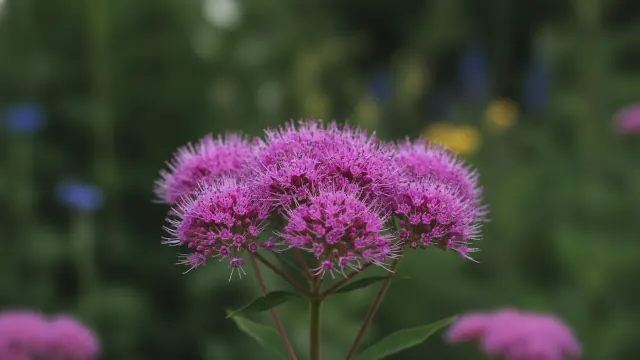
Joe Pye Weed
Shares full sun and moderate to high water; blooms in midsummer as this one finishes; its seed heads stand through winter, for structure and the birds; taller at 6 ft, for the layer behind it.
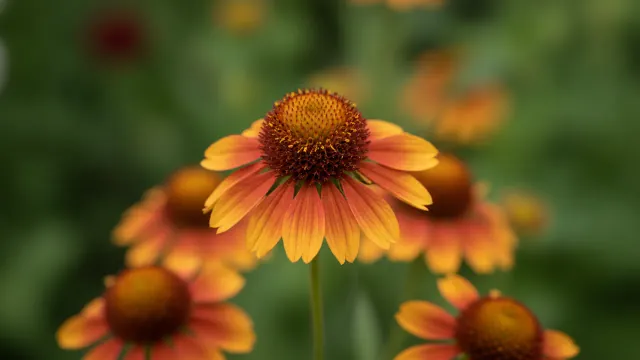
Sneezeweed
Shares full sun and moderate water; blooms in midsummer as this one finishes; its seed heads stand through winter, for structure and the birds.
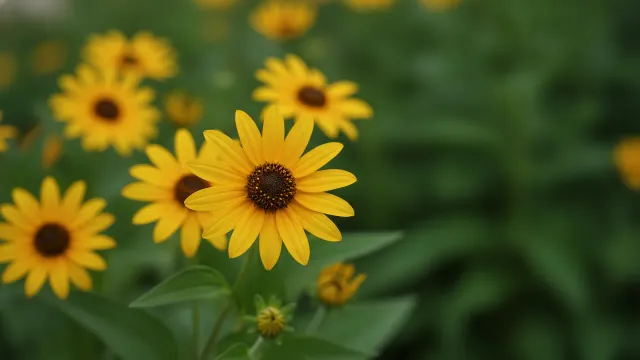
False Sunflower
Shares full sun and moderate water; blooms in midsummer as this one finishes; its seed heads stand through winter, for structure and the birds; taller at 4 ft, for the layer behind it.

Sunflower
Shares full sun and moderate water; blooms in midsummer as this one finishes; its seed heads stand through winter, for structure and the birds; taller at 6.5 ft, for the layer behind it.
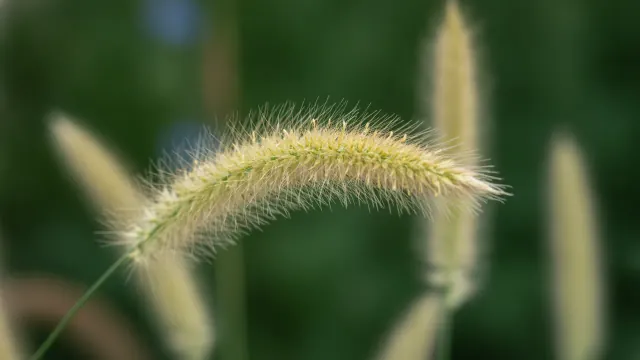
Feather Reed Grass
Shares full sun and moderate water; overlaps, then carries the display into late summer; its seed heads stand through winter, for structure and the birds; taller at 5 ft, for the layer behind it.
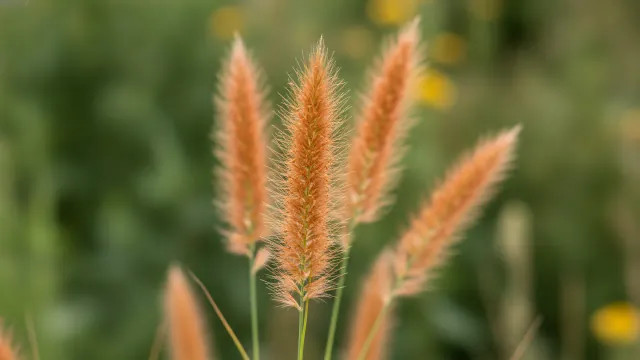
Little Bluestem
Shares full sun and low to moderate water; blooms in late summer, extending the bed's season; its seed heads stand through winter, for structure and the birds.
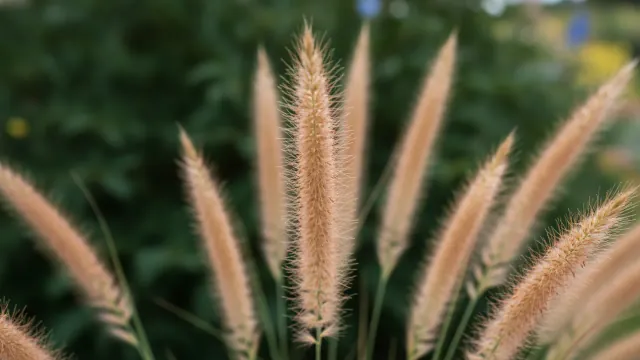
Fountain Grass
Shares full sun and low to moderate water; blooms in late summer, extending the bed's season; its seed heads stand through winter, for structure and the birds.
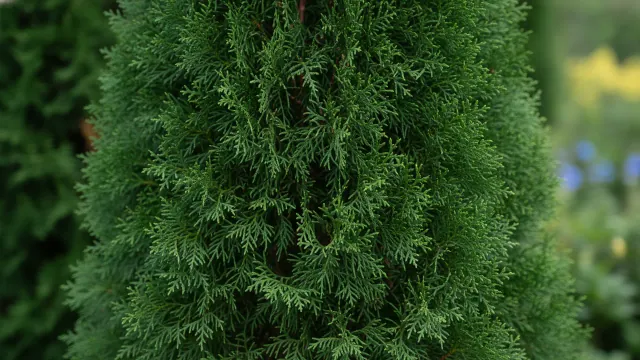
Arborvitae
Shares full sun and moderate water; evergreen, so the bed keeps its shape through winter; stands well above at 20 ft, a canopy to plant beneath.
Featured in these guides
Explore similar plants
You might also like
Design a garden with this
Drop this plant onto a 3D plan, see how it fills in, and watch your whole garden bloom across the year.