
Practical
Dividing Perennials: When to Split Them, and How
The best deal in gardening: one tired clump in, three young plants out. When to lift, how to split, and who to leave alone.
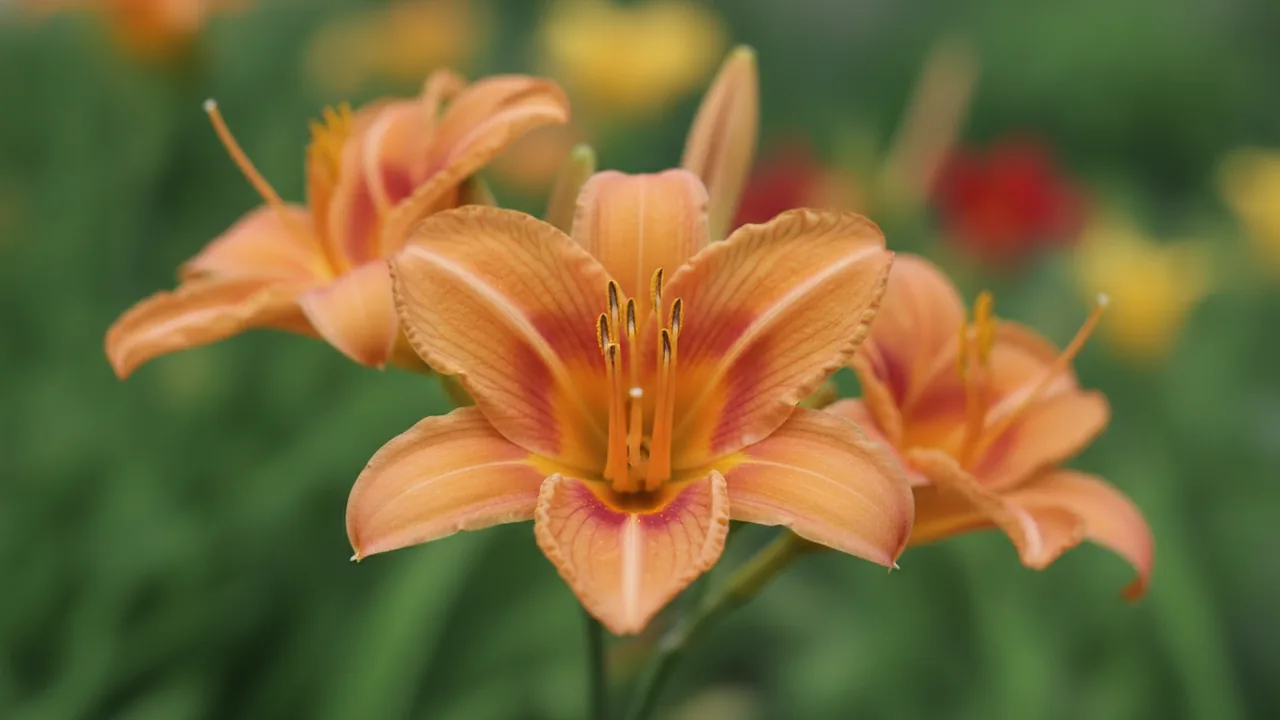
Sooner or later almost every perennial sends the same signal: the clump grows outward, the middle goes thin and woody, and the flowering slides year by year. That signal is an invitation. Dig it up, split it into pieces, replant the young outer parts, and you get back plants that flower like they did in year two, plus spares for every gap in the garden and every neighbor you owe a favor. Division sounds brutal and is actually routine; the whole skill is timing and a little nerve.
When should I divide perennials?
The rule extension services repeat: divide spring and early-summer bloomers in early fall, and late-summer and fall bloomers in early spring, so the plant is never trying to flower and rebuild roots at once. The famous exception is bearded iris, which wants dividing in the July to September window, right after its rest begins. Either way, give fall divisions about six weeks of growing time before your first frost.
The timing rule, and why it works
Division is root surgery, so you schedule it for when the roots are doing the work anyway: in the cool halves of the year, on a plant that is not in flower. Spring bloomers get split in early fall, once their show is long over; fall bloomers get split in spring, as the new shoots emerge. The fall side of the rule borrows the planting calendar's frost maths: a division needs roughly six weeks of root growth before real frost, which lands the job in August in the coldest zones and stretches into October in mild ones. Your zone's page on the planting calendar shows exactly where that line falls for you.
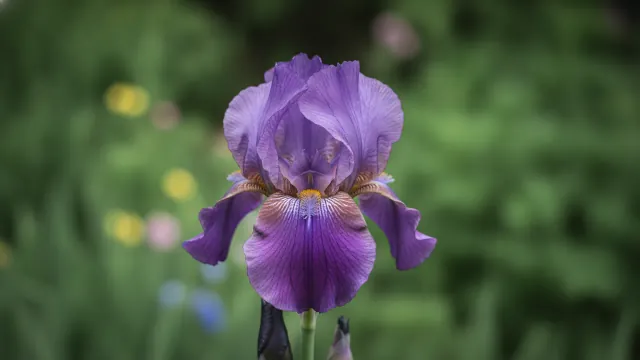
Iris germanica
The one perennial with its own private calendar: July to September, while the rhizomes rest. The craft is in the split. Break the clump into single fans, each a firm thumb-length of rhizome with a blade of leaves attached, then trim those leaves back by half so the new roots are not anchoring a sail, and bin anything soft or leafless. Fans set proud of the soil root fast and flower the following May and June.
How to divide a perennial, in five steps
Set it up the day before
Water the clump deeply the day before, and pick a cool, cloudy day if you can get one; roots exposed to hot sun lose the fight before it starts. Have the new holes, or pots, ready before you lift anything.
Lift the whole clump
Push a garden fork in vertically a hand's width out from the crown, all the way around, then lever the whole clump up like a cake from a tin. Wide beats close: cut roots regrow, but a stabbed crown does not. Shake or hose off enough soil to see what you are working with.
Split it into strong pieces
Pull the clump apart at its natural seams with your hands; for tough, congested crowns like a daylily's or a hosta's, use two forks back to back, or simply slice with a sharp spade or old knife. Each division needs both roots and several shoots or buds. Fist-sized pieces regrow fastest; the woody dead center of an old clump goes to the compost, not back in the ground.
Replant immediately, at the same depth
Divisions dry out in minutes, not hours, so replant as you go: same depth as before, into soil loosened and improved with a little compost, spaced for the plant's full size. The exception is bearded iris, whose rhizome sits on the surface, never buried. Firm each piece in and leave no air pockets around the roots.
Water in, then keep the water coming
Water thoroughly the day you plant and steadily for the following few weeks; a division is living on half its old root system while it rebuilds. A thin mulch keeps the moisture even, kept clear of crowns and off iris rhizomes entirely. Expect a brief sulk, then a visibly younger plant next season.
The plants that repay division most
Nearly every clumping perennial can be divided; these five practically ask for it, and every division takes.
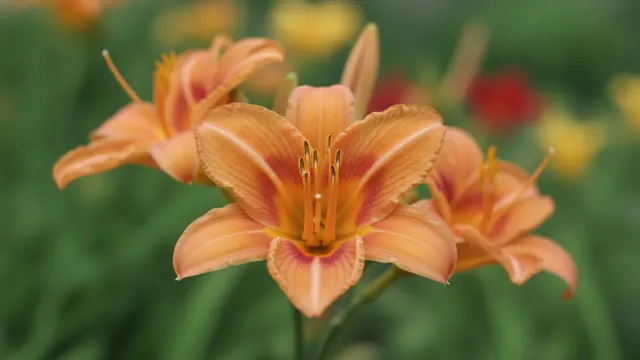
Hemerocallis
The beginner's perfect first division: a congested daylily clump pulls apart into tough, root-heavy fans that barely notice the move, and it is the least fussy of all about timing. Divide every few years and it keeps its June to August show at full volume.
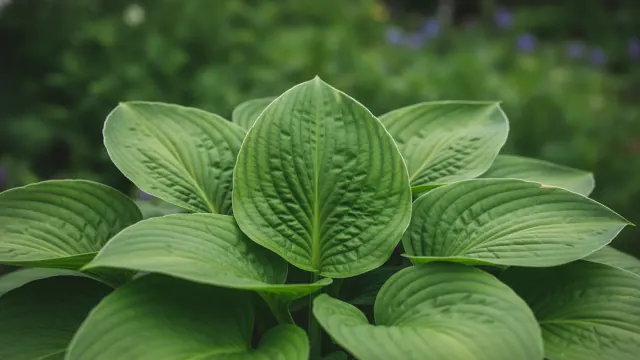
Hosta
The shade garden's multiplier: one big hosta is three medium ones with a spade cut in early spring, just as the pointed buds show. Grown for its mound of foliage rather than flowers, it looks respectable again within weeks and enormous again within two seasons.
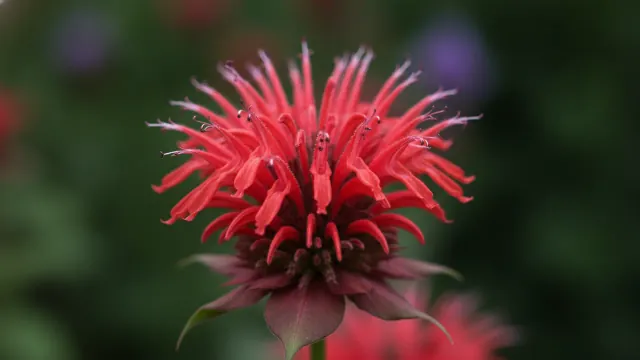
Monarda
The classic ring-former: bee balm races outward while its own center dies hollow, so a spring split every couple of years, replanting only the vigorous outer pieces, is simply how you keep it. Its July to August flowers come back stronger for it.
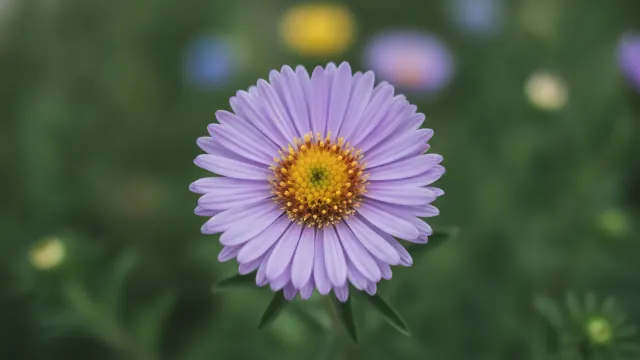
Symphyotrichum
Fall asters bloom September and October, which puts their division squarely in spring under the rule. Split every few years as the shoots emerge and the clumps stay dense, upright, and covered in late flowers instead of going leggy and bare-shinned.
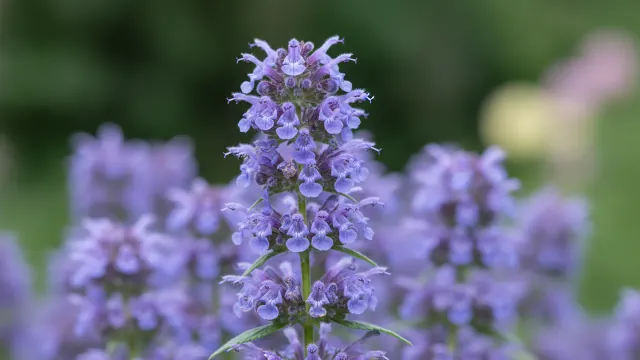
Nepeta
A sprawling old catmint lifts and splits easily in spring, and the divisions race back to a full May to September haze in their first year. Free edging, effectively forever, from one original plant.
And the ones to leave alone
A few perennials build one permanent root system instead of a spreading clump, and they answer the spade with years of sulking. Propagate these from seed or cuttings instead, or just let them be.
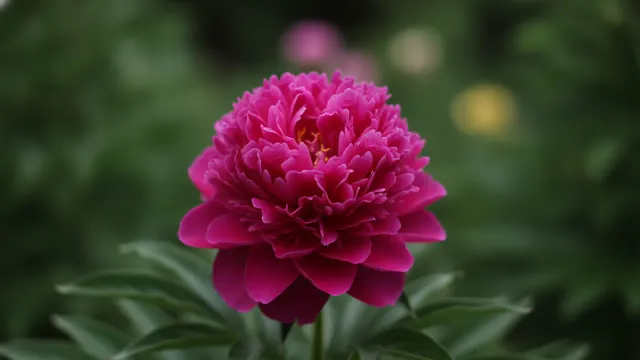
Paeonia
The famous grudge-holder: a peony can live for generations and never needs dividing, and a moved or carelessly split one can skip flowering for years. If you genuinely must move one, do it in early fall, in its bare-root planting window, and keep the buds shallow.
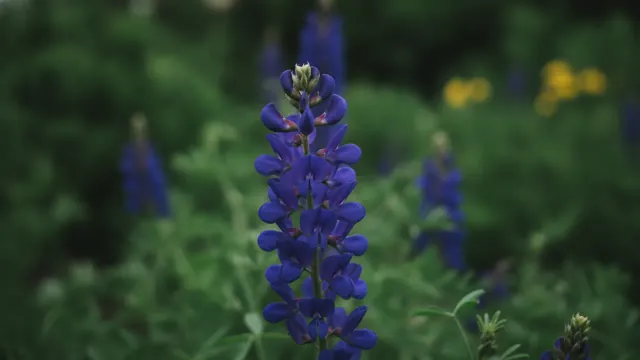
Baptisia
Built on a taproot like a tree's, baptisia is close to undividable once mature: the deep root does not come up whole, and pieces resent replanting. Site it right the first time and it repays you for decades.
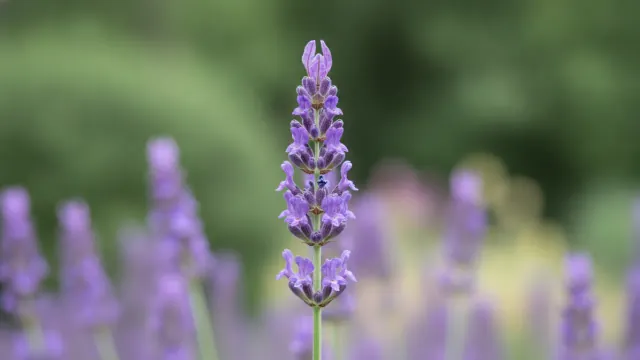
Lavandula
Not a clump at all but a woody little shrub, so there is nothing to split: dig up a lavender and you get one lavender with worse roots. When a plant goes leggy, replace it; our lavender guide helps you choose the successor.
The six-week rule for fall divisions
Whatever you divide in fall needs about six weeks of root growth before hard frost, the same maths our planting calendar applies to new plantings. On typical frost averages that window is late July into August in zones 3 and 4, August through September in zones 5 and 6, and September into October in zones 7 and 8. Miss it and spring is the better half of the rule anyway.
How often should perennials be divided?
Every three to five years is the working average, but read the plant, not the calendar: a hollow center, smaller flowers, or a clump flopping open in the middle all say now, while a dense, heavily flowering clump says leave me alone. Some plants never ask at all.
Can I divide perennials in summer?
Mostly no: dividing a plant in active growth in July heat is how divisions die. The grand exception is bearded iris, whose July to September window is precisely a summer job, and it works because the rhizomes are resting then. For everything else, wait for the cool ends of the year.
How big should each division be?
Fist-sized or better, with several shoots and a good share of roots on every piece. Tiny slivers can work in a nursery bed with steady care, but in the open garden a bigger division establishes faster and flowers a year sooner. When in doubt, cut a clump in thirds, not tenths.
Do all perennials need dividing?
No. Division is for clump-formers that thin from the center; the permanent-root perennials, peonies, baptisia, and the woody herbs like lavender, are happiest never touched. If a plant is thriving and flowering, there is no rule that says you owe it a spade.
Design a garden with these plants
Open BloomsEye Studio with this guide's plants ready to drop onto a plan, then watch the whole bed bloom across the year. New to it? See what the free garden planner does.