
Practical
Lavender Varieties Compared: English, Lavandin, Spanish, and French
One word, four different plants. Every true lavender in the library in one table, and the honest answer on which to grow.
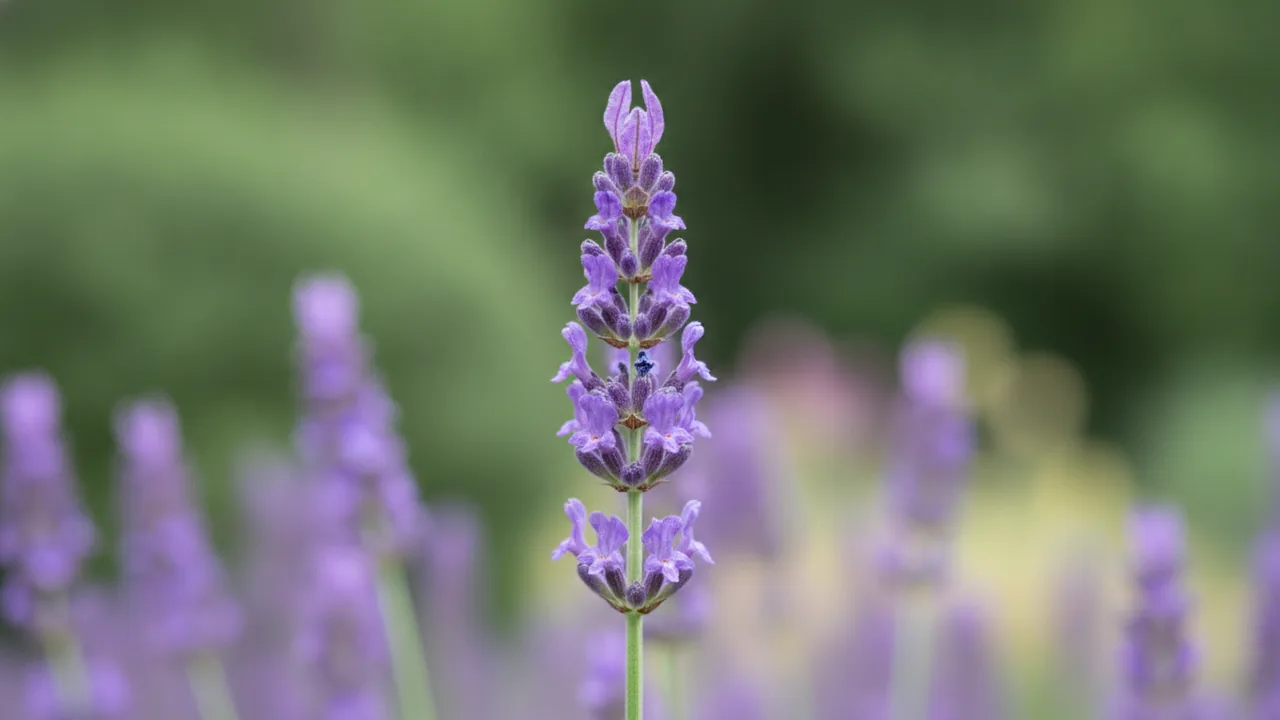
Lavender has a naming problem. One word stretches across four distinct species and a crowd of impostors: dozens of records in our library borrow "lavender" for their flower color, and one, the 'Lavender Twist' redbud, is a full-grown weeping tree. So this guide starts the only honest way, with the botanical names. Our library holds twelve true lavenders, all Lavandula, and they sort cleanly into four families: English, lavandin, Spanish, and French. Which family you plant decides your hardiness, your bloom window, and the size of your hedge.
Which lavender should I plant?
For most gardens, an English lavender: 'Hidcote' and 'Munstead' are the tidy, hardy classics, happy from zone 5. For a big fragrant hedge, step up to the lavandins, the biggest and most perfumed family of the twelve: 'Phenomenal' and 'Grosso' are its proven hedgers, and 'Provence' its largest plant. Spanish and French lavenders flower earliest, from May, but the records are blunt about their limits: Spanish is hardy only from zone 7 and French from zone 8, so in cold-winter gardens they are pot plants, not hedges.
| Variety | Type | Zones | Height | Blooms |
|---|---|---|---|---|
| Lavender | The genus entry | 5 to 9 | 24 in | June to August |
| 'Hidcote' | English | 5 to 9 | 18 in | June to August |
| 'Munstead' | English | 5 to 9 | 18 in | June to August |
| 'Royal Velvet' | English | 5 to 9 | 24 in | June to August |
| 'Hidcote Pink' | English | 5 to 9 | 18 in | June to August |
| 'Nana Alba' | English | 5 to 9 | 12 in | June to August |
| 'Phenomenal' | Lavandin | 5 to 9 | 2.5 ft | June to August |
| 'Grosso' | Lavandin | 5 to 9 | 2.5 ft | June to August |
| 'Provence' | Lavandin | 5 to 9 | 2.5 ft | June to August |
| 'Edelweiss' | Lavandin | 5 to 9 | 2 ft | June to August |
| Spanish lavender | Spanish | 7 to 9 | 1.5 ft | May to August |
| French lavender | French | 8 to 9 | 24 in | May to September |
English lavenders: the hardy classics
Lavandula angustifolia is the lavender of hedges, sachets, and cottage paths, and the family to choose almost everywhere: as hardy as any lavender gets (zone 5 with good drainage), compact, and the sweetest-scented of the four. All five in the library flower June to August. Beyond the three below, a pink form ('Hidcote Pink') and the taller 'Royal Velvet' round out the family in the table above.
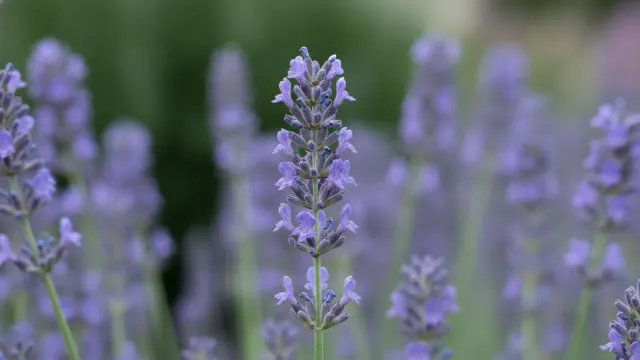
Lavandula angustifolia 'Hidcote'
The classic deep violet-purple at a neat 18 inches: 'Hidcote' is the one for low hedges and path edges, flowering June to August on silvery mounds that hold their shape.
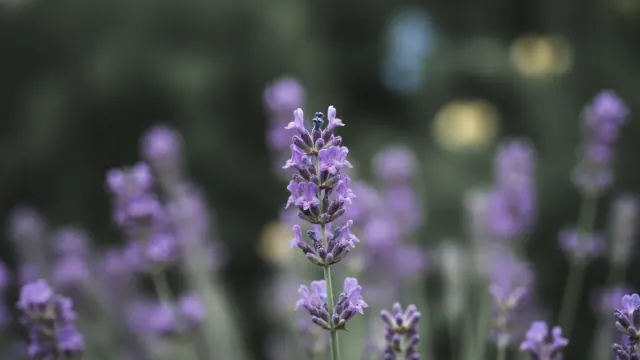
Lavandula angustifolia 'Munstead'
The soft lavender-blue sibling of 'Hidcote', the same 18 inches and the same June to August window. Named for Gertrude Jekyll's garden, and the more relaxed, cottagey of the two.
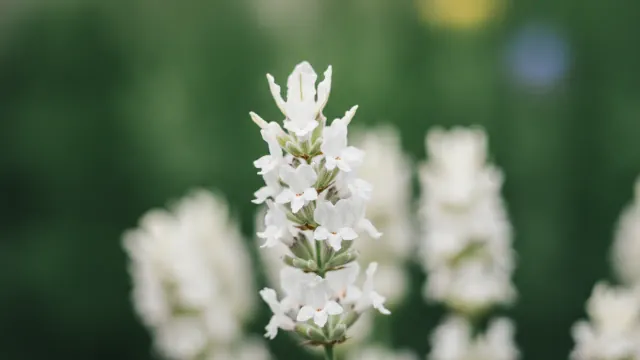
Lavandula angustifolia 'Nana Alba'
A white lavender at 12 inches, the smallest of the twelve. The one for pots, troughs, and the front inch of an edge, with the same June to August season as its purple cousins.
Lavandins: the big, fragrant hedges
The lavandins (Lavandula x intermedia) are sterile hybrids between English lavender and a tender Mediterranean species, and they inherit the best of both: English hardiness (zone 5 again, by every record here) with extra size and a stronger, more camphorous perfume. These are the lavenders of the commercial oil fields, and the family to pick when you want a hedge you can smell from across the garden. All four bloom June to August, on long stems that make the best dried bundles.
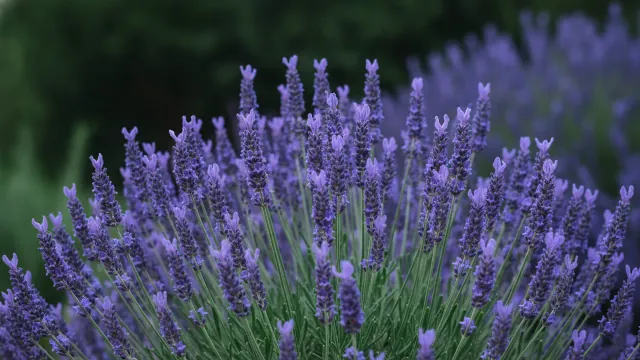
Lavandula × intermedia 'Phenomenal'
The modern star of the family at 2.5 feet, June to August, with a deserved reputation for shrugging off the humid summers and wet winters that finish other lavenders. If you have lost lavender before, start again here.
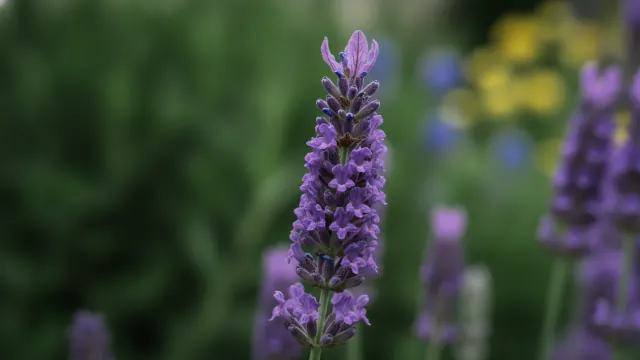
Lavandula × intermedia 'Grosso'
The workhorse of the perfume industry: the same 2.5 feet with long-stemmed violet spikes, June to August, and the heaviest oil production of the twelve. The classic choice for drying.
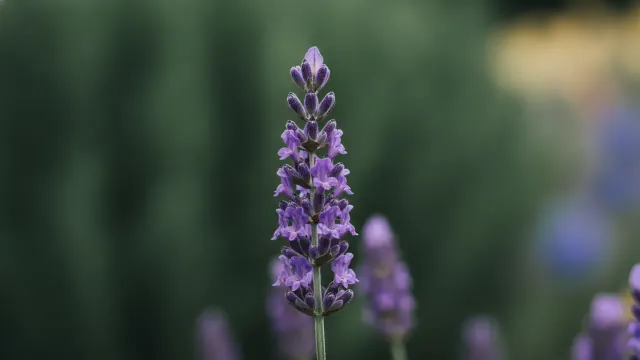
Lavandula × intermedia 'Provence'
The biggest lavender in the library at 2.5 feet and nearly 3 feet across, June to August. One plant reads as a shrub; a row of them is the postcard hedge.
Spanish and French lavenders: early, showy, tender
The two Mediterranean families trade hardiness for an earlier, longer show. Folklore usually names Spanish lavender as the delicate one; our records say otherwise. Spanish lavender (Lavandula stoechas) is hardy from zone 7, while French lavender (Lavandula dentata) is the true tender member of the group, hardy only from zone 8, and it repays the mild winters it demands with the longest bloom window of any lavender here, May to September. In colder zones, grow both in pots and winter them under cover.
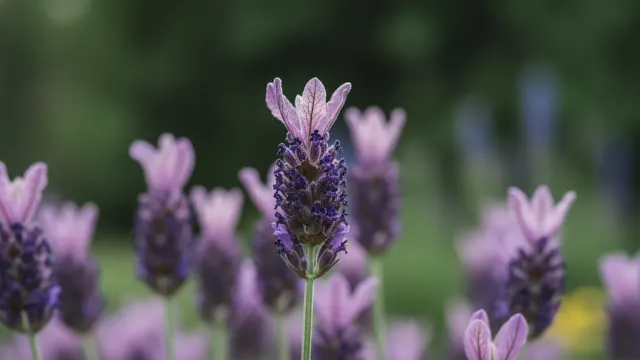
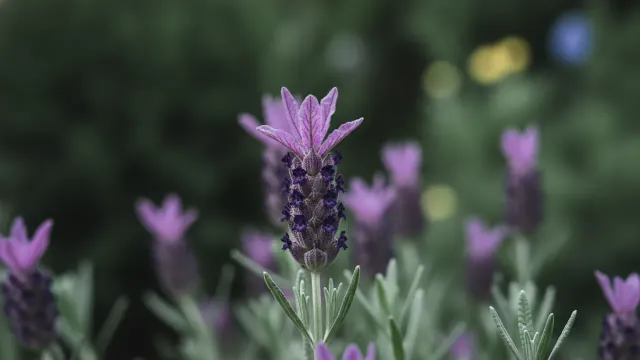
Lavandula stoechas
The showman: plump flower heads topped with rabbit-ear bracts, opening in May, a month ahead of the English varieties, and running to August. Hardy zones 7 to 9, at a compact 1.5 feet.
Lavandula dentata
Gray-green toothed leaves and the longest season of the twelve, May to September, but the narrowest range: zones 8 to 9. Where winters are truly mild it barely stops; everywhere else it is a container plant.
The one thing every lavender demands
Drainage. Every record above reads full sun and low water, and gardeners and extension services agree on the corollary: wet winter soil kills far more lavender than cold does. Plant in gritty, free-draining ground (or a raised bed or pot), skip the rich soil and the mulch piled on the crown, and a lavender can live for a decade.
Which lavender is the hardiest?
The English lavenders and the lavandins, which every record in our library puts at zones 5 to 9. None of the twelve is rated below zone 5, so in zones 3 and 4 lavender is a container plant everywhere; substitute catmint for the same haze of color in a border. Our drought-tolerant guide has more like it.
Which lavender is best in a pot?
'Nana Alba' at 12 inches is made for containers, and Spanish lavender's compact 1.5 feet and early flowers suit a big terracotta pot beautifully. In any zone colder than the plant's rating, a pot you can move under cover for winter is the honest way to grow it.
When should I prune lavender?
Right after flowering: shear the spent spikes plus an inch or so of leafy growth to keep the mound dense. The rule every grower repeats is never to cut into bare, leafless wood, because old lavender stems rarely resprout. A leggy, woody plant is easier to replace than to rebuild.
Is 'Lavender Twist' a lavender?
No, and it is our favorite example of the naming problem: 'Lavender Twist' is a weeping redbud, Cercis canadensis 'Covey', a small tree with lavender-pink spring flowers. Plenty of other plants borrow the word for a color too, so when in doubt, check the botanical name for Lavandula.
Design a garden with these plants
Open BloomsEye Studio with this guide's plants ready to drop onto a plan, then watch the whole bed bloom across the year. New to it? See what the free garden planner does.