
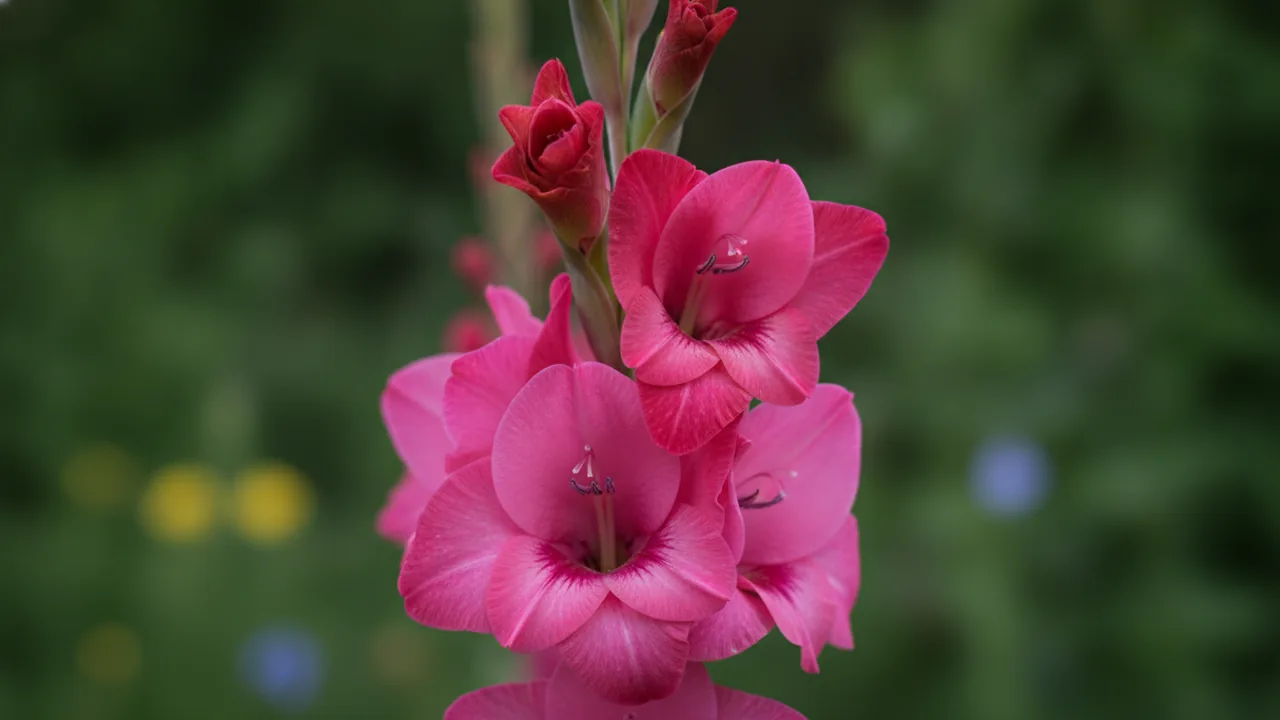
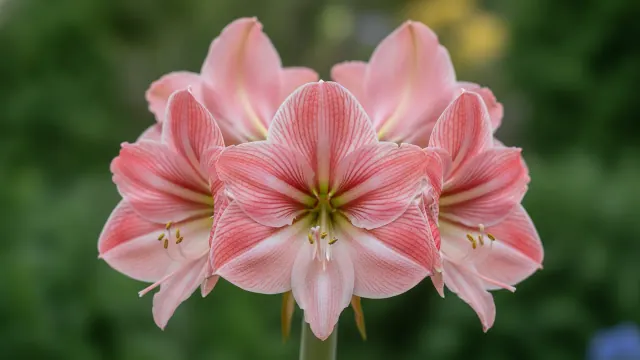
 Illustration

Gladiolus
Gladiolus
Gladiolus blooms from July through August.
Months here are Northern Hemisphere months; in the Southern Hemisphere, shift them by six months.
Growing Gladiolus
Plant it in full sun. It prefers moderate water. It is hardy in USDA zones 7–10. Expect it to reach about 4 ft tall and 0.5 ft wide at maturity, in roughly 1 year (not yet checked).
What was checked
Mature height and spread, hardiness zones, sun and the trait tags were checked against named botanical sources for this plant. The bloom months and water need on this page were not, and each fact above says which. The planting, spacing and size sections are derived from these checked facts by a fixed rule, not checked separately, and the plant type is the library's own classification.
When to plant Gladiolus
Gladiolus is a summer bulb planted in spring: get it in after the last frost, once the soil has warmed, March or April in zone 8, the middle of its hardy zones 7 to 10. It is hardy in zones 7 to 10, where it can stay in the ground over winter; colder than zone 7, lift and store it before the ground freezes. Expect flowers from July to August.
Month-by-month timing for your zone is on the planting calendar; if you garden near zone 8, the middle of this plant's hardy range, start with zone 8 in March. Derived from the plant's category, zones and bloom months plus typical zone frost dates, not checked separately.
How big does Gladiolus get?
 4 fttall5 ft 7 inan adult0.5 ftwide
See Gladiolus in a garden plan: the planner shows it in 3D beside everything else you add, growing toward this size over the years.
Where these facts come from
Gladiolus' height, spread, hardiness zones, sun and trait tags were checked against 7 published sources on July 30, 2026. Each one is linked below with every fact it carried, which can include a fact this page still marks as not yet checked, because a source carrying a value is not the same as the value being held to the standard. Facts not in that list, and the planting, spacing and size sections, are not covered by these sources.
- Missouri Botanical GardenPlant Finder (Gladiolus (group), the genus-wide group profile)height, spread, hardiness zones, sun and trait tags
- Missouri Botanical GardenGladiolus 'Atom', one cultivarheight, spread, hardiness zones, sun and trait tags
- NC State ExtensionGladiolus, the genus entryheight, spread, hardiness zones, sun and trait tags
- Mississippi State University ExtensionGladiolus for the Farmer Florist, the genushardiness zones, sun and trait tags
- Clemson Home and Garden Information CenterSummer- and Fall-Flowering Bulbs, its Gladiolus species sectionsun and trait tags
- extension.missouri.eduUniversity of Missouri Extension G6620 (Summer Flowering Bulbs: Gladio...sun and trait tags
- extension.k-state.eduK-State Research and Extension 4-H Horticulture Judging (Gladiolus, th...height
How the checking works, and what each standard covers, is on the verified plants page.
Comes in 11 varieties across 5 colors
Same genus, similar care - pick the color you are growing.
Compare every variety in the Gladiolus group
Every figure is the variety's own page fact. Tap a name to open it.
| Variety | Color | Blooms | Hardiness | Sun | Size (H × W) |
|---|---|---|---|---|---|
| Black Star | Red | Jul–Aug | Zones 7–10 | Full sun | 4 ft × 0.5 ft |
| Gladiolusthis page | Pink | Jul–Aug | Zones 7–10 | Full sun | 4 ft × 0.5 ft |
| Green Star | - | Jul–Aug | Zones 7–10 | Full sun | 4 ft × 0.5 ft |
| Lavender | Purple | Jul–Aug | Zones 7–10 | Full sun | 4 ft × 0.5 ft |
| Magenta | Pink | Jul–Aug | Zones 7–10 | Full sun | 4 ft × 0.5 ft |
| Peche Melba | Orange | Jul–Aug | Zones 7–10 | Full sun | 4 ft × 0.5 ft |
| Priscilla | White | Jul–Aug | Zones 7–10 | Full sun | 4 ft × 0.5 ft |
| Purple Magic | Purple | Jul–Aug | Zones 7–10 | Full sun | 4 ft × 0.5 ft |
| Red | Red | Jul–Aug | Zones 7–10 | Full sun | 4 ft × 0.5 ft |
| Tangelo | Orange | Jul–Aug | Zones 7–10 | Full sun | 4 ft × 0.5 ft |
| White Prosperity | White | Jul–Aug | Zones 7–10 | Full sun | 4 ft × 0.5 ft |
| Yellow | Yellow | Jul–Aug | Zones 7–10 | Full sun | 4 ft × 0.5 ft |
Good to know about Gladiolus
Curated from university extensions, botanic gardens and other primary sources, with the source named on every note. A note reports what its source says; where that differs from a fact above, the fact above is this entry's stored value, and its mark says whether it has been checked.
Safety
Toxic to dogs, cats and horses; the toxins concentrate in the corm. Eating it usually causes drooling, vomiting, lethargy and diarrhea. per ASPCA
Worth knowing
Each corm blooms just once and the spike is short-lived, so plant corms in stages about a week apart to keep flowers coming all summer. per Clemson
Leave corms in, or lift?
Zones 8 to 10 can leave corms in the ground; zone 7 is borderline, so mulch or lift; zone 6 and colder must dig and store them. per NC State
Tall spikes flop; stake them
The tall, one-sided flower spikes get top-heavy and topple in wind or rain. Stake them, hill soil around the base, or plant corms 4 to 6 in deep. per Clemson and NC State
Sanitize corms at digging
Gladiolus thrips and the corm rot fungi both overwinter on stored corms. One digging-time routine (discard infested or lesioned corms, destroy old debris, cure dry, store cool) beats both. per NC State and University of Illinois
About 70 to 90 days
Corms take 70 to 90 days from planting to flower, so bloom timing follows your planting date. A spring planting flowers mid to late summer, later plantings into fall. per NC State and Clemson
Flowers open bottom to top
The tall, one-sided spike opens its funnel-shaped flowers in sequence from the bottom upward, so the lowest blooms fade while fresh buds are still opening at the tip. per NC State
What pairs well with Gladiolus
Good companions share its growing conditions and add something it lacks: an earlier or later bloom, a lower carpet in front, or structure through winter.
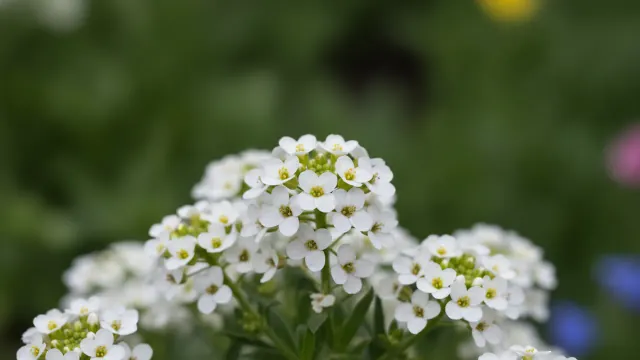
Candytuft
Shares full sun and low to moderate water; blooms in mid spring, before this one opens; lower at 10 in, for the front of the border; evergreen, so the bed keeps its shape through winter.
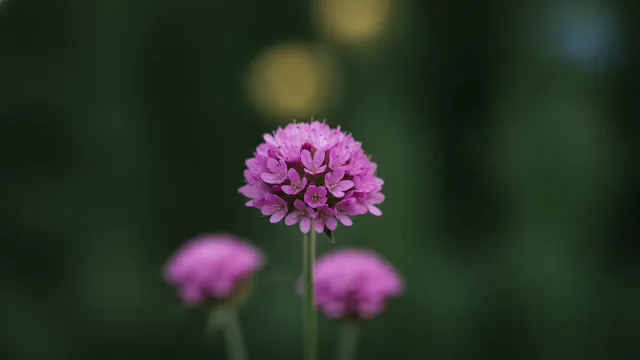
Sea Thrift
Shares full sun and low to moderate water; blooms in mid spring, before this one opens; lower at 8 in, for the front of the border; evergreen, so the bed keeps its shape through winter; they only overlap in zones 7 to 8.
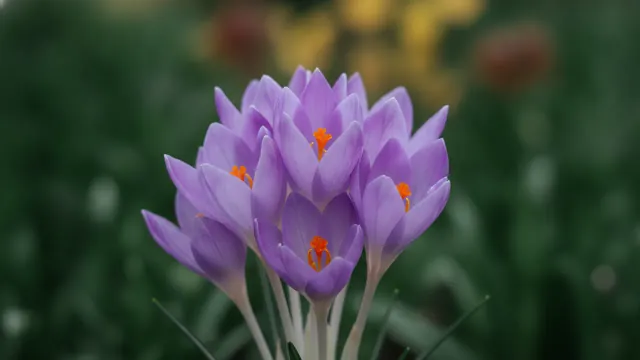
Autumn Crocus
Shares full sun and moderate water; blooms in early fall as this one finishes; low at 6 in, to carpet the ground beneath.
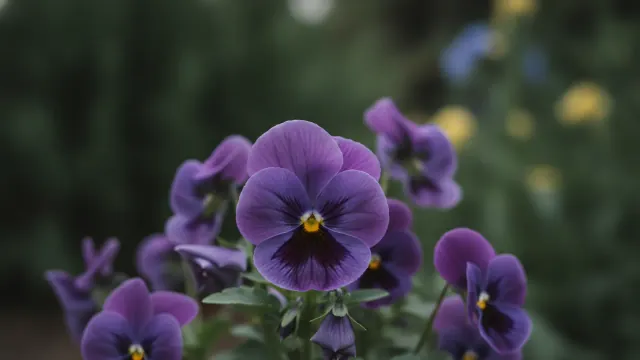
Pansy
Takes full sun to part sun and moderate water; blooms in early spring, before this one opens; lower at 8 in, for the front of the border.
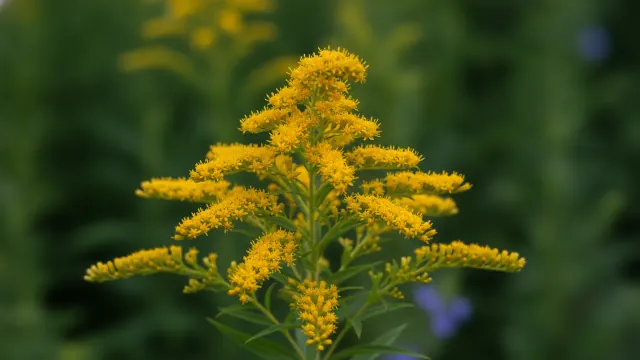
Goldenrod
Shares full sun and low to moderate water; overlaps, then carries the display into mid fall; its seed heads stand through winter, for structure and the birds; lower at 3 ft, for the front of the border.
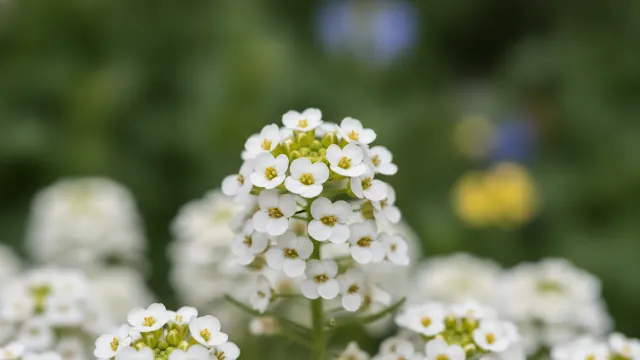
Sweet Alyssum
Shares full sun and moderate water; overlaps, then carries the display into mid fall; low at 5 in, to carpet the ground beneath; its white flowers settle the pink.
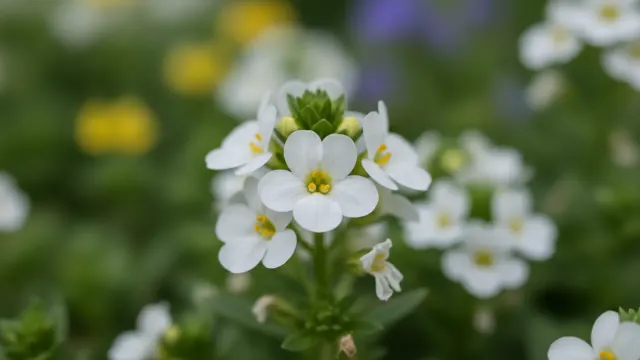
Bacopa
Takes full sun to part sun and moderate water; overlaps, then carries the display into mid fall; low at 6 in, to carpet the ground beneath; its white flowers settle the pink.

Pampas Grass
Shares full sun and low to moderate water; overlaps, then carries the display into mid fall; its seed heads stand through winter, for structure and the birds; its white flowers settle the pink.
Featured in these guides
Explore similar plants
You might also like
Design a garden with this
Drop this plant onto a 3D plan, see how it fills in, and watch your whole garden bloom across the year.