
 Illustration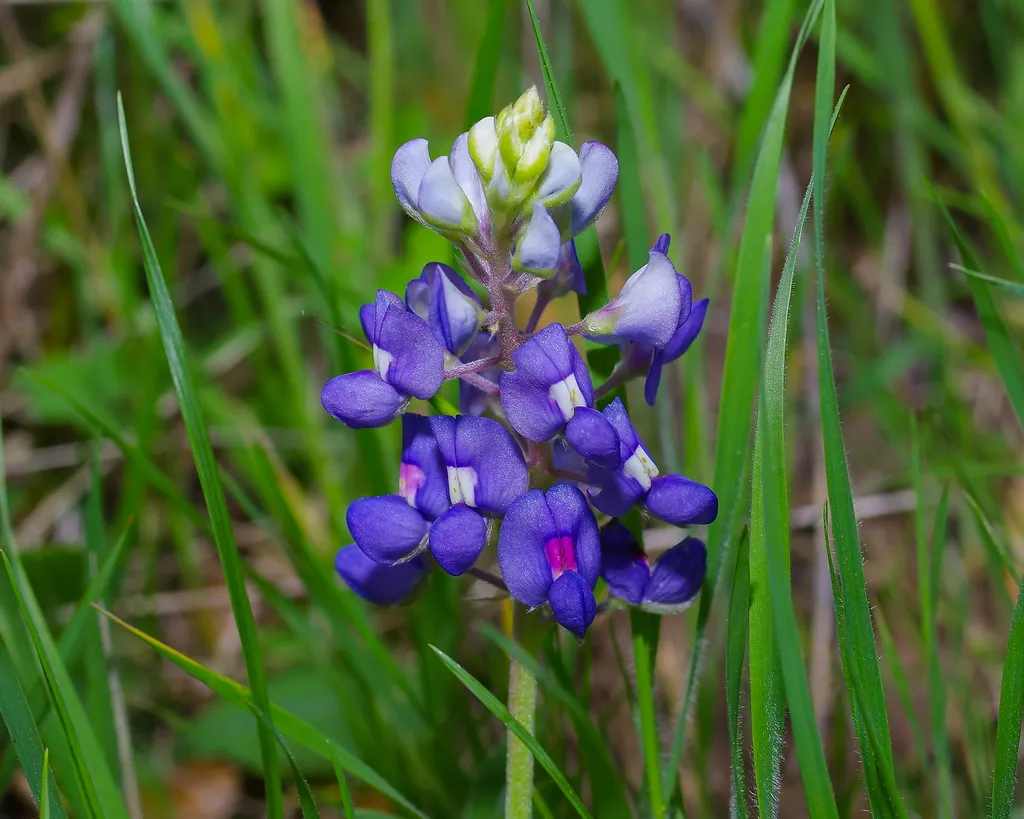

Photo credits and licenses
Real photographs from naturalists and photographers worldwide, each used under its own license. Credit: Photo by Michelle W. (鍾偉瑋) / iNaturalist (CC BY). How photos are sourced →

Lupine
Lupinus
Lupine blooms from May through June.
Months here are Northern Hemisphere months; in the Southern Hemisphere, shift them by six months.
Growing Lupine
Plant it in full sun. It prefers moderate water. It is hardy in USDA zones 4–8. Expect it to reach about 3 ft tall and 1.5 ft wide at maturity, in roughly 2 years (not yet checked).
What was checked
Mature height and spread, hardiness zones, sun and the trait tags were checked against named botanical sources for this plant. The bloom months and water need on this page were not, and each fact above says which. The planting, spacing and size sections are derived from these checked facts by a fixed rule, not checked separately, and the plant type is the library's own classification.
When to plant Lupine
Plant Lupine in early spring as soon as the soil is workable, or in early fall at least six weeks before your first frost, so roots establish in cool weather. In zone 6, the middle of its hardy zones 4 to 8, spring means March to May and fall means August or September. Once settled, it blooms from May to June.
Month-by-month timing for your zone is on the planting calendar; if you garden near zone 6, the middle of this plant's hardy range, start with zone 6 in March. Derived from the plant's category, zones and bloom months plus typical zone frost dates, not checked separately.
How big does Lupine get?
 3 fttall5 ft 7 inan adult1.5 ftwide
See Lupine in a garden plan: the planner shows it in 3D beside everything else you add, growing toward this size over the years.
How far apart to plant Lupine
Derived from the mature spread above by a fixed rule, not checked separately: spacing is the spread, center to center.
Space Lupine about 1.5 ft apart, center to center, so each plant has room to reach its full width.
Add Lupine to a garden plan and the planner draws it at its full width, so you see the spacing before you buy.
Where these facts come from
Lupine's height, spread, hardiness zones, sun and trait tags were checked against 8 published sources on July 30, 2026. Each one is linked below with every fact it carried, which can include a fact this page still marks as not yet checked, because a source carrying a value is not the same as the value being held to the standard. Facts not in that list, and the planting, spacing and size sections, are not covered by these sources.
- Missouri Botanical GardenLupinus x hybrida, hybrid garden lupinesheight, spread, hardiness zones, sun and trait tags
- Missouri Botanical GardenLupinus 'The Governor', a Russell Hybridheight, spread, hardiness zones, sun and trait tags
- NC State ExtensionLupinus, genus entryheight, spread, hardiness zones, sun and trait tags
- Perennial Resource (Walters Gardens)Lupinus Russell Hybrids - Mixedheight, spread, hardiness zones, sun and trait tags
- botanicgardens.uw.eduUniversity of Washington Botanic Gardens plant profile (Lupinus 'The G...height, spread, sun and trait tags
- RHSLupin, the Lupinus genusheight, sun and trait tags
- American MeadowsLupinus, genus guidesun and trait tags
- Utah State University ExtensionLupine, Lupinusheight
How the checking works, and what each standard covers, is on the verified plants page.
Comes in 11 varieties across 6 colors
Same genus, similar care - pick the color you are growing.
- Chandelier
- Gallery Blue
- Gallery Red
- Gallery White
- Manhattan Lights
- Masterpiece
- My Castle
- Noble Maiden
- The Chatelaine
- The Governor
- The Pages
Compare every variety in the Lupine group
Every figure is the variety's own page fact. Tap a name to open it.
| Variety | Color | Blooms | Hardiness | Sun | Size (H × W) |
|---|---|---|---|---|---|
| Chandelier | Yellow | May–Jun | Zones 4–8 | Full sun | 3 ft × 1.5 ft |
| Gallery Blue | Blue | May–Jun | Zones 4–8 | Full sun | 20 in × 16 in |
| Gallery Red | Red | May–Jun | Zones 4–8 | Full sun | 20 in × 16 in |
| Gallery White | White | May–Jun | Zones 4–8 | Full sun | 20 in × 16 in |
| Lupinethis page | Purple | May–Jun | Zones 4–8 | Full sun | 3 ft × 1.5 ft |
| Manhattan Lights | Purple | May–Jun | Zones 4–8 | Full sun | 3 ft × 1.5 ft |
| Masterpiece | Purple | May–Jun | Zones 4–8 | Full sun | 3 ft × 1.5 ft |
| My Castle | Red | May–Jun | Zones 4–8 | Full sun | 3 ft × 1.5 ft |
| Noble Maiden | White | May–Jun | Zones 4–8 | Full sun | 3 ft × 1.5 ft |
| The Chatelaine | Pink | May–Jun | Zones 4–8 | Full sun | 3 ft × 1.5 ft |
| The Governor | Blue | May–Jun | Zones 4–8 | Full sun | 3 ft × 1.5 ft |
| The Pages | Red | May–Jun | Zones 4–8 | Full sun | 3 ft × 1.5 ft |
Good to know about Lupine
Curated from university extensions, botanic gardens and other primary sources, with the source named on every note. A note reports what its source says; where that differs from a fact above, the fact above is this entry's stored value, and its mark says whether it has been checked.
Safety
Toxic quinolizidine alkaloids, most concentrated in the seeds and pods. Poisonous to dogs, cats, horses, livestock and people if eaten in quantity. per NC State and Pet Poison Helpline
Worth knowing
It is a legume and fixes its own nitrogen, so it thrives in poor, sandy ground. Rich soil or added nitrogen means floppy, leafy growth and fewer flowers. per NC State
Soil pH: sources disagree
Most sources want lean, slightly acidic soil (NC State: pH below 6.0); one wants neutral to slightly alkaline. Aim for slightly acidic to neutral and focus on sharp drainage. per NC State and SDSU
Short-lived, hates heat
A cool-climate plant that dislikes heat and humidity; even in ideal conditions it lives only about 2 to 5 years. In hot regions grow it as an annual. per NC State
Grow from seed, don't divide
It forms a deep taproot early, so established plants resent division and transplanting. Plant young and leave in place; to make more, sow scarified seed. per NC State
Native host for rare butterfly
The native wild lupine (L. perennis) is the only larval host plant of the endangered Karner blue butterfly; showy garden hybrids do not fill that role. per USDA Forest Service
Watch for lupine aphid
A large aphid feeds only on lupine and overwinters as eggs on the stems. Blast it off with water, and clear the top growth in fall cleanup. per Colorado State
What pairs well with Lupine
Good companions share its growing conditions and add something it lacks: an earlier or later bloom, a lower carpet in front, or structure through winter.
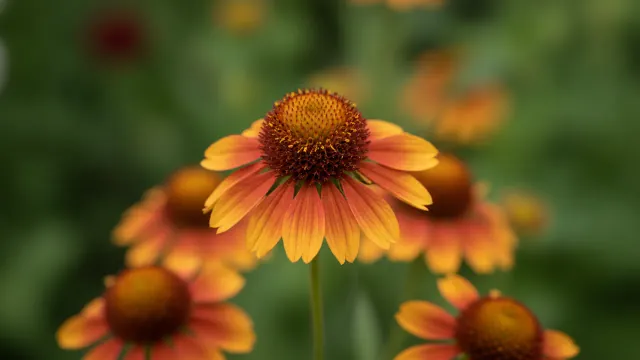
Sneezeweed
Shares full sun and moderate water; blooms in midsummer as this one finishes; both are strong pollinator plants, and they feed in different months; its seed heads stand through winter, for structure and the birds.
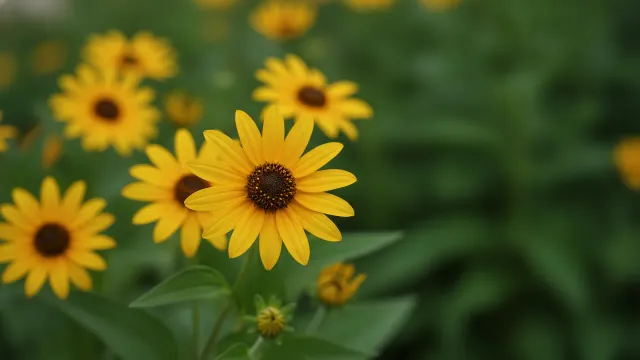
False Sunflower
Shares full sun and moderate water; blooms in midsummer as this one finishes; both are strong pollinator plants, and they feed in different months; its seed heads stand through winter, for structure and the birds.
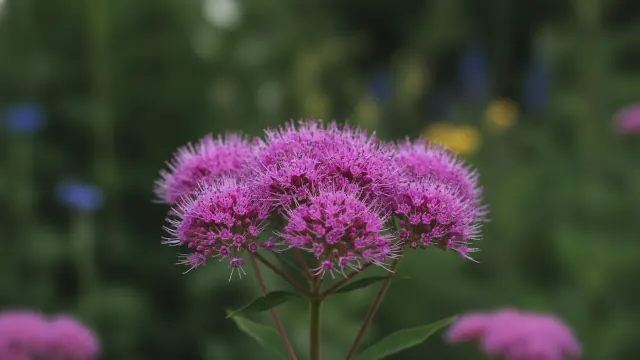
Joe Pye Weed
Shares full sun and moderate to high water; blooms in midsummer as this one finishes; both are strong pollinator plants, and they feed in different months; its seed heads stand through winter, for structure and the birds.
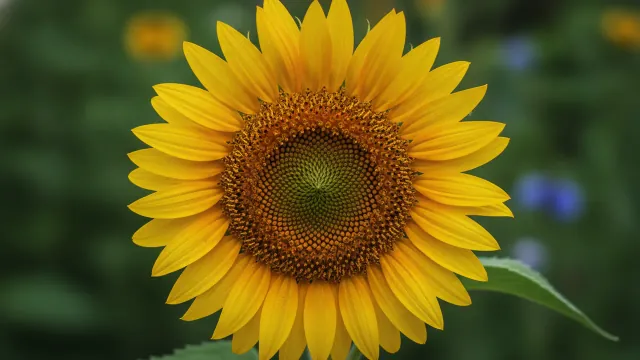
Sunflower
Shares full sun and moderate water; blooms in midsummer as this one finishes; both are strong pollinator plants, and they feed in different months; its seed heads stand through winter, for structure and the birds.
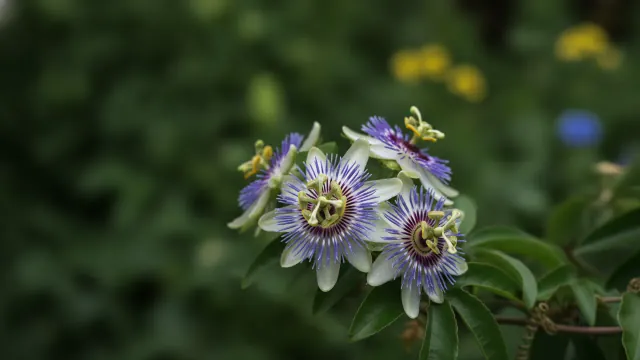
Passionflower
Shares full sun and moderate water; blooms in midsummer as this one finishes; both are strong pollinator plants, and they feed in different months; climbs to 13 ft behind it, height without the footprint.
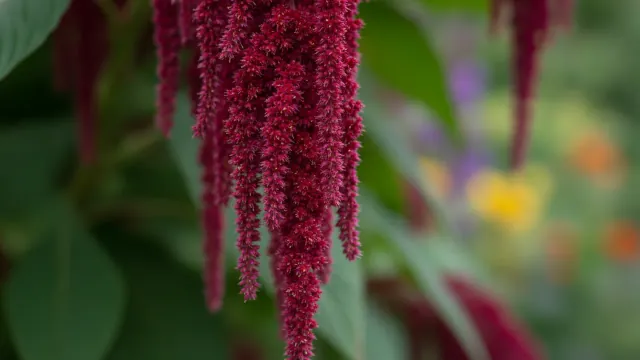
Love-Lies-Bleeding
Shares full sun and moderate water; blooms in midsummer as this one finishes; both are strong pollinator plants, and they feed in different months.
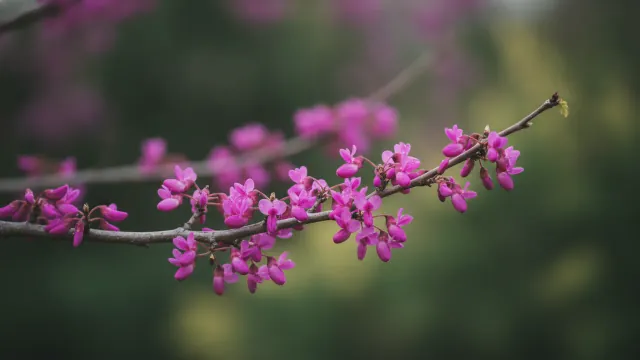
Eastern Redbud
Takes full sun to part sun and moderate water; blooms in mid spring, before this one opens; both are strong pollinator plants, and they feed in different months; stands well above at 23 ft, a canopy to plant beneath.
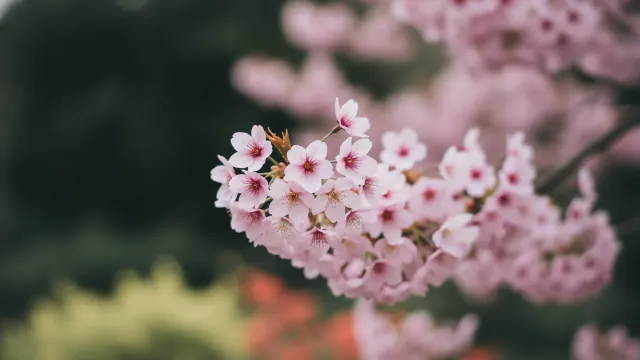
Flowering Cherry
Shares full sun and moderate water; blooms in mid spring, before this one opens; both offer pollinator forage, in different months; a soft color beside the purple.
Featured in these guides
Explore similar plants
You might also like
Design a garden with this
Drop this plant onto a 3D plan, see how it fills in, and watch your whole garden bloom across the year.