
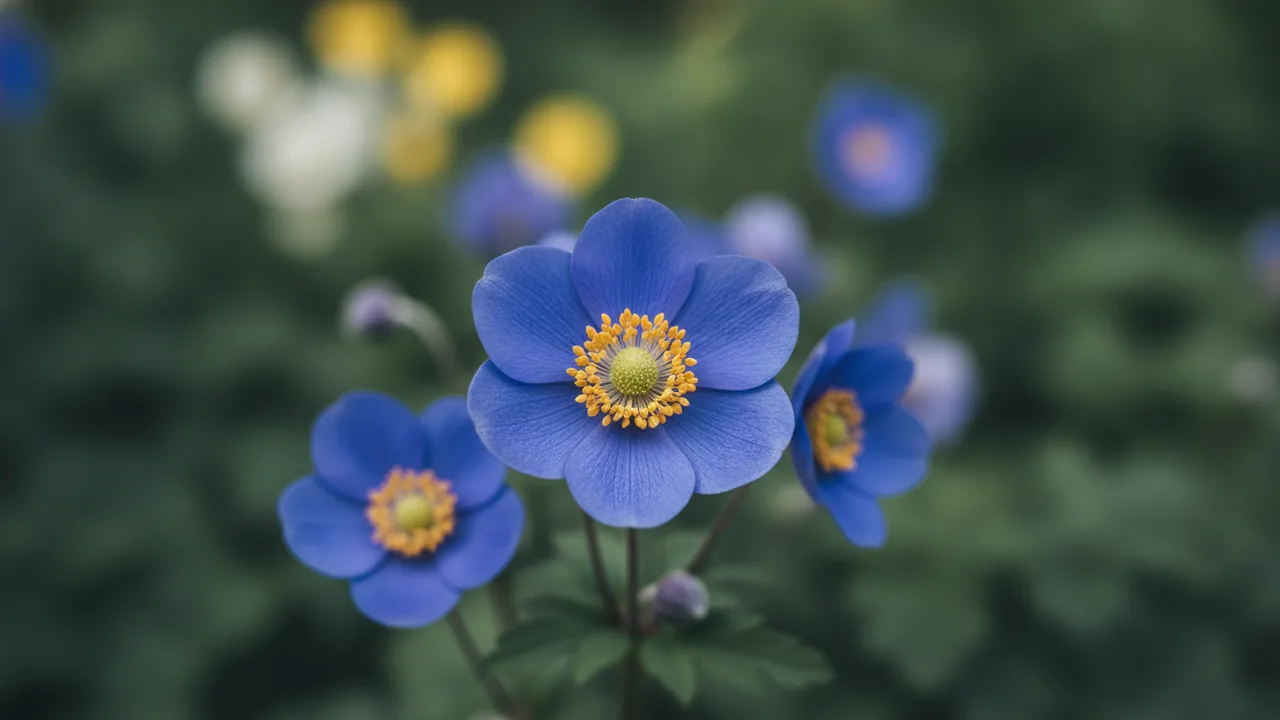
 Illustration

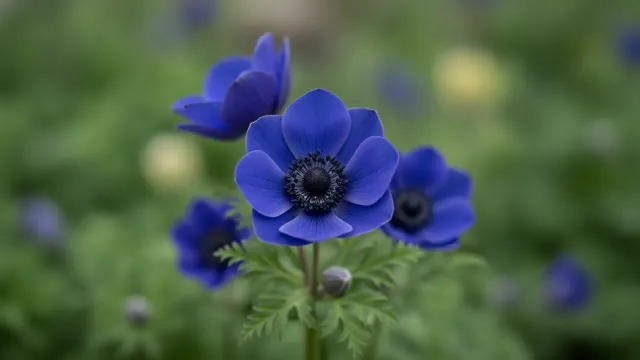
Poppy Anemone
Anemone coronaria
Poppy Anemone blooms from April through June.
Months here are Northern Hemisphere months; in the Southern Hemisphere, shift them by six months.
Growing Poppy Anemone
Plant it in full sun. It prefers moderate water. It is hardy in USDA zones 7–10. Expect it to reach about 12 in tall and 6 in wide at maturity, in roughly 1 year (checked).
What was checked
Fifteen fields were checked against named botanical sources, each recorded beside the sources that carried it, with every unsettled point written down and decided: mature height and spread, hardiness zones, sun, water, bloom months and color, the trait tags, soil, diseases, pests, toxicity, the plant's own names, and years to mature size, which rests on a recorded house rule where no publisher states one and is marked so. Each fact above carries its own mark. The planting, spacing and size sections are derived from these checked facts by a fixed rule, not checked separately, and the plant type is the library's own classification.
When to plant Poppy Anemone
Poppy Anemone is a fall-planted bulb: get it in the ground 6 to 8 weeks before the ground freezes, typically October or November in zone 8, the middle of its hardy zones 7 to 10. It pays you back the following April to June.
Month-by-month timing for your zone is on the planting calendar; if you garden near zone 8, the middle of this plant's hardy range, start with zone 8 in October. Derived from the plant's category, zones and bloom months plus typical zone frost dates, not checked separately.
How big does Poppy Anemone get?
 12 intall5 ft 7 inan adult6 inwide
See Poppy Anemone in a garden plan: the planner shows it in 3D beside everything else you add, growing toward this size over the years.
Where these facts come from
Poppy Anemone's height, spread, hardiness zones, sun, water, bloom months and color, years to mature size, trait tags, soil, diseases, pests and toxicity were checked against 16 published sources on August 23, 2026. Each one is linked below with every fact it carried, which can include a fact this page still marks as not yet checked, because a source carrying a value is not the same as the value being held to the standard. Facts not in that list, and the planting, spacing and size sections, are not covered by these sources.
- NC State ExtensionPlant Toolboxheight, spread, hardiness zones, sun, water, bloom months and color, years to mature size, trait tags, soil, diseases, pests and toxicity
- Missouri Botanical Gardenheight, spread, hardiness zones, sun, water, bloom months and color, years to mature size, trait tags, soil, diseases and pests
- RHSRoyal Horticultural Societyheight, spread, sun, water, bloom months and color, years to mature size, soil, diseases, pests and toxicity
- vanzyverden.comVan Zyverdenheight, spread, hardiness zones, sun, water, bloom months and color, trait tags, soil, diseases and pests
- Longfield Gardenshardiness zones, sun, bloom months and color, years to mature size, trait tags, soil and pests
- Chicago Botanic GardenAnemone coronaria 'Harmony Blue'hardiness zones, sun, bloom months and color, trait tags and pests
- ucanr.eduUniversity of California Agriculture and Natural Resources (UC Master...sun, water, bloom months and color and soil
- almanac.comThe Old Farmer's Almanacheight, hardiness zones, sun and trait tags
- asu.eduArizona State University, Virtual Library of Phoenix Landscape Plantsheight, hardiness zones, sun and trait tags
- Chicago Botanic GardenAnemone coronaria 'PAS1863', Mona Lisaheight, hardiness zones, sun and trait tags
- John ScheepersBeauty from Bulbsheight, hardiness zones, sun and trait tags
- terraceiafarms.comTerra Ceia Farmsheight, hardiness zones, sun and trait tags
- Clemson Home and Garden Information CenterClemson Cooperative Extension Home & Garden Information Centertrait tags
- pacificbulbsociety.orgPacific Bulb Societyheight
- premierepeau.comPremiere Peau (perfumery glossary, NOT a horticultural source)trait tags
- University of Georgia ExtensionBulletin B918hardiness zones
How the checking works, and what each standard covers, is on the verified plants page.
8 more colors in the Anemone group
Same genus, similar care - pick the one you are growing.
Compare every variety in the Anemone group
Every figure is the variety's own page fact. Tap a name to open it.
| Variety | Color | Blooms | Hardiness | Sun | Size (H × W) |
|---|---|---|---|---|---|
| Admiral | Purple | Mar–May | Zones 7–10 | Full sun | 12 in × 6 in |
| Hollandia | Red | Mar–May | Zones 7–10 | Full sun | 12 in × 6 in |
| Lord Lieutenant | Blue | Mar–May | Zones 7–10 | Full sun | 12 in × 6 in |
| Mr. Fokker | Blue | Apr–Jun | Zones 7–10 | Full sun | 12 in × 6 in |
| Mt. Everest | White | Mar–May | Zones 7–10 | Full sun | 12 in × 6 in |
| Poppythis page | Purple | Apr–Jun | Zones 7–10 | Full sun | 12 in × 6 in |
| Sylphide | Pink | Mar–May | Zones 7–10 | Full sun | 12 in × 6 in |
| The Bride | White | Mar–May | Zones 7–10 | Full sun | 12 in × 6 in |
| The Governor | Red | Apr–Jun | Zones 7–10 | Full sun | 12 in × 6 in |
Good to know about Poppy Anemone
Curated from university extensions, botanic gardens and other primary sources, with the source named on every note. A note reports what its source says; where that differs from a fact above, the fact above is this entry's stored value, and its mark says whether it has been checked.
Safety
All parts are poisonous. The sap holds protoanemonin, a vesicant: it reddens, swells and blisters skin, and eating it causes mouth pain, vomiting and diarrhea. per NC State and Cornell
Worth knowing
It blooms early, when little else does, drawing spring bees and butterflies. The flower cannot self-pollinate, so it depends on those visitors to set seed. per NC State and MDPI
Fall plant or spring annual?
In mild zones (roughly 7 to 10) plant corms in fall and leave them. Hard freezes kill the foliage, so colder zones grow it as an annual or lift them. per NC State and Clemson
Soak the corms first
The dry, hard corms are soaked in water before planting to plump them and speed sprouting; Clemson soaks them overnight. per Clemson
Deer and rabbit resistant
Deer and rabbits usually leave it alone: the acrid, burning-tasting sap that makes every part poisonous works as a browse deterrent, though the very hungry may still sample it. per NC State and Cornell
Planting depth and spacing
Plant the corms 2 to 3 in (5 to 7.5 cm) deep and 4 to 6 in apart. per NC State and Clemson
Naturalizes where winters are mild
In mild-winter zones (for example zone 8) established plantings overwinter and spread into an ever-denser patch over the years; propagate by seed or by dividing the tubers. per NC State and Clemson
What pairs well with Poppy Anemone
Good companions share its growing conditions and add something it lacks: an earlier or later bloom, a lower carpet in front, or structure through winter.
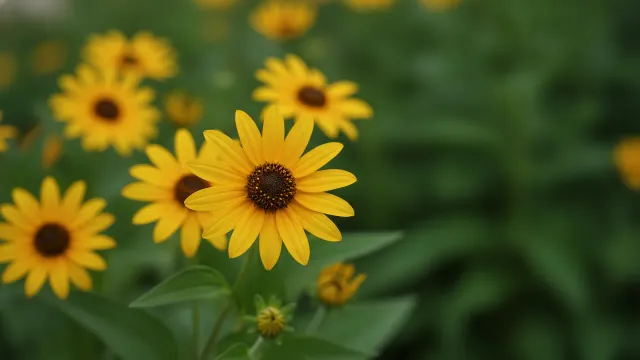
False Sunflower
Shares full sun and moderate water; blooms in midsummer as this one finishes; its seed heads stand through winter, for structure and the birds; taller at 4 ft, for the layer behind it.
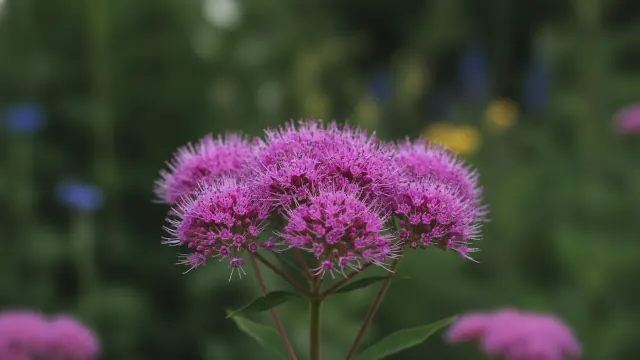
Joe Pye Weed
Shares full sun and moderate to high water; blooms in midsummer as this one finishes; its seed heads stand through winter, for structure and the birds; taller at 6 ft, for the layer behind it.
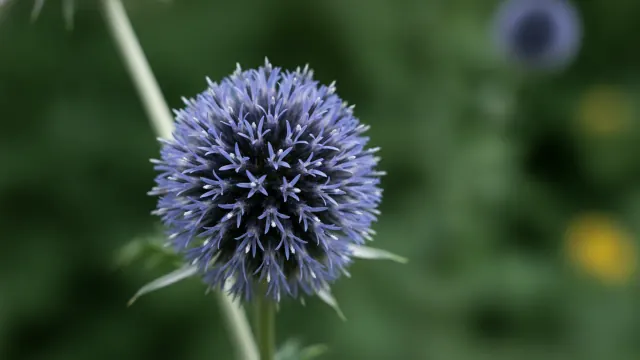
Globe Thistle
Shares full sun and low to moderate water; blooms in midsummer as this one finishes; its seed heads stand through winter, for structure and the birds; taller at 3.5 ft, for the layer behind it.
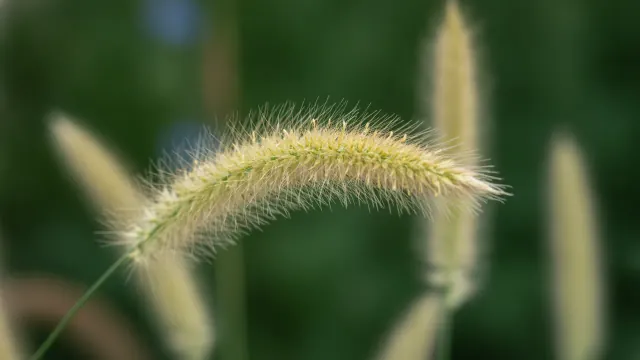
Feather Reed Grass
Shares full sun and moderate water; overlaps, then carries the display into late summer; its seed heads stand through winter, for structure and the birds; taller at 5 ft, for the layer behind it.
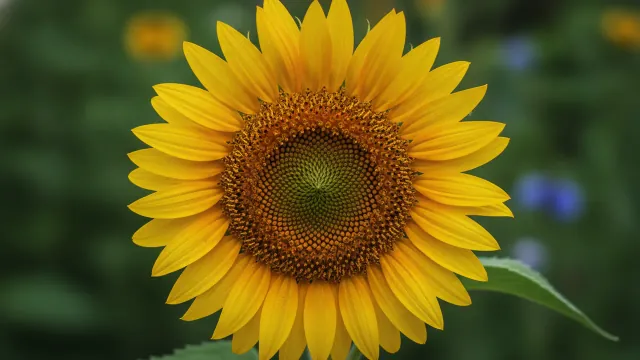
Sunflower
Shares full sun and moderate water; blooms in midsummer as this one finishes; its seed heads stand through winter, for structure and the birds; stands well above at 6.5 ft, a canopy to plant beneath.
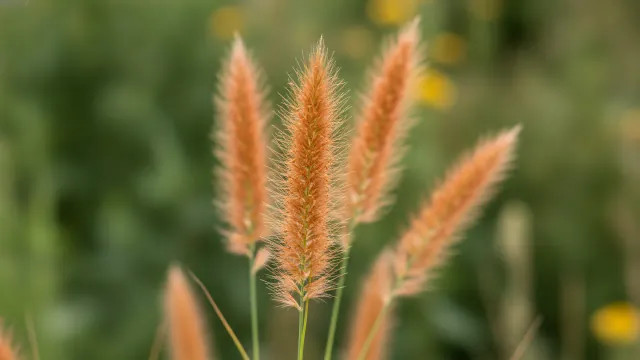
Little Bluestem
Shares full sun and low to moderate water; blooms in late summer, extending the bed's season; its seed heads stand through winter, for structure and the birds; taller at 3.5 ft, for the layer behind it.
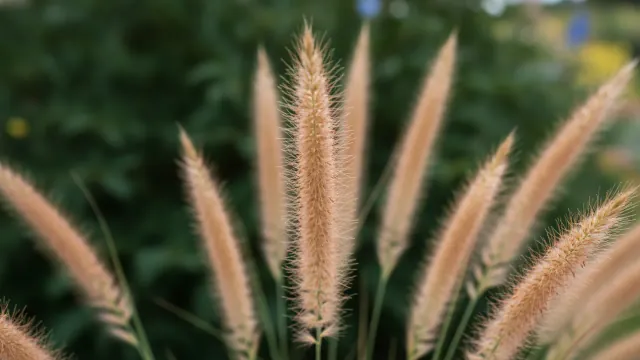
Fountain Grass
Shares full sun and low to moderate water; blooms in late summer, extending the bed's season; its seed heads stand through winter, for structure and the birds; taller at 3.5 ft, for the layer behind it.
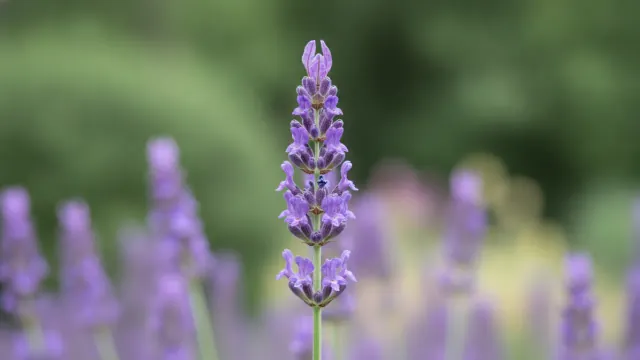
Lavender
Shares full sun and low to moderate water; overlaps, then carries the display into late summer; evergreen, so the bed keeps its shape through winter; echoes the purple.
Featured in these guides
Explore similar plants
You might also like
Design a garden with this
Drop this plant onto a 3D plan, see how it fills in, and watch your whole garden bloom across the year.