
Planting
Spring Bulbs to Plant This Fall: What to Buy, When to Plant, How Deep
Spring is decided in fall. The zone-by-zone windows, the bulbs worth ordering, the deer truth, and the depth rule, all from the records.
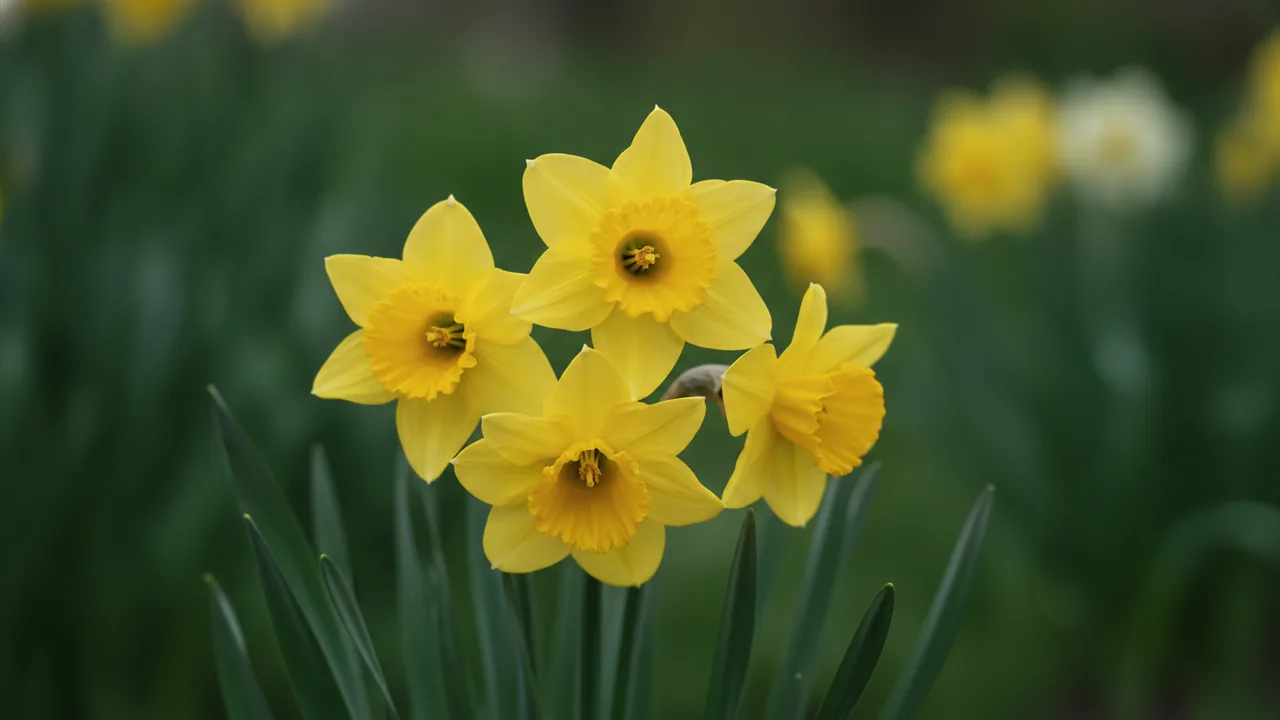
Spring bulbs run on a one-way contract: the flowers arrive months after the work, and the work can only be done in fall. Miss the window and no amount of spring enthusiasm buys it back. Our library holds 228 bulbs, and roughly 150 of them are fall-planted spring bloomers, tulips and daffodils in real depth, plus crocuses, hyacinths, alliums, squills, and a supporting cast most garden centers never stock. This guide is the whole job in one place: when to plant by zone, what to buy so the color runs February to June instead of two weeks in April, and the two questions everyone asks, about deer and about depth.
Timing follows our planting calendar, which anchors every window to typical zone frost averages. Your own dates can differ by weeks, so read the months below as a season, not a deadline.
When do I plant spring bulbs?
About 6 to 8 weeks before your ground freezes, once fall has genuinely cooled the soil. On typical frost averages that means late August through September in zones 3 and 4, September and October in zones 5 and 6, and October into November in zones 7 and 8. In zones 9 and 10 the window is November and December, and the cast changes: the classic tulips and daffodils are rated to zone 8, so the mild-winter garden plants anemones, ranunculus, and freesias instead. Frost dates vary by weeks, so check your own.
When to plant, zone by zone
The rule every bulb below shares: into the ground about 6 to 8 weeks before the ground freezes, so roots grow in cool soil while the top stays asleep. Where that lands depends entirely on your zone, and rushing it is the classic mistake in the warm half of the map, because bulbs planted into warm soil can sprout too early or sulk.
| Zones | Typical first frost | Your bulb window |
|---|---|---|
| Zones 3 to 4 | Mid to late September | Late August through September: the earliest bulb planting in the country, and the shortest window. |
| Zones 5 to 6 | Early to late October | September and October, the classic fall-bulb season of garden folklore. |
| Zones 7 to 8 | Early to late November | October and November, and not sooner: wait for the soil to genuinely cool. |
| Zones 9 to 10 | December, or rare to none | November and December, with the mild-winter cast below rather than tulips. |
Order well before you plant, though. The best varieties sell through in late summer while the ground is still far too warm, so the smart rhythm is order in August, plant on your zone's schedule, and keep the boxes somewhere cool and dark in between. Our August guide makes the order-now case in full.
The early shift: color in February and March
Buy the display in three waves and spring stops being a two-week event. The first wave is the small, cheap, cold-proof bulbs that open while frost is still on the ground, and every one of them wants planting by the hundred, not the dozen: at 4 to 6 inches tall, they only read from the kitchen window as a drift.
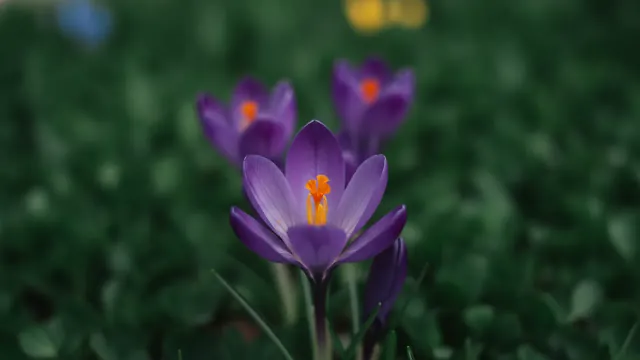
Crocus
Cups of purple, gold, and white from February into March at 4 inches, zones 3 to 8. The one siting rule that matters: in a lawn, plant the early snow crocuses, which finish before the first mow, because the big Dutch hybrids ripen their leaves too late for mowed grass.
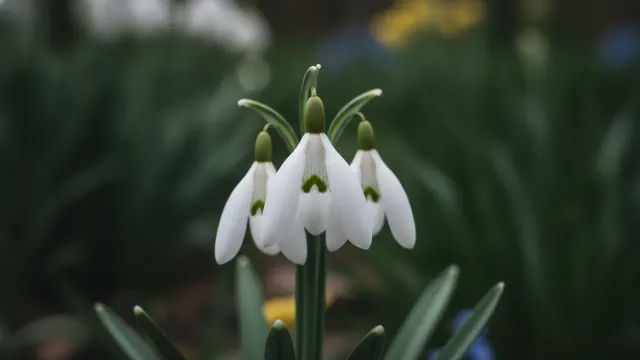
Galanthus
White bells in February and March, zones 3 to 7, and the one bulb here that refuses the full-sun rule: it wants the woodland deal, under deciduous trees, sunny in late winter and shaded all summer, with more moisture than its neighbors in this list would accept.
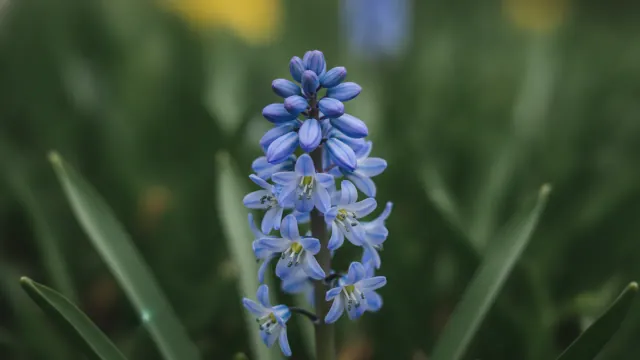
Scilla siberica
The bargain of the aisle: Siberian squill's small bulbs cost pennies, plant in seconds a few inches deep, and return every March and April in a pool of blue that widens on its own. At a zone 2 rating it is also the hardiest bulb in this guide, with margin to spare.
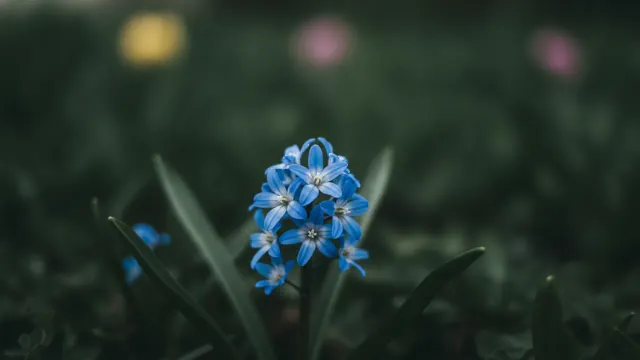
Scilla
Starry blue flowers with white eyes, opening in March at 5 inches, zones 3 to 8. The same compounds that make it poisonous are why deer and rodents leave the whole planting alone, so it persists where daintier bulbs get dug up.
The main event: March and April
The second wave is the one the neighborhood notices. These are the bulbs to spend real money on, because they are the ones that come back: a daffodil planting is a decades-long asset, and the library's sixteen daffodil records alone run from 7-inch miniatures in early March to white doubles finishing in May.
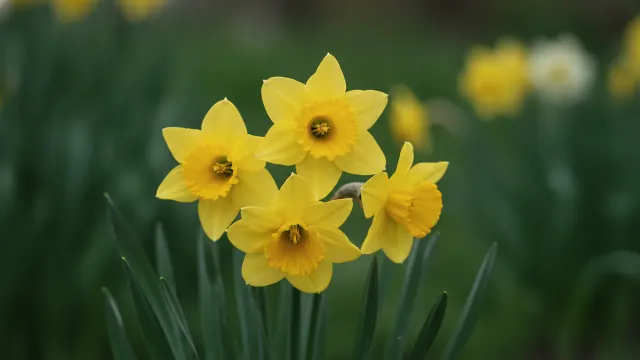
Narcissus
The safest money in the bulb aisle: zones 3 to 8, untouched by deer and rodents, and naturalizing into bigger drifts every spring. Stagger the family and the show runs three months: 'Tête-à-Tête' and 'February Gold' open the season in March, the classic trumpets fill April, and doubles like 'Cheerfulness' close it in May.
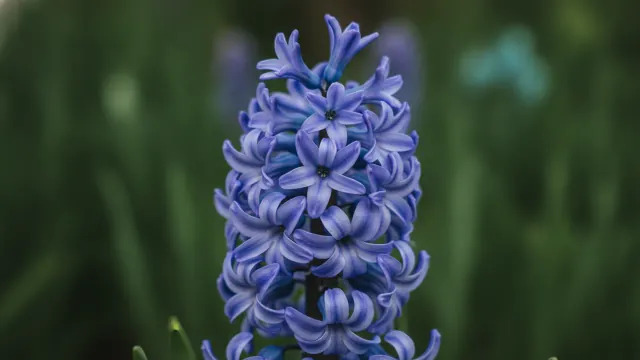
Hyacinthus orientalis
The fragrance bulb: dense 10-inch spikes in March and April, zones 4 to 8, strong enough to scent a doorway. Plant it where you pass daily, and wear gloves when handling the bulbs; the same crystals that keep rodents off can leave bare hands itching.
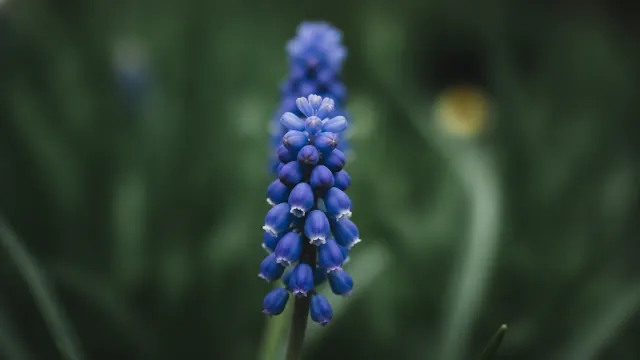
Muscari
The by-the-hundred bulb: at 8 inches, grape hyacinth only works as a river, and a big bag plants an entire river of March and April blue, zones 3 to 8. One quirk worth knowing: its grassy leaves push up in fall and sit green all winter. That is normal, and a handy map of where your clumps are.
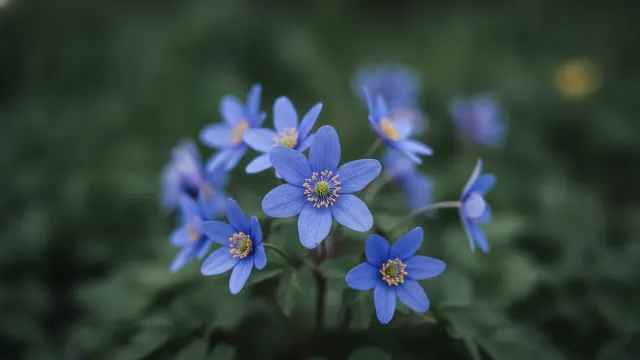
Anemone blanda
Anemone blanda: starry daisy flowers in blue, pink, and white at 6 inches, March and April, zones 4 to 8. It carpets the ground under shrubs and between bigger bulbs, filling the gaps the showpieces leave.
The late shift: April to June
The third wave carries spring into early summer and hands the border to the perennials. It is also where tulip buying gets interesting: our eighteen tulip records split into an early class that opens in March ('Apricot Beauty', 'Monte Carlo', 'Purissima') and a late class that holds to May ('Queen of Night', 'Angelique', 'Ballerina'), so a deliberate early-plus-late mix runs the tulip season across all three months rather than the single window one bag would give you.
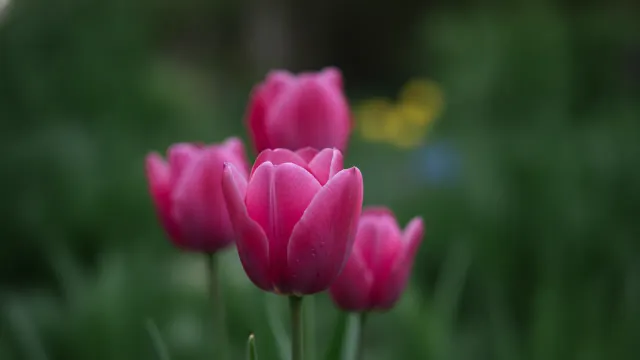
Tulipa
The brightest color in spring, April and May, zones 3 to 8, with an honest asterisk: most big hybrids fade after a year or two, so treat them as annuals, or choose Darwin hybrids and species tulips, the types that actually return. Plant them last; tulips are happy to wait until the ground is nearly closed.
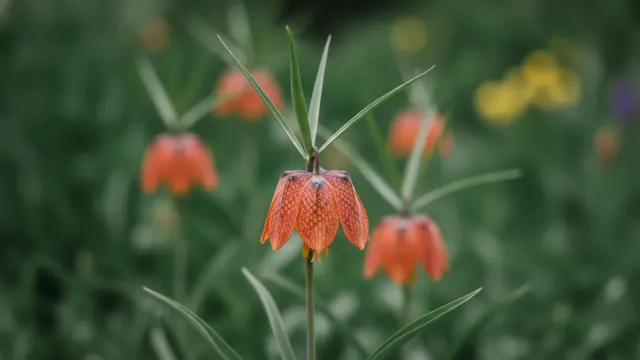
Fritillaria imperialis
Crown imperial: a 3-foot exclamation mark topped with orange bells in April and May, zones 5 to 8, with a skunky musk that warns rodents and deer off before they bite. The big hollow-topped bulb rots if water pools in it, so set it on its side at planting.
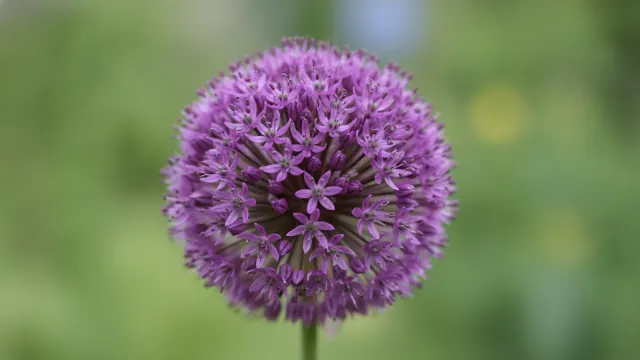
Allium giganteum
The giant allium: 3-foot stems topped with purple spheres in May and June, zones 4 to 8, bridging the awkward gap between tulips and roses. Deer pass over the whole onion tribe, and the seed heads stand sculptural for months. 'Purple Sensation' opens the relay in May; drumstick alliums carry it into July.
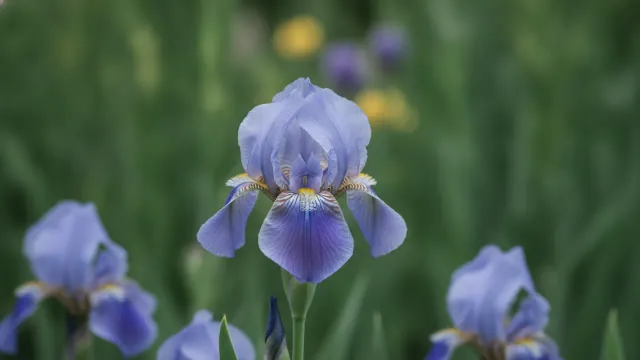
Iris × hollandica
The florist's iris, grown from a fall bulb: sleek blue-and-gold flowers on 2-foot stems in May and June, zones 5 to 9. It earns its spot as a cut flower; a dozen bulbs is a month of vases.
The deer question, answered by the records
The most-asked bulb question deserves a precise answer. Across our whole 1,785-plant library, the only records that carry the deer-resistant tag are daffodils: the lycorine that makes them poisonous is exactly why deer, rabbits, and rodents leave them completely alone. The wider bulb aisle mostly defends itself too: alliums repel browsers with the same sulfur compounds that give them their onion smell, and snowdrops, snowflakes, squills, and glory of the snow all carry alkaloids or glycosides that deer, rabbits, and voles refuse.
Tulips are the exception, and it is worth saying plainly: they are toxic, and squirrels, voles, and deer eat the bulbs and flowers anyway. If deer walk your garden, plant tulips close to the house and protect new plantings, or simply give their budget to daffodils and alliums and lose nothing but the worry. Our deer-resistant guide covers the rest of the border.
How deep, which way up
The rule of thumb extension services repeat is to plant a bulb about three times as deep as the bulb is tall, pointed end up, and deeper in sandy soil than in heavy soil. In practice that lands where the specific guidance does anyway: about 6 to 8 inches for a standard daffodil, 4 to 6 inches for a hyacinth, shallower for the little early bulbs. Two refinements are worth the digging: plant in generous clumps and drifts rather than soldier rows, and if a bulb has no obvious top, or a hollow one like the crown imperial, lay it on its side and let it sort itself out.
The backwards bulb
One bulb in the fall boxes refuses the whole contract: colchicum, the so-called autumn crocus. Plant it in the same late-summer-to-fall window and it flowers within weeks, September and October, zones 4 to 9, then does its leafy growing in spring. It is the only instant gratification in the bulb aisle, and the same colchicine that makes every part of it deadly is why deer, rabbits, and rodents refuse it.
Mild winters, different bulbs
In zones 9 and 10 the records are blunt: the classic tulips, daffodils, crocuses, and hyacinths nearly all stop at about zone 8, and our planting calendar honestly drops them from the near-frost-free pages rather than pretend. The mild-winter garden gets its own fall planting instead, and it is a glamorous one.

Anemone coronaria
The poppy anemone: silky flowers in purple, blue, red, and white, April into June, zones 7 to 10. Corms go in through fall where winters are mild; in colder zones it is grown as a spring-planted annual instead.
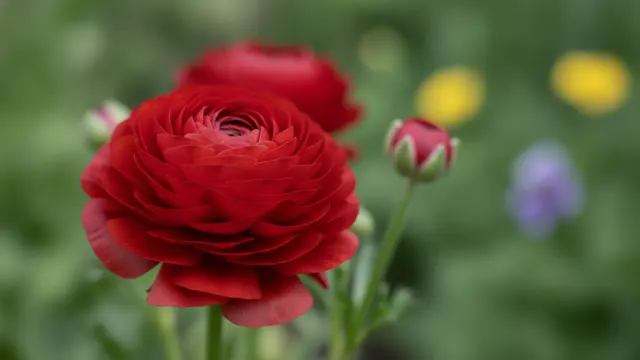
Ranunculus asiaticus
The rose of the bulb world: layered ruffles in April and May at 16 inches, zones 8 to 10, and the darling of every cutting garden. Fall-planted in mild winters, it flowers for weeks in the cool spring.
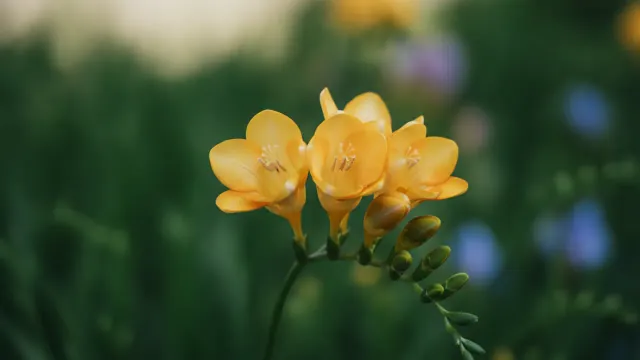
Freesia
The scent specialist: arching sprays in April and May, zones 9 and 10, with one of the great flower fragrances. A dozen corms by the door is the mild-winter answer to the hyacinth.
Two footnotes complete the aisle. Hardy lilies are the two-window exception: fall is ideal and early spring is a close second, so a missed October is not a lost year. And the dahlias, cannas, and gladioli sharing the shelf are summer bulbs on the opposite schedule: planted after the last frost in spring and, in cold zones, lifted again each fall. Fall planting is not their door.
When exactly should spring bulbs go in the ground?
About 6 to 8 weeks before your ground freezes: late August and September in zones 3 and 4, September and October in zones 5 and 6, October and November in zones 7 and 8, and November into December in the near-frost-free zones. Get the daffodils in at the front of your window, they start rooting first, and save the tulips for the tail end; cold ground suits them. Local frost dates swing by weeks, so check yours.
Can I plant spring bulbs in spring instead?
Honestly, no. A spring-flowering bulb needs the fall months to root and the winter cold to trigger bloom, so a tulip planted in April gives you leaves at best. The exceptions are hardy lilies, which take fall or early spring, and the garden-center pots of already-sprouted bulbs sold in spring, which work fine at several times the price. For everything else, the answer is a note in your calendar for August.
Do I need to water or feed new bulbs?
Water once, deeply, at planting; that settles the soil and starts the roots, and fall rain usually handles the rest. Feeding is not what decides success. Drainage is: more bulbs are lost to soggy winter ground than to cold, so skip the spot where puddles linger.
Which bulbs come back every year?
Daffodils, crocuses, squills, glory of the snow, grape hyacinths, and snowdrops all naturalize, returning wider every spring for decades. Alliums persist reliably too. Tulips are the honest exception: most big hybrids fade after a season or two, so replant them like an annual, or choose Darwin hybrids and species types.
Design a garden with these plants
Open BloomsEye Studio with this guide's plants ready to drop onto a plan, then watch the whole bed bloom across the year. New to it? See what the free garden planner does.