
 Illustration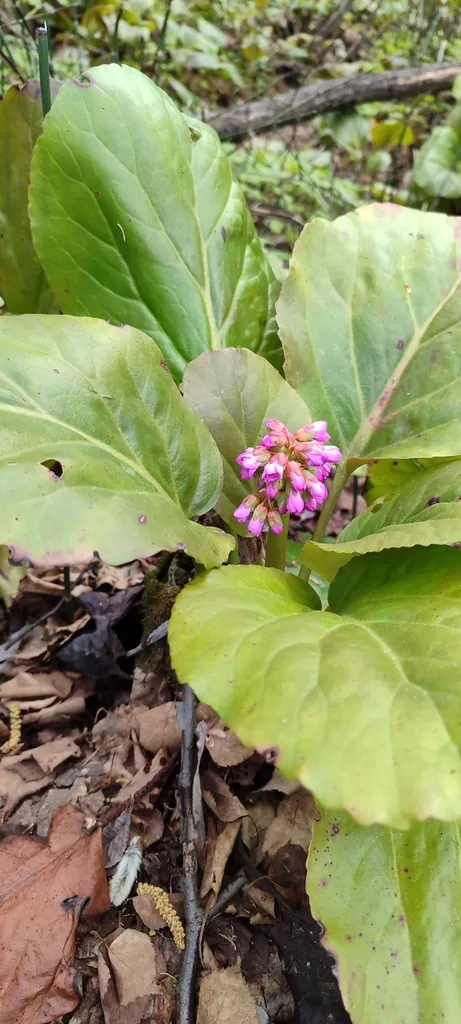
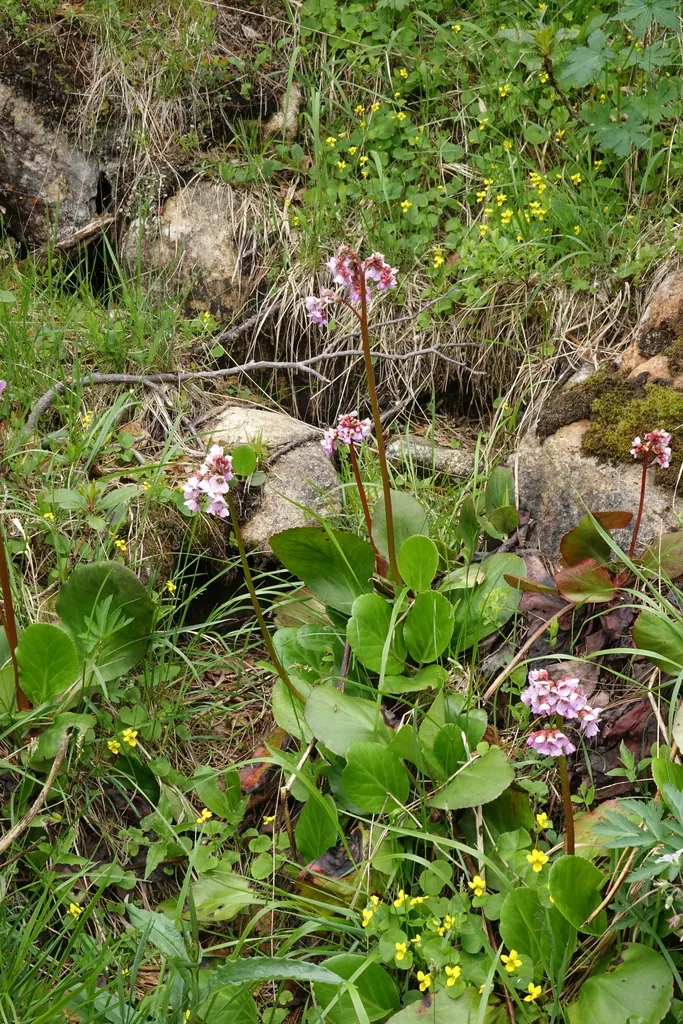

Photo credits and licenses
Real photographs from naturalists and photographers worldwide, each used under its own license. Credit: Photo by Фёдор / iNaturalist (CC BY) and Photo by Oleg Kosterin / iNaturalist (CC BY). How photos are sourced →

Bergenia
Bergenia
Bergenia blooms from April through May.
Months here are Northern Hemisphere months; in the Southern Hemisphere, shift them by six months.
Growing Bergenia
Plant it in part sun. It prefers moderate water. It is hardy in USDA zones 3–8. Expect it to reach about 16 in tall and 20 in wide at maturity, in roughly 2 years (not yet checked).
No toxicity note is on file for Bergenia. That is not a clearance: check its safety for people and pets before planting.
What this means
Written with AI assistance and not yet checked plant by plant against recorded sources, so treat every fact above as a starting point. Its scientific name was checked against botanical registries, an audit keeps its values consistent with the rest of the library, and a July 2026 review re-read the main facts of every plant then in the library against horticultural authorities without recording a source for each, which is why none of that counts as checked here. The source-by-source check is working through the whole library in the open, and a checked plant says so in this row.
When to plant Bergenia
Plant Bergenia in early spring as soon as the soil is workable, or in early fall at least six weeks before your first frost, so roots establish in cool weather. In zone 5, the middle of its hardy zones 3 to 8, spring means April to June and fall means August or September. Once settled, it blooms from April to May.
Month-by-month timing for your zone is on the planting calendar; if you garden near zone 5, the middle of this plant's hardy range, start with zone 5 in April. Derived from the plant's category, zones and bloom months plus typical zone frost dates, not checked separately.
How big does Bergenia get?
 16 intall5 ft 7 inan adult20 inwide
See Bergenia in a garden plan: the planner shows it in 3D beside everything else you add, growing toward this size over the years.
How far apart to plant Bergenia
Derived from the mature spread above by a fixed rule, not checked separately: spacing is the spread, center to center.
Space Bergenia about 20 in apart, center to center, so each plant has room to reach its full width.
Add Bergenia to a garden plan and the planner draws it at its full width, so you see the spacing before you buy.
Good to know about Bergenia
Curated from university extensions, botanic gardens and other primary sources, with the source named on every note. A note reports what its source says; where that differs from a fact above, the fact above is this entry's stored value, and its mark says whether it has been checked.
Worth knowing
The leathery evergreen leaves flush to bronze, burgundy or copper-red as cold sets in and days shorten, which is the plant's main off-season show. per NC State
Is it drought tolerant?
Sources split by climate. Established clumps take short dry spells in cool regions, but in heat it wants steady moisture and shade, and scorches when it dries out. per NC State and Arkansas
Does it get leaf spot?
RHS flags a possible leaf spot; NC State reports no known diseases. Both agree on the fix: plant in well-drained, airy soil and water at the roots, not overhead. per RHS and NC State
Why it is called pigsqueak
The common name comes from the squealing sound a leaf makes when you rub it between your fingers. per NC State
Deer and rabbit resistant
The thick, leathery, faintly bitter leaves are usually passed over by deer and rabbits, though very hungry deer under heavy pressure may still sample it. per Morton Arboretum and NC State
Leaf-chewing pests to watch
Slugs and snails rasp holes in the leaves and vine weevils notch the edges; both hide in the damp, shady litter the plant likes. per RHS and UC IPM
Tough, low-care groundcover
Valued as a low-care evergreen cover for edging, mass plantings, slopes, rock walls and shade, holding ground where turf struggles. It spreads slowly and is not invasive. per NC State and South Dakota State
What pairs well with Bergenia
Good companions share its growing conditions and add something it lacks: an earlier or later bloom, a lower carpet in front, or structure through winter.
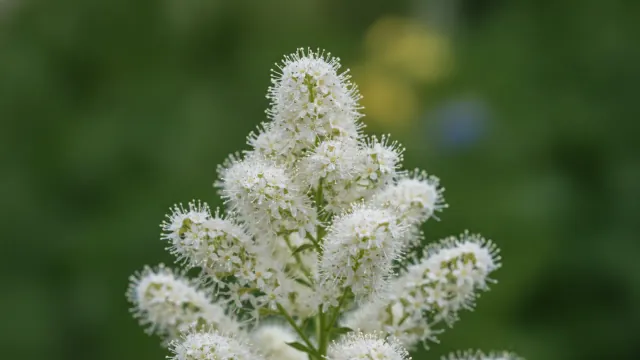
Goatsbeard
Takes part sun to part shade and moderate water; blooms in early summer as this one finishes; taller at 4 ft, for the layer behind it; its white flowers settle the pink.
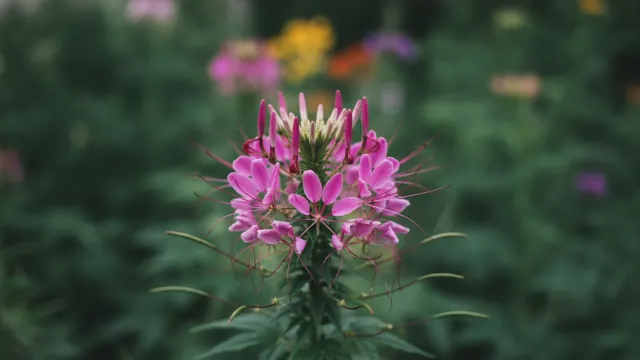
Cleome
Takes full sun to part sun and moderate water; blooms in early summer as this one finishes; taller at 4 ft, for the layer behind it; echoes the pink.
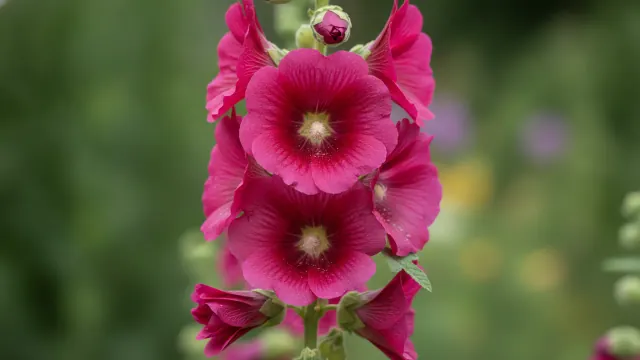
Hollyhock
Takes full sun to part sun and moderate water; blooms in early summer as this one finishes; taller at 6 ft, for the layer behind it; echoes the pink.
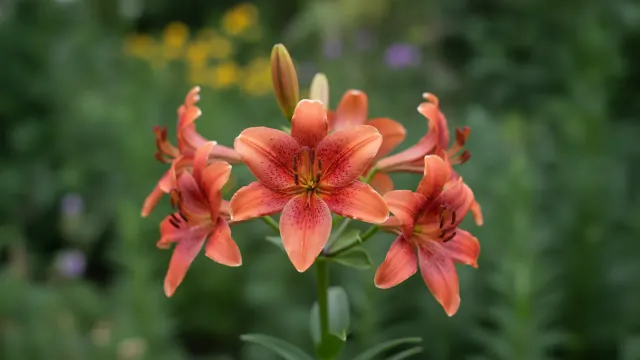
Asiatic Lily
Takes full sun to part sun and moderate water; blooms in early summer as this one finishes; taller at 3.5 ft, for the layer behind it; orange sits close to pink on the wheel.
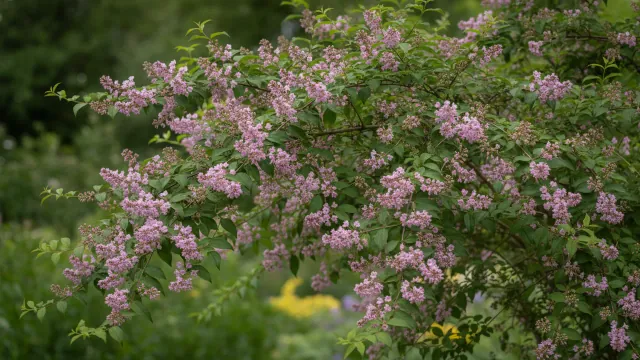
Beautyberry
Shares part sun and moderate water; blooms in early summer as this one finishes; taller at 5 ft, for the layer behind it; purple sits close to pink on the wheel.
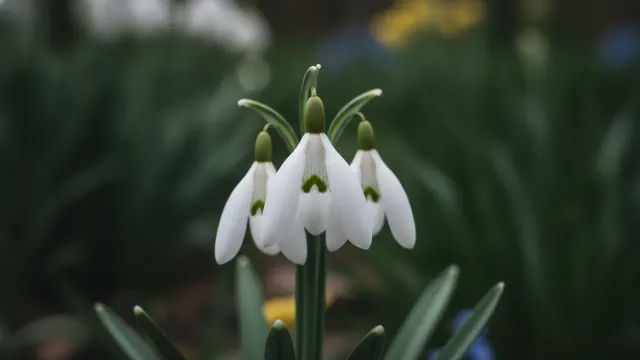
Snowdrop
Takes part sun to part shade and moderate water; blooms in late winter, before this one opens; lower at 5 in, for the front of the border; its white flowers settle the pink.
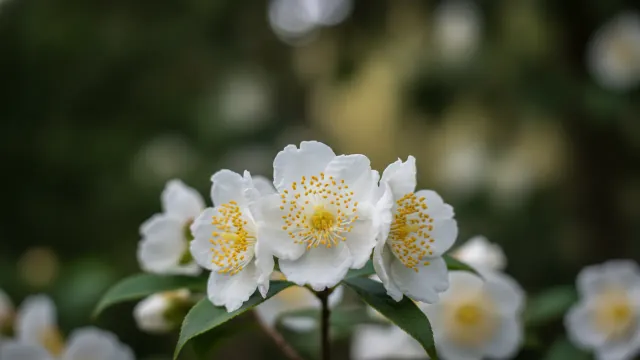
Japanese Stewartia
Shares part sun and moderate water; blooms in early summer as this one finishes; its white flowers settle the pink.
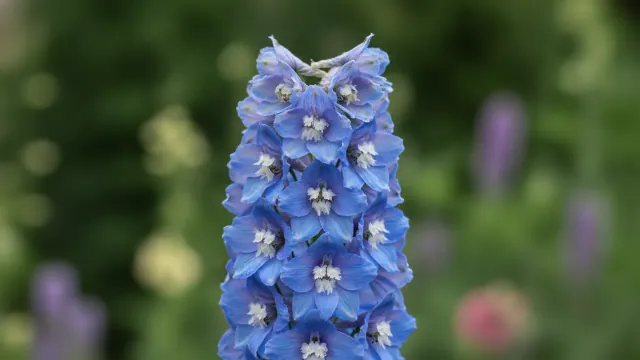
Delphinium
Takes full sun to part sun and moderate water; blooms in early summer as this one finishes; taller at 4.5 ft, for the layer behind it.
Explore similar plants
You might also like
Design a garden with this
Drop this plant onto a 3D plan, see how it fills in, and watch your whole garden bloom across the year.