
Practical
The Earliest Flowers of the Year, Ranked by Their Actual Bloom Calendars
Which flower really opens first? We ranked the whole library by first month in bloom, and the famous answer is not the winner.
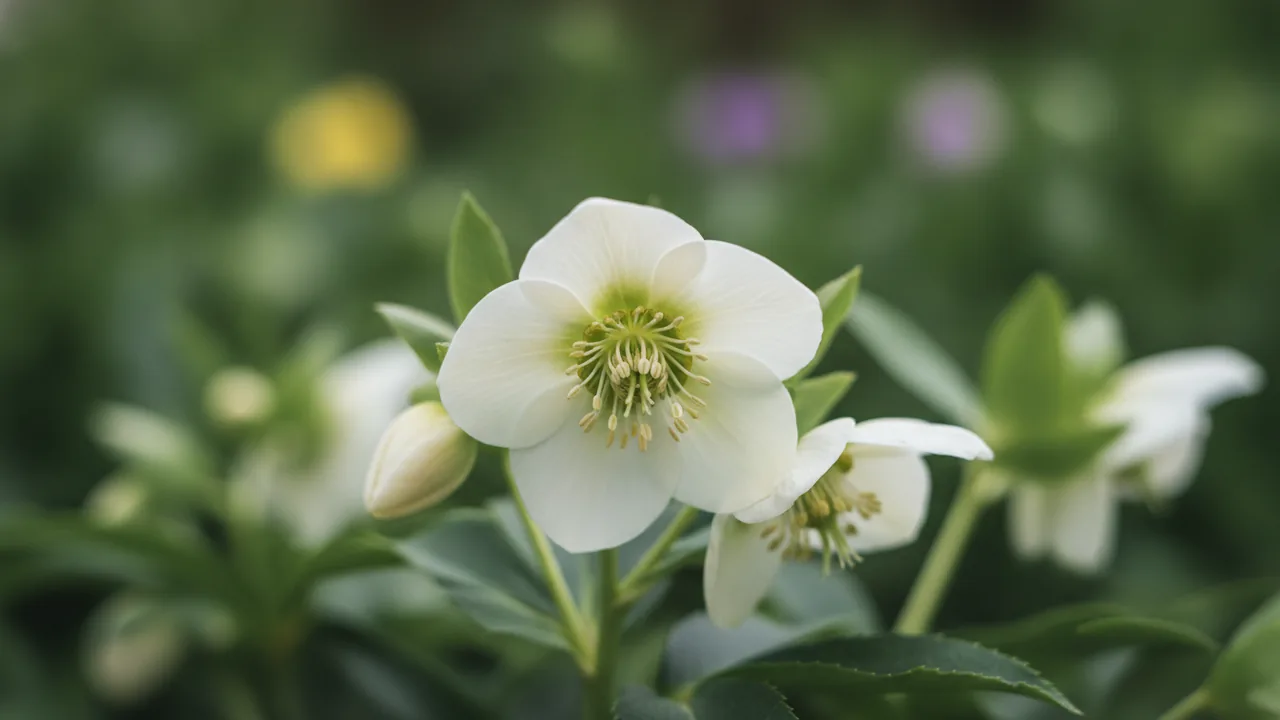
Ask any gardener which flower opens first and you will hear the same answer: the snowdrop. It is a lovely answer, and our bloom calendars politely disagree. We ranked the whole library, every plant, by the first calendar month its record shows in flower, counting from New Year's Day, one entry per family of near-identical cultivars, and the top of the list belongs to January: a hellebore, the winter witch hazels, and the camellias, all open while the snowdrop is still underground. The famous first flower comes fourth.
The seasonal catch, and the reason to read this in fall: six of the ten are bulbs, and every one of those is planted in the fall window our spring-bulb guide covers. The earliest color of next year is bought this October.
What is the earliest flower to bloom in the year?
By the bloom calendars in our library, the Christmas rose, a hellebore whose record opens in January, alongside the winter witch hazels and, in mild zones, the camellias. The first bulbs follow in February: snowdrops, crocuses, and the early squill. Nearly all of the early tier is planted in fall, bulbs especially, so the shopping for the year's first flowers happens in September and October.
The top ten
Helleborus niger
The measured winner: January to March on its record, zones 4 to 8, white cups over evergreen leaves in part shade. The flowers hold their looks for a remarkable stretch because the 'petals' are really long-lasting sepals, and in a gentle winter the plant does flirt with its Christmas name.
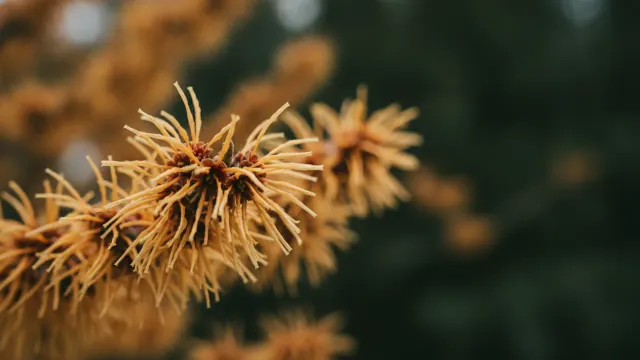
Add to a gardenHamamelis × intermedia 'Jelena'
January to March on bare branches, zones 5 to 8: ribbons of coppery orange with the family's spiced fragrance, on a shrub of nearly 10 feet. The winter witch hazels are the tallest thing flowering in January by a wide margin; 'Arnold Promise' follows in yellow from February.
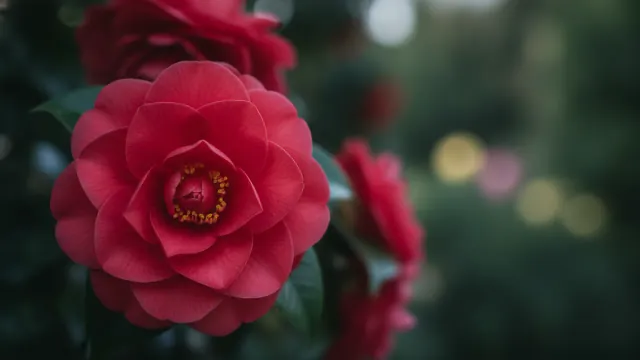
Add to a gardenCamellia japonica
January to March in zones 7 to 9, and the mild-winter garden's unfair advantage: full rose-like flowers in pink, red, or white on a glossy evergreen while the rest of the country has bare sticks. It asks for part shade and acidic soil, and repays them for decades.
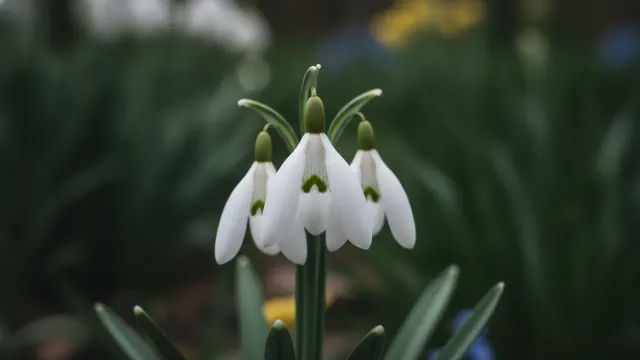
Add to a gardenGalanthus
February and March, zones 3 to 7: no flower is more famous for coming first, and in gardens without the January tier above, which is most gardens, it honestly does, pushing through frost and snow. Fourth on the measured list, first in the folklore, and planted, like most of this list, the previous fall.
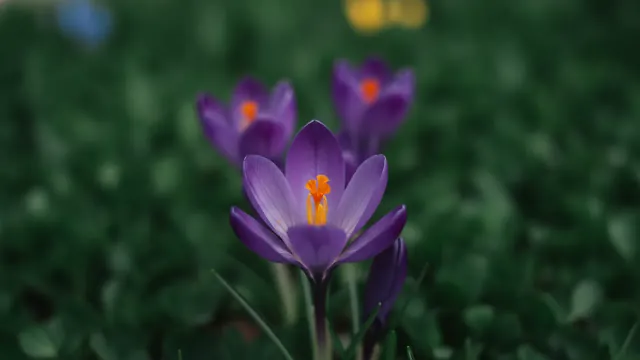
Add to a gardenCrocus
February and March at 4 inches, zones 3 to 8, and the first flower with a daily schedule: the goblets shut tight on gray days and throw themselves open in sun, so the display flickers with the weather. The year's first foraging bees find them within hours of an opening.
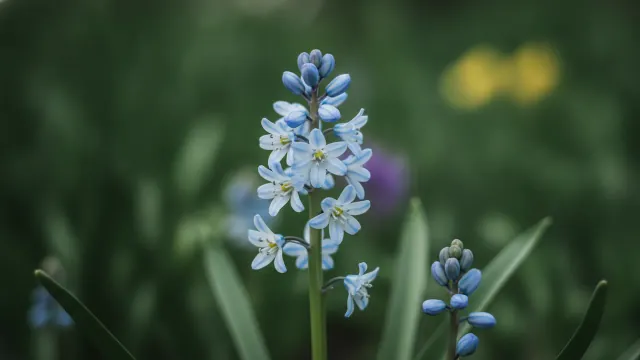
Add to a gardenScilla mischtschenkoana
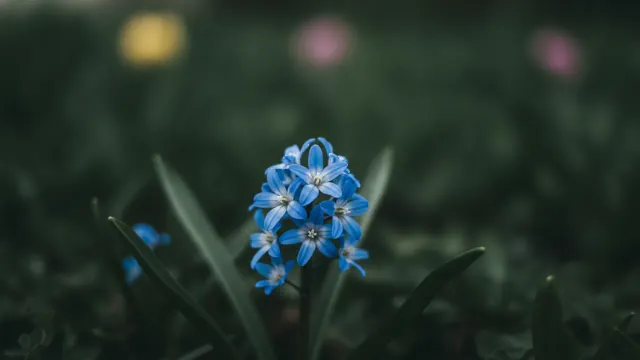
The sleeper on the list: the early squill, February and March at 4 inches, zones 3 to 8, palest ice-blue bells with a darker stripe. Its famous sibling the Siberian squill follows in March; this one beats it by a month and hardly anyone knows its name.
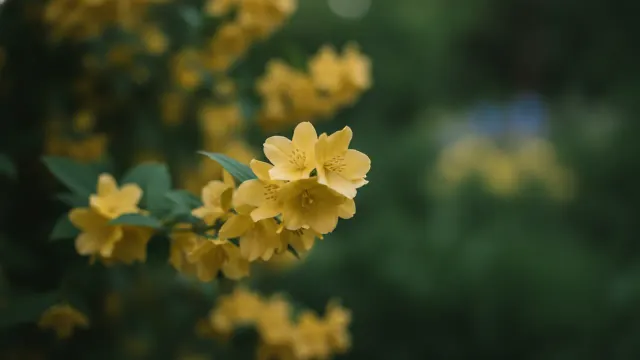
Add to a gardenJasminum nudiflorum
Winter jasmine, February to April in zones 6 to 10: leafless green stems strung with unscented yellow stars, cascading over walls and banks. It is the earliest thing in the library that behaves like a vine, and mild-winter gardens often see it open even sooner.
Add to a gardenScilla
March, zones 3 to 8, and the best-named plant on the list: it flowers as the snow retreats, sometimes through the last of it, which is exactly what glory of the snow promises. Left alone it seeds itself into wider pools of blue each spring.
Add to a gardenNarcissus 'February Gold'
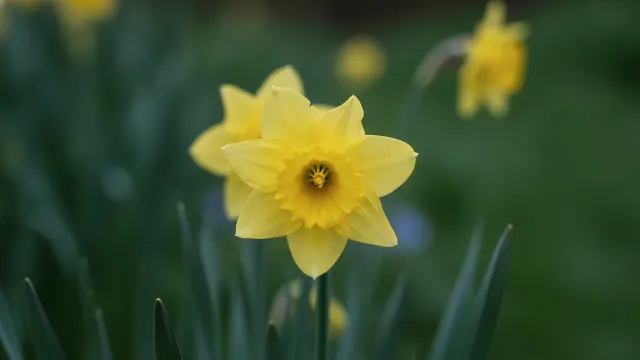
The first daffodil, and the honest joke in its name: bred and named where February bloom is plausible, its record here reads March. Golden trumpets at 12 inches, zones 3 to 8, opening weeks ahead of the classic daffodils it introduces.
Add to a gardenLeucojum vernum
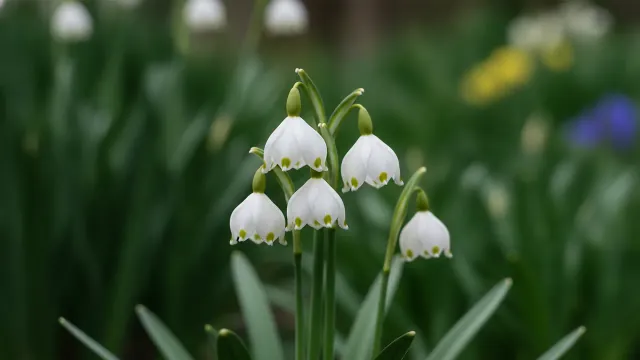
The spring snowflake, March at 8 inches, zones 3 to 8: white bells with a green dot on every petal tip, like a snowdrop that dressed up. It takes damper ground than most bulbs, and deer, rabbits, and voles all refuse it.
Add to a garden
How this list was made
The method, in full: we loaded the published library this site is built from and ranked every plant by the first calendar month its bloom record shows in flower, counting from New Year's Day. One representative per cultivar family, chosen for the earliest record with fame breaking ties; community-submitted records sat out. Within a month, the order is editorial and we say so. The January tier is exactly three families, the hellebores, the winter witch hazels, and the camellias. February adds the first bulbs and winter jasmine, and March opens the floodgates: the crowd that just missed the cut includes forsythia, star magnolia, cornelian cherry, rosemary, lungwort, and primrose, all opening in March, along with the hyacinths, grape hyacinths, and windflowers covered in the bulb guide.
Two honest technicalities. Counting from New Year files the true winter bloomers, the sasanqua camellia 'Yuletide' in November and December and winterberry's berry season, as the end of last year rather than the start of this one; they are the stars of our winter interest guide instead. And the witch hazel clan needs a cultivar-level eye: the January openers are the winter-flowering hybrids and the vernal witch hazel, while the wild American species famously flowers at the other end of the calendar, in late fall, so buy by name if January matters to you.
Is the snowdrop not the first flower, then?
Both answers are true, and it is worth being precise. The snowdrop is usually the first bulb, and in gardens without a hellebore, a winter witch hazel, or a camellia, which is most gardens, it is simply first. But by the records, those three families open in January while snowdrops start in February. Plant a Christmas rose beside your snowdrops and watch which wins; ours is not a close race.
When should I plant for the earliest spring?
Almost entirely in fall. The bulbs on this list, snowdrops, crocuses, squills, glory of the snow, early daffodils, and snowflakes, all go in on the fall schedule in our spring-bulb guide. Hellebores, witch hazels, and camellias are container plants set out in the hardy spring or fall windows on the planting calendar, and camellias especially love a fall planting in their mild zones.
Will these really flower through snow?
The February tier genuinely will: snowdrops and crocuses push through frost and light snow as a matter of routine, and a hellebore in bloom shrugs off a snowfall that buries it. What winter can do is pause things: a brutal cold snap holds buds where they are, and the same plant that opens in January in zone 7 may wait for March in zone 4. The ranking holds; the dates slide with your winter.
What is flowering earliest in mild, nearly frost-free gardens?
Zones 8 to 10 get the January camellias in full stride, winter jasmine from February, rosemary from March, and the fall-planted poppy anemones of the bulb guide's mild-winter cast from March too. The cold-country bulbs are the trade-off, since most are rated only to about zone 8 and want more winter chill than a mild garden offers.
Design a garden with these plants
Open BloomsEye Studio with this guide's plants ready to drop onto a plan, then watch the whole bed bloom across the year. New to it? See what the free garden planner does.