
Practical
English Rose Varieties Compared: Health, Scent, Cold, and Color
Near twins on paper, very different in the garden. One straight answer, picks for four jobs, and the honest word on black spot.
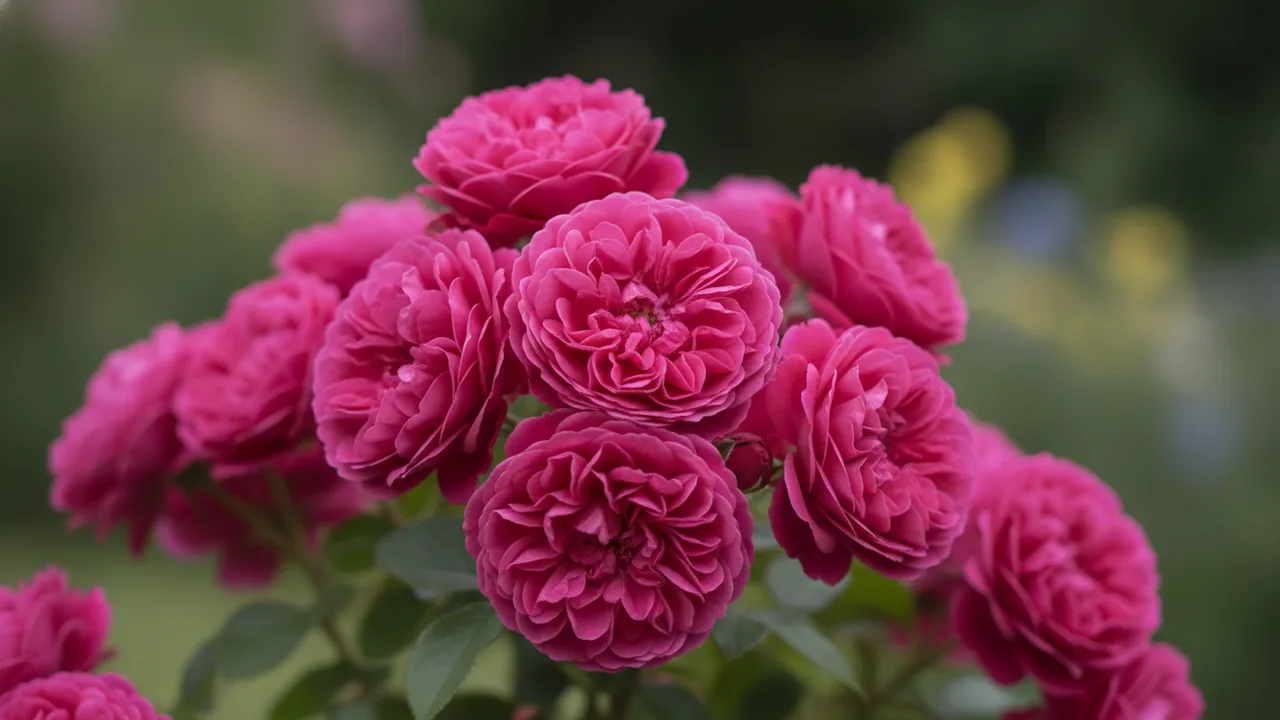
An English rose is David Austin's answer to an old trade-off: most old roses flowered only once a year, while modern roses repeated but often lacked the fragrance, so he set out to breed one shrub with both. Our library holds 36 English roses, each registered under a code name that starts with Aus ('Gertrude Jekyll' is Rosa 'Ausbord'), and on paper they are near twins: every record reads full sun and a May to October bloom window, and most are zones 5 to 10 at 3.5 to 5 feet. So the choice turns on four things: health, scent, the cold edge of the map, and color.
Which David Austin rose should I plant?
For most gardens, 'Olivia Rose Austin'. It is on the breeder's own short list of its most disease-resistant roses, it starts flowering exceptionally early and repeats into fall, and at 4.5 feet it suits a border or a big pot; the trade is a light to medium scent. For the classic old-rose perfume, 'Gertrude Jekyll'; for zone 4 winters, or the same health with a strong scent, 'Eustacia Vye'; for a scented red, 'Munstead Wood'; and for a break from pink, the orange 'Lady of Shalott'.
| Variety | Color | Zones | Height | Scent |
|---|---|---|---|---|
| 'Olivia Rose Austin' | Pink | 5 to 10 | 4.5 ft | Light-medium, fruity |
| 'Emily Brontë' | Pink | 5 to 10 | 3.5 ft | Strong, tea to old rose |
| 'Gertrude Jekyll' | Pink | 5 to 10 | 5 ft | Strong, old rose |
| 'Munstead Wood' | Red | 5 to 10 | 3.5 ft | Strong, old rose with fruit |
| 'Golden Celebration' | Yellow | 5 to 10 | 4.5 ft | Strong, tea |
| 'Eustacia Vye' | Pink | 4 to 11 | 4 ft | Strong, fruity |
| 'The Alnwick Rose' | Pink | 4 to 11 | 4 ft | Medium-strong, old rose |
| 'Susan Williams-Ellis' | White | 4 to 9 | 3.5 ft | Medium-strong, old rose |
| 'Lady of Shalott' | Orange | 5 to 10 | 4.5 ft | Medium, tea |
| 'Desdemona' | White | 5 to 10 | 3.5 ft | Strong, old rose |
Start with health
Black spot is among the most common rose diseases, so start with the breeder's own short list of its most disease-resistant roses. Both of these are on it, as are 'Eustacia Vye' and 'Susan Williams-Ellis' below.
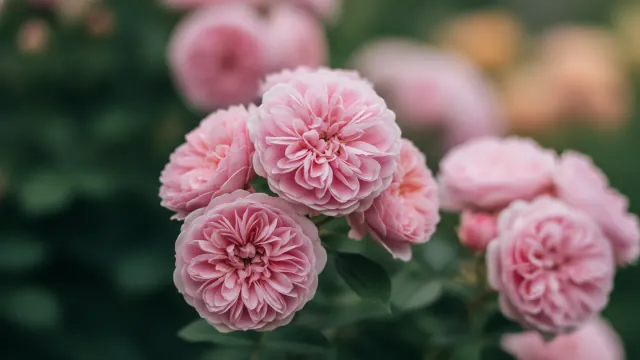
Rosa 'Ausmixture'
The one to plant if you plant one: even mid-pink cupped rosettes over dark green leaves, on a well-balanced shrub the breeder calls very healthy. It is among the first to flower, then repeats in flushes from May to October, at 4.5 feet.
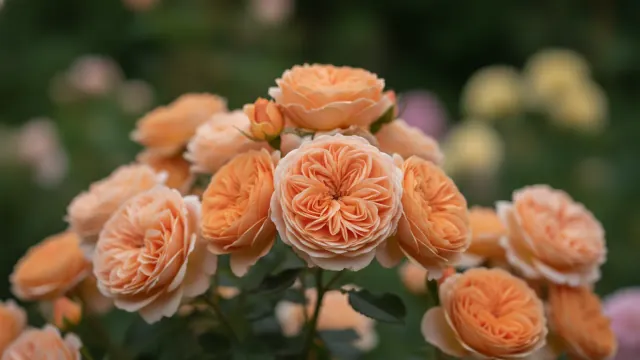
Rosa 'Ausearnshaw'
The compact pick from the health list: the breeder praises its strong, healthy, upright growth and names it for pots. Neat, flat soft-pink blooms warm to apricot at the center on a 3.5-foot shrub, and the strong scent turns from tea to old rose.
For fragrance
Nearly every English rose here is tagged fragrant, but the strength varies, hence the breeder's rating in the table. These three are on its most-fragrant list, and each smells different; our fragrant plants guide covers the rest of the scented garden.
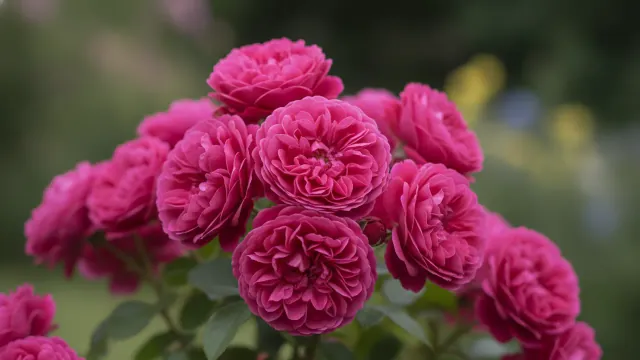
Rosa 'Ausbord'
The benchmark: the breeder says its perfume is often called the quintessential old-rose fragrance, and the RHS, which gives it an Award of Garden Merit, calls it one of the best roses for fragrance. Bright pink rosettes from May to October on an upright 5 feet.
Rosa 'Ausbernard'
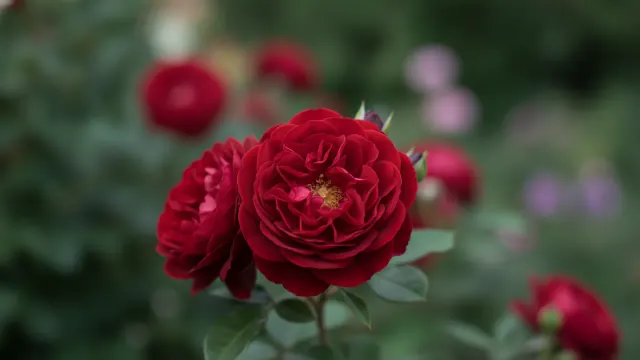
The red for scent: deep, velvety crimson cups with a strong old-rose perfume and notes of blackberry, blueberry, and damson. A broad, bushy shrub about 3.5 feet tall, with red-bronze young leaves, named for Gertrude Jekyll's own home.
Rosa 'Ausgold'
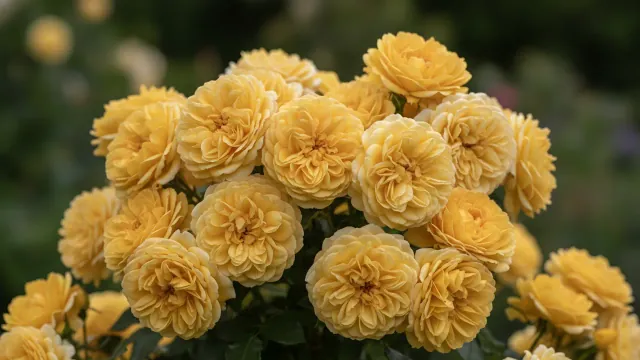
The yellow for scent, and one of the largest-flowered English roses: giant cups of rich yellow with a strong tea fragrance that develops notes of Sauternes wine and strawberry. A rounded 4.5 feet on long, arching branches.
For cold winters
Most of the library's English roses are rated from zone 5; these three go to zone 4. At the cold end of any rose's range, extension advice is to mound about a foot of soil or compost around the base after several hard freezes, then pull it back in spring.
Rosa 'Ausegdon'
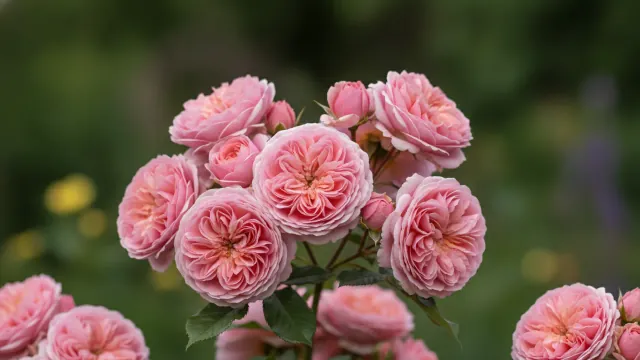
The cold-garden first choice, hardy in zones 4 to 11: soft apricot-pink rosettes with a strong fruity scent on a vigorous, upright 4 feet. The breeder calls it very healthy and names it first among its shrub roses that flourish in part shade, though, like every rose here, it flowers hardest in full sun.
Rosa 'Ausgrab'
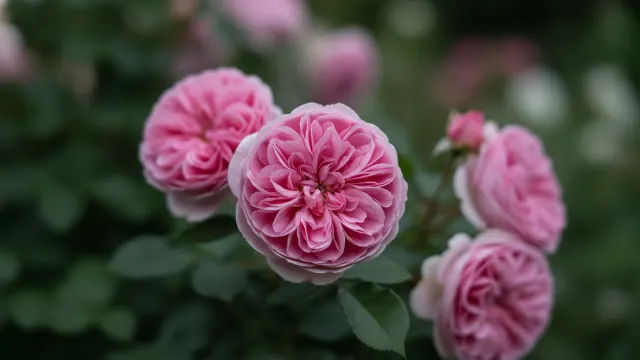
The old-rose look for a cold garden: soft pink cups packed with petals, a rich old-rose scent with a hint of raspberry, and glossy leaves on a rounded 4 feet. Hardy in zones 4 to 11.
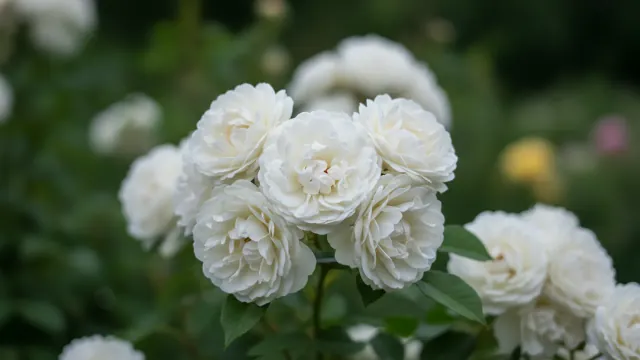
Rosa 'Ausquirk'
The white for cold gardens: the breeder calls it extremely winter hardy and, as far as it knows, completely free from disease. A medium-strong old-rose scent on upright, twiggy growth about 3.5 feet tall, hardy in zones 4 to 9.
Beyond pink
Pink is the family's most common color, and our cottage garden and pink border guides both feature 'Gertrude Jekyll'. Red, yellow, and a cold-hardy white are covered above, so these two add orange and a more strongly scented white.
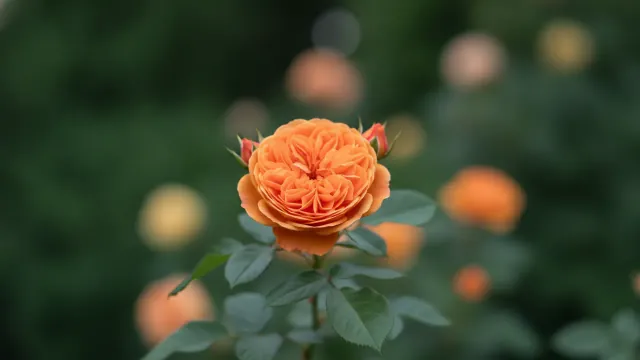
Rosa 'Ausnyson'
The pick for orange, with an RHS Award of Garden Merit: orange-red buds open to orange and salmon chalices with a warm tea scent and hints of spiced apple and clove, on a bushy 4.5 feet. Our orange flowers guide prescribes it for skeptics.
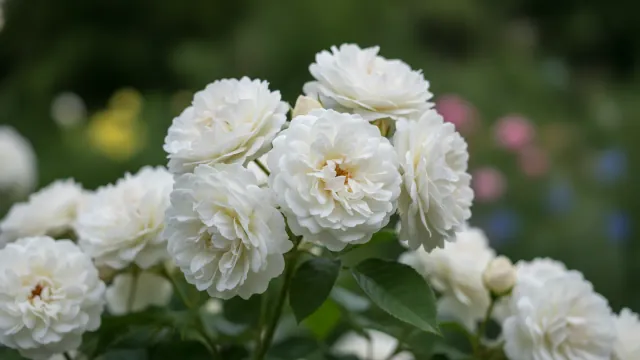
Rosa 'Auskindling'
The white for scent: peachy-pink buds open to blush-white chalices, with a strong old-rose perfume and hints of almond blossom, cucumber, and lemon zest. A neat, rounded 3.5 feet that the breeder lists for pots, hedges, and cutting.
The one thing every English rose needs
Dry leaves. Black spot spores travel in splashing water and need about seven hours of wet leaves to infect, so water the soil, not the plant, and in the morning; give it sun and air; and rake up fallen leaves in winter, because the fungus lives on in them. Left alone, it strips the plant and the flowers dwindle year by year.
Why is my English rose not blooming?
Check the light first: extension services ask for six to eight hours of direct sun, free of competing roots. A young rose is still establishing its roots, the breeder says, so give it time. Then suspect too much nitrogen, which buys leaves instead of flowers, or black spot stripping the leaves. Pruning is to blame only if it was hard: these are shrub roses, which flower from mature stems, so cutting much deeper than a third to a half costs flowers.
When should I prune an English rose?
In late winter or early spring, as the buds begin to swell. Take out dead, damaged, and weak stems, then cut the rest back by a third to a half. In summer, snip each spent bloom just below its head, and once a whole cluster has finished, cut it back to the first strong leaf with five leaflets to encourage the next flush; our deadheading guide shows the cut.
Do English roses need full sun?
Full sun is where they flower hardest and stay healthiest, and morning sun matters most, because it dries the leaves. The breeder says many roses manage on four or five hours of sun a day, and names 'Eustacia Vye' and 'Emily Brontë' for part shade, but none of them is a shade plant.
Can I grow an English rose in a pot?
Yes, in a big one: the breeder asks for a pot at least 18 inches deep and wide, in a free-draining mix, and names 'Olivia Rose Austin' and 'Emily Brontë' as container picks. In cold zones, winter the pot in an unheated garage or shed, since roots above ground take the full cold.
Sources for these facts
Every plant in this guide's table is source-checked, one plant at a time against published sources; each plant's own page names its sources and the facts each one carried. Every source behind their growing facts, with how many of these plants it covers:
- David Austin Roses10 plants
- Grace Rose Farm8 plants
- Heirloom Roses8 plants
- NC State Extension7 plants
- menagerieflower.com6 plants
- Plant Addicts3 plants
- rosariumlottum.com3 plants
- Clemson Home and Garden Information Center2 plants
- HelpMeFind Roses2 plants
- RHS2 plants
- US plant patent (Google Patents)2 plants
- angelgardens.com1 plant
- belle-epoque.nl1 plant
- greenvalleygardensupply.com1 plant
- knightsroses.com.au1 plant
- Missouri Botanical Garden1 plant
- pridescorner.com1 plant
- wilsonbrosgardens.com1 plant
What each level of checking covers: how plants are checked.
Design a garden with these plants
Open BloomsEye Studio with this guide's plants ready to drop onto a plan, then watch the whole bed bloom across the year. New to it? See what the free garden planner does.