
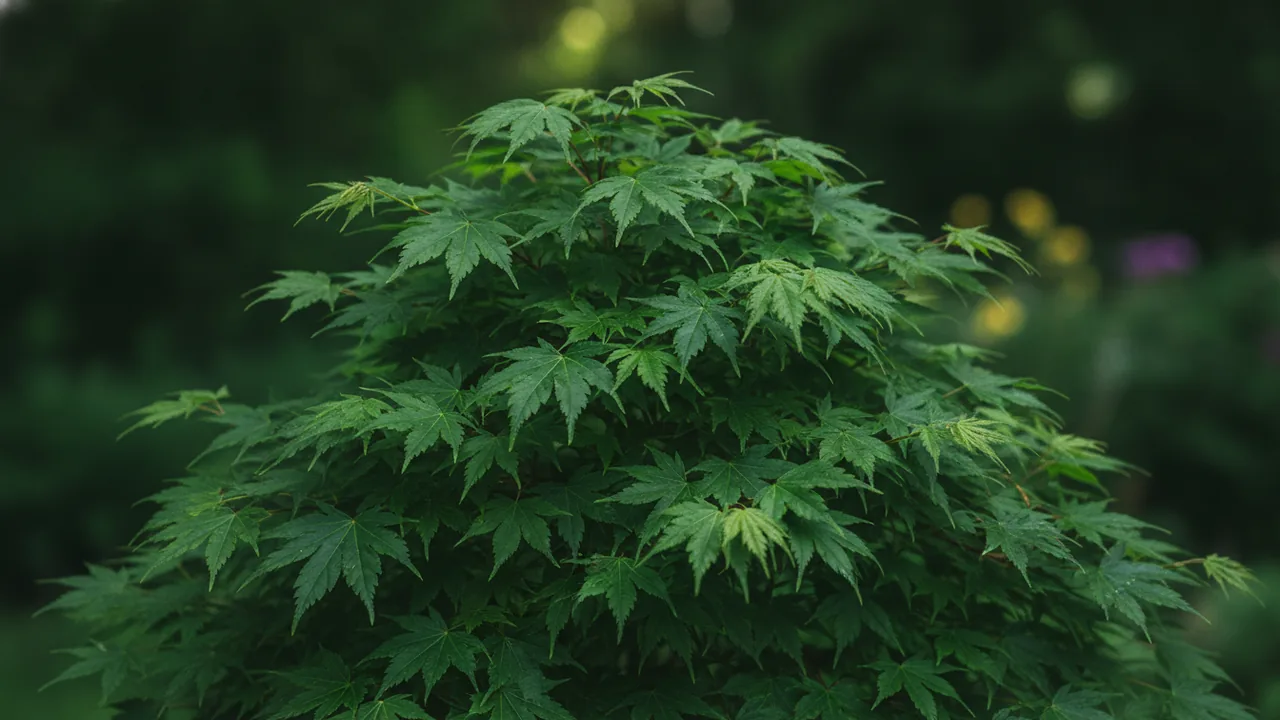
 Illustration

Red Maple
Acer rubrum
Red Maple is grown for its foliage rather than flowers, giving the garden structure and color all season long.
Months here are Northern Hemisphere months; in the Southern Hemisphere, shift them by six months.
Growing Red Maple
Plant it in full sun. It prefers moderate water. It is hardy in USDA zones 3–9. Expect it to reach about 49 ft tall and 39 ft wide at maturity, in roughly 20 years (not yet checked).
What this means
Written with AI assistance and not yet checked plant by plant against recorded sources, so treat every fact above as a starting point. Its scientific name was checked against botanical registries, an audit keeps its values consistent with the rest of the library, and a July 2026 review re-read the main facts of every plant then in the library against horticultural authorities without recording a source for each, which is why none of that counts as checked here. The source-by-source check is working through the whole library in the open, and a checked plant says so in this row.
When to plant Red Maple
Plant Red Maple in early spring as soon as the soil is workable, or in early fall at least six weeks before your first frost, so roots establish in cool weather. In zone 6, the middle of its hardy zones 3 to 9, spring means March to May and fall means August or September.
Month-by-month timing for your zone is on the planting calendar; if you garden near zone 6, the middle of this plant's hardy range, start with zone 6 in March. Derived from the plant's category, zones and bloom months plus typical zone frost dates, not checked separately.
How big does Red Maple get?
 49 fttall5 ft 7 inan adult39 ftwide
See Red Maple in a garden plan: the planner shows it in 3D beside everything else you add, growing toward this size over the years.
How far apart to plant Red Maple
Derived from the mature spread above by a fixed rule, not checked separately: spacing is the spread, center to center.
Give Red Maple about 39 ft of clear ground in every direction, measured from its center. It is one plant with room around it, not a row, and a raised bed is too small for it.
Add Red Maple to a garden plan and the planner draws it at its full width, so you see the spacing before you buy.
Good to know about Red Maple
Curated from university extensions, botanic gardens and other primary sources, with the source named on every note. A note reports what its source says; where that differs from a fact above, the fact above is this entry's stored value, and its mark says whether it has been checked.
Safety
Wilted or dried leaves are highly toxic to horses and frequently fatal: one case series reported roughly 59% mortality. Listed non-toxic to dogs and cats. per ASPCA and Journal of Veterinary Internal Medicine
Worth knowing
On high-pH soil the leaves yellow while the veins stay green. The soil is not short of manganese and iron; the high pH blocks the roots from taking them up. per Wisconsin
Zone range varies by source
Sources list 2a to 9b, 3 to 8, or 4 to 9. The spread comes from cultivar and where the tree was grown. Match the cultivar to your zone. per NC State
Shallow roots heave pavement
Dense surface roots compete with turf and can lift sidewalks and driveways. Avoid tight tree pits and 4 to 6 ft mulch rings, which encourage girdling roots. per NC State
Thin bark, breakable branches
Thin, easily wounded bark and a tendency to break mean it drops limbs. Site it clear of the house, and prune it young for strong structure. per NC State
Brilliant red fall color
Fall foliage turns brilliant red, often mixed with orange and yellow; the intensity varies from tree to tree and by cultivar. per NC State
Few serious diseases
Anthracnose, tar spot and leaf spots turn up, but the one disease that can kill it is verticillium wilt, which attacks the vascular system. per Clemson
What pairs well with Red Maple
Good companions share its growing conditions and add something it lacks: an earlier or later bloom, a lower carpet in front, or structure through winter.
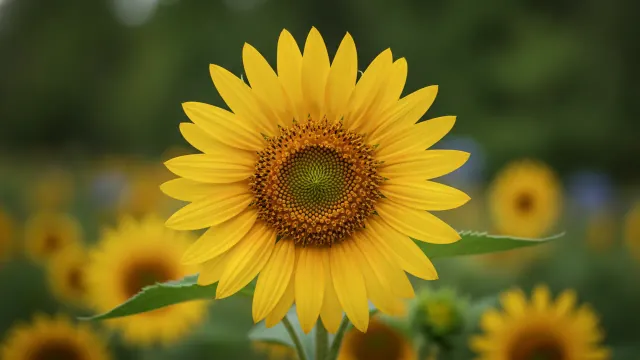
Perennial Sunflower
Shares full sun and moderate water; its seed heads stand through winter, for structure and the birds; both are North American natives.
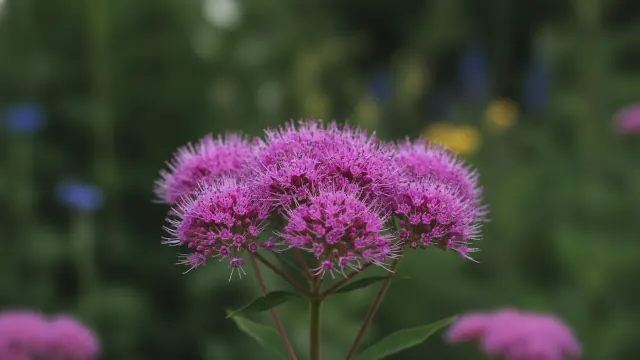
Joe Pye Weed
Shares full sun and moderate to high water; its seed heads stand through winter, for structure and the birds; both are North American natives.
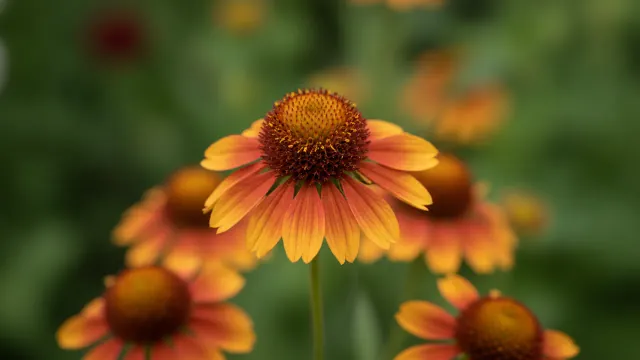
Sneezeweed
Shares full sun and moderate water; its seed heads stand through winter, for structure and the birds; both are North American natives.
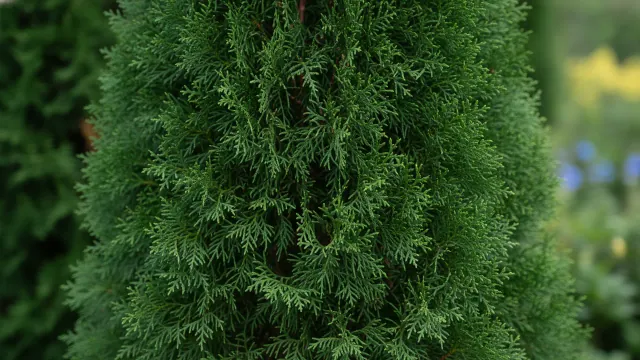
Arborvitae
Shares full sun and moderate water; evergreen, so the bed keeps its shape through winter; both are North American natives.
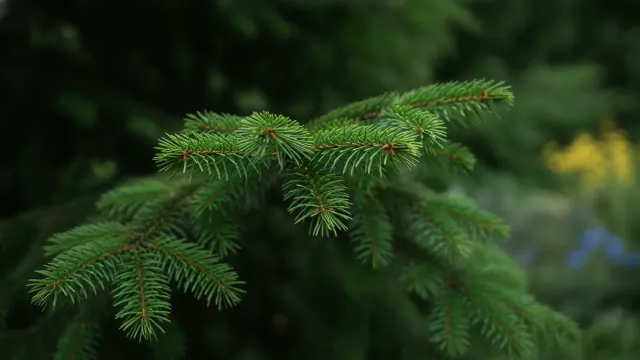
Douglas Fir
Shares full sun and moderate water; evergreen, so the bed keeps its shape through winter; both are North American natives.
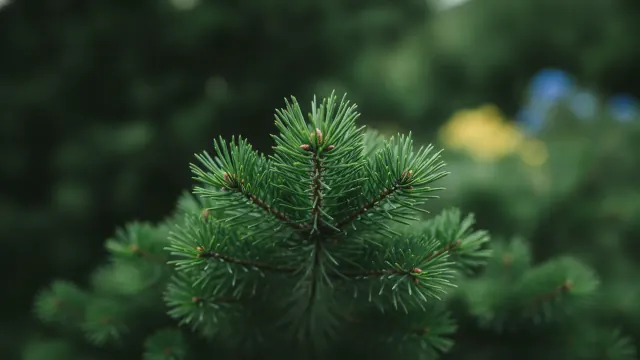
Eastern White Pine
Shares full sun and moderate water; evergreen, so the bed keeps its shape through winter; both are North American natives.
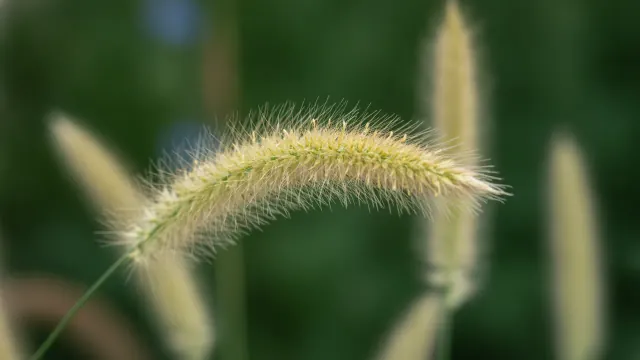
Feather Reed Grass
Shares full sun and moderate water; its seed heads stand through winter, for structure and the birds.
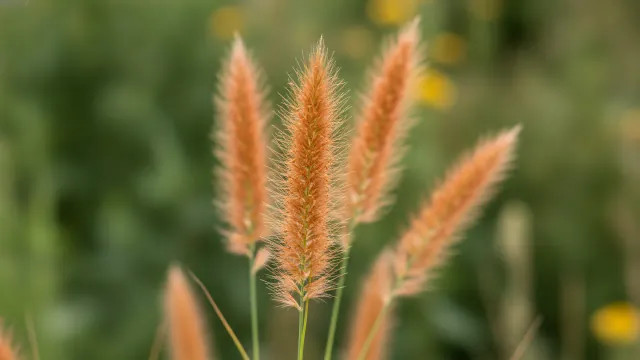
Little Bluestem
Shares full sun and low to moderate water; its seed heads stand through winter, for structure and the birds; both are North American natives.
Explore similar plants
You might also like
Design a garden with this
Drop this plant onto a 3D plan, see how it fills in, and watch your whole garden bloom across the year.