
Practical
Azalea Varieties Compared: The Rebloomers, the Hardy Ones, and the Classics
Evergreen classics, deciduous azaleas for cold gardens, and rebloomers that flower into October. One shortlist, one straight answer, and the fine print on reblooming.
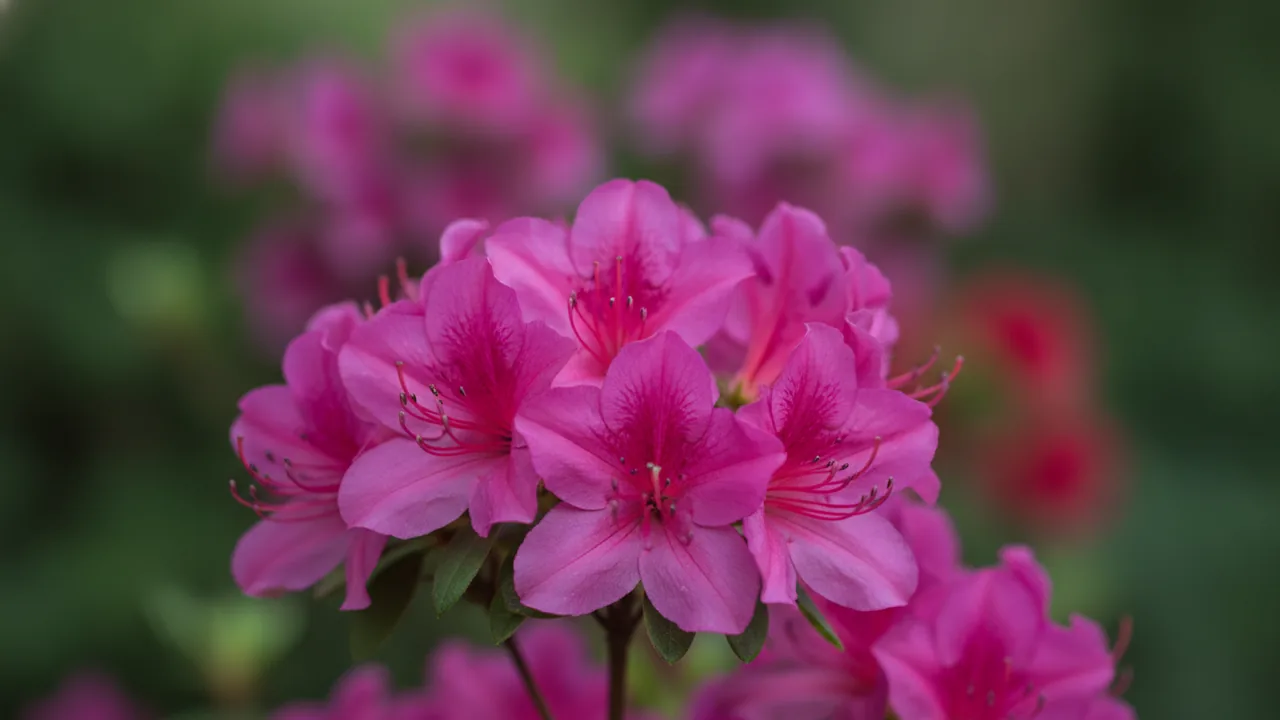
Azaleas used to be a spring event: one great flush, then nothing until next year. The reblooming Encores changed that and are now among the most popular azaleas sold, but they are not for every garden. Our library holds 36 azaleas of three kinds: evergreen hybrids that flower once in spring, deciduous azaleas that take colder winters, and the rebloomers. Your zone decides most of it, and as one extension service warns, a poorly adapted variety often gives poor results year after year.
Which azalea should I plant?
In zones 6 to 9, a reblooming Encore: it flowers with the other azaleas in spring, then again from midsummer into fall, and stays evergreen. 'Autumn Royalty' is the proven purple and 'Autumn Bonfire' the dwarf red; give either four to six hours of sun and prune only right after the spring flush. Colder than zone 6, choose another kind: the deciduous 'Golden Lights' is hardy from zone 4, the evergreen 'Karen' from zone 5. Where winters are mild, plant the big Southern Indicas, 'Formosa' first.
| Variety | Type | Color | Blooms | Zones | Height |
|---|---|---|---|---|---|
| 'Autumn Royalty' | Evergreen, reblooms | Purple | April to October | 6 to 9 | 4.5 ft |
| 'Autumn Bonfire' | Evergreen, reblooms | Red | April to October | 6 to 9 | 2.5 ft |
| 'Autumn Carnation' | Evergreen, reblooms | Pink | April to October | 6 to 9 | 4.5 ft |
| 'Golden Lights' | Deciduous | Yellow | May to June | 4 to 7 | 5 ft |
| 'White Lights' | Deciduous | White | May to June | 4 to 7 | 4 ft |
| 'Karen' | Evergreen | Purple | April to May | 5 to 8 | 3.5 ft |
| 'Gibraltar' | Deciduous | Orange | April to May | 5 to 8 | 5 ft |
| 'Gumpo Pink' | Evergreen | Pink | May to June | 6 to 9 | 1.5 ft |
| 'Hino-Crimson' | Evergreen | Red | April to May | 6 to 8 | 2.5 ft |
| 'Formosa' | Evergreen | Purple | April to May | 7 to 9 | 6 ft |
| 'George Tabor' | Evergreen | Pink | March to April | 8 to 10 | 6 ft |
The rebloomers: how they work, which to grow
The Encores were bred from a summer-flowering azalea whose buds form on new growth. So an Encore opens in spring on last year's buds, grows new shoots, then flowers on those from midsummer until frost, which is why every name in the series begins with Autumn. The fine print: the repeat depends on climate and sun, and botanical-garden records often call it lighter than spring's. Our long-blooming shrubs guide measures how long the season runs.
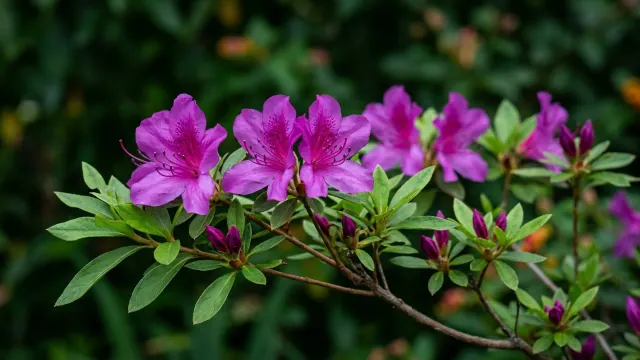
Rhododendron 'Conlec'
The one to start with: big, velvety purple flowers, April to October, on an upright 4.5-foot shrub for zones 6 to 9. The breeder reports it hardy throughout zone 6, so it also suits the cold edge.
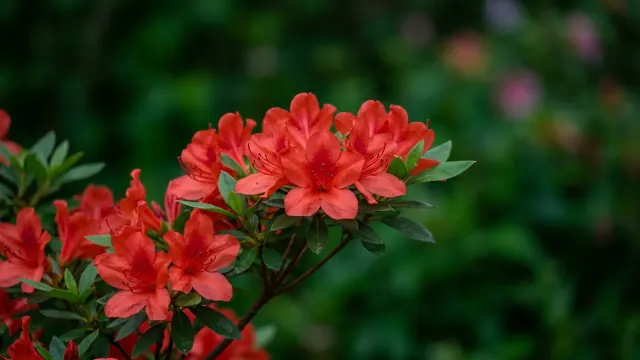
Rhododendron 'Robleza'
The dwarf red: clear red flowers, single and semi-double, April to October on a compact 2.5-foot shrub for zones 6 to 9. The breeder pitches it for containers and the front of the house.
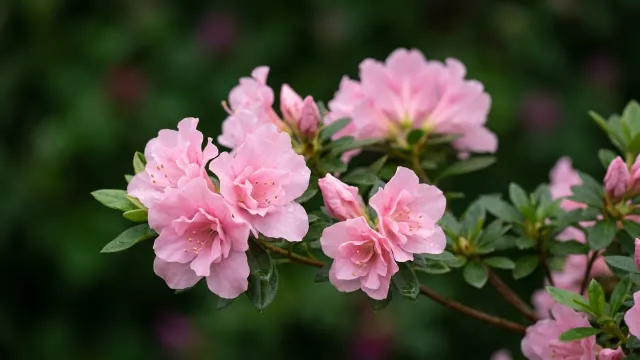
Autumn Carnation Encore Azalea
Rhododendron 'Roblec'
The pink: ruffled, semi-double flowers flecked with darker pink, April to October, at 4.5 feet, zones 6 to 9. Upright and dense enough to make a flowering hedge.
Zones 4 and 5: a different kind of azalea
No Encore here is rated below zone 6. At that edge, plant in spring and favor the Encores the breeder reports hardy throughout zone 6: 'Autumn Royalty', 'Autumn Twist', 'Autumn Amethyst', 'Autumn Lilac', 'Autumn Carnation' and 'Autumn Sangria'. 'Autumn Bonfire' came after that report, and its patent rates it hardy to zone 6 too. Below that, evergreen azaleas are generally less winter-hardy than deciduous ones, so zone 4 belongs to the deciduous Northern Lights, bred for buds that survive 30 below zero, and zone 5 adds the toughest evergreens and the Exbury hybrids.
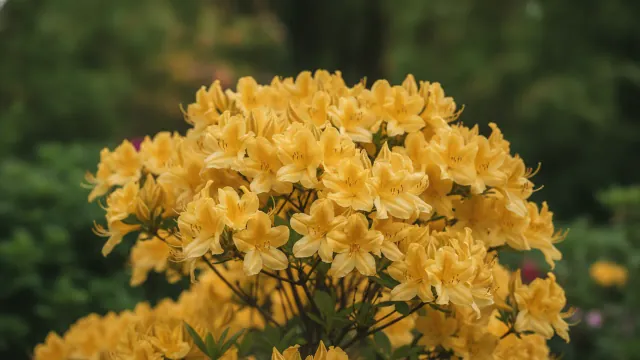
Rhododendron 'Golden Lights'
As cold-hardy as any azalea in the library: fragrant golden-yellow flowers, May to June, zones 4 to 7, on a 5-foot deciduous shrub bred for better mildew resistance. Where evergreens fail, start here.
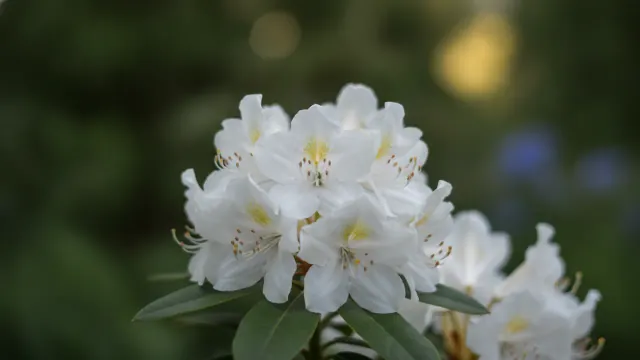
Rhododendron 'White Lights'
The white sibling: pale pink buds open to very fragrant white flowers with a yellow blotch, May to June, zones 4 to 7, at 4 feet. It blooms before it leafs out, like all the Northern Lights.
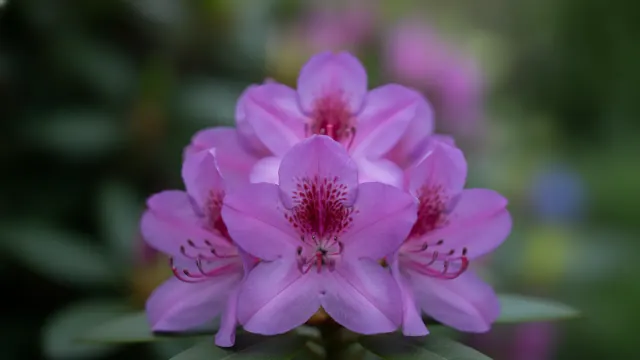
Rhododendron 'Karen'
The evergreen for zone 5: lavender-purple flowers, April to May, on a dense 3.5-foot shrub for zones 5 to 8, noted for excellent winter hardiness. Glossy leaves turn copper to wine-red in the cold.
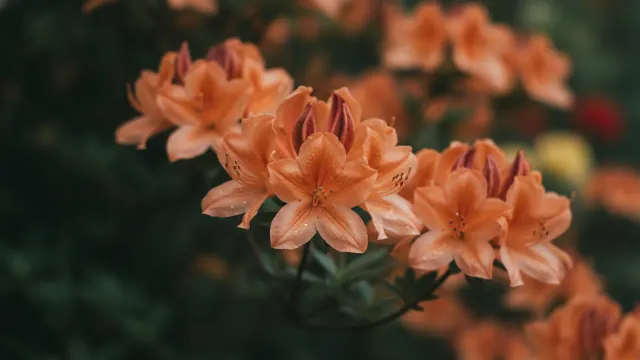
Rhododendron 'Gibraltar'
The true orange: frilly, vivid flowers from crimson-orange buds, April to May, zones 5 to 8, on a 5-foot deciduous shrub. An Exbury hybrid from 1947 that still holds the RHS Award of Garden Merit.
Small spaces: the low ones
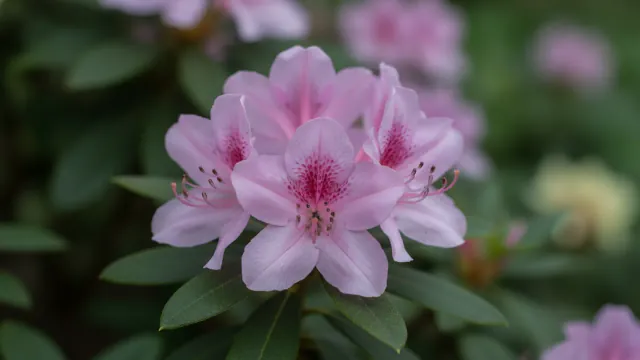
Rhododendron 'Gumpo Pink'
The smallest azalea here at 1.5 feet: a spreading evergreen Satsuki for zones 6 to 9 that saves its pink flowers for May to June, after most azaleas finish. Give it afternoon shade, since late flowers scorch in hot sun.

Rhododendron 'Hino-Crimson'
The classic small Kurume: bright crimson flowers, April to May, so numerous they can hide the tiny glossy leaves, which bronze in winter. A compact 2.5 feet for zones 6 to 8, with the RHS Award of Garden Merit.
Mild winters: the Southern giants
Where winters are mild, plant the big Southern Indica hybrids: the two below are the tallest azaleas in the library. They outgrow a foundation bed, and their flower buds take frost injury more often than those of the Kurume hybrids.

Rhododendron 'Formosa'
Brilliant magenta-purple flowers, April to May, on a 6-foot evergreen for zones 7 to 9. Zone 7 is its cold edge, where extension services hedge on its hardiness; give it shelter there.

Rhododendron 'George Tabor'
The earliest azalea here, March to April: countless soft pink flowers on a 6-foot evergreen for zones 8 to 10. Its extension fact sheet calls it most impressive in mass plantings, so plant three, not one.
Why is my azalea not blooming?
Three usual suspects: a cut after June, which removes the buds azaleas set over summer; cold, since a hard winter, a sudden fall freeze or a late frost can kill buds outright; and deep shade. An Encore that skips its fall show adds three more: too little sun, a nitrogen-heavy feed, or simply being new, since first-year plants may skip a cycle.
When should I prune azaleas?
Right after flowering, and only if needed. Spring-blooming azaleas set next year's buds over summer, so finish any shaping by the end of June. Encores keep the same rule on a tighter clock, and need no deadheading: prune just after the spring flush, since the new shoots that follow carry the summer and fall flowers.
Do azaleas want sun or shade?
Filtered shade for the classics: morning sun and afternoon shade is ideal, since heavy shade cuts flowering and hot, dry, full sun invites lace bugs. Encores want the sunny end of that, four to six hours of direct sun, and the Northern Lights take full sun only in a sheltered spot. Our shade guide shows how to count your hours.
Why are my azalea's leaves turning yellow?
Yellow leaves with green veins usually mean the soil pH is too high: the iron is there but locked away. Azaleas want a pH of about 4.5 to 6.0, so test the soil, and if it reads high, lower it with sulfur, not aluminum sulfate. A few inner leaves yellowing in fall is normal.
Sources for these facts
Every plant in this guide's table is source-checked, one plant at a time against published sources; each plant's own page names its sources and the facts each one carried. Every source behind their growing facts, with how many of these plants it covers:
- NC State Extension9 plants
- Missouri Botanical Garden8 plants
- kiefernursery.com5 plants
- rhododendron.org5 plants
- University of Georgia Extension5 plants
- Pleasant Run Nursery4 plants
- aces.edu3 plants
- encoreazalea.com3 plants
- Plant Addicts3 plants
- pridescorner.com3 plants
- RHS3 plants
- The Tree Center3 plants
- University of Florida IFAS3 plants
- US plant patent (Google Patents)3 plants
- arb.umn.edu2 plants
- campbellsnursery.com2 plants
- Chicago Botanic Garden2 plants
- gardencentermarketing.com2 plants
- Internet Archive (archived page)2 plants
- Iowa State University Extension2 plants
- mnhardy.umn.edu2 plants
- scholar.lib.vt.edu2 plants
- The Morton Arboretum2 plants
- wilsonbrosgardens.com2 plants
- almanacplanting.com1 plant
- azaleas.org1 plant
- boethingtreeland.com1 plant
- colesvillenursery.com1 plant
- edis.ifas.ufl.edu1 plant
- evansnursery.net1 plant
- fieldstonegardens.com1 plant
- horsfordnursery.com1 plant
- Mississippi State University Extension1 plant
- newlifenursery1.net1 plant
- Oregon State University1 plant
- plants.natorp.com1 plant
- plants.skh.com1 plant
- plants.westwoodgardens.com1 plant
- plantsoftexas.com1 plant
- riggins-nursery.com1 plant
- shop.glendoick.com1 plant
- taylorsnursery.com1 plant
- University of Arkansas Extension1 plant
- wasconursery.com1 plant
What each level of checking covers: how plants are checked.
Design a garden with these plants
Open BloomsEye Studio with this guide's plants ready to drop onto a plan, then watch the whole bed bloom across the year. New to it? See what the free garden planner does.