
Practical
The Longest-Blooming Perennials, Ranked by Their Actual Bloom Calendars
Most longest-blooming lists are folklore. This one is measured: the library's perennials, ranked by their actual months in flower.
Every plant page on BloomsEye carries a bloom calendar: the months that plant is in flower in a typical year, from our curated library. That turns a question most gardening lists answer from folklore into one we can simply measure. Which perennials flower longest? We took every perennial in the library, measured each one's longest unbroken run of bloom months, and ranked the results. The list below is that ranking, curated only to keep it useful: one plant per family of near-identical cultivars, and nothing whose data we would not stand behind.
Two honest notes before the countdown. Reblooming shrub roses would gatecrash this list if we let them in (a Knock Out rose flowers May to October), but they are shrubs, so they sit this one out. And a bloom calendar describes a typical year: your zone, your season, and your deadheading all stretch or shrink these windows.
What is the longest-blooming perennial?
By the bloom calendars in our library, catmint 'Early Bird': an unbroken April to September run, six months in flower. The famous runner-up is the hardy geranium 'Rozanne', which starts later but carries on from June into October. Nearly everything else at the top is a salvia, a catmint, or a fringed bleeding heart, with the four-month summer marathoners close behind.
The top ten
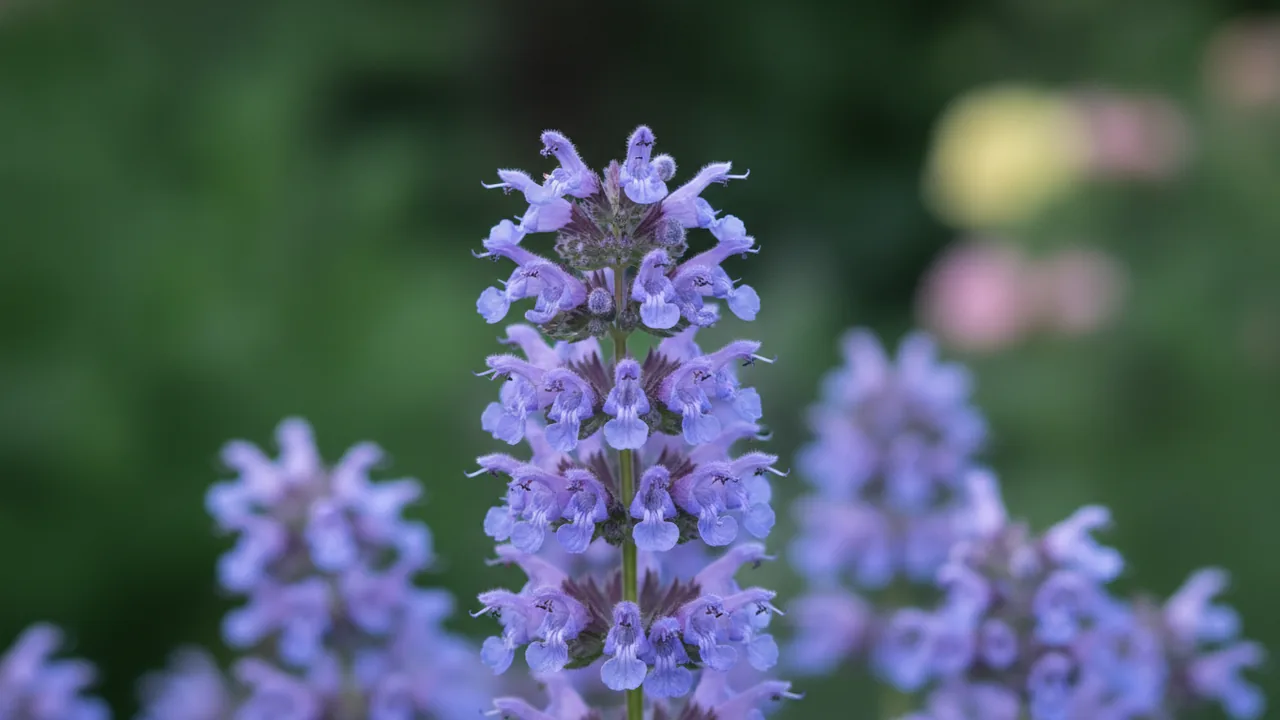
Nepeta 'Early Bird'
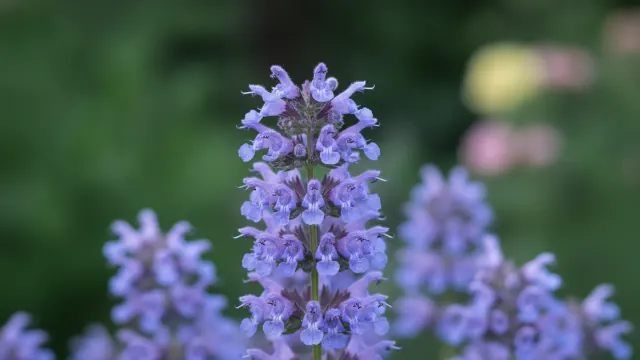
The longest run in the library: April to September, six unbroken months. An early-flowering catmint that opens with the tulips and is still feeding bees when the asters take over. Shear it mid-season and the mound stays fresh to the end.
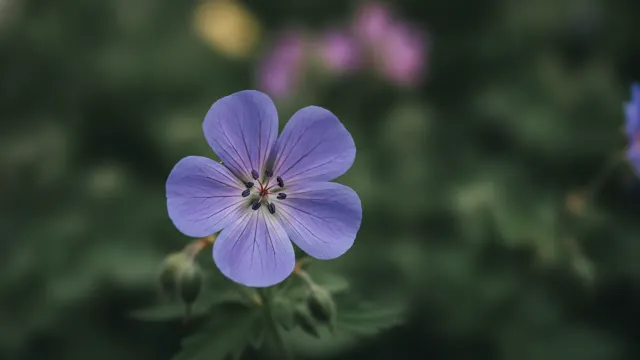
Add to a gardenGeranium 'Rozanne'
June to October, and the only plant here still opening new flowers in mid-fall. Violet-blue saucers that weave through neighbors, with no deadheading needed; it simply does not stop until frost.
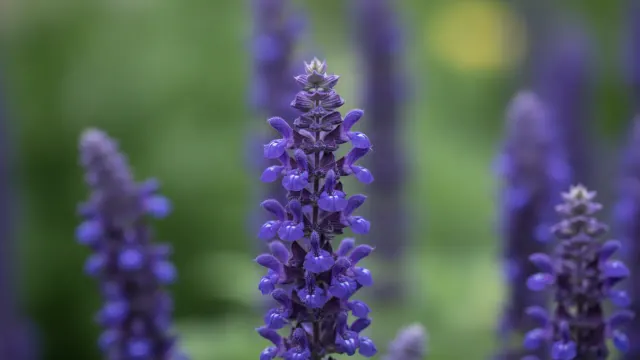
Add to a gardenSalvia nemorosa 'Mainacht'
May to September on deep violet spikes. It stands here for a whole pack of salvias with the same five-month window, and the shear is how they hold it: cut the plant back after the first flush and it rebuilds.
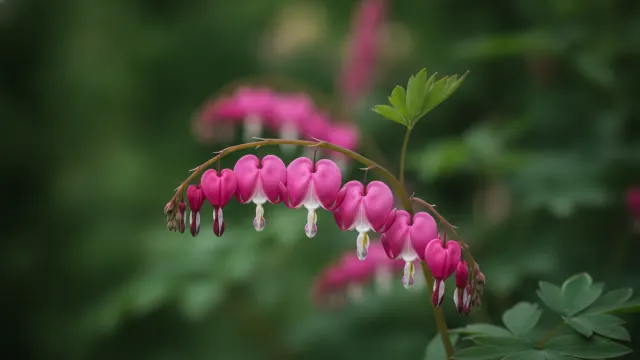
Add to a gardenDicentra 'King of Hearts'
The surprise entry: a fringed bleeding heart with rose-pink lockets from May to September over finely cut foliage, in part shade, where five-month flowers are nearly unheard of.
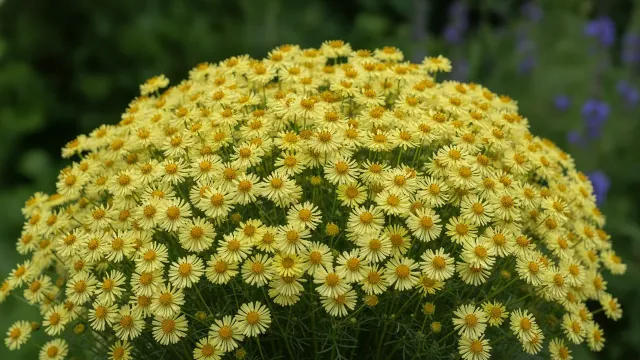
Add to a gardenCoreopsis verticillata 'Moonbeam'
June to September, a cloud of soft lemon daisies that never seems to pause. The most famous name in the four-month tier, drought-proof and impossible to overdo.
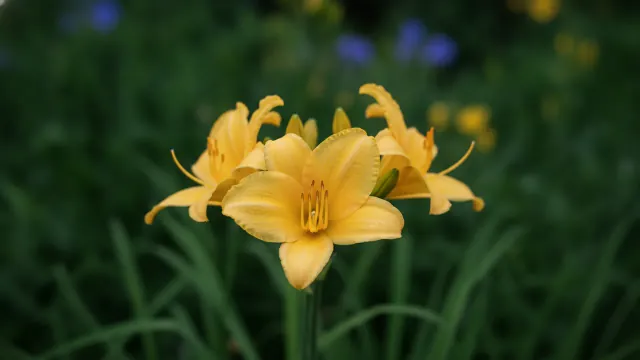
Add to a gardenHemerocallis 'Stella de Oro'
June to September by relay: each flower lasts one day, but the most famous reblooming daylily keeps sending more for four months, in gold, at knee height.
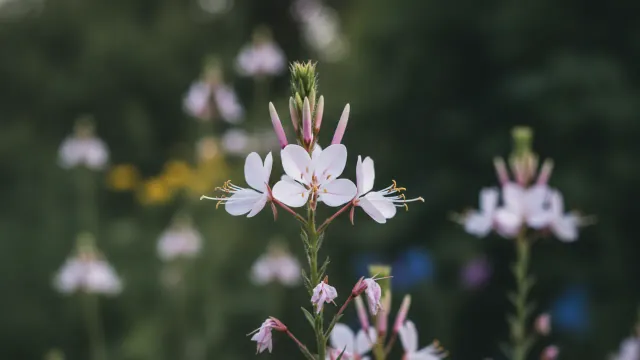
Add to a gardenOenothera lindheimeri
June to September of white-and-pink flowers dancing on wiry stems, unbothered by heat or drought. Lean soil is the secret; rich ground makes it flop.
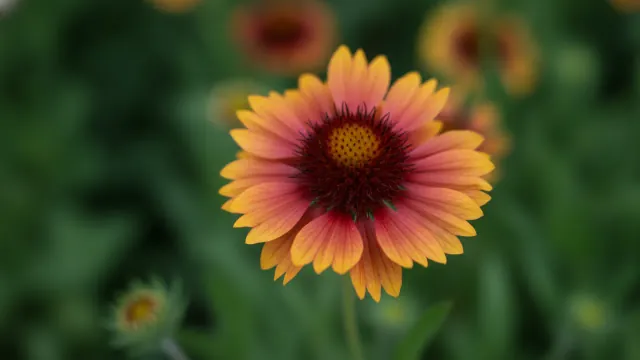
Add to a gardenGaillardia
June to September in red and orange, flowering so hard it can wear itself out within a few years. Let it self-seed or divide it, and enjoy the marathon while it runs.
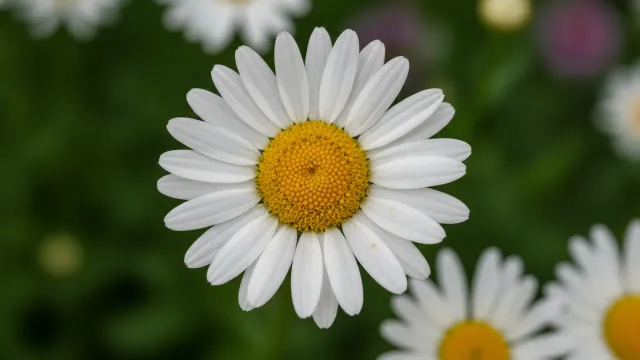
Add to a gardenLeucanthemum × superbum 'Becky'
June to September of crisp white daisies on stems that never need staking. 'Becky' is the variety that stretched a short-season classic across the whole summer.
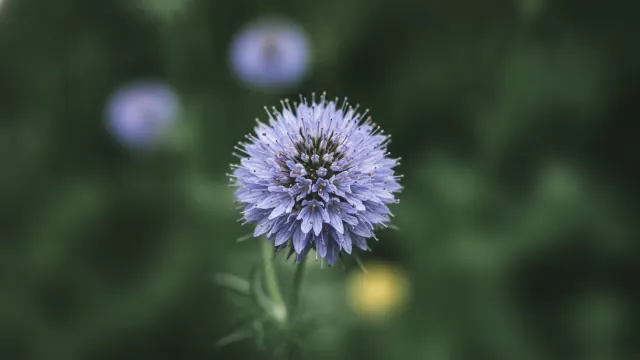
Add to a gardenScabiosa
June to September of pincushion blooms in blue, pink, white, or red above a neat mound, with bees on every one. Give it sharp winter drainage; soggy ground, not cold, is what ends it.
Add to a garden
How this list was made
The method, in full: we loaded the same published plant library this site is built from, kept the true herbaceous perennials, and measured each plant's longest unbroken run of calendar months in bloom. Where a family of cultivars ties (a dozen salvias and catmints share nearly the same window), we kept one representative, the best-known, so the list stays ten distinct plants rather than ten variations on two. Community-submitted records sat out; every entry here is our own curated record, and how far each plant's record has been source-checked is published on our verification tracker.
Your garden will vary, honestly
A bloom calendar is a typical year in a plant's comfortable range. A zone 3 June arrives weeks after a zone 8 one, a drought pauses almost everything, and deadheading extends nearly all of these. Read the months as the shape of the season, not a contract.
How do I make these bloom even longer?
Deadhead. Most of this list responds to it, and catmint and salvia will rebuild an entire second flush if you shear them back after the first one. Our deadheading guide covers what to cut and where.
Do they bloom this long in every zone?
Honestly, no. The calendars describe a typical year in each plant's comfortable range; a short-season zone compresses the same window and a mild one stretches it. The ranking holds up well, because every plant shifts together, but the exact months move with your climate.
Why is the purple coneflower not on the list?
It is a closer call than it looks. Its own calendar reads June to September, and four months ties the six plants sitting at the bottom of this list rather than beating them. The list holds ten and is strict about the measurement, so a tie leaves the coneflower just outside it, with everything else that makes the plant worth growing intact.
Are annuals longer-blooming than perennials?
Often, yes. Annuals like zinnias race from early summer to frost precisely because they get one year to set seed. This list is perennials only: plants that do their months of bloom and then come back to do it again next year.
Design a garden with these plants
Open BloomsEye Studio with this guide's plants ready to drop onto a plan, then watch the whole bed bloom across the year. New to it? See what the free garden planner does.