
 Illustration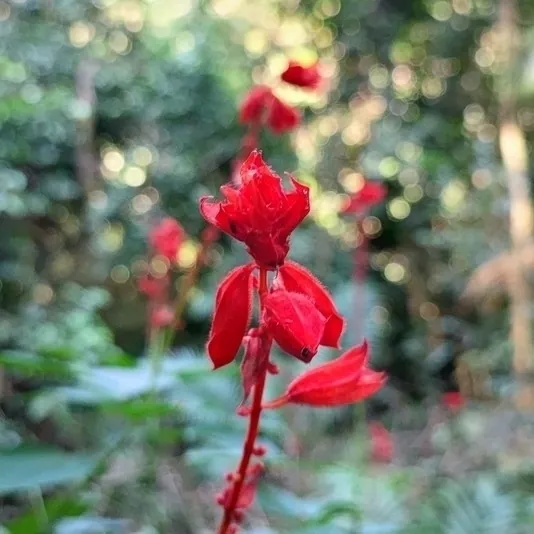

Photo credits and licenses
Real photographs from naturalists and photographers worldwide, each used under its own license. Credit: Photo by Thomaz Ricardo Favreto Sinani / iNaturalist (CC BY). How photos are sourced →

Salvia (Annual)
Salvia splendens
Also comes in purple and white.
Salvia (Annual) blooms from June through October.
Months here are Northern Hemisphere months; in the Southern Hemisphere, shift them by six months.
Growing Salvia (Annual)
Plant it in full sun. It prefers moderate water. Expect it to reach about 20 in tall and 16 in wide at maturity, in roughly 1 year (not yet checked).
No toxicity note is on file for Salvia (Annual). That is not a clearance: check its safety for people and pets before planting.
What this means
Written with AI assistance and not yet checked plant by plant against recorded sources, so treat every fact above as a starting point. Its scientific name was checked against botanical registries, an audit keeps its values consistent with the rest of the library, and a July 2026 review re-read the main facts of every plant then in the library against horticultural authorities without recording a source for each, which is why none of that counts as checked here. The source-by-source check is working through the whole library in the open, and a checked plant says so in this row.
When to plant Salvia (Annual)
Wait until all danger of frost has passed, then plant out Salvia (Annual) into warm soil; in most zones that means late spring. Planted then, it flowers from June to October.
Month-by-month timing for your zone is on the planting calendar. Derived from the plant's category, zones and bloom months plus typical zone frost dates, not checked separately.
How big does Salvia (Annual) get?
 20 intall5 ft 7 inan adult16 inwide
See Salvia (Annual) in a garden plan: the planner shows it in 3D beside everything else you add, growing toward this size over the years.
How far apart to plant Salvia (Annual)
Derived from the mature spread above by a fixed rule, not checked separately: spacing is the spread, center to center.
Space Salvia (Annual) about 16 in apart, center to center, so each plant has room to reach its full width.
Add Salvia (Annual) to a garden plan and the planner draws it at its full width, so you see the spacing before you buy.
Good to know about Salvia (Annual)
Curated from university extensions, botanic gardens and other primary sources, with the source named on every note. A note reports what its source says; where that differs from a fact above, the fact above is this entry's stored value, and its mark says whether it has been checked.
Worth knowing
Many compact bedding cultivars produce no nectar, so a plant with perfect hummingbird-shaped flowers can feed almost nothing. For pollinators, pick nectar-rich species types. per NC State
Is it drought tolerant?
NC State calls it drought intolerant and wants steady moisture; Clemson and Minnesota find established plants fairly drought tolerant in well-drained soil. Keep evenly moist, then avoid soggy soil. per NC State and Clemson
Hummingbird and bee magnet
The showy tubular flowers pull in hummingbirds, butterflies, and bees; the red tubular corolla is the classic shape a hummingbird's long beak and tongue can reach. per Clemson and Wisconsin
Deer and rabbit resistant
The pungent, aromatic mint-family foliage deters browsing: NC State tags it deer resistant, and Clemson adds rabbit resistant too. per NC State and Clemson
Blooms summer to frost
A long, continuous display from late spring or summer through the first autumn frost is the plant's main selling point; deadhead spent spikes to keep it going. per NC State and Clemson
Overwatering, not drought, kills it
The fungal rots that afflict it (damping-off, root rot, powdery mildew, Botrytis) all follow excess moisture and heavy nitrogen. Well-drained soil and light feeding are the fix. per NC State and Clemson
What pairs well with Salvia (Annual)
Good companions share its growing conditions and add something it lacks: an earlier or later bloom, a lower carpet in front, or structure through winter.
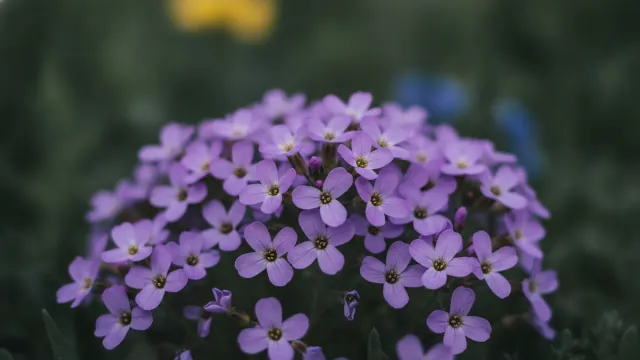
Rock Cress
Shares full sun and low to moderate water; blooms in mid spring, before this one opens; both offer pollinator forage, in different months; evergreen, so the bed keeps its shape through winter.
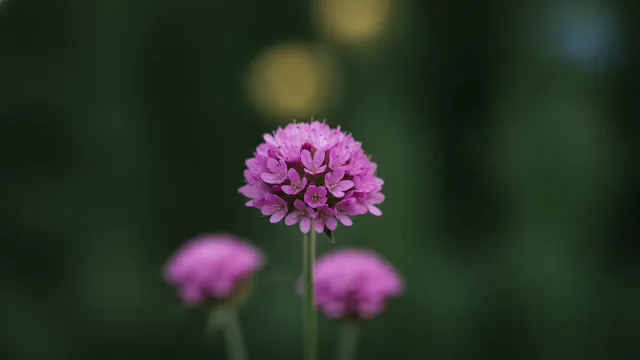
Sea Thrift
Shares full sun and low to moderate water; opens in mid spring and overlaps into this one's season; evergreen, so the bed keeps its shape through winter; both offer pollinator forage.
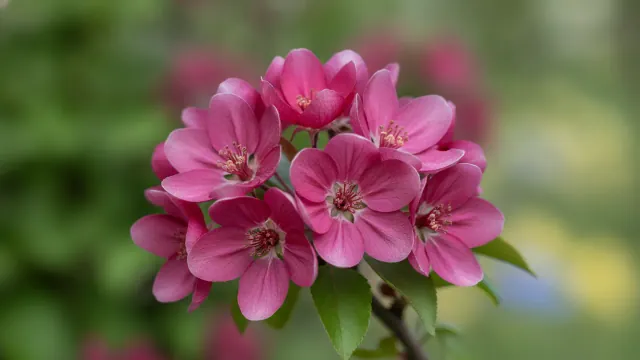
Flowering Crabapple
Shares full sun and moderate water; blooms in mid spring, before this one opens; both are strong pollinator plants, and they feed in different months; pink sits close to red on the wheel.
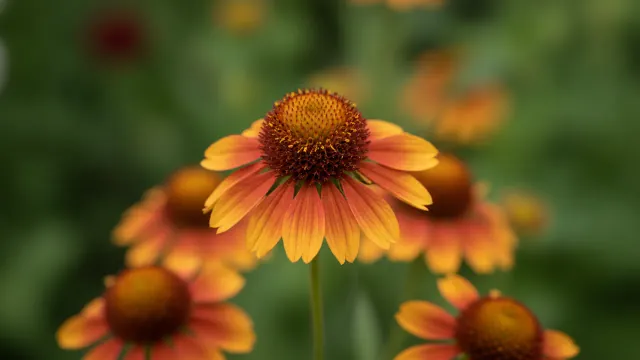
Sneezeweed
Shares full sun and moderate water; both are strong pollinator plants; its seed heads stand through winter, for structure and the birds; taller at 3.5 ft, for the layer behind it.
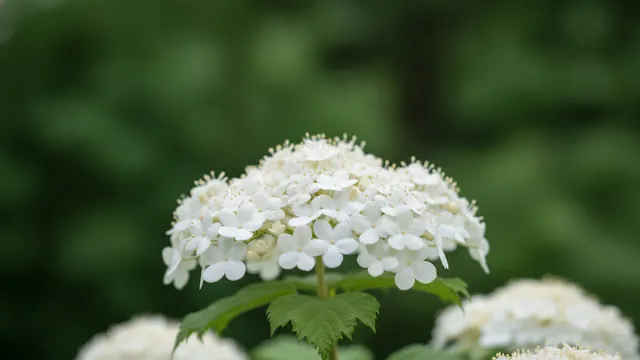
Viburnum
Shares full sun and moderate water; blooms in mid spring, before this one opens; both offer pollinator forage, in different months; taller at 6.5 ft, for the layer behind it.
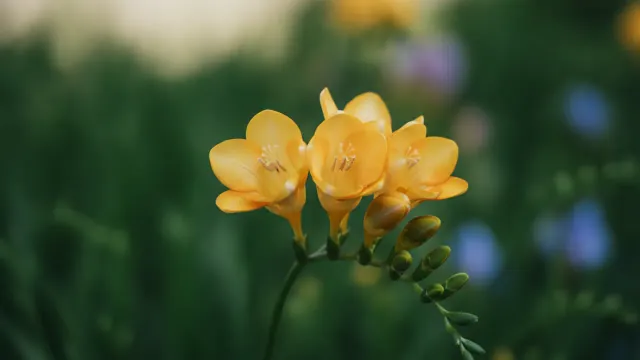
Freesia
Shares full sun and moderate water; blooms in mid spring, before this one opens; both are strong pollinator plants, and they feed in different months.
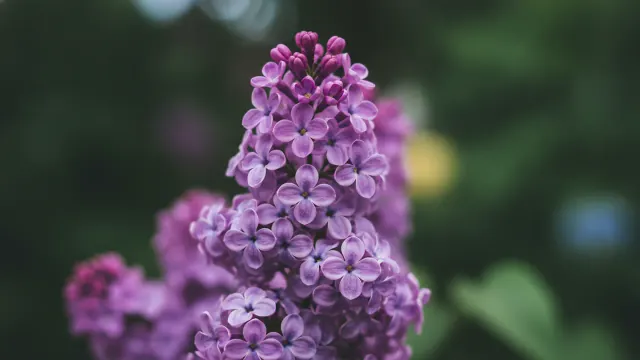
Lilac
Shares full sun and moderate water; blooms in mid spring, before this one opens; both offer pollinator forage, in different months; taller at 10 ft, for the layer behind it.
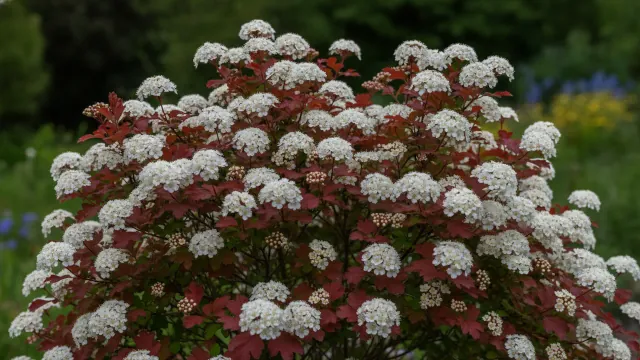
Ninebark
Shares full sun and moderate water; opens in late spring and overlaps into this one's season; both are strong pollinator plants; taller at 6.5 ft, for the layer behind it.
Explore similar plants
You might also like
Design a garden with this
Drop this plant onto a 3D plan, see how it fills in, and watch your whole garden bloom across the year.