
723of 1,785
Verification in progress
Plant verification tracker
Fully verified so far: 112 of 1,785. Source-checked: 723. The standard below says exactly what each word means, field by field, and this page moves as the work does.
Every source-checked plant here has been read by AI research agents against a median of 9 (from 2 to 32 across the list) independent botanical sources, including the RHS, Missouri Botanical Garden and NC State Extension, one plant at a time, with each claim recorded next to the source it came from. No person reads every entry; the method, and what a second independent pass does to refute the first, is written out further down this page. A claim with no source is discarded rather than used. "Fully verified" is a higher bar than that, and its honest count is published above, however small it reads.
The library's entries were written with AI assistance in June 2026, their scientific names were then checked against the botanical registries, and a July 2026 review re-read every plant's base facts against horticultural authorities without recording a source per plant, which is why nothing before the plant-by-plant pass below counts as checked. We're working through the full library of 1,785 plants, this page updates as each check completes, and every plant page marks each of its facts as checked, a house reading, or not yet checked. The rest of this page says exactly what each word does, and does not, mean.
What the checkmark means
Source-checked, in one sentence: this plant's measurable facts have been checked against named botanical authorities, with every claim recorded next to the source it came from. That is a claim about particular fields, not a seal over the whole page. It comes in two amounts of work, which the next section separates rather than averaging. Fully verified is the complete standard above both: the whole fifteen-field record, the thirteen growing facts plus what the plant is called (its common name and its other names), each carried by a named source, with the unsettled points written down, and (since September 2026) with every value-bearing question the record raised for a person decided: a plant whose record still waits on someone's decision holds the full record but is not counted here until the decision is made. 112 plants hold it so far, and the count at the top of this page moves only when a plant's whole record does. Two honest footnotes on the standard itself: years to mature size may rest on a recorded convention where no publisher states one (today 78 of the 264 full records carry a quoted source for it); and a plant's own common name counts only when a source actually prints it, which sources often do not.
The fields it covers, and the authorities behind them
The facts a garden plan is built on: how tall and how wide the plant really grows, the hardiness zones it can be expected to survive, how much sun it needs, and the trait tags a recommendation leans on, cut flower, fragrant and pollinator among them. The sources are named botanical authorities: the RHS, Missouri Botanical Garden, POWO at Kew, SANBI and the university extension services, NC State's among them, and for a named cultivar the breeder's own registration, which on a trademarked plant is often the most accurate size anyone publishes. Scientific names get a pass of their own over the whole library, against those same authorities. A smaller set of 264 plants is checked past those fields to everything else the page says, and those are listed by name below.
What it deliberately does not claim
- Not every fact on the page, on most plants. Bloom months and water needs are checked on the 264 plants that hold the deeper of the two standards below, and on none of the other 459. They are named as gaps rather than quietly counted as checked.
- Not the exact color, on any plant. Sources give color in words, 'rose-pink', 'creamy white', never as a color code, so the code a page is painted with has nothing to be checked against and never will have. The color WORD can be checked, and on those same 264 plants it has been; on the rest it is the library's own word, with nothing behind it yet.
- Not the artwork or the photographs. Most plants here have no photograph at all: their card is an illustration we generated with AI, labeled as an illustration on its plant page and named as one in the footer of every page that shows the cards, and never counted as checked by anything. Where a plant has real photographs, they were matched to a species by an automated chain and approved automatically once that match and the license both came back clean. Nothing confirms, photo by photo, that a picture shows this exact plant. That is true of every plant here, whichever standard it holds.
The care notes are a separate layer
Soil, toxicity and invasiveness are not fields in this catalog at all, so no check can hold them to a source. What exists instead is written prose: 277 plant pages carry researched notes, on subjects like soil and siting, disease and pests, and on 125 of them a Safety note, every statement credited to the publisher it came from. A plant's Safety note also travels to its cultivar pages, and to the handful of ungrouped pages of that same taxon, 786 pages in all, so a warning never stays on the canonical page alone. That layer is curated separately and is not re-read by the pass behind this list, so a checkmark tells you nothing about a plant's notes. Nor is a missing Safety note a clearance: nothing here separates "checked, and it is not toxic" from "nobody has looked yet". One more thing carries the word care in this product, and it is not this layer: the pruning and cut-back timings the BloomsEye app shows are separate again, checked a different way, and they get their own account further down this page.
Two levels of checking
Both are real checks against named sources, one plant at a time. They differ in how much of the page they reach. The two divide the 723 source-checked plants counted at the top of this page: 459 hold the first, 264 the second. Every plant in this list holds at least the first.
Core facts checked
459 plants
The facts a garden plan is built on. These are checked and the rest of the page is not, which is exactly what the gaps below say.
- Mature height
- Mature spread
- Hardiness zones
- Sun needs
- The honesty tags
Full record checked
264 plants
Everything on the left, and then everything else the page states, each with the source's own words beside it and a written list of whatever the sources could not settle.
- Mature height
- Mature spread
- Hardiness zones
- Sun needs
- The honesty tags
- Bloom months
- Bloom color, in words
- Water needs
- Years to mature size
- Soil
- Diseases
- Pests
- Toxicity
Fully verified sits inside the deeper of these two rather than beside them: 112 of those 264 plants hold it.
The 264 plants that hold "Full record checked"
Short enough to read, so it is printed rather than hidden behind a filter. Each one is also marked in the full list at the bottom of this page.
- Abraham Darby
- Adirondack
- Admiral
- Agapanthus
- Agastache 'Apricot Sprite'
- Agastache 'Firebird'
- Ageratum
- Akebono Cherry
- Alexandrina Magnolia
- Alma Pötschke
- Aloe
- Amaryllis
- American Elderberry
- Amethyst
- Angel Face
- Angelface Raspberry
- Angelonia
- Anise Hyssop
- Ann Magnolia
- Annabelle
- Anthony Waterer
- Appalachian Red
- Apple Blossom
- Aster
- Astilbe
- Astra Double Blue
- Autumn Brilliance
- Autumn Damask Rose
- Autumn Flowering Cherry
- Autumn Sun Coneflower
- Avant-Garde
- Axminster Gold
- Azalea
- Bacopa
- Balloon Flower
- Basket of Gold
- Bathsheba Rose
- Bearberry Cotoneaster
- Bearded Iris
- Becky
- Bee Balm
- Beryl Bach
- Beyond Midnight Bluebeard
- Black Beauty Elderberry
- Black Lace Elderberry
- Black-Eyed Susan
- BloomStruck Hydrangea
- Blue Bacopa
- Blue Girl
- Blue Hill
- Blue Horizon
- Blue Zinger Sedge
- Bluebeard
- Bobo Hydrangea
- Bolero
- Bowles' Golden Sedge
- Bridal Veil
- Bugleweed
- Buttonbush
- Carolina Moonlight
- Catmint
- Chardonnay Pearls Deutzia
- Cherries Jubilee
- Chinese Fringe Flower
- Chinese Stewartia
- Christmas Gift
- Claire Grace
- Common Comfrey
- Coral Fountain
- Cranberry Cotoneaster
- Creeping Lilyturf
- Crimson Clover
- Dark Dancer
- Dark Knight Bluebeard
- Delaware Valley White
- Deutschland
- Dolce Cherry Truffles
- Dolly Parton
- Double Scoop Raspberry
- Dragon's Blood
- Dreadlocks
- Drooping Leucothoe
- Drumstick Allium
- Dutch Chocolate
- Dwarf Comfrey
- Dwarf Fothergilla
- Earth Angel
- Emerald Tassels
- Encore Autumn Amethyst
- Encore Autumn Rouge
- Eustacia Vye
- Everest Sedge
- Evergold Sedge
- Everillo Sedge
- False Indigo
- Fanal
- Fireball
- Formosa
- Fragrant Cloud
- Fragrant Sumac
- Fuji Pink
- Fuji White
- Gardenview Scarlet
- George Tabor
- Gertrude Jekyll
- Giant Allium
- Gibraltar
- Girard's Crimson
- Gladiator
- Globemaster
- Gold Medal
- Golden Garlic
- Golden Lights
- Goldsmith
- Grand Marshall
- Gro-Low Fragrant Sumac
- Gumpo Pink
- Henry's Garnet Sweetspire
- Hidcote Blue
- Hino-Crimson
- Hollandia
- Hot Biscuits
- Ice Dance Sedge
- Invincibelle Spirit II Hydrangea
- Jacob Cline
- James L. Austin
- Japanese Cleyera
- Japanese Pieris
- Japanese Stewartia
- Jeanne Moreau
- Kaleidoscope Abelia
- Kalm's St. John's Wort
- Karen
- Kickin' Carmine Red
- Komachi
- Korean Stewartia
- Large Fothergilla
- Lavender Annual Phlox
- Lavender Bacopa
- Let's Dance Rhythmic Blue Hydrangea
- Little Henry Sweetspire
- Little Lime Hydrangea
- Lord Lieutenant
- Louise Clements
- Love-Lies-Bleeding
- Luminary Ultraviolet
- Magical Candle Hydrangea
- Mai Tai Avens
- Martha Stewart
- Michelangelo
- Midnight Blue
- Millenium
- Minerva
- Montgomery
- Mount Airy Fothergilla
- Mount Everest
- Mountain Fire Pieris
- Mountain Laurel
- Mountain Stewartia
- Mr. Fokker
- Mrs. Bradshaw Avens
- Mt. Everest
- Nemesia
- Nikko Deutzia
- Northern Exposure Silver
- October Skies
- Orange Sovereign
- Oregold
- Oso Easy Double Red
- Paint the Town Fancy
- Palm Sedge
- Patricia Ballard
- Peach Annual Phlox
- Peach Blossom
- PeeGee Hydrangea
- Pennsylvania Sedge
- Peruvian Lily
- Peter Pan
- Phantom Hydrangea
- Picotee
- Pink Ageratum
- Pink Bacopa
- Pink Lemonade
- Pinky Winky Hydrangea
- Poppy Anemone
- Prairie Smoke
- Professor Kippenberg
- Purple Ageratum
- Purple Annual Phlox
- Purple Coneflower
- Purple Dome
- Purple Sensation
- Purple Smoke
- Quick Fire Hydrangea
- Rainbow Leucothoe
- Raydon's Favorite
- Red Clover
- Red Eden
- Red Feather Clover
- Red Hot Poker
- Red Lion
- Red Sentinel
- Rheinland
- Rilona
- Rock Cress
- Rockspray Cotoneaster
- Rosebud
- Royal Jubilee
- Royal Purple Lilyturf
- Russian Comfrey
- Russian Sage
- Sarah Mountain Laurel
- Savannah
- Scarletta Leucothoe
- Screaming Yellow
- Sentimental Blue
- Serena Blue
- Serena Purple
- Serena Rose
- Serena White
- Shrubby St. John's Wort
- Siberian Iris
- Slender Deutzia
- Smooth Hydrangea
- Snow Flurry
- Snowball
- Sprite
- St. Tropez
- Staghorn Sumac
- Star of Persia
- Stephen Rulo
- Stewartstonian
- Storm Cloud
- Strawberry Sundae Hydrangea
- Sugar Buzz Cherry Pops
- Sugar Shack Buttonbush
- Sunny Boulevard St. John's Wort
- SunSparkler Firecracker
- SuperCal Neon Rose Petchoa
- Sylphide
- The Alnwick Rose
- The Bride
- The Governor
- Tiamo
- Toad Lily
- Totally Tangerine Avens
- Twister
- Vanilla Strawberry Hydrangea
- Variegated Lilyturf
- Vintage Jade Distylium
- Virginia Bluebells
- Visions
- Wedgwood Blue
- White Agapanthus
- White Ageratum
- White Annual Phlox
- White Clover
- White Lights
- White Wild Indigo
- Wood's Blue
- Wood's Pink
- Wood's Purple
- Yarrow
- Yuki Cherry Blossom Deutzia
Vegetables: the kitchen garden standard
The library grew its first vegetables in September 2026: 28 crops in 139 rows counting their named varieties (arugula, bean, beet, broccoli, cabbage, carrot, cauliflower, cucumber, eggplant, garlic, hot pepper, kale, lettuce, melon, onion, pea, pole bean, potato, pumpkin, radish, spinach, summer squash, sweet corn, sweet pepper, swiss chard, tomato, watermelon and winter squash), grown in the BloomsEye Studio planner. They are not in the 723 of 1,785 above, because no vegetable has a page on this site yet and that number counts only what this site lists. They were checked before they went in, to a standard of their own, and it is written out here so the count reads the same way on the day their pages arrive.
Kitchen garden record checked
Every one of the 139 rows holds it
Everything "Full record checked" requires, the thirteen growing facts each with a source's URL and its verbatim words beside it, plus a value and a quoted source for each of the 10 kitchen garden fields below. Two conventions the check enforces on top: a days-to-harvest figure states what it counts from, sowing or planting out, because seed catalogs disagree; and a spacing figure names its kind, in the row or between rows, because the two are printed side by side. Read by the same method as everything above, one pass collecting and a second told to refute it, on 2026-09-17 and 2026-09-23.
- What kind of crop it is
Vegetable, fruit or herb: the shelf it sits on in the planner, the gardener's word rather than botany's.
- The part you eat
Fruit, leaf, root, tuber, bulb, seed, pod, stem, flower or shoot. A crop grown for a part it must flower to make carries a checked bloom window as well; one grown for its leaves or roots does not, and that is correct.
- Its botanical family
Quoted from a taxonomy source, because rotation is planned by family: never tomatoes where the potatoes were.
- How a garden grows it
Annual, biennial or perennial as a cold-winter garden treats it: kale is a biennial grown as an annual.
- Its frost class
Hardy, half-hardy, tender or very tender, the extension services' own classes, which are what make it a cool-season or a warm-season crop.
- How it goes in
Sown where it grows, started indoors and transplanted, either, or from sets, crowns, bare roots or pots.
- When to sow
The windows in weeks before or after the last frost, and a fall window where there is one. The planner resolves them against your zone's frost dates, so the record never stores a calendar date that is only true in one place.
- Days to first harvest
A range, and it states what it counts from, sowing or planting out, because seed catalogs disagree on the convention and a 70-day tomato is a 130-day tomato read the other way.
- Spacing
In the row and between rows, from extension tables, each figure naming which of the two it is, because the two are routinely printed side by side. The plan's footprint is the in-row figure.
- Support
None, a stake, a cage, a trellis, a pole or a wire. It drives the card's line and the frame the 3D model draws.
Two honest footnotes, published with the count
The same rule as the ornamental standards: a softer reading is printed beside the number, never folded into it.
- Every row's support rests on a quote
A crop's support (a stake, a cage, a trellis) has a second door into the standard: where a source names a support the record's closed vocabulary has no word for, the record writes that down as a gap in the researcher's own words instead of guessing a nearest match, and it counts. No row entered that way this build.
- None of them is counted fully verified
Fully verified adds the names pass, what a plant is called and its other names, each carried by a source, and that pass has not read a crop yet, so the vegetables hold the deepest field check the library has and not the word this page reserves for the whole record. The 112 fully verified at the top of this page are ornamental plants only.
Where the vegetables' facts come from
Counted from the published receipts: 771 source pages across 116 sites, a median of 13 per row (from 7 to 18). Listed by site with the number of rows each one carries, and not summarized as one kind of authority, the care section's rule. A named variety's days to harvest may rest on the seed catalogs that sell it, at least two of them and never one.
- extension.umd.edu
139 rows.
- extension.usu.edu
139 rows.
- plants.ces.ncsu.edu
139 rows.
- extension.illinois.edu
127 rows.
- extension.umn.edu
113 rows.
- gardening.cornell.edu
84 rows.
- plantfinder.mobot.org
78 rows.
- vegvariety.cce.cornell.edu
74 rows.
- burpee.com
65 rows.
- reimerseeds.com
58 rows.
- johnnyseeds.com
52 rows.
- yardandgarden.extension.iastate.edu
48 rows.
- missouribotanicalgarden.org
47 rows.
- territorialseed.com
43 rows.
- botanicalinterests.com
31 rows.
- gurneys.com
24 rows.
- rareseeds.com
20 rows.
- njaes.rutgers.edu
14 rows.
- all-americaselections.org
12 rows.
- gardening.cals.cornell.edu
12 rows.
- hort.extension.wisc.edu
12 rows.
- ufseeds.com
11 rows.
The other 94 sites, each on fewer than 10 rows
- bonnieplants.com
9 rows.
- holmesseed.com
9 rows.
- pubs.extension.wsu.edu
9 rows.
- everwilde.com
8 rows.
- warren.cce.cornell.edu
8 rows.
- westcoastseeds.com
8 rows.
- fedcoseeds.com
7 rows.
- highmowingseeds.com
7 rows.
- berlinseeds.life
6 rows.
- edenbrothers.com
6 rows.
- extension.missouri.edu
6 rows.
- extension.purdue.edu
6 rows.
- ferrymorse.com
6 rows.
- seedsnsuch.com
6 rows.
- content.ces.ncsu.edu
5 rows.
- extension.psu.edu
5 rows.
- msu-prod.dotcmscloud.com
5 rows.
- sandiegoseedcompany.com
5 rows.
- web.extension.illinois.edu
5 rows.
- wildroseheritageseed.com
5 rows.
- extension.sdstate.edu
4 rows.
- info.ballseed.com
4 rows.
- trueleafmarket.com
4 rows.
- victoryseeds.com
4 rows.
- yadkin.ces.ncsu.edu
4 rows.
- halifaxseed.ca
3 rows.
- horticulture.oregonstate.edu
3 rows.
- hudsonvalleyseed.com
3 rows.
- plantgoodseed.com
3 rows.
- seedneeds.com
3 rows.
- tomorrowseeds.com
3 rows.
- clearcreekseeds.com
2 rows.
- extension.unh.edu
2 rows.
- idiggreenacres.com
2 rows.
- jungseed.com
2 rows.
- kawvalleygreenhouses.com
2 rows.
- marshallsgarden.com
2 rows.
- panamseed.com
2 rows.
- paseseeds.com
2 rows.
- ruppseeds.com
2 rows.
- store.underwoodgardens.com
2 rows.
- superseeds.com
2 rows.
- ucanr.edu
2 rows.
- agsci.oregonstate.edu
1 row.
- allianceofnativeseedkeepers.com
1 row.
- amsaseed.com
1 row.
- ballseed.com
1 row.
- brothernature.ca
1 row.
- bucktownseed.com
1 row.
- calloways.com
1 row.
- chileplants.com
1 row.
- cliftonseed.com
1 row.
- cucurbitbreeding.wordpress.ncsu.edu
1 row.
- degroot-inc.com
1 row.
- deneweths.com
1 row.
- edenseeds.com.au
1 row.
- en.runabergsfroer.se
1 row.
- extension.rutgers.edu
1 row.
- farmfreshselects.com
1 row.
- gaeasblessing.com
1 row.
- gaiaorganics.ca
1 row.
- gowanseed.com
1 row.
- groworganic.com
1 row.
- harrisseeds.com
1 row.
- hazzardsgreenhouse.com
1 row.
- heirloom-seeds.ca
1 row.
- homegarden.cahnr.uconn.edu
1 row.
- hometownseeds.com
1 row.
- humeseeds.com
1 row.
- ifsi.com
1 row.
- kingsseeds.co.nz
1 row.
- mckenzieseeds.com
1 row.
- neseed.com
1 row.
- npgsweb.ars-grin.gov
1 row.
- oscseeds.com
1 row.
- pangeaseeds.com
1 row.
- pennington.com
1 row.
- peoriagardens.com
1 row.
- plants.jimwhitingnursery.com
1 row.
- prod-na02.johnnyseeds.com
1 row.
- provenwinnersdirect.com
1 row.
- seaspringseeds.co.uk
1 row.
- seedorganica.com
1 row.
- seedsnow.myshopify.com
1 row.
- shop.epicgardening.com
1 row.
- southdevonchillifarm.co.uk
1 row.
- sowmeseeds.com
1 row.
- sowrightseeds.com
1 row.
- starkbros.com
1 row.
- stokeseeds.com
1 row.
- tomatogrowers.com
1 row.
- transitionfarm.com
1 row.
- treeseeds.ca
1 row.
- vannoortbulb.com
1 row.
The 28 crops, and the named varieties under each
Listed by name and not linked: no vegetable has a page on this site yet. When the pages arrive they join the list at the bottom of this page under the same standard. The library grows in waves as the Studio adds crops, and this page counts what has landed, never what is planned.
- Arugula (2 varieties)
- Bean (4 varieties)
- Beet (3 varieties)
- Broccoli (4 varieties)
- Cabbage (4 varieties)
- Carrot (4 varieties)
- Cauliflower (3 varieties)
- Cucumber (4 varieties)
- Eggplant (4 varieties)
- Garlic (4 varieties)
- Hot Pepper (4 varieties)
- Kale (4 varieties)
- Lettuce (4 varieties)
- Melon (4 varieties)
- Onion (4 varieties)
- Pea (4 varieties)
- Pole Bean (4 varieties)
- Potato (4 varieties)
- Pumpkin (4 varieties)
- Radish (4 varieties)
- Spinach (4 varieties)
- Summer Squash (4 varieties)
- Sweet Corn (4 varieties)
- Sweet Pepper (4 varieties)
- Swiss chard (3 varieties)
- Tomato (8 varieties)
- Watermelon (4 varieties)
- Winter Squash (4 varieties)
What we check
A plant page makes a dozen kinds of claim, and they are not all checkable the same way. This is where each kind stands: checked against outside sources (the RHS, Missouri Botanical Garden, NC State Extension, POWO at Kew, SANBI), not checked yet, not yet a field at all, or not checkable by any source.
Source-checked
On every plant in this list
Checked plant by plant during its own deep run: a median of 9 (from 2 to 32 across the list) independent sources, every claim recorded next to the source it came from.
- Mature height
How tall it really gets, which is also the size its 3D model is built at.
- Mature spread
How wide it grows, which is what spacing on a plan hangs on.
- Hardiness zones
Where it can be expected to survive winter.
- Sun needs
Full sun through full shade.
- The honesty tags
Cut flower, fragrant and pollinator: the three tags that drive recommendations, so they are held to sources.
Full record checked
On 264 of them, a deeper check
Everything above, plus the rest of what the page says about the plant, each with the source's own words beside it. The other 459 are checked on the fields above and not on these.
- Bloom months
When it actually starts and stops, read off named sources for a cold-winter garden rather than from a catalog's season word.
- Bloom color, in words
What the sources call the color. The color CODE the page is painted with is still nobody's to check, and the row below says so.
- Water needs
The one the drought-tolerant tag is derived from, so getting it wrong moves a recommendation.
- Years to mature size
The horizon the height and spread are read at. Where no publisher states one, the record says the number is a house convention instead of pretending it is measured, and the plant page marks it 'a house reading' rather than 'checked'.
- Soil, diseases, pests and toxicity
Collected against named sources even though the catalog has no field for any of them, so the answer exists before the field does.
- And what the sources could not settle
Every one of these plants carries a written list of what stayed unresolved. A check that finds nothing to disagree about has usually not looked hard enough.
Checked library-wide
Names and internal consistency
Separate passes that cover every plant in the library, not just the verified list.
- Botanical names
Every built-in plant's scientific name was checked against the botanical registries; 42 were corrected in that pass.
- Internal consistency
A standing audit checks that a plant's own values agree with each other. It cannot catch a value that is consistent but wrong, which is exactly the gap the source checks exist to close.
Not checked yet
The honest gaps
Named gaps, never quiet ones. These are checked on the 264 plants above and on no others, so on every other plant in the library they are still unchecked, and both are on the roadmap below. A July 2026 AI batch review did re-read these fields for every plant then in the library against horticultural authorities and left them standing; it recorded no source per plant, and a review without receipts is not a check, so they stay unchecked here until the plant-by-plant pass reaches them.
- Bloom months
The biggest one. Bloom time is regional: a UK source's bloom window is not a zone 5 bloom window, so the rule for reading sources has to be designed before collection starts.
- Water needs
Next in line after the current pass, partly because the drought-tolerant tag is derived from it.
- Years to mature size
Collected word for word from source pages, but deliberately stored as raw material rather than scored or trusted yet.
Not a field yet
Said in prose, not in fields
Soil, toxicity and invasiveness have no structured field in the catalog: there is no per-plant value for a check to hold. We publish them as sourced notes on the plants that carry a curated record, each note credited to its publisher, so "not a field" never means nothing is said. The deeper check above collects soil, diseases, pests and toxicity against named sources for its 264 plants, but there is still no field, so no page renders them as a value yet.
- Soil
Type, pH and drainage have no field anywhere in the catalog; soil advice appears only inside some plants' curated notes, its source named. As a field it would be the highest-value addition the catalog could gain, and it comes once the claims already shipping are sound.
- Toxicity
The clearest case of the difference: 786 plant pages print a sourced Safety note today, as prose (a toxic plant's warning travels to its cultivar pages too, and to the few ungrouped pages of the same taxon). What no plant has is a yes-or-no toxicity field, so a page without a note is silent, not cleared, and the shipped notes are due an audit before any field is added.
- Invasiveness
Discussed in the curated notes on some plants, as a regional question, because it is one: a plant that is invasive in one region can be well behaved in another. A field would need a per-region answer, not a yes or no, so it waits on a schema decision first.
No source can say
The unverifiable
Stated plainly rather than hidden.
- Exact color values
Sources describe color in words, 'rose-pink', 'creamy white', never as a color code, so the code itself has nothing to be checked against, on any plant, ever. The color WORD can be checked, and on the 264 plants above it has been; you can also simply look at the photo.
- The 3D models
No botanical source publishes the shape of a plant. Each model is drawn from a procedural archetype built at the plant's real mature size, and that size is exactly what the height and spread checks discipline.
- Subjective tags
'Dramatic' or 'elegant' is a matter of taste, and no source can confirm taste.
The goal is a 100% verified data record: every fact on every plant checked against named sources, with the honest count published, which today is 112 and climbing. Artwork, the 3D models, and matters of taste can never be checked against a source, so they sit outside the number, named here rather than counted.
The rule underneath both halves is unchanged: zero unverifiable claims presented as facts.
The method, on one plant
Here is what the board above means on a real entry: Bee Balm, one of the 723 source-checked plants, with its actual catalog values. The marks show how the method treats each kind of field, not a field-by-field report card for this one plant: the published ledger records which standard checked each plant, not a per-field result for each. This one holds "Full record checked", so read the marks below as that standard's answers.
An example of the method, not a live readout
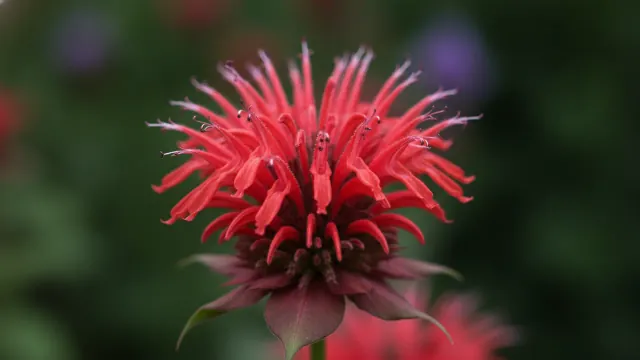
Monarda
Also called bergamot and wild bergamot
Our illustrated card, generated with AI. The artwork is ours, labeled as an illustration on the plant's page and named as one in every page's footer, and no source can check a drawing.
The three tags that drive recommendations.
Checked against the botanical registries in a separate pass over the whole library.
Read off named sources for this plant, with the quote recorded beside it.
Read off named sources for a cold-winter garden, with the quote recorded beside it.
Sources say color in words, never as a code, so the color name can be checked; this exact code cannot, on any plant, and the photo shows the rest.
No source publishes a plant's shape; the size the model is built at is what the height and spread checks discipline.
When a source disagrees with us
This is the part that earns the checkmark. The reading is done by AI research agents, and we say so because the method is the point: one pass collects, an independent second pass re-fetches every cited page and tries to refute the first, every unit conversion is recomputed, and every value carries the page it came from with the source's verbatim words. A source that fails to load, describes a different plant, or does not contain its quoted value is dropped, not discounted. The evidence is frozen, the published record re-derives from it byte for byte, and the pass is a collector, not a decider: machines do the reading, a human decides what gets applied.
The pass proposes
When a source disagrees with a catalog value, the disagreement is recorded as a proposal, with the source's own words beside it.
A human decides
A proposal becomes a change only when a person reviews and applies it. Corrections that would ripple into how plants are drawn or spaced, the heights and the spreads, are deliberately held back until that ripple has been reviewed.
The ledger remembers
Every applied change is recorded in a ledger. And when the evidence is thin, that is recorded too: some checks end in "not enough evidence", which is an outcome of its own, never a prompt to guess.
Where the pruning advice comes from
Every plant in this library also carries care advice: when to prune, when to cut back, when to divide. It reads your garden's frost dates rather than a fixed calendar, so the same plant is told a different week in a cold garden than in a mild one. It is a second program with a second method, and a weaker claim than anything above, which is why it is written out here instead of folded into the number at the top of this page. It is shown inside the BloomsEye app; no page on this site gives care advice.
We do not call any of it verified
Those words are spoken for. On this site "fully verified" means the complete fifteen-field record, and "source-checked" means the multi-source pass described above. Care advice has been through neither of them. The word for what it has been through is sourced: a named authority was read, and the page it was read on is written down beside the claim. That is a real thing and a smaller thing, and the difference is the whole reason this section exists.
What ships today
Counted from the published care file on the day this page was built, generated 2026-09-27.
- 1,547 plants get their full advice
Out of 1,785 that carry care at all. Not one plant is left with nothing: a plant we cannot advise on says so instead of going quiet.
- 238 are held back on purpose
Their pruning advice is withheld and the plant says it is not settled yet. The reasons are listed below, one by one.
- 20 kinds of plant behavior
Advice is written against how a plant behaves, not against its name: a shrub that flowers on last year's wood needs different timing from one that flowers on this year's.
- 87 pieces of advice, 11 of them serious
Serious means the timing is the whole point: get it wrong and you lose a year of flowers, and on the woody herbs a cut in the wrong place can kill the plant outright. The rest is watering, feeding and tidying, where being a few weeks out costs nothing.
The cuts that can cost you a season, or the plant
This is the number to judge us on, so it is the one we checked hardest.
- 68 plants can be shown one
Every single one of them rests on a named authority that publishes the rule. Not one rests on a guess, and none of them is a plant we are still unsure about, because those are held back instead.
- Some of them can kill, not just cost a year
Lavender and its woody relatives do not regrow from bare wood, so a cut below the leafy growth can end the plant rather than cost it a season. Their advice says exactly that inside the instruction itself rather than leaving it to be found out, and it rests on a university horticulture library and named university horticulturists rather than on an extension service.
- That number is a ceiling, not a headcount
The calendar a gardener actually sees is built against their own frost dates, and it drops a cut wherever the season is too short to carry it. So what any one garden is shown is that many or fewer, never more. We would rather publish the ceiling than a number that is only true in one zone.
- Where they came from
Every page is listed by name further down this section. We are not going to summarize them as one kind of authority, because they are not one kind, and rounding them up into a tidier phrase would be the first dishonest sentence on this page.
Every source, by name
The 25 places the care layer actually rests on, and how many plants each one carries, counted from the published file. This is deliberately the raw list rather than a summary: they are a mix of university extension services, botanical gardens and arboreta, a university horticulture library, horticultural publishers, and the breeder's or nursery's own page for a named cultivar. One or two are document hosts rather than publishers, where an extension service's own PDF is posted somewhere else. Calling all of that "extension services" would read better and would not be true.
- extension.unh.edu
49 plants.
- canr.msu.edu
39 plants.
- extension.colostate.edu
39 plants.
- extension.illinois.edu
39 plants.
- purdue.edu
39 plants.
- ask.extension.org
18 plants.
- depts.washington.edu
12 plants.
- gardendesign.com
12 plants.
- provenwinners.com
12 plants.
- plants.ces.ncsu.edu
11 plants.
- hgic.clemson.edu
10 plants.
- issuu.com
10 plants.
- publications.extension.uconn.edu
10 plants.
- mortonarb.org
8 plants.
- libanswers.nybg.org
7 plants.
- garden.org
3 plants.
- rhs.org.uk
3 plants.
- whiteflowerfarm.com
3 plants.
- missouribotanicalgarden.org
2 plants.
- pyracantha.co.uk
2 plants.
- romencegardens.com
2 plants.
- gardenersworld.com
1 plant.
- pleasantrunnursery.com
1 plant.
- rhsplants.co.uk
1 plant.
- springmeadownursery.com
1 plant.
And the 1,695 plants with no source at all
The honest majority. Said here as loudly as the good part, because it is the bigger number.
- Their care comes from a rule, not from a page about them
Each one is sorted into a behavior class and given that class's advice. The file records that as exactly what it is, and so do we: a rule applied to a plant is not the same thing as a plant somebody looked up. It is why 90, not 1,785, is the number in this section.
- None of them is shown a cut that could cost a season
That is the line we hold. Watering, feeding and tidying advice is derived for every plant, because being a few weeks out on those costs nothing. The advice that can cost you something is only ever shown where a source was read.
How these were checked, and how that is weaker
The honest comparison with the checkmarks above.
- One live reading, against the authority's own page
Done on 2026-08-13 and 2026-08-14, claim by claim, with the URL recorded next to each one. 34 separate pages back the 90 plants that carry a source.
- No second pass tried to prove it wrong
The checkmarks above earn their name partly because an independent pass re-fetches every page and tries to refute the first. Nothing here has had that. It is a lighter method and we are not going to describe it as the same one.
- It anchors a rule; it does not verify a plant
What it establishes is that a rule matches what the authorities publish, so the advice is not built on a machine's memory. Our own source ledger records that limitation in those terms, and no care check moves a plant's count at the top of this page by so much as one.
- When the sources split, we take the cheap mistake
On Snowmound (Spiraea nipponica 'Snowmound') the sources disagree about which wood it flowers on. We took the answer that is harmless if we are wrong: read it as last year's wood and a gardener prunes after flowering and loses nothing even if we are mistaken. The other way round, a late-winter cut takes the entire year's flowers. The disagreement is recorded rather than tidied away.
What is held back, and why
238 plants of 1,785. A held plant is the system working, not failing: it means we would rather say nothing about pruning than say something we cannot stand behind.
- 156 plants
Shrubs whose genus carries no published pruning rule we could apply, so each one needs deciding by hand.
- 44 plants
Plants that look like they flower on last year's wood, where being wrong costs the whole display, so the call waits for a source.
- 17 plants
Clematis, which the RHS sorts into three pruning groups that cannot be read off a genus name.
- 13 plants
Magnolias, where the authorities say an established plant should not be pruned at all unless it is necessary, so every routine cut is switched off for them.
- 3 plants
Climbers in a genus that flowers on old wood, held for the same reason as the shrubs above.
- 1 plant
A honeysuckle entry that names no species, and the species is what decides the answer.
- 1 plant
A spirea entry that names no species, and the species is what decides the answer.
- 1 plant
A plant that will not regrow from bare wood, where a wrong cut kills it rather than costing a season.
- 2 plants
Held for another recorded reason that this page has no plain wording for yet. They are counted here so the totals above still add up.
What this layer deliberately does not do
- It never names a pesticide, an active ingredient, or a dose. Those are the three things a garden planner has no business prescribing, and chemical questions belong to your local extension service, which knows your county and your season.
- It never claims a cure or a guarantee. It tells you when a job is due and what it is for. Whether a plant thrives after that depends on soil, weather and a hundred things no calendar can see.
- It is written for a Northern Hemisphere garden and reads your frost dates, not your calendar. It has nothing correct to say to a Southern Hemisphere gardener, and we would rather write that here than let you find out in October.
- It cannot settle a plant that names no species. Two entries here are a bare genus, and a genus can hold plants that want opposite treatment, so no amount of reading fixes them. They stay in the held list rather than being given an average answer.
- It is not a substitute for someone who can see your garden. Your local extension service knows your soil and your season; this knows your frost dates and what the authorities published.
The 90 plants whose care rests on a named source
Short enough to print, so it is printed. Every other plant's care comes from a rule applied by its behavior class, which is recorded as exactly that and not dressed up as a source.
- Amethyst Falls Wisteria
- Annabelle
- Anthony Waterer
- Arrowwood
- Beauty of Moscow
- Belle Étoile
- Bigleaf Hydrangea
- Blackhaw
- Bloomerang Purple
- Blue Moon Wisteria
- Bridal Wreath
- Burkwood
- Charles Joly
- Climbing Hydrangea
- Czechmark Trilogy
- Double Play Big Bang
- Double Play Candy Corn
- Doublefile
- Dutch Woodbine
- Edelweiss
- European Snowball
- Fiesta
- Forsythia
- French Lavender
- Gold Tide
- Golden Mock Orange
- Goldflame
- Goldflame Honeysuckle
- Goldmound
- Grosso
- Hidcote
- Hidcote Pink
- Java Red
- Katherine Havemeyer
- Koreanspice
- Lavender
- Lilac
- Limelight Hydrangea
- Little Princess
- Ludwig Späth
- Lynwood Gold
- Madame Lemoine
- Magic Carpet
- Magical Candle Hydrangea
- Magical Gold
- Major Wheeler
- Miniature Snowflake
- Minuet
- Miss Kim
- Mock Orange
- Munstead
- My Monet
- Nana Alba
- Natchez
- Neon Flash
- Northern Gold
- Oakleaf Hydrangea
- Panicle Hydrangea
- Phantom Hydrangea
- Phenomenal
- Pink Delight
- Pink Wisteria (Rosea)
- President Grevy
- President Lincoln
- Primrose
- Provence
- Quick Fire Hydrangea
- Red Prince
- Royal Velvet
- Scentsation Honeysuckle
- Sensation
- Show Off
- Smooth Hydrangea
- Snow White Sensation
- Snowbelle
- Snowmound
- Sonic Bloom Pink
- Sonic Bloom Red
- Spanish Lavender
- Spilled Wine
- Variegata
- Viburnum
- Wedgwood Blue
- Weigela
- White Knight
- White Weigela
- White Wisteria (Alba)
- Wine & Roses
- Wisteria
- Yankee Doodle
What's next
In order. This is the plan, not a promise with dates on it.
Where the authorities disagree
The disagreements this pipeline surfaces are published in full, with the dataset free to download.
Browse every source-checked plant
All 723 source-checked plants, grouped by type, alphabetical within each group. The 264 that hold "Full record checked" carry a mark; the other 459 hold "Core facts checked".
Perennials 225 source-checked
- Agastache 'Apricot Sprite'Full record checked
- Agastache 'Firebird'Full record checked
- Alba
- Alma PötschkeFull record checked
- AloeFull record checked
- AmethystFull record checked
- Anise HyssopFull record checked
- April Night
- AsterFull record checked
- AstilbeFull record checked
- Astra Double BlueFull record checked
- Autumn Fire
- Autumn Joy Sedum
- Autumn Sun ConeflowerFull record checked
- Axminster GoldFull record checked
- Balloon FlowerFull record checked
- Barrenwort
- Basket of GoldFull record checked
- Bearded IrisFull record checked
- BeckyFull record checked
- Bee BalmFull record checked
- Bela Lugosi
- Black Barlow
- Black Knight
- Black-Eyed SusanFull record checked
- Blanket Flower
- Blazing Star
- Bleeding Heart
- Blue Fortune Agastache
- Blue HillFull record checked
- Bluestar
- Bridal VeilFull record checked
- Bronze Mum
- Brunner 'Silver Heart'
- Brunnera
- BugleweedFull record checked
- Butterfly Weed
- Camelot Rose
- Camelot White
- Candy Stripe
- Caradonna
- Cardinal Flower
- Carolina MoonlightFull record checked
- CatmintFull record checked
- Chater's Double Yellow
- Cherries JubileeFull record checked
- Cheyenne Spirit
- Christmas Rose
- Claire GraceFull record checked
- Coconut Lime
- Columbine
- Common ComfreyFull record checked
- Coral Bells
- Coreopsis
- Crater Lake Blue
- Creeping LilyturfFull record checked
- Creeping Phlox
- Cyclamen
- Dalmatian Peach
- Dark DancerFull record checked
- David
- Daylily
- Dead Nettle
- Delphinium
- DeutschlandFull record checked
- Dianthus
- Dolce Cherry TrufflesFull record checked
- Double Scoop RaspberryFull record checked
- Dragon's BloodFull record checked
- Dutch ChocolateFull record checked
- Dwarf ComfreyFull record checked
- Early Bird
- Eastern Red Columbine
- Emerald Pink
- False IndigoFull record checked
- FanalFull record checked
- Foam Flower
- Foxglove
- Francee
- Frosty Fire
- Fuji PinkFull record checked
- Fuji WhiteFull record checked
- Gallery Blue
- Garden Mum
- Garden Phlox
- Gardenview ScarletFull record checked
- Gaura
- Globe Thistle
- Goatsbeard
- Goblin
- Gold Heart
- Goldenrod
- GoldsmithFull record checked
- Goldsturm
- Grand MarshallFull record checked
- Green Jewel
- Happy Returns
- Hardy Geranium
- Hardy Hibiscus
- Hellebore
- Hidcote BlueFull record checked
- Hollyhock
- Hollyhock 'Chater's Double'
- Hosta
- Hot Papaya
- Ice Plant
- Ironweed
- Jacob ClineFull record checked
- Jacob's Ladder
- Japanese Anemone
- Joan Senior
- Joe Pye Weed
- Kickin' Carmine RedFull record checked
- King of Hearts
- Kismet Raspberry
- KomachiFull record checked
- Krossa Regal
- Lady's Mantle
- Lamb's Ear
- Laura
- Ligularia
- Lily of the Valley
- Little Titch
- Lord Baltimore
- Luminary UltravioletFull record checked
- Lungwort
- Lupine
- Magnus
- Mai Tai AvensFull record checked
- Maiden Pink
- Marmalade
- Marmalade
- May Night
- Meadow Rue
- Monkshood
- MontgomeryFull record checked
- Moonbeam
- Mountain Frost Ruby
- Mrs. Bradshaw AvensFull record checked
- New England Aster 'Barr's Pink'
- Nigra
- Northern Exposure SilverFull record checked
- Obsidian
- October SkiesFull record checked
- Oranges and Lemons
- Pachysandra
- Paint the Town FancyFull record checked
- Palace Purple
- Pardon Me
- Pardon My Purple
- Patricia BallardFull record checked
- Peach BlossomFull record checked
- Penstemon
- Peony
- Perennial Salvia
- Periwinkle
- Peruvian LilyFull record checked
- Pink Double Delight
- Pink Frost
- Pink LemonadeFull record checked
- Pink Mum
- Pink Profusion
- PowWow Wild Berry
- Prairie SmokeFull record checked
- Professor KippenbergFull record checked
- Purple ConeflowerFull record checked
- Purple DomeFull record checked
- Purple Rooster
- Purple SmokeFull record checked
- Raspberry Wine
- Raydon's FavoriteFull record checked
- Red CloverFull record checked
- Red Feather CloverFull record checked
- Red Hot PokerFull record checked
- Red SentinelFull record checked
- RheinlandFull record checked
- Rock CressFull record checked
- Rose Marvel
- Royal Candles
- Royal Purple LilyturfFull record checked
- Rozanne
- Russian ComfreyFull record checked
- Russian SageFull record checked
- Rust Mum
- Sarah Bernhardt
- Screaming YellowFull record checked
- Sea Holly
- Sensation Rose
- Sentimental BlueFull record checked
- Shasta Daisy
- Siberian IrisFull record checked
- Sneezeweed
- Snow FlurryFull record checked
- Snow Hill
- Snow-in-Summer
- Sombrero Adobe Orange
- Sombrero Hot Coral
- Sombrero Lemon Yellow
- Sombrero Salsa Red
- SpriteFull record checked
- Stella de Oro
- Strawberry Candy
- Sugar Buzz Cherry PopsFull record checked
- SunSparkler FirecrackerFull record checked
- Sutton's Apricot
- The Chatelaine
- Toad LilyFull record checked
- Tomato Soup
- Totally Tangerine AvensFull record checked
- Variegated LilyturfFull record checked
- Veronica
- Violet Riot
- Virginia BluebellsFull record checked
- VisionsFull record checked
- Walker's Low
- White CloverFull record checked
- White Pinks
- White Swan
- White Wild IndigoFull record checked
- Wood's BlueFull record checked
- Wood's PinkFull record checked
- Wood's PurpleFull record checked
- YarrowFull record checked
- Yellow Foxglove
- Zagreb
Shrubs 119 source-checked
- Amber Jubilee
- American ElderberryFull record checked
- AnnabelleFull record checked
- Anthony WatererFull record checked
- Arnold Promise
- August Beauty
- AzaleaFull record checked
- Bearberry CotoneasterFull record checked
- Beautyberry
- Belle Étoile
- Beyond Midnight BluebeardFull record checked
- Bigleaf Hydrangea
- Black Beauty ElderberryFull record checked
- Black Knight
- Black Lace ElderberryFull record checked
- Bloomerang Purple
- BloomStruck HydrangeaFull record checked
- Blue Chiffon
- BluebeardFull record checked
- Bobo HydrangeaFull record checked
- Boxwood
- Butterfly Bush
- ButtonbushFull record checked
- California Flannel Bush 'Ken Taylor'
- Camellia
- Capistrano
- Chardonnay Pearls DeutziaFull record checked
- Chinese Fringe FlowerFull record checked
- Cranberry CotoneasterFull record checked
- Crape Myrtle
- Crown Jewel
- Dark Knight BluebeardFull record checked
- Delaware Valley WhiteFull record checked
- Diabolo
- Double Play Candy Corn
- Drooping LeucothoeFull record checked
- Dwarf FothergillaFull record checked
- Early Amethyst
- Encore Autumn AmethystFull record checked
- Encore Autumn RougeFull record checked
- FireballFull record checked
- FormosaFull record checked
- Forsythia
- Fragrant SumacFull record checked
- Gardenia
- George TaborFull record checked
- GibraltarFull record checked
- Girard's CrimsonFull record checked
- Golden LightsFull record checked
- Green Velvet
- Gro-Low Fragrant SumacFull record checked
- Gumpo PinkFull record checked
- Henry's Garnet SweetspireFull record checked
- Hino-CrimsonFull record checked
- Invincibelle Spirit II HydrangeaFull record checked
- Japanese CleyeraFull record checked
- Japanese PierisFull record checked
- Kaleidoscope AbeliaFull record checked
- Kalm's St. John's WortFull record checked
- KarenFull record checked
- Large FothergillaFull record checked
- Let's Dance Rhythmic Blue HydrangeaFull record checked
- Lilac
- Little Henry SweetspireFull record checked
- Little Lime HydrangeaFull record checked
- Madame Lemoine
- Magical Candle HydrangeaFull record checked
- McKay's White
- Minuet
- Mock Orange
- Mount Airy FothergillaFull record checked
- Mountain Fire PierisFull record checked
- Mountain LaurelFull record checked
- Nanho Blue
- Nikko DeutziaFull record checked
- Ninebark
- Oakleaf Hydrangea
- Panicle Hydrangea
- PeeGee HydrangeaFull record checked
- Phantom HydrangeaFull record checked
- Pinky Winky HydrangeaFull record checked
- Potentilla
- Professor Sargent
- Pugster Blue
- Quick Fire HydrangeaFull record checked
- Rainbow LeucothoeFull record checked
- Red Rocket
- Rhododendron
- Rockspray CotoneasterFull record checked
- Rose of Sharon
- RosebudFull record checked
- Ruby Spice
- Sarah Mountain LaurelFull record checked
- Scarletta LeucothoeFull record checked
- Shrubby St. John's WortFull record checked
- Slender DeutziaFull record checked
- Smokebush
- Smooth HydrangeaFull record checked
- Spirea
- Staghorn SumacFull record checked
- StewartstonianFull record checked
- Strawberry Sundae HydrangeaFull record checked
- Sugar Shack ButtonbushFull record checked
- Summersweet
- Sunny Boulevard St. John's WortFull record checked
- Tropical Hibiscus
- Vanilla Strawberry HydrangeaFull record checked
- Viburnum
- Vintage Jade DistyliumFull record checked
- Wedgwood Blue
- Weigela
- White LightsFull record checked
- Wine & Roses
- Winter Gem
- Winterberry
- Witch Hazel
- Yellow Tropical Hibiscus
- Yuki Cherry Blossom DeutziaFull record checked
- Yuletide
Annuals 99 source-checked
- African Daisy
- AgeratumFull record checked
- Angelface RaspberryFull record checked
- AngeloniaFull record checked
- Annual Phlox
- Bachelor's Button
- BacopaFull record checked
- Begonia
- Bidens
- Black Ball
- Blue BacopaFull record checked
- Blue HorizonFull record checked
- Bright Lights
- Browallia
- Caladium
- Calendula
- Calibrachoa
- California Poppy
- Canterbury Bells
- Celosia
- Cherry Queen
- Cleome
- Coleus
- Confetti
- Coral FountainFull record checked
- Cosmos
- Crimson CloverFull record checked
- Cuphea (Cigar Plant)
- Dragon Wing Pink
- DreadlocksFull record checked
- Dusty Miller
- Emerald TasselsFull record checked
- Fan Flower
- Flowering Tobacco
- Four O'Clock
- Fuchsia
- Gazania
- Geranium (Annual)
- Gerbera Daisy
- Globe Amaranth
- Hot BiscuitsFull record checked
- Impatiens
- Indian Prince
- Lantana
- Larkspur
- Lavender Annual PhloxFull record checked
- Lavender BacopaFull record checked
- Lisianthus
- Lobelia
- Love-Lies-BleedingFull record checked
- Magenta Zinnia
- Marguerite Daisy
- Marigold
- Nasturtium
- NemesiaFull record checked
- Ornamental Kale
- Pansy
- Peach Annual PhloxFull record checked
- Pentas
- Petunia
- Pink African Daisy
- Pink AgeratumFull record checked
- Pink BacopaFull record checked
- Plum Wine
- Portulaca
- Purple AgeratumFull record checked
- Purple Annual PhloxFull record checked
- Red Kiss Rex Begonia
- Red Pentas
- Rex Begonia
- Rose Lisianthus
- Royal White Sweet Pea
- Serena BlueFull record checked
- Serena PurpleFull record checked
- Serena RoseFull record checked
- Serena WhiteFull record checked
- Snapdragon
- Statice
- Stock
- Strawflower
- Sunflower
- SuperCal Neon Rose PetchoaFull record checked
- Sweet Alyssum
- Sweet Pea
- Sweet Potato Vine
- Tuberous Begonia
- Verbena
- Vinca
- Wedgwood BlueFull record checked
- White AgeratumFull record checked
- White Annual PhloxFull record checked
- White Gazania
- White Mexican Heather
- Wishbone Flower
- Yellow California Poppy
- Yellow Gerbera
- Yellow Marigold
- Yellow Snapdragon
- Zinnia
Bulbs 84 source-checked
- AdmiralFull record checked
- AgapanthusFull record checked
- Alba
- AmaryllisFull record checked
- Apple BlossomFull record checked
- Arabian Night
- Asiatic Lily
- Australia
- Autumn Crocus
- Bishop of Llandaff
- Black Magic
- Black Star Calla
- Blue Jacket
- Café au Lait
- Calla Lily
- Canna Lily
- Chincherinchee
- Christmas GiftFull record checked
- Couleur Cardinal
- Crocosmia
- Crocus
- Crown Imperial
- Daffodil
- Dahlia
- David Howard
- Drumstick AlliumFull record checked
- Dutch Iris
- Dutch Master
- Early Squill
- Elephant Ear
- Emily McKenzie
- February Gold
- Fleurel
- Freesia
- Giant AlliumFull record checked
- Giant Snowdrop
- GladiatorFull record checked
- Gladiolus
- GlobemasterFull record checked
- Glory of the Snow
- Golden GarlicFull record checked
- Grape Hyacinth
- HollandiaFull record checked
- Hyacinth
- Lavender Gladiolus
- Lord LieutenantFull record checked
- Lucifer
- Midnight BlueFull record checked
- MilleniumFull record checked
- MinervaFull record checked
- Mount EverestFull record checked
- Mount Hood
- Mr. FokkerFull record checked
- Mt. EverestFull record checked
- Orange SovereignFull record checked
- Oriental Lily
- Peter PanFull record checked
- PicoteeFull record checked
- Poppy AnemoneFull record checked
- Purple Freesia
- Purple SensationFull record checked
- Ranunculus
- Red Calla
- Red LionFull record checked
- Red Ranunculus
- RilonaFull record checked
- Ruby Giant
- Siberian Squill
- SnowballFull record checked
- Snowdrop
- Snowflake
- Star of Bethlehem
- Star of PersiaFull record checked
- Storm CloudFull record checked
- SylphideFull record checked
- Tête-à-Tête
- The BrideFull record checked
- The GovernorFull record checked
- Tulip
- Turkestan Onion
- TwisterFull record checked
- White AgapanthusFull record checked
- Windflower
- Wyoming
Roses 58 source-checked
- Abraham DarbyFull record checked
- Angel FaceFull record checked
- Autumn Damask RoseFull record checked
- Avant-GardeFull record checked
- Bathsheba RoseFull record checked
- Beryl BachFull record checked
- Blue GirlFull record checked
- BoleroFull record checked
- Boscobel
- Carding Mill
- Claire Austin
- Crown Princess Margareta
- Darcey Bussell
- Desdemona
- Dolly PartonFull record checked
- Don Juan
- Double Delight
- Drift Rose
- Earth AngelFull record checked
- Eden
- Emily Brontë
- Eustacia VyeFull record checked
- Floribunda Rose
- Fragrant CloudFull record checked
- Gentle Hermione
- Gertrude JekyllFull record checked
- Gold MedalFull record checked
- Golden Celebration
- Hybrid Tea Rose
- Iceberg
- James L. AustinFull record checked
- Jeanne MoreauFull record checked
- Julia Child
- Knock Out Rose
- Lady Emma Hamilton
- Lady of Shalott
- Louise ClementsFull record checked
- Martha StewartFull record checked
- MichelangeloFull record checked
- Mister Lincoln
- Molineux
- Munstead Wood
- New Dawn
- Olivia Rose Austin
- OregoldFull record checked
- Oso Easy Double RedFull record checked
- Peace
- Princess Alexandra of Kent
- Red EdenFull record checked
- Royal JubileeFull record checked
- SavannahFull record checked
- Shrub Rose
- St. TropezFull record checked
- Stephen RuloFull record checked
- Susan Williams-Ellis
- Teasing Georgia
- The Alnwick RoseFull record checked
- TiamoFull record checked
Climbers 32 source-checked
- Amethyst Falls Wisteria
- Black-Eyed Susan Vine
- Blushing Susie
- Boston Ivy
- Bright Eyes
- Clematis
- Climbing Hydrangea
- Climbing Rose
- Crimson Rambler
- Doctor Ruppel
- Flava (Yellow Trumpet)
- Hagley Hybrid
- Honeysuckle
- Jackmanii
- Jasmine
- Madame Galen
- Mandevilla
- Moonflower
- Morning Glory
- Nelly Moser
- Passionflower
- Red Passionflower
- Scarlett O'Hara
- Scentsation Honeysuckle
- Star Jasmine
- Sun Parasol Apricot
- Sun Parasol Sunbeam
- Sweet Autumn Clematis
- Trumpet Vine
- Ville de Lyon
- Winter Jasmine
- Wisteria
Conifers 30 source-checked
- Arborvitae
- Baby Blue
- Bald Cypress
- Bird's Nest Spruce
- Blue Pacific Juniper
- Blue Rug Juniper
- Blue Star Juniper
- Colorado Blue Spruce
- Danica
- Douglas Fir
- Dwarf Alberta Spruce
- Dwarf White Pine
- Eastern Hemlock
- Eastern White Pine
- Emerald Green
- Falling Waters
- Gold Coast Juniper
- Golden Globe
- Green Giant
- Holmstrup
- Hoopsii
- Italian Cypress
- Jeddeloh Hemlock
- Juniper
- Mugo Pine
- Sea Green Juniper
- Shawnee Brave
- Skyrocket Juniper
- Techny
- Tiny Tower
Grass 29 source-checked
- Albostriata
- Blaze
- Blue Fescue
- Blue Oat Grass
- Blue Zinger SedgeFull record checked
- Bowles' Golden SedgeFull record checked
- Everest SedgeFull record checked
- Evergold SedgeFull record checked
- Everillo SedgeFull record checked
- Feather Reed Grass
- Flame Grass
- Fountain Grass
- Gold Band Pampas
- Golden Hakone (Aureola)
- Gracillimus
- Ice Dance SedgeFull record checked
- Japanese Forest Grass
- Little Bluestem
- Little Bunny
- Maiden Grass
- Northern Sea Oats
- Palm SedgeFull record checked
- Pampas Grass
- Pennsylvania SedgeFull record checked
- Pink Feather Pampas
- Purple Fountain Grass
- River Mist
- Shenandoah
- Switchgrass
Herbs 19 source-checked
Trees 19 source-checked
- AdirondackFull record checked
- Akebono CherryFull record checked
- Alexandrina MagnoliaFull record checked
- Ann MagnoliaFull record checked
- Appalachian RedFull record checked
- Autumn BrillianceFull record checked
- Autumn Flowering CherryFull record checked
- Chinese StewartiaFull record checked
- Eastern Redbud
- Flowering Cherry
- Flowering Crabapple
- Flowering Dogwood
- Ginkgo
- Japanese Maple
- Japanese StewartiaFull record checked
- Korean StewartiaFull record checked
- Mountain StewartiaFull record checked
- Saucer Magnolia
- Serviceberry